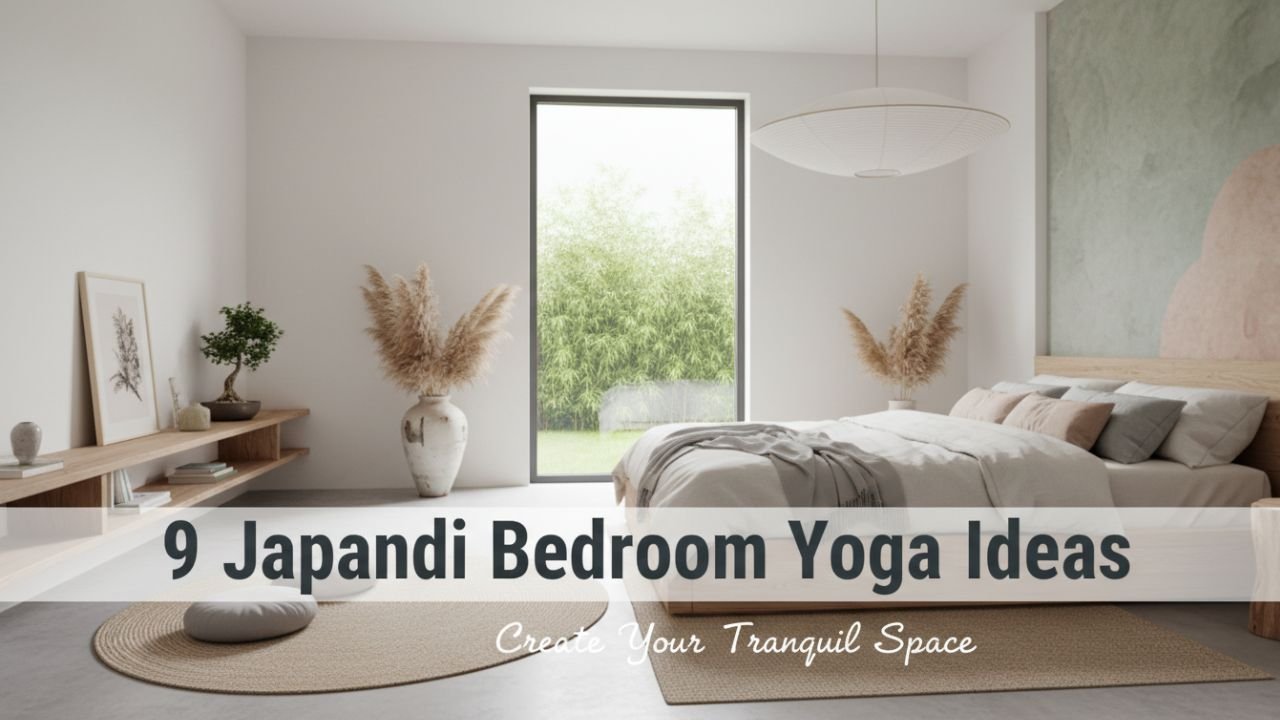
Creating a dedicated space for yoga in your bedroom doesn’t require a massive renovation. By embracing the Japandi design philosophy—a harmonious blend of Japanese minimalism and Scandinavian warmth—you can transform your sleeping quarters into a serene sanctuary.
This hybrid style prioritizes function, simplicity, and natural elements, making it the perfect backdrop for your daily mindfulness practice. Here are nine ways to seamlessly integrate a Japandi-inspired yoga space into your bedroom.
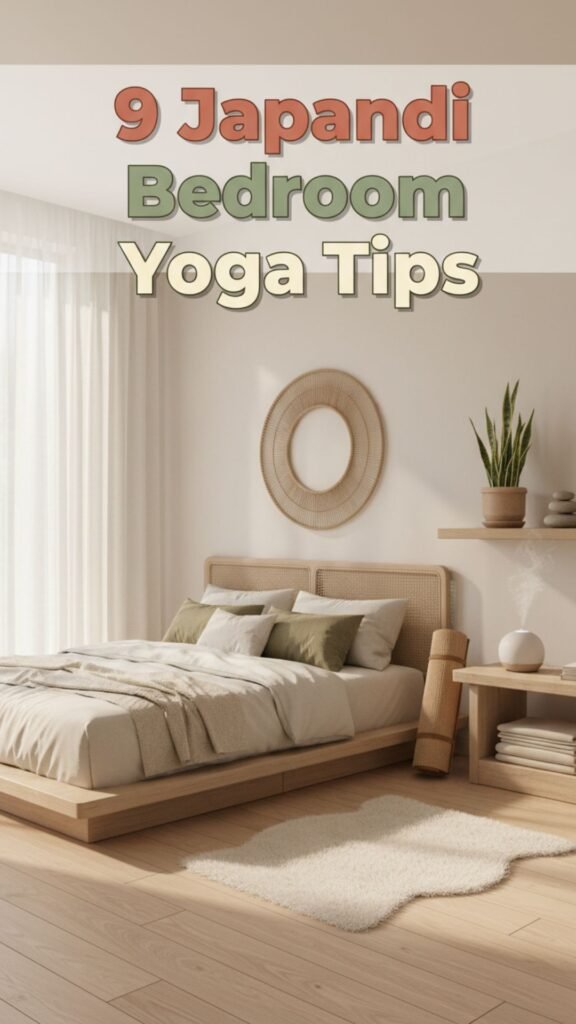
1. Low-Profile Furniture and Floor Space
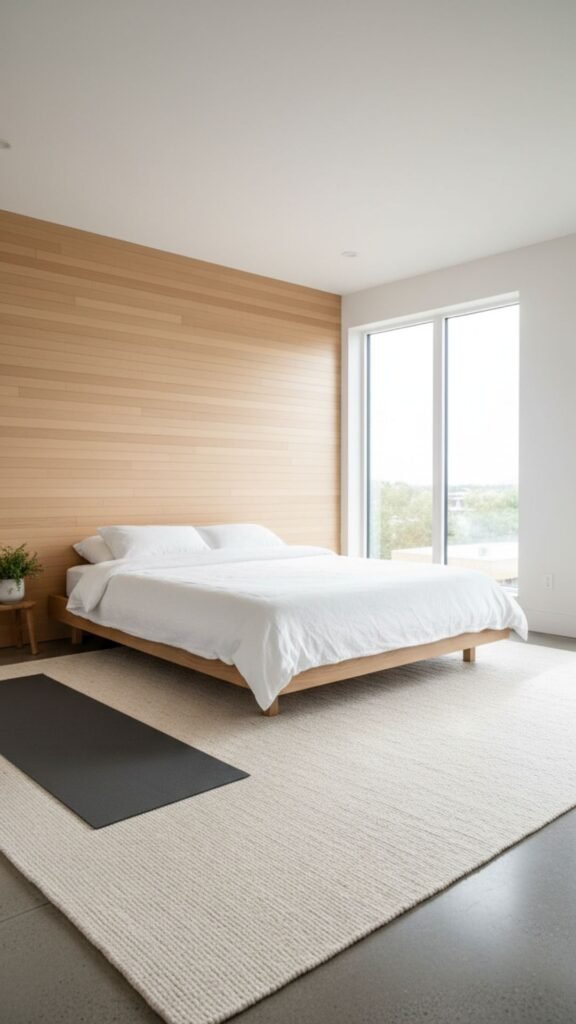
Japandi design heavily features low-to-the-ground furniture, which naturally opens up the room. By choosing a low platform bed, you create an illusion of higher ceilings and a more expansive floor area. This provides ample, unobstructed space to roll out your yoga mat without feeling cramped.
Steps To Achieve The Look:
- Swap out bulky bed frames for a simple wooden platform bed.
- Keep the floor area immediately next to the bed completely clear.
- Use a low-pile, neutral rug to define the practice area.
2. Earthy and Neutral Color Palettes
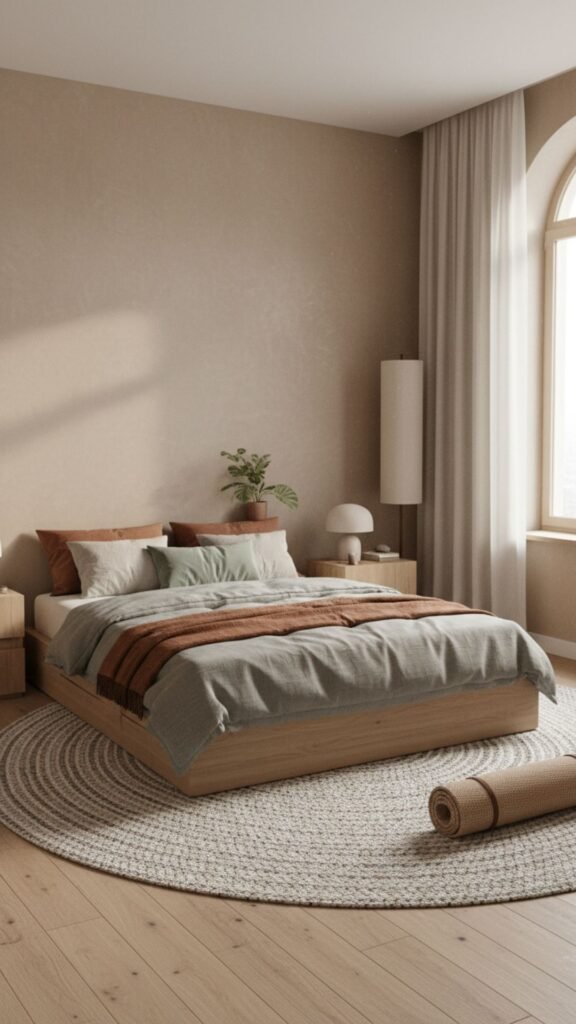
A calm mind starts with a calm environment. Japandi interiors rely on muted, earthy tones that reflect nature, avoiding harsh or overly bright colors. A palette of soft beige, warm gray, terracotta, and muted sage green helps ground your energy before you even step onto your mat.
Steps To Achieve The Look:
- Paint your walls in warm white or soft oatmeal hues.
- Incorporate contrasting dark wood tones through small furniture pieces.
- Choose a yoga mat in a natural, earthy color rather than a neon shade.
3. Natural Materials and Textures
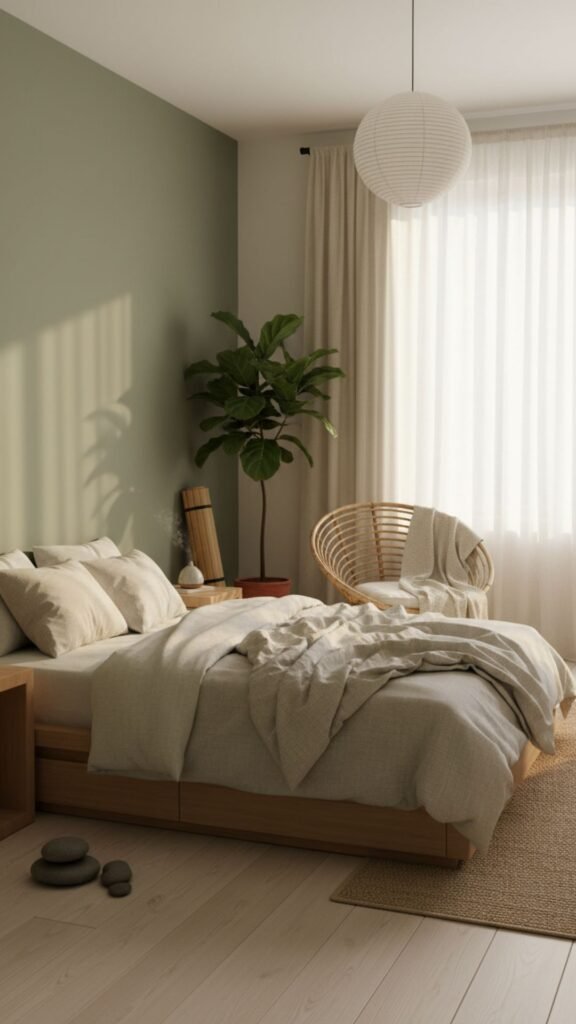
Both Japanese and Scandinavian aesthetics celebrate the raw beauty of natural materials. Integrating wood, bamboo, rattan, and stone into your bedroom brings an organic warmth that synthetic materials simply cannot replicate. These elements create a tactile richness that grounds your yoga practice.
Steps To Achieve The Look:
- Opt for solid oak or walnut nightstands.
- Use a bamboo mat or a cork yoga mat for your practice.
- Incorporate a rattan chair or woven basket for a touch of texture.
4. Soft, Diffused Lighting
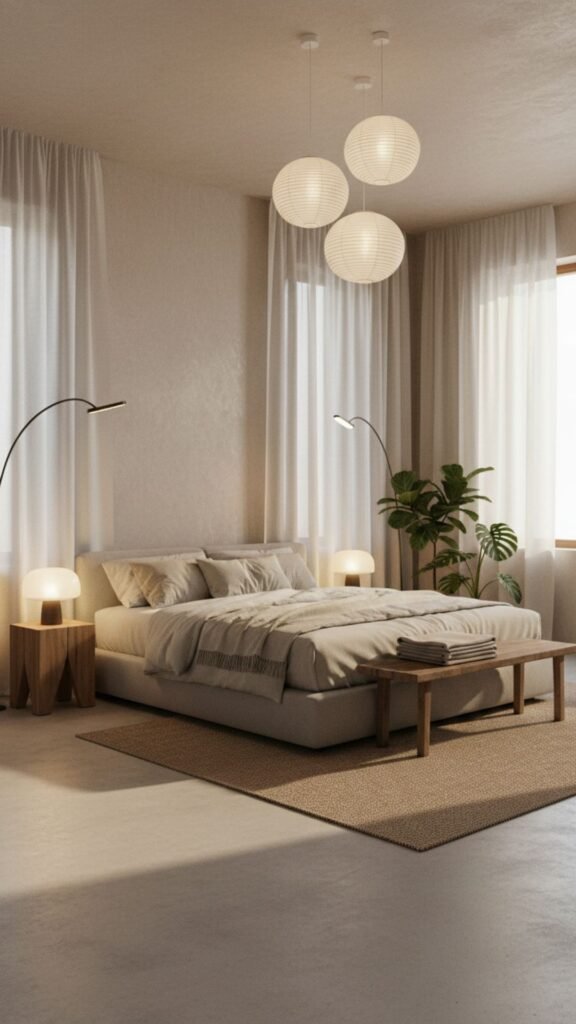
Harsh overhead lighting can easily disrupt a meditative state. Japandi style favors soft, indirect light that mimics the gentle glow of early morning or late afternoon sun. Layering different light sources allows you to adjust the ambiance based on your current yoga flow.
Steps To Achieve The Look:
- Install paper lantern pendants or use frosted glass lampshades.
- Place warm-toned LED floor lamps in the corners of the room.
- Rely on natural sunlight during the day by using sheer linen curtains.
5. Minimalist Decor and Clutter-Free Zones
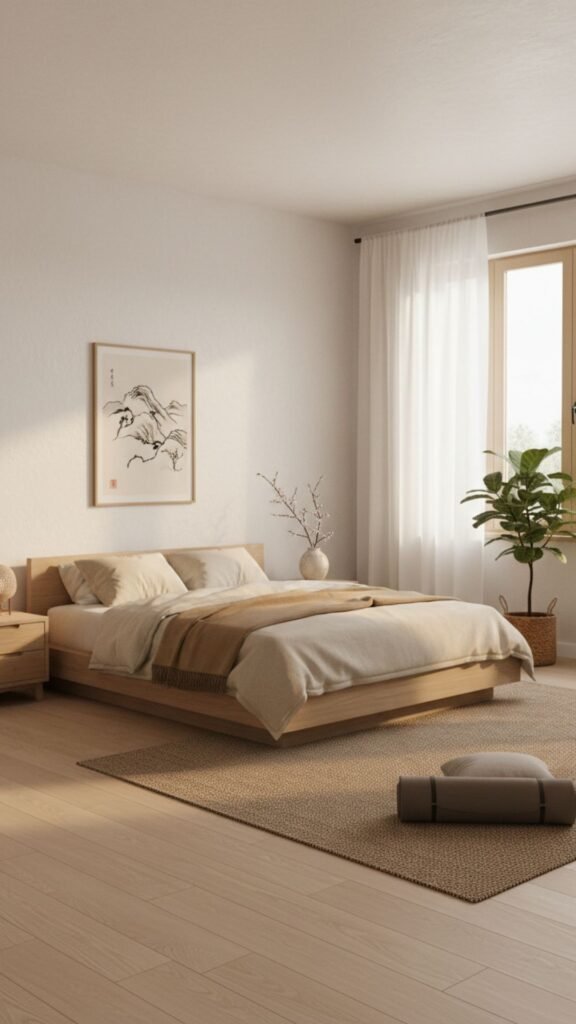
A core tenet of Japandi is intentionality, meaning every item in the room serves a purpose or brings joy. Visual clutter translates directly to mental clutter. Keeping your bedroom decor minimal ensures your focus remains entirely on your breath and movement.
Steps To Achieve The Look:
- Clear all non-essential items from your nightstands and dressers.
- Display only one or two meaningful pieces of art.
- Maintain a strict “put it away immediately” rule for clothing and accessories.
6. Bring Nature Indoors with Greenery
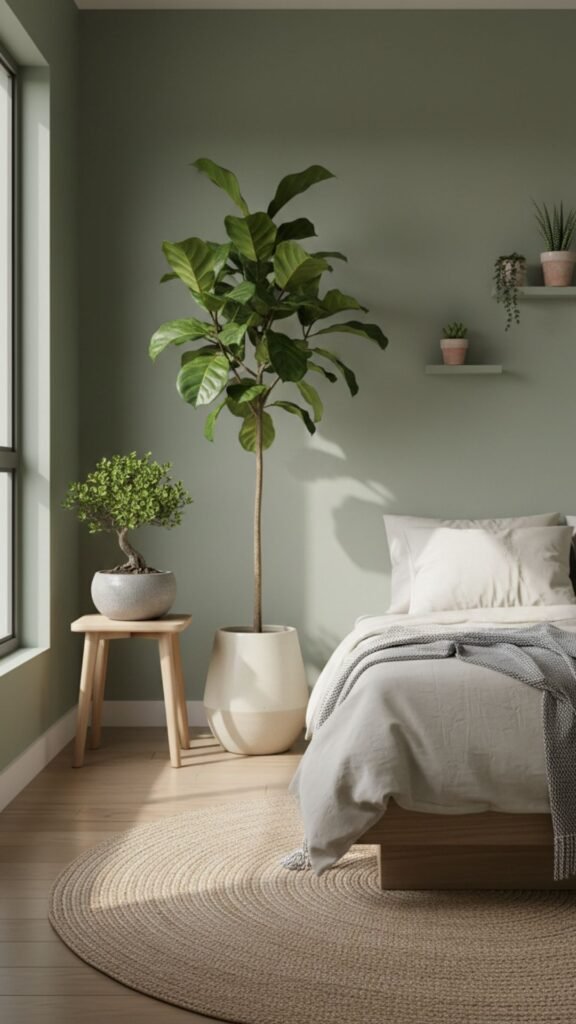
Nature is a deeply stabilizing force in both Scandinavian and Japanese cultures. Adding a few carefully selected plants to your bedroom purifies the air and brings vibrant life into the muted color palette. The presence of greenery subtly enhances the restorative benefits of your yoga sessions.
Steps To Achieve The Look:
- Place a small bonsai tree on your dresser for a distinctly Japanese touch.
- Add a tall, leafy plant like a Ficus Audrey to an empty corner.
- Use simple, unglazed ceramic pots for your houseplants.
7. Functional Storage for Yoga Gear
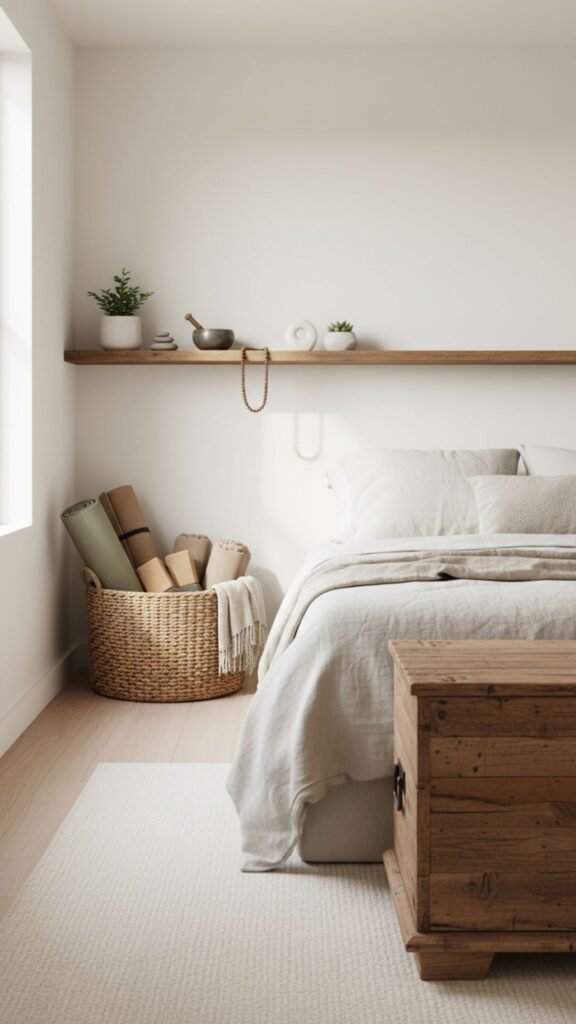
To maintain the minimalist aesthetic, your yoga props shouldn’t be scattered around the room. Japandi style champions smart, concealed storage solutions that keep everyday items easily accessible but hidden from view.
Steps To Achieve The Look:
- Store blocks, straps, and bolsters in a woven belly basket.
- Use a wooden chest at the foot of your bed to hide larger gear.
- Install simple floating shelves to display a singing bowl or incense neatly.
8. Shoji-Inspired Room Dividers
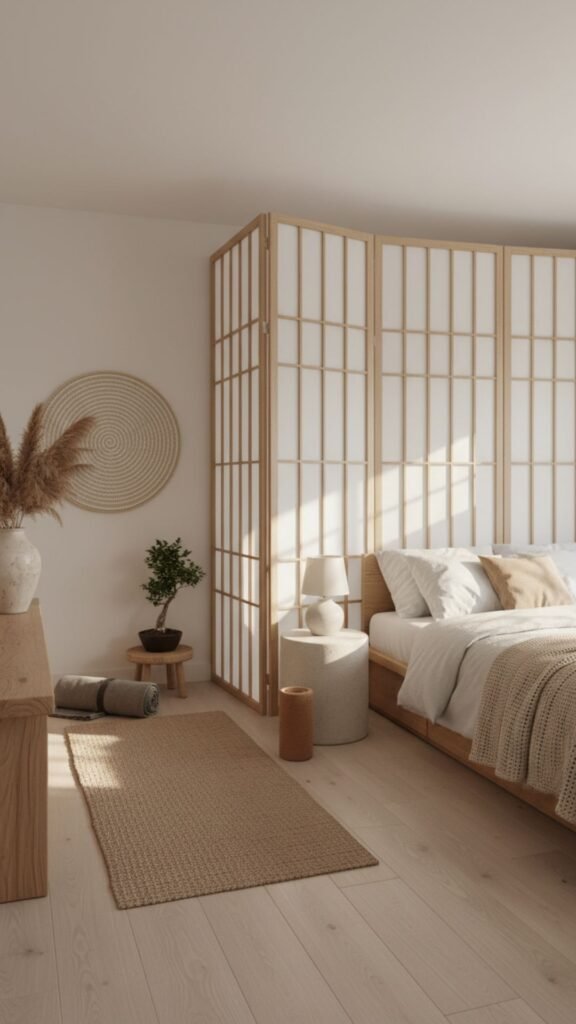
If you have a larger bedroom, creating a distinct physical boundary between your sleeping area and your yoga space can help shift your mindset. Traditional Japanese shoji screens, made of wood and translucent paper, divide the room while still allowing light to flow freely.
Steps To Achieve The Look:
- Position a folding shoji screen to partition off a corner of the room.
- Use a slatted wood divider for a more modern, Scandinavian take.
- Keep the divider partially open to maintain the room’s airy feel.
9. Cozy Textiles for Savasana
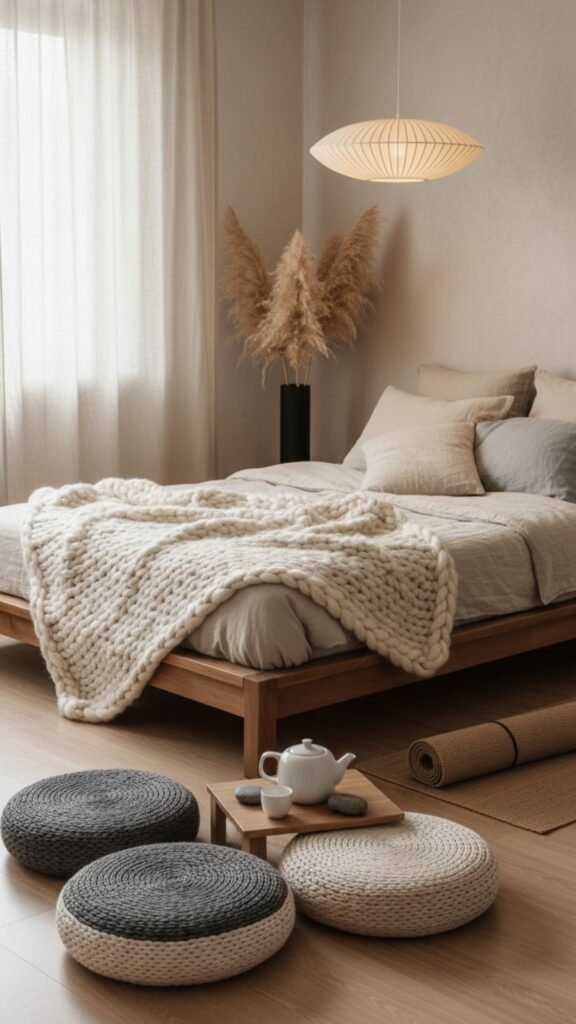
While Japanese design leans toward the austere, Scandinavian “hygge” emphasizes coziness. Blending these concepts means incorporating high-quality, comforting textiles that you can reach for during your final resting pose (savasana).
Steps To Achieve The Look:
- Keep a chunky knit throw blanket folded at the end of your bed.
- Use linen or organic cotton bedding for a relaxed, rumpled look.
- Add a couple of soft, neutral floor cushions for meditation.
Designing Your Ultimate Zen Retreat
Fusing the elegant minimalism of Japanese design with the inviting warmth of Scandinavian interiors offers the perfect environment for rest and reflection. By applying these Japandi principles to your bedroom, you create a space that not only looks beautiful but actively supports your daily yoga and meditation practice. Start with small changes, clear out the clutter, and watch as your bedroom transforms into your personal sanctuary.
Frequently Asked Questions (FAQs)
1. What is the Japandi style?
Japandi is a hybrid design trend that combines the minimalist, functional elements of Japanese design with the cozy, warm aesthetics of Scandinavian interiors.
2. How do I start decluttering for a Japandi bedroom?
Begin by removing items that do not serve a practical purpose or bring you a sense of peace. Keep surfaces clear and invest in closed storage solutions to hide everyday items.
3. What are the best colors for a Japandi yoga space?
Stick to a neutral and earthy palette. Soft whites, warm beiges, muted greens, and pale grays work best to create a calming atmosphere.
4. Can I achieve this look on a budget?
Absolutely. Focus on decluttering, prioritizing natural light, and incorporating a few key organic elements like a bamboo mat, a single houseplant, or a paper lantern.
5. Why is a low bed recommended for this style?
Low-profile furniture is a staple in Japanese design. It makes the room feel taller and more spacious, leaving an open, airy environment for your floor-based yoga practice.