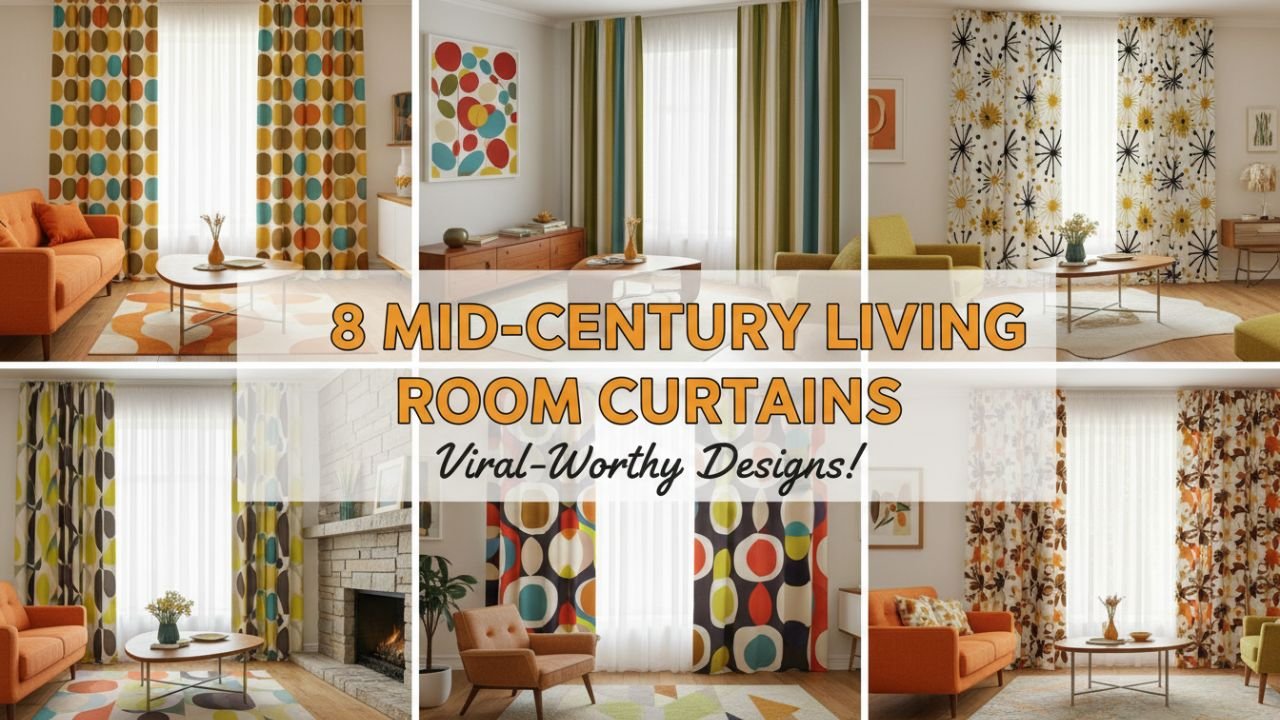
Mid-century modern design remains one of the most celebrated interior styles, famous for its clean lines, organic shapes, and bold accents. While furniture usually gets all the attention, window treatments are the secret ingredient that truly anchors a vintage aesthetic. The right curtains can instantly transform a bland space into a stylish 1950s or 60s haven.
Finding the perfect balance between retro charm and modern functionality requires a keen eye. You need fabrics and patterns that honor the era without making your home look like a museum set. Here are eight curtain ideas to inject genuine retro personality into your living room.
1. Bold Geometric Prints
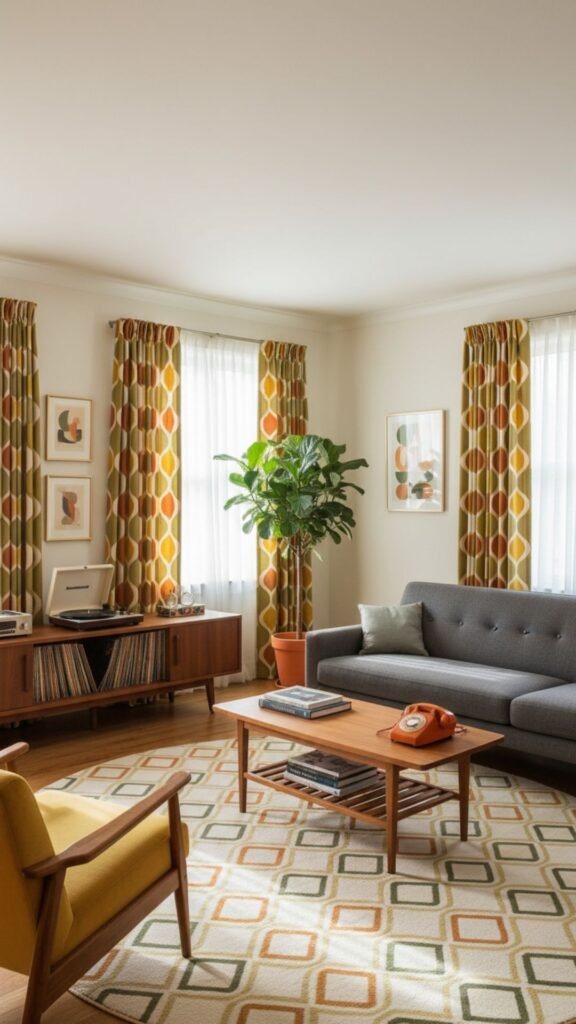
Geometric shapes were a hallmark of 1960s textile design. Curtains featuring repeating diamonds, hexagons, or overlapping circles immediately draw the eye and establish a vintage vibe. These patterns work exceptionally well when paired with minimalist teak furniture, adding necessary visual interest to the room.
Steps To Achieve The Look:
- Select patterns with high-contrast color combinations, like navy and white or orange and brown.
- Keep the rest of your living room decor relatively subdued so the curtains act as the focal point.
- Hang the curtains high above the window frame to make the ceilings feel taller.
2. Mustard Yellow Velvet
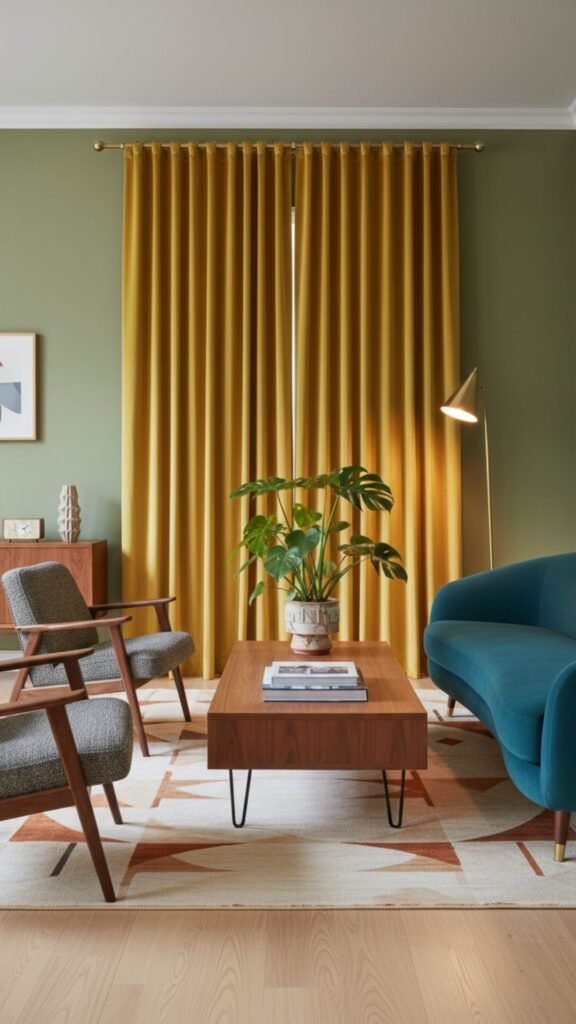
Nothing screams mid-century luxury quite like velvet. Mustard yellow is a quintessential color of the era, bringing warmth and a touch of glamour to your living space. Heavy velvet drapes not only look spectacular but also provide excellent insulation and light-blocking capabilities.
Steps To Achieve The Look:
- Opt for a matte velvet finish rather than a highly glossy one for authentic period styling.
- Pair the mustard curtains with dark wood accents like walnut or rosewood.
- Use a sturdy brass or wooden curtain rod to support the weight of the heavy fabric.
3. Airy Sheer Linen Panels
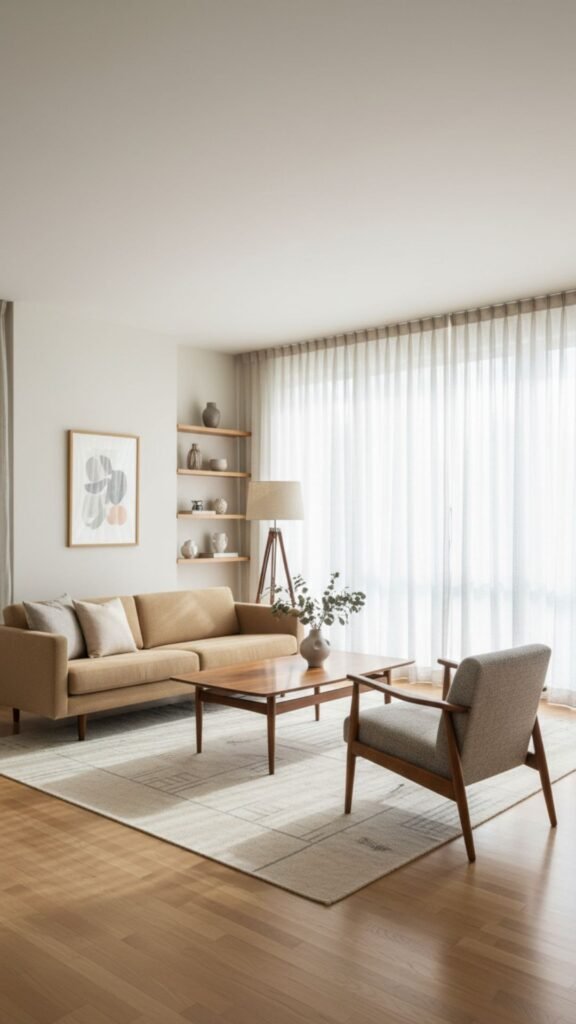
Sometimes, the best retro look is subtle and understated. Sheer linen panels allow natural light to flood the room, highlighting the clean lines of your mid-century furniture. This breezy, organic texture aligns perfectly with the era’s focus on connecting indoor and outdoor spaces.
Steps To Achieve The Look:
- Choose unbleached, natural linen or a soft off-white shade.
- Let the curtains pool slightly on the floor for a relaxed, elegant feel.
- Layer them with a heavier drape if you need privacy during the evening hours.
4. Abstract Atomic Patterns
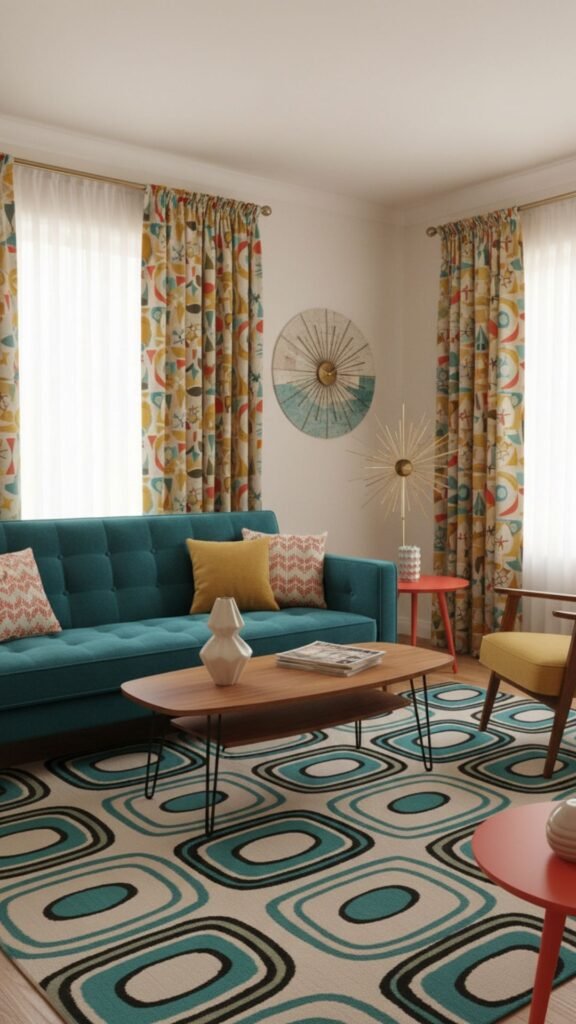
The atomic age heavily influenced mid-century aesthetics, resulting in quirky, asymmetrical patterns resembling boomerangs, stars, and molecular structures. These playful textiles bring a fun, energetic personality to your living room and serve as great conversation starters.
Steps To Achieve The Look:
- Search for authentic reproduction fabrics from specialized vintage textile retailers.
- Match one of the minor colors in the atomic print to a throw pillow or rug in the room.
- Keep the curtain styling simple with standard rod pockets or grommets to let the pattern shine.
5. Classic Pinch Pleat Drapes
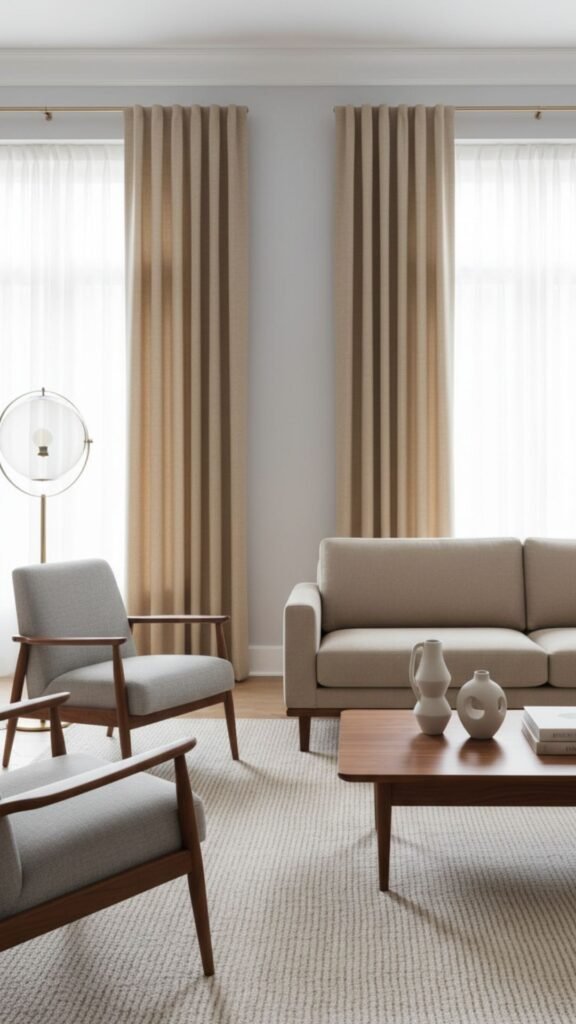
The pinch pleat is the definitive mid-century curtain header style. It features tightly sewn folds at the top that create a structured, tailored appearance falling evenly to the floor. This style brings a sense of formal elegance to the living room while maintaining vintage authenticity.
Steps To Achieve The Look:
- Use traverse rods to allow the pinch pleats to open and close smoothly.
- Select a solid, medium-weight fabric like cotton canvas or a wool blend to hold the crisp folds.
- Ensure the curtains are measured exactly to skim the floor or hover half an inch above it.
6. Earthy Olive Green
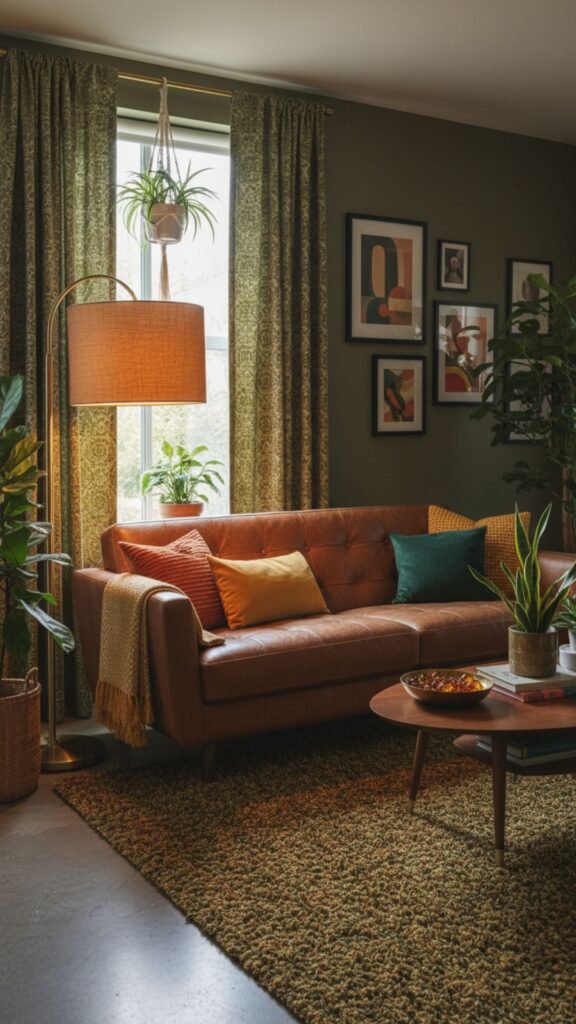
The 1970s transition of mid-century design introduced deep, earthy tones inspired by nature. Olive green curtains offer a moody, sophisticated backdrop that pairs beautifully with the era’s popular leather upholstery and vibrant indoor house plants.
Steps To Achieve The Look:
- Look for fabrics with a slight texture, such as tweed or heavy cotton weave.
- Accompany the olive curtains with warm metallic accents, like brushed brass floor lamps.
- Incorporate large-leaf plants like Monstera or Ficus near the windows to complement the green tones.
7. High-Contrast Color Blocks
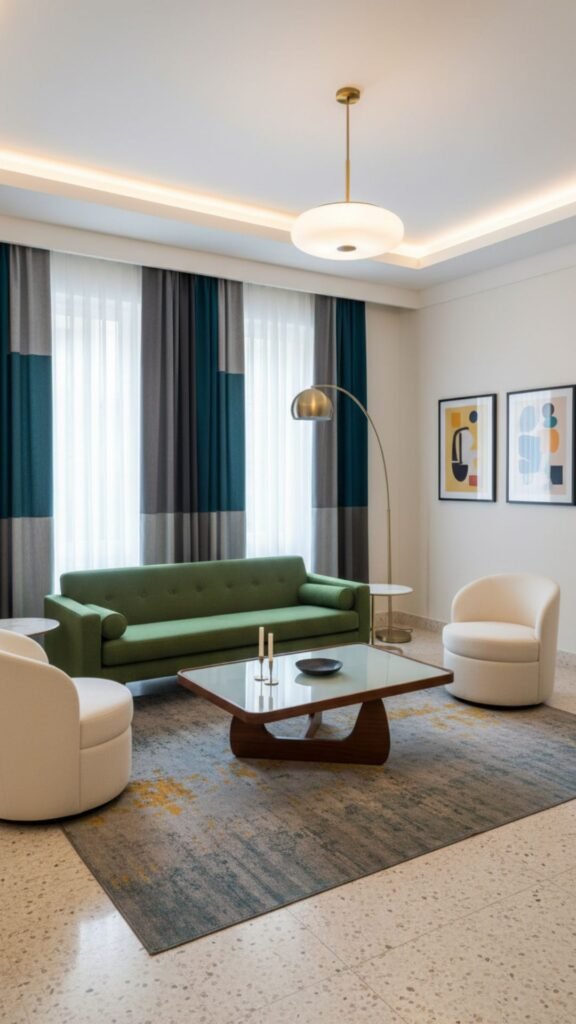
Color blocking is a dynamic way to introduce retro flair. Curtains featuring large, horizontal or vertical bands of contrasting colors create a striking architectural element in the room. It is a bold choice that perfectly captures the adventurous spirit of mid-century modernism.
Steps To Achieve The Look:
- Choose a two-tone combination, such as teal and gray or burnt orange and cream.
- Align the color block seams with architectural features in the room, like the window sill or a chair rail.
- Keep the curtain panels wide to ensure the color blocks remain visible even when the curtains are open.
8. Tropical Barkcloth Prints
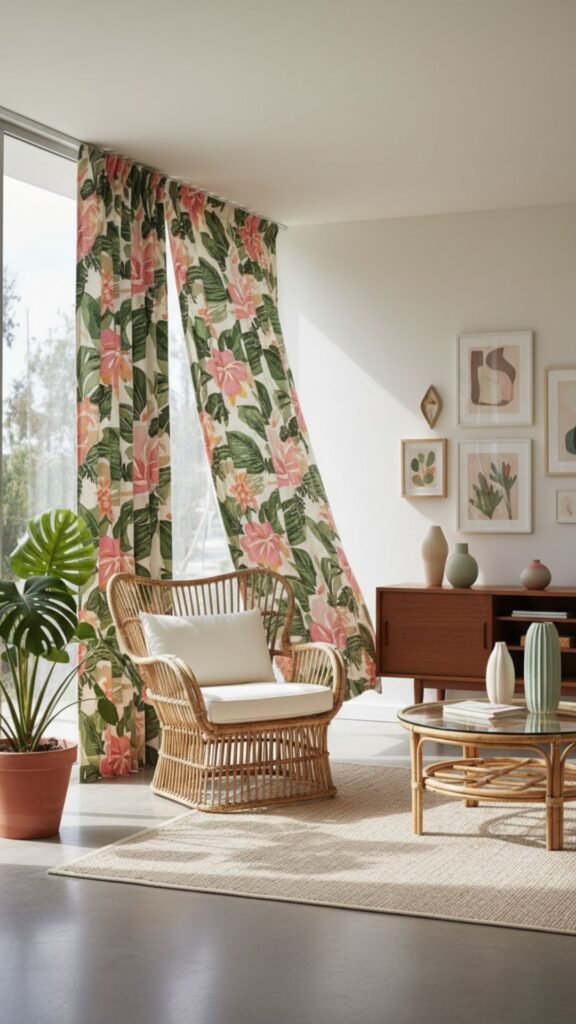
Barkcloth is a dense, textured cotton fabric heavily used in the 1950s. Tropical prints featuring large palm leaves, hibiscus flowers, and bamboo motifs were incredibly popular in post-war American homes. These curtains instantly create a relaxed, Palm Springs-inspired atmosphere.
Steps To Achieve The Look:
- Scour vintage shops or specialty fabric stores for authentic barkcloth textures.
- Combine these curtains with rattan or wicker furniture pieces to complete the tropical modern vibe.
- Keep the wall colors neutral to prevent the room from feeling overwhelmingly busy.
Bring Your Retro Vision to Life
Updating your window treatments is a highly effective way to solidify your living room’s retro aesthetic. Whether you lean toward the tailored look of pinch pleats or the vibrant energy of atomic prints, the right fabric choices will completely elevate your space. Take stock of your current furniture and color palette, and choose a curtain style that confidently ties your mid-century room together.
Frequently Asked Questions (FAQs)
1. What fabric was most popular for mid-century curtains?
Barkcloth, velvet, and fiberglass fabrics were incredibly popular during the mid-century era. Today, cotton blends, linen, and modern velvet offer the same look with better durability.
2. Should mid-century curtains touch the floor?
Yes, for the most authentic and tailored look, mid-century curtains should either just barely skim the floor or hover about half an inch above it. Pooling is generally reserved for more relaxed, bohemian styles.
3. What colors best represent the mid-century modern style?
Earthy and warm tones are the hallmark of this era. Mustard yellow, olive green, burnt orange, teal, and chocolate brown are all excellent choices for retro window treatments.
4. Are grommet curtains appropriate for a retro living room?
While grommets look clean and modern, pinch pleats or simple rod pocket styles are much more historically accurate for a 1950s or 1960s aesthetic.
5. Can I mix mid-century patterned curtains with other patterns in the room?
Yes, but do so carefully. If your curtains feature a loud geometric or atomic print, balance them by using solid colors on large furniture pieces and saving other patterns for small accents like throw pillows.