
Your ceiling is often referred to as the fifth wall of a room, yet it frequently gets ignored during renovations. Upgrading this space with a Plaster of Paris (POP) design can instantly elevate your home’s aesthetic, drawing the eye upward and making the area feel larger.

From subtle elegance to bold architectural statements, a well-planned ceiling layout completely redefines your interior. Here are eight standout POP ceiling designs to give your living room that highly coveted premium finish.

1. The Classic Tray Ceiling with Cove Lighting
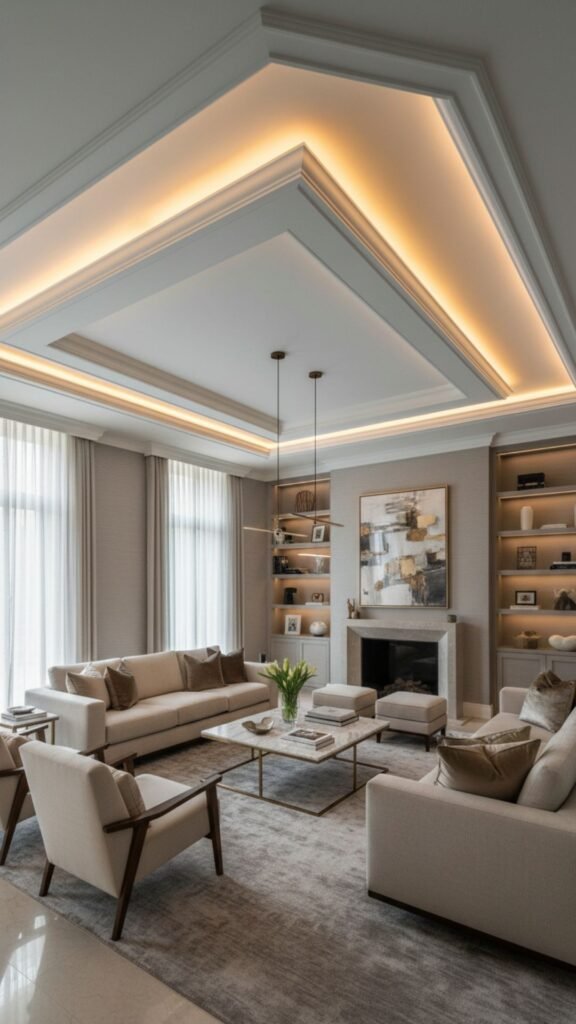
A tray ceiling features a recessed center that creates a beautiful sense of depth and height. Adding hidden cove lighting around the inner perimeter casts a soft, warm glow across the room. This design is perfect for creating a cozy, sophisticated atmosphere without overwhelming your existing decor.
Steps To Achieve The Look:
- Build a dropped border using POP around the perimeter of your ceiling.
- Install LED strip lights inside the recessed rim.
- Paint the recessed center a shade darker than the border for added contrast.
2. Geometric POP Patterns
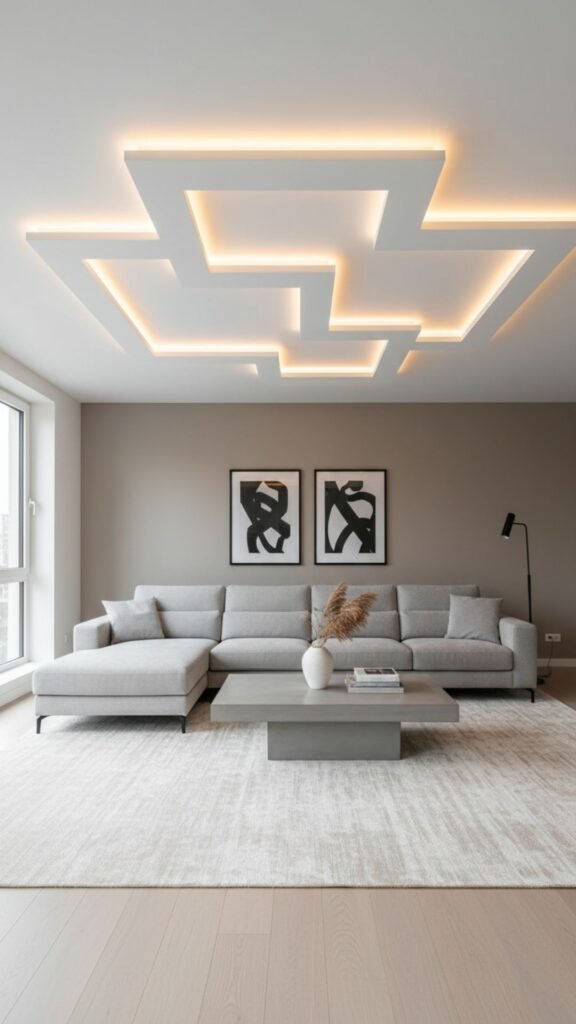
Sleek geometric shapes bring a highly modern, architectural feel to your living space. By molding POP into intersecting squares, hexagons, or rectangles, you add distinct character and structure to the ceiling. This works exceptionally well in contemporary homes favoring clean lines and minimalist furniture.
Steps To Achieve The Look:
- Map out intersecting geometric shapes on the ceiling blueprint.
- Use POP to create raised outlines of these shapes.
- Embed flush-mount LED panel lights within specific geometric blocks.
3. Wooden Panel Integration
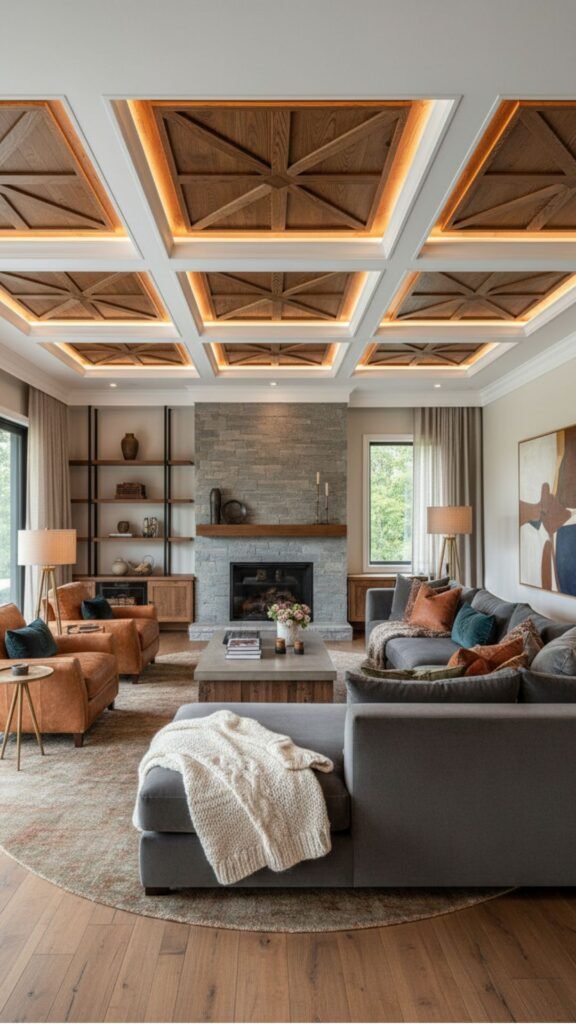
Combining the smooth, white finish of POP with the organic texture of wood creates a stunning visual dynamic. The POP acts as a clean framing device, while the wood inserts bring warmth and natural elegance. This fusion suits mid-century modern and rustic-luxe interiors perfectly.
Steps To Achieve The Look:
- Design a central POP frame with a hollow core.
- Secure high-quality wood veneers or faux wood beams into the hollow space.
- Apply a rich stain to the wood to contrast against the bright POP.
4. Coffered POP Ceiling
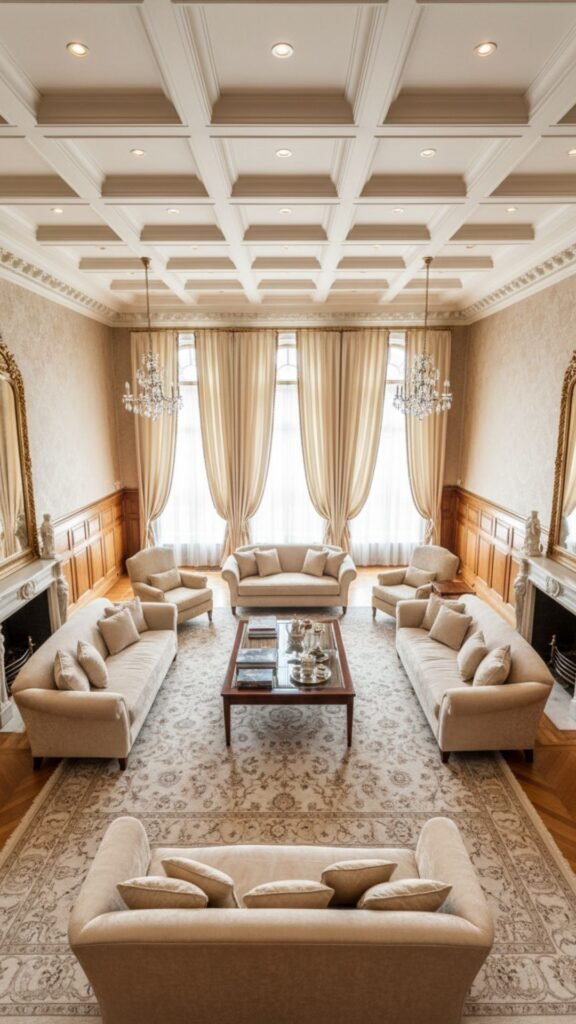
Coffered ceilings consist of a series of sunken panels, usually square or rectangular, covering the entire surface. This traditional design adds immense architectural volume and acoustic improvement. When rendered in POP, it delivers an ultra-luxurious, mansion-like quality to your living room.
Steps To Achieve The Look:
- Divide the ceiling into a uniform grid pattern.
- Mold deep POP beams along the grid lines.
- Place recessed spotlights in the center of each sunken panel.
5. Layered Suspended Ceiling
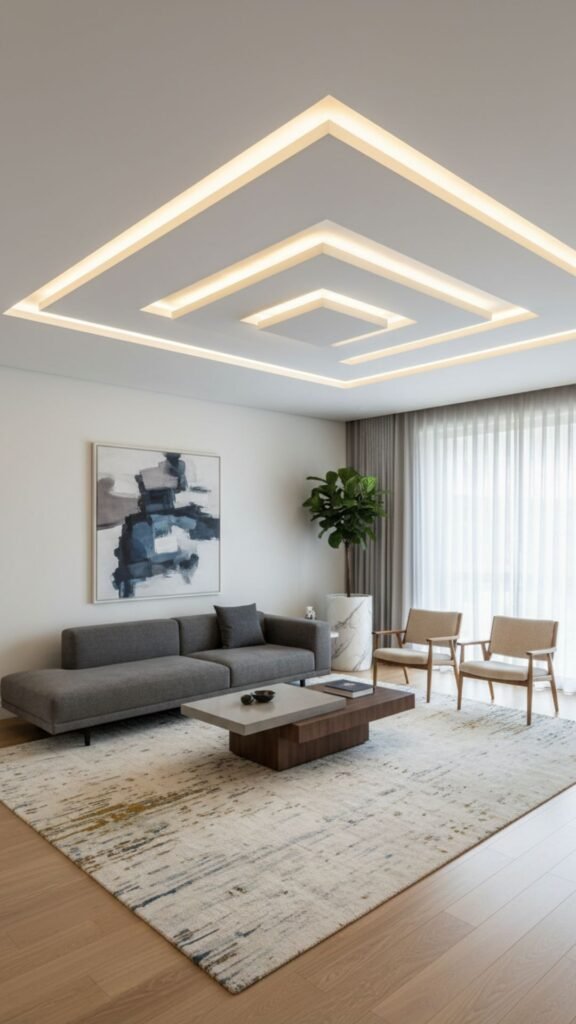
A layered design uses multiple tiers of suspended POP panels overlapping each other. This creates a striking 3D effect that serves as the room’s main focal point. It provides ample opportunity to hide wiring, climate control vents, and speakers seamlessly.
Steps To Achieve The Look:
- Install a primary drop ceiling base.
- Suspend a secondary, slightly smaller POP panel beneath it.
- Hide LED lighting strips between the two layers to emphasize the depth.
6. Minimalist Peripheral POP Border
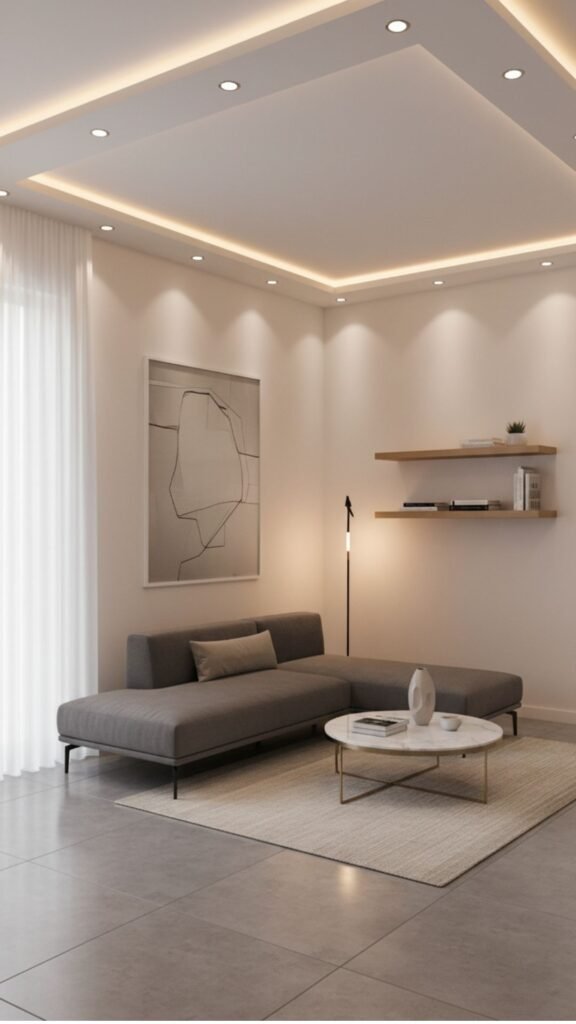
Sometimes, less truly is more. A simple peripheral POP border runs along the edges of the room, leaving the center bare. It offers a clean, understated look that frames the room beautifully and provides a discreet housing for ambient lighting.
Steps To Achieve The Look:
- Run a simple, flat POP border 12-18 inches wide around the ceiling edges.
- Keep the edges sharp and straight for a modern aesthetic.
- Install small, evenly spaced downlights along the border.
7. Circular POP Medallion
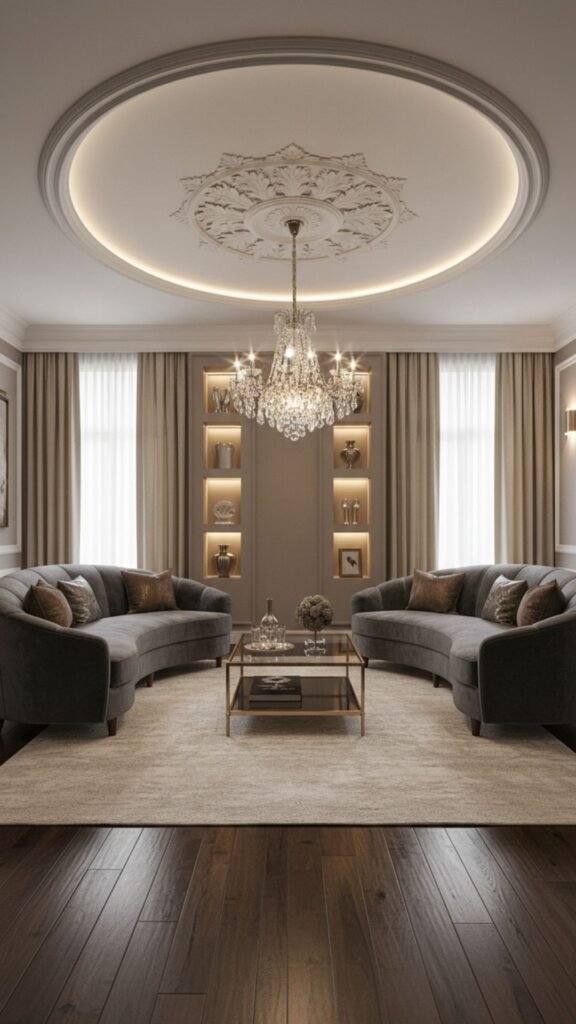
A circular POP drop or medallion creates a sweeping, elegant focal point, especially above a central seating area. It softens the hard corners of a standard square room and naturally draws attention to a statement lighting fixture.
Steps To Achieve The Look:
- Mold a large, smooth circular drop in the center of the ceiling.
- Finish the edges with a subtle, rounded bevel.
- Suspend a premium crystal chandelier directly from the center of the circle.
8. Metallic Accent POP Ceiling
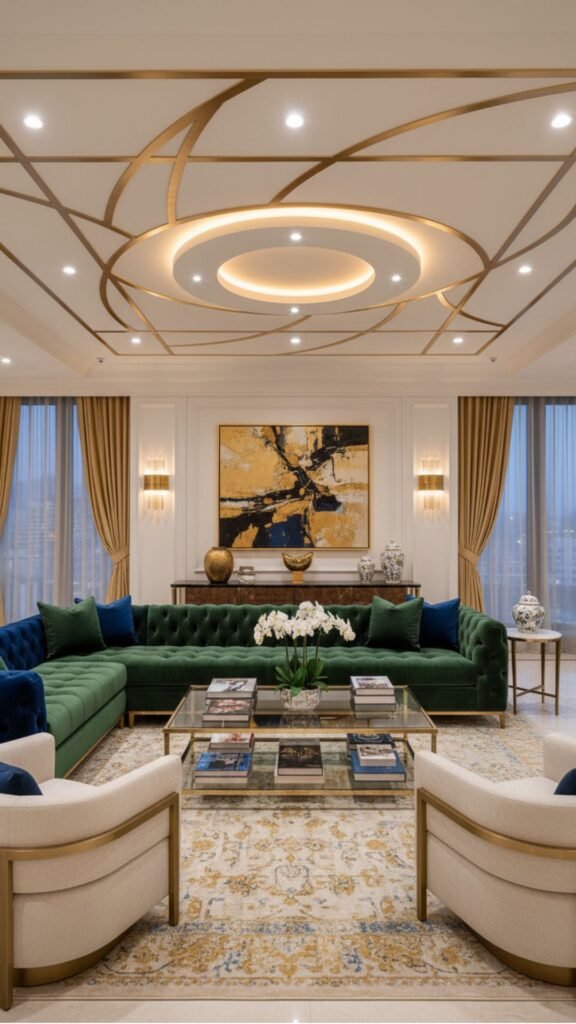
Adding metallic strips or paint to a POP design injects instant glamour. The matte finish of the plaster paired with reflective gold, silver, or brass creates a high-end, bespoke appearance. This style effortlessly complements living rooms with metallic furniture accents.
Steps To Achieve The Look:
- Create shallow grooves within your POP ceiling design.
- Inlay thin brass or gold-painted strips into these grooves.
- Keep the rest of the POP a stark, crisp white to make the metal pop.
Elevate Your Space With Confidence
Upgrading to a luxury living room POP ceiling design transforms the entire mood and perceived value of your home. By selecting a style that complements your existing architecture and furniture, you can craft a space that feels both welcoming and brilliantly refined.
Frequently Asked Questions (FAQs)
1. What is a POP ceiling?
A Plaster of Paris (POP) ceiling is a secondary ceiling suspended below the main structural ceiling, made from a quick-setting gypsum plaster. It is used to create decorative patterns, hide wiring, and house specialized lighting fixtures.
2. How long does a POP ceiling last?
When installed correctly and kept free from water damage, a high-quality POP ceiling can last up to 20 years or more. Regular dusting and occasional repainting are usually all that is needed for maintenance.
3. Can POP ceilings support heavy chandeliers?
The POP material itself cannot support heavy weights. Heavy fixtures like chandeliers must be anchored directly to the original, structural ceiling joists located above the POP layer.
4. Are POP ceilings resistant to moisture?
Standard POP is highly porous and not resistant to moisture. If your living room is prone to high humidity or leaks, you should address those issues first or consider moisture-resistant gypsum boards instead.
5. How much space is needed for a drop POP ceiling?
You generally need a minimum ceiling height of 9 feet before installing a drop POP ceiling. The false ceiling usually requires a drop of at least 4 to 6 inches to accommodate wiring and lighting fixtures comfortably.