
When redesigning a living room, most people focus entirely on the furniture, flooring, and walls. The ceiling, often referred to as the fifth wall, is frequently left blank and ignored. Upgrading your ceiling is one of the most effective ways to completely transform a standard room into a breathtaking, high-end space.

By adding architectural details, bold colors, or unique textures above your head, you draw the eye upward and make the entire room feel larger and more intentional. A beautifully finished ceiling adds a layer of sophistication that standard flat white drywall simply cannot match.
Read on to discover seven stunning ceiling designs that will elevate your living room, along with practical steps to recreate these looks in your own home.

1. Classic Coffered Ceilings
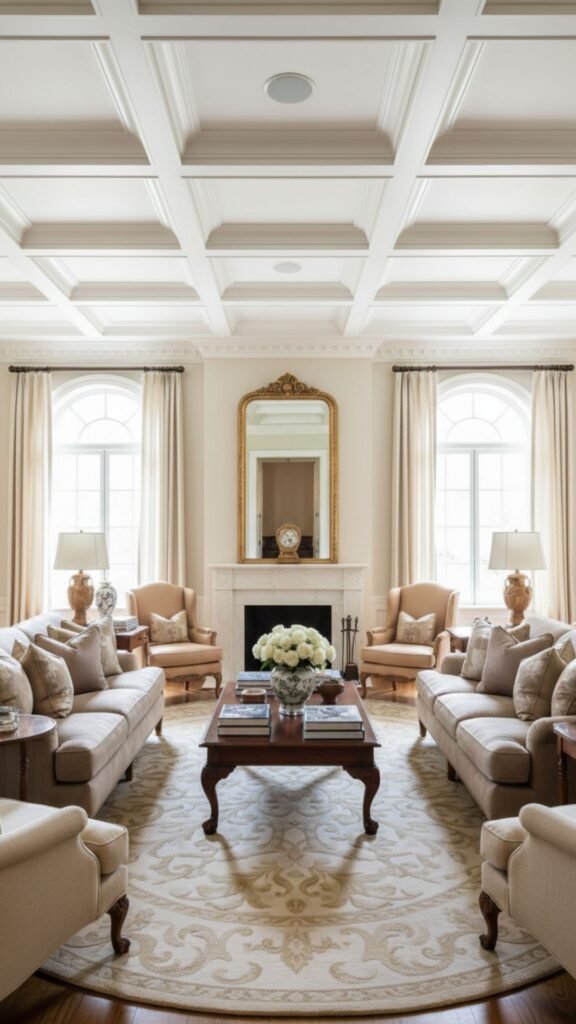
Coffered ceilings feature a grid of sunken panels defined by intersecting structural beams. This architectural detail adds immense depth, dimension, and a sense of historic grandeur to any living room. It works beautifully in traditional, transitional, and modern farmhouse aesthetics.
Steps To Achieve The Look:
- Measure your ceiling to plan a symmetrical grid layout.
- Install a framework of hollow faux beams or solid wood joists.
- Finish the sunken panels with a smooth coat of paint or decorative beadboard.
- Add crown moulding inside each panel for an extra touch of elegance.
2. Tray Ceilings with Hidden Lighting
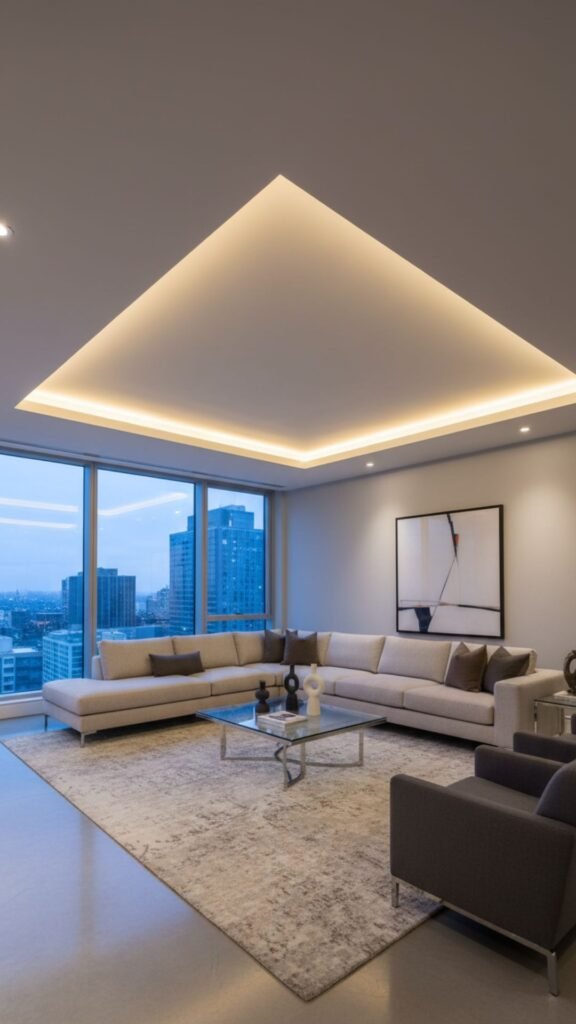
A tray ceiling features a raised center section that resembles an inverted tray. This design creates a feeling of height and spaciousness. When paired with hidden LED lighting along the inner perimeter, it casts a soft, ambient glow that instantly makes the room feel like a luxury hotel lounge.
Steps To Achieve The Look:
- Frame a drop-down border around the perimeter of your existing ceiling.
- Finish the drywall edges cleanly to create the recessed center “tray.”
- Install LED strip lights inside the lip of the tray so the bulbs remain hidden.
- Paint the recessed area a slightly darker shade than the border to emphasize depth.
3. Exposed Wood Beams
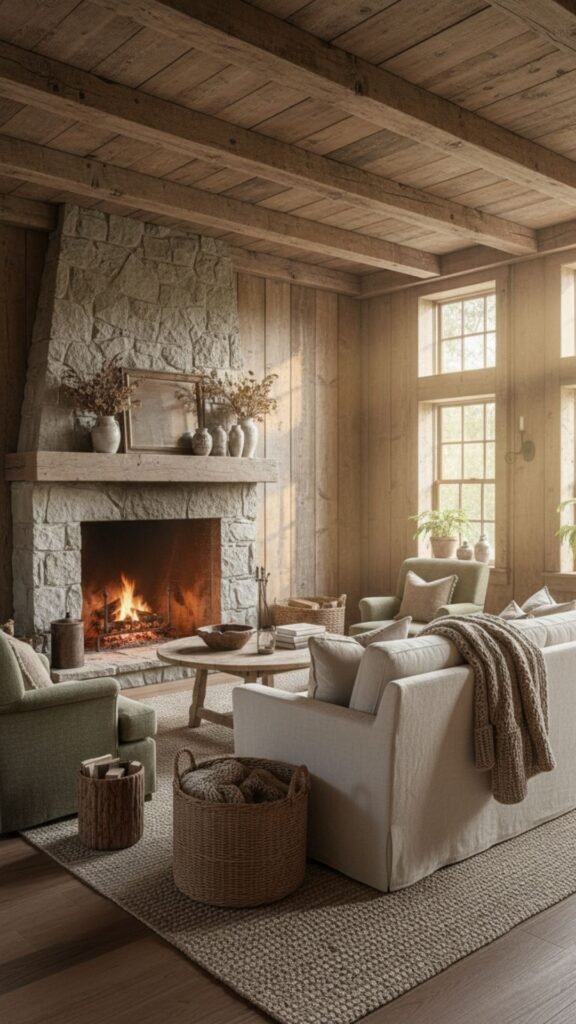
Wood beams bring warmth, texture, and organic beauty to a living space. Whether you prefer the rustic charm of reclaimed barn wood or the sleek look of smooth, stained oak, beams draw the eye upward and ground the room. They are perfect for vaulted ceilings or standard flat ceilings needing a focal point.
Steps To Achieve The Look:
- Choose between solid wood beams or lightweight hollow faux wood beams.
- Select a stain or finish that complements your existing living room furniture.
- Space the beams evenly across the ceiling, running parallel to the longest wall.
- Secure them firmly to the ceiling joists using heavy-duty hardware.
4. Statement Wallpaper Ceilings

Wallpaper is no longer just for standard walls. Applying a bold, textured, or metallic wallpaper to the ceiling introduces unexpected drama and high-end flair. This design choice is a fantastic way to infuse personality and color into a room without overwhelming the eye at ground level.
Steps To Achieve The Look:
- Ensure your ceiling is perfectly smooth; sand down any popcorn or heavy textures.
- Apply a high-quality primer to help the wallpaper adhere properly.
- Choose a pattern that suits your room’s scale (larger patterns for high ceilings).
- Hire a professional paperhanger, as ceiling application is highly challenging.
5. High-Gloss Painted Ceilings
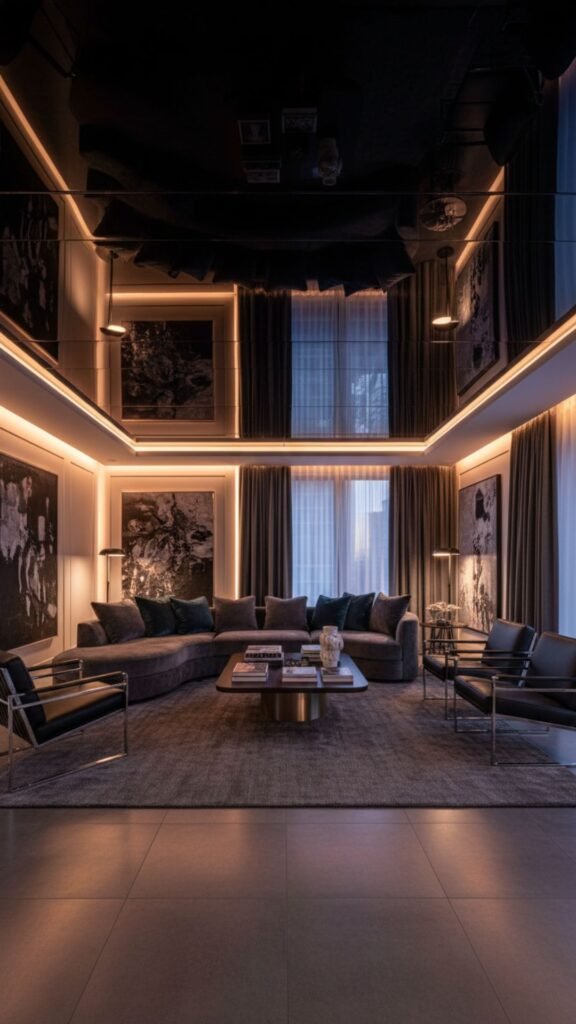
A high-gloss or lacquered ceiling reflects light beautifully, making a room feel taller and more expansive. This finish gives the ceiling a mirror-like quality that feels incredibly modern, glamorous, and sophisticated. It works especially well in darker, moody living rooms.
Steps To Achieve The Look:
- Skim coat the ceiling to achieve a flawless, glass-smooth surface.
- Apply a premium stain-blocking primer.
- Use a high-quality lacquer or high-gloss paint in your chosen color.
- Apply multiple thin coats, sanding lightly between each for a perfect finish.
6. Metallic Leaf Finishes
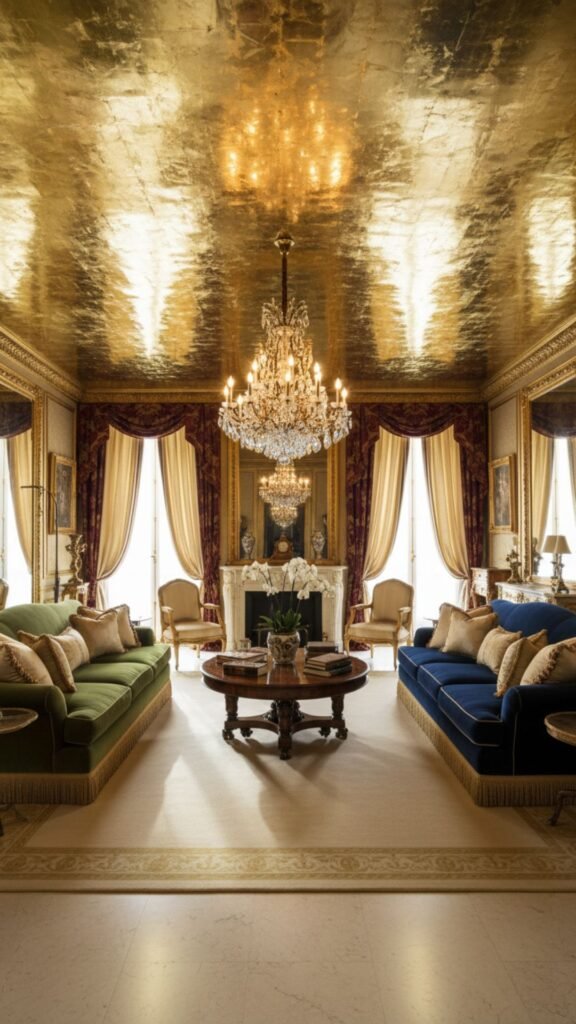
Applying gold, silver, or copper leaf to a ceiling creates an opulent, shimmering effect that exudes luxury. The metallic surface catches the light from your chandeliers and lamps, creating a warm, glowing canopy over your living room.
Steps To Achieve The Look:
- Paint the ceiling with a base coat that complements your chosen metallic leaf.
- Apply a specialized sizing adhesive to the ceiling surface.
- Carefully press delicate sheets of metallic leaf onto the adhesive.
- Seal the ceiling with a clear topcoat to prevent the metal from tarnishing.
7. Plaster Medallions and Moulding
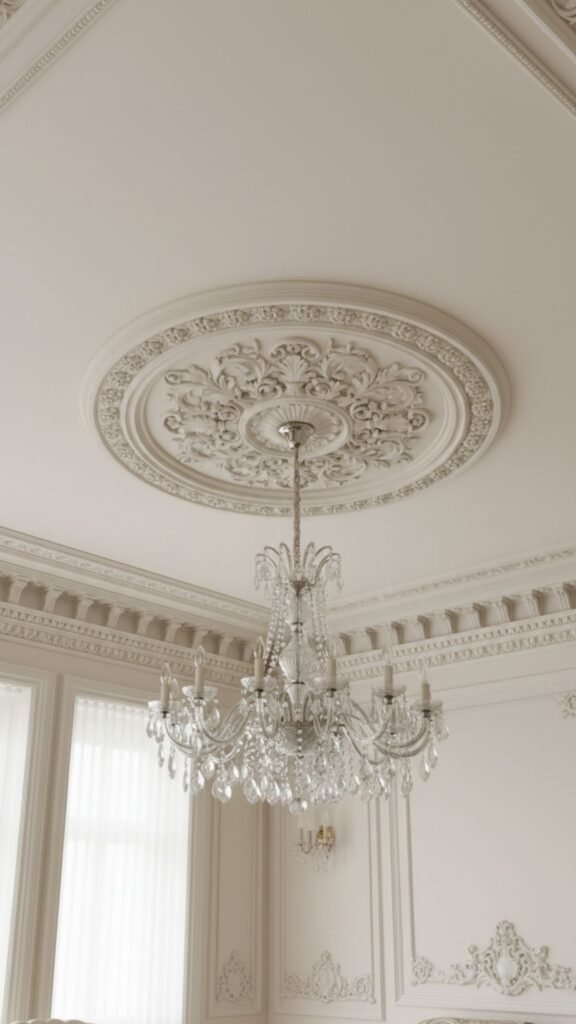
Ornate plaster ceiling medallions and intricate perimeter moulding bring Parisian-apartment charm to any living room. These decorative elements highlight beautiful light fixtures and add a sense of history and craftsmanship to the space.
Steps To Achieve The Look:
- Select a ceiling medallion that is proportionate to your chandelier and room size.
- Install decorative panel moulding or heavy crown moulding around the room’s edges.
- Secure the medallion around the electrical box before hanging your light fixture.
- Paint the plaster details the same color as the ceiling for a modern, monochromatic look.
Elevate Your Space From Top to Bottom
Upgrading your ceiling is a strategic way to infuse your home with luxury and character. By implementing one of these seven designs, you can completely change the atmosphere of your living room. Take time to evaluate your room’s height, lighting, and overall style, then choose the ceiling treatment that best aligns with your vision.
Frequently Asked Questions (FAQs)
- How much does a luxury ceiling cost?
The cost varies widely based on the materials and labor required. A simple painted high-gloss ceiling might cost a few hundred dollars, while custom coffered ceilings or metallic leafing can run into the thousands. - Can I install a coffered ceiling in a low room?
It is generally not recommended for ceilings lower than eight feet. The beams in a coffered ceiling drop down into the room, which can make low ceilings feel cramped and heavy. - What is the best paint finish for a standard ceiling?
For most standard ceilings, a flat or matte finish is best because it hides imperfections. High-gloss finishes should only be used if the ceiling is perfectly smooth. - Do wood beams make a room look smaller?
Dark, heavy beams can make a ceiling feel lower. If you have a small room, opt for shallow, light-colored beams to add texture without enclosing the space. - How do I choose the right ceiling design?
Look at your home’s existing architecture. Traditional homes suit coffered ceilings and plaster medallions, while modern homes pair well with tray ceilings or high-gloss paint.