
Bringing the serenity of the beach into your home starts with the ground up. The right rug does more than just cover your floor; it defines your space and sets a relaxing tone.

If you want to capture that breezy, seaside aesthetic, how you place your rug is just as important as its design. Read on to discover eleven ways to position your rugs for a perfectly relaxed coastal living room.

1. Anchor the Main Seating Area
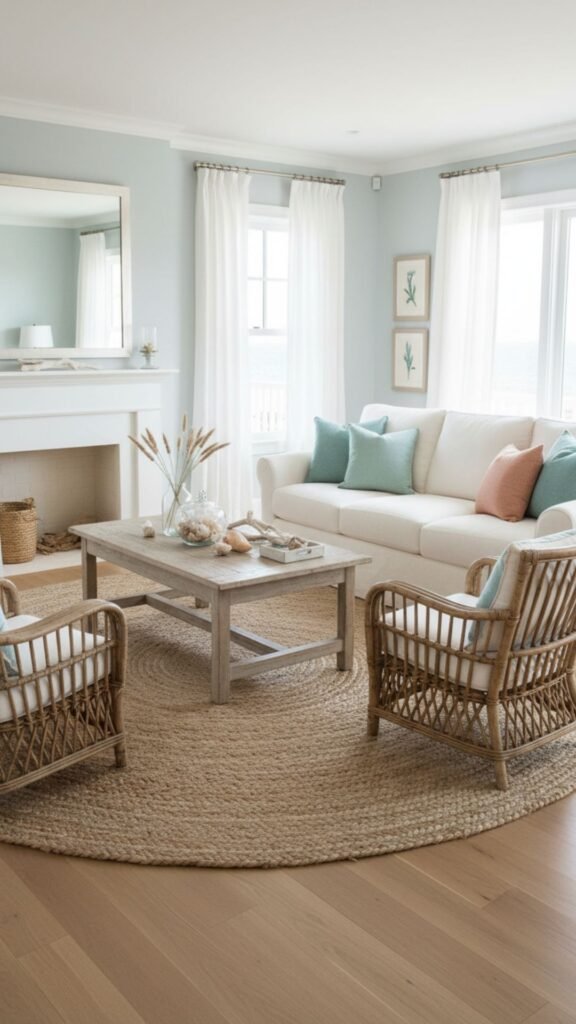
Creating a cohesive gathering space is essential for a relaxed living room. By placing your largest furniture pieces completely on the rug, you instantly create a unified, cozy zone. This method works exceptionally well with large natural fiber rugs.
Steps To Achieve The Look:
- Measure your seating arrangement to ensure the rug extends at least six inches past the furniture.
- Place the sofa, accent chairs, and coffee table entirely on the rug.
- Keep a border of bare floor around the room to maintain an airy feel.
2. Layering Jute and Cotton
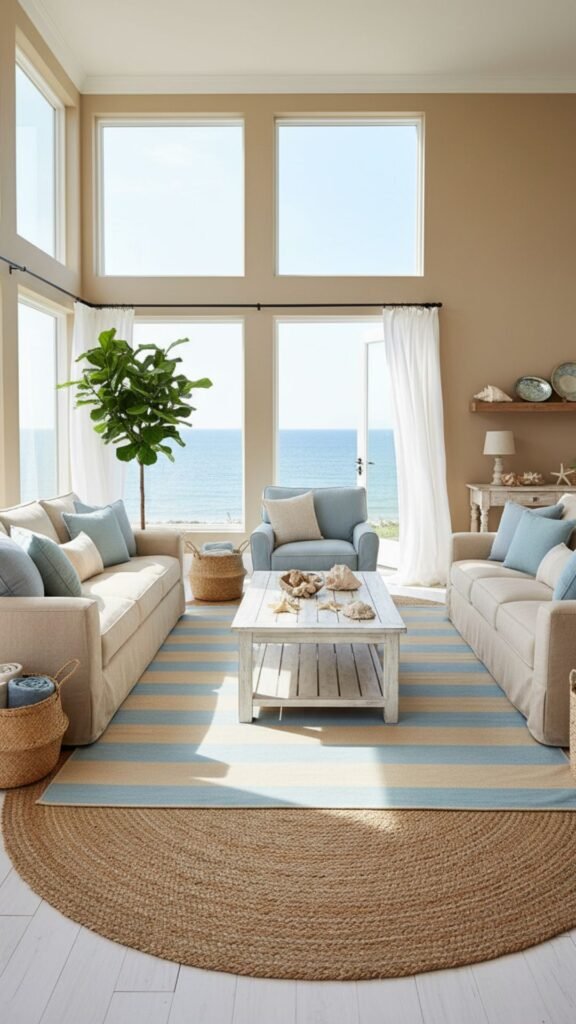
Layering adds incredible texture and visual interest to a coastal space. A large, durable jute rug serves as the perfect sandy base, while a smaller cotton rug on top brings in a splash of sea-inspired color.
Steps To Achieve The Look:
- Center a large natural jute or sisal rug in the middle of your living area.
- Place a smaller, striped or subtly patterned cotton rug directly over the center.
- Arrange your coffee table over the overlapping center point to anchor both pieces.
3. The Front-Legs-Only Approach
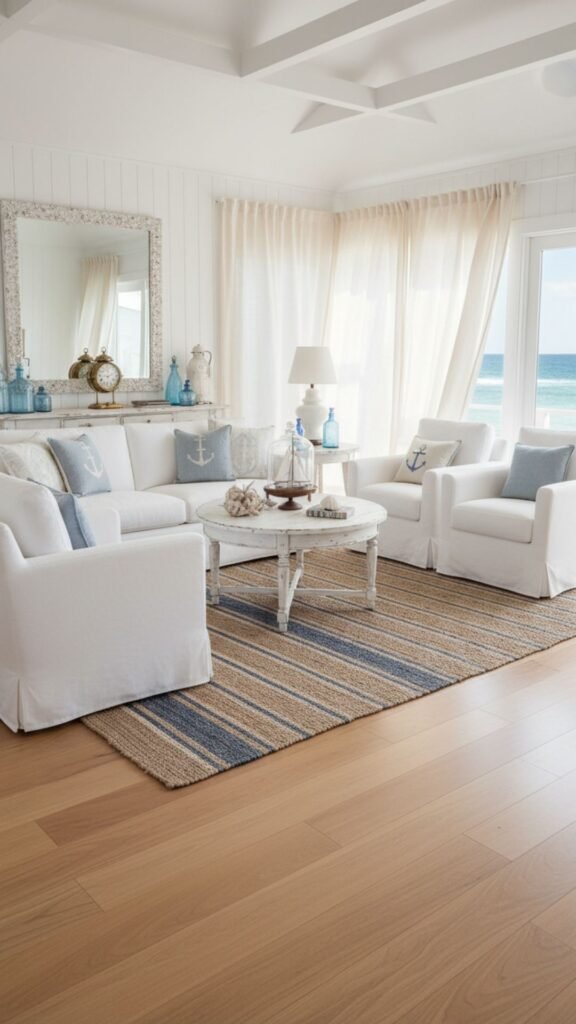
If you have a slightly smaller rug but still want to ground the room, the front-legs-only method is a classic choice. It connects the furniture without overwhelming the floor space, keeping the room feeling open and light.
Steps To Achieve The Look:
- Position the rug so it runs parallel to your main sofa.
- Slide the rug just far enough under the sofa and chairs so only their front legs rest on it.
- Leave the back legs on the bare wood or tile floor.
4. The Floating Island Setup
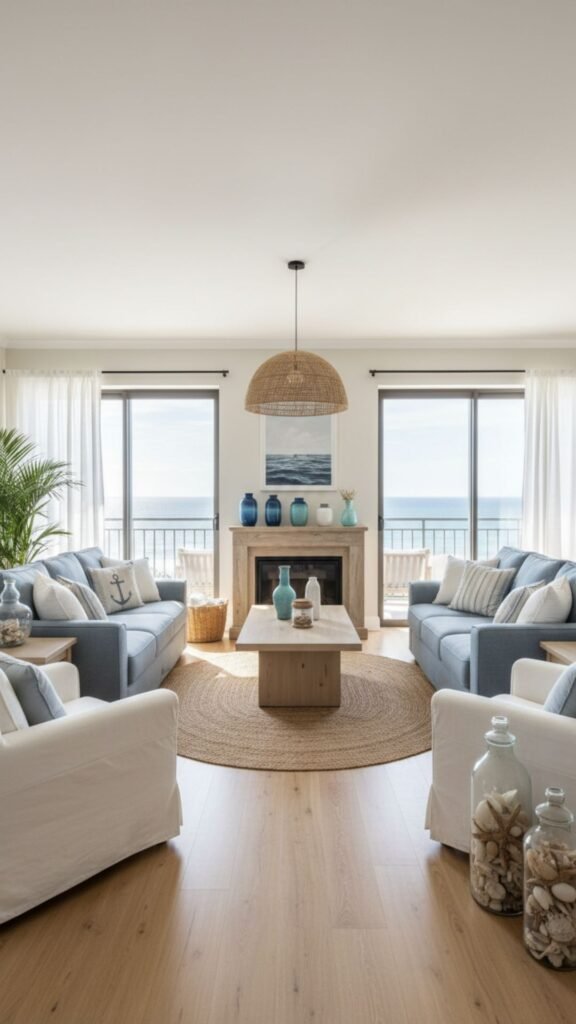
Sometimes, you want your coffee table to be the star of the show. The floating island placement uses a smaller rug to highlight the center of the room, leaving the surrounding seating to frame the space.
Steps To Achieve The Look:
- Choose a smaller, heavily textured rug, like a thick wool or shag piece.
- Place it directly in the center of the seating area, completely free of the main furniture legs.
- Set the coffee table dead center on the rug.
5. Round Rugs for Cozy Reading Nooks
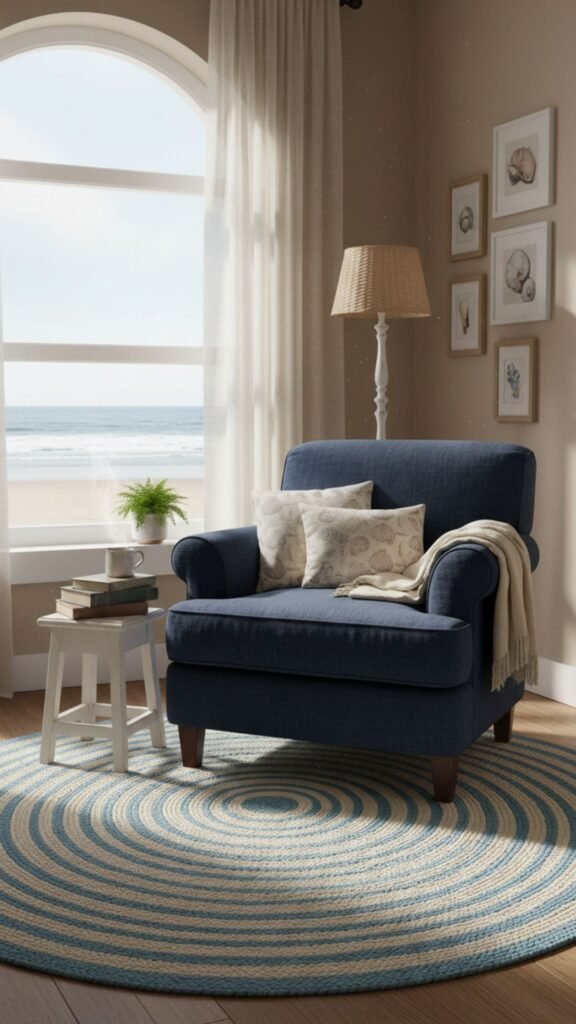
Coastal design often incorporates quiet corners for relaxation. A round rug softens the harsh angles of a room and creates a dedicated, intimate zone for reading or enjoying a morning coffee.
Steps To Achieve The Look:
- Select a round braided rug in a light cream or navy hue.
- Position it in an empty corner or near a bright window.
- Place a comfortable armchair and a small side table entirely on the round rug.
6. Defining the Open Concept
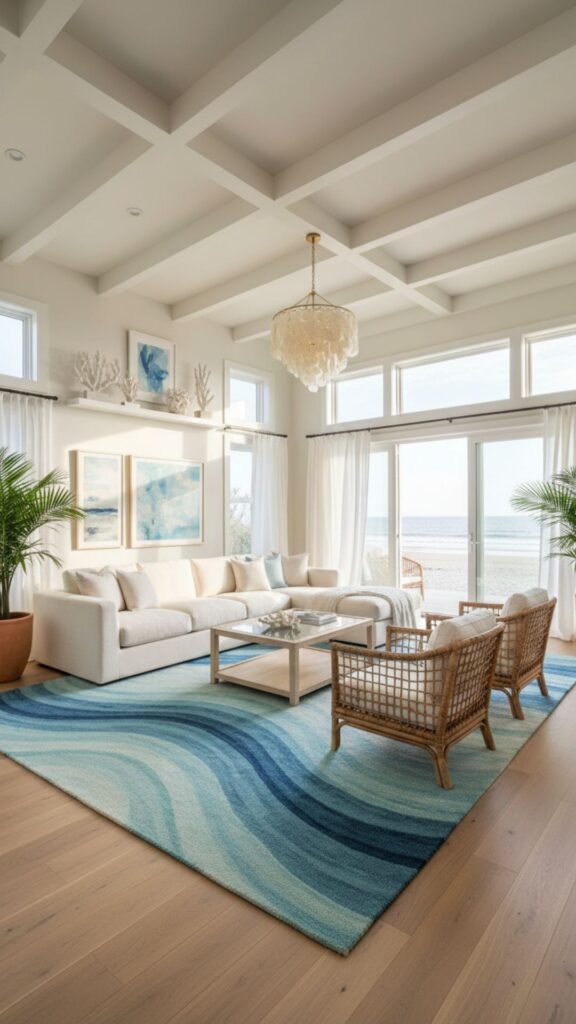
In open floor plans, rugs act as visual boundaries. You can carve out a distinct living room area from an adjacent dining space using a well-placed, oversized rug in soothing oceanic tones.
Steps To Achieve The Look:
- Pick an oversized rug with a subtle wave or stripe pattern.
- Align the edges of the rug with the natural walkways of your home.
- Ensure all living room furniture sits inside the rug’s borders to separate it from the dining area.
7. The Angled Placement
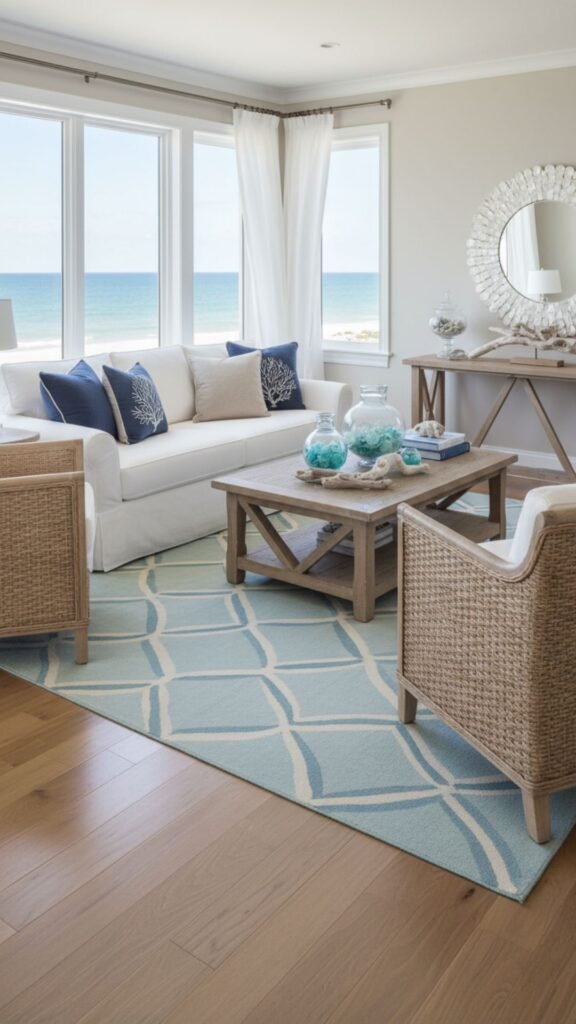
Adding a touch of playfulness to a room can enhance the relaxed coastal vibe. Placing your rug on an angle breaks up rigid lines and guides the eye dynamically through the space.
Steps To Achieve The Look:
- Use a square or rectangular rug with a simple geometric pattern.
- Rotate the rug 45 degrees relative to your sofa.
- Allow the corners of the rug to peek out uniquely under chairs and tables.
8. The Runner Transition
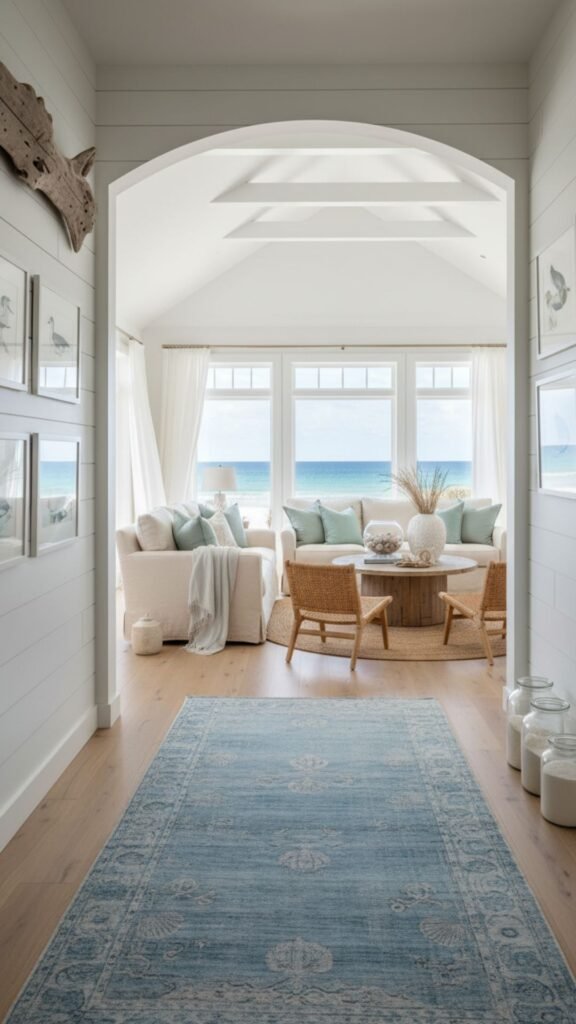
Walkways connecting the living room to other areas shouldn’t be neglected. A coastal-inspired runner eases the transition between rooms and carries the beachy aesthetic down the hall.
Steps To Achieve The Look:
- Find a long runner in a faded blue or seafoam green.
- Place it in the primary walkway leading right up to the edge of the living room seating area.
- Ensure the runner lies flat with a non-slip pad underneath.
9. Asymmetrical Placement
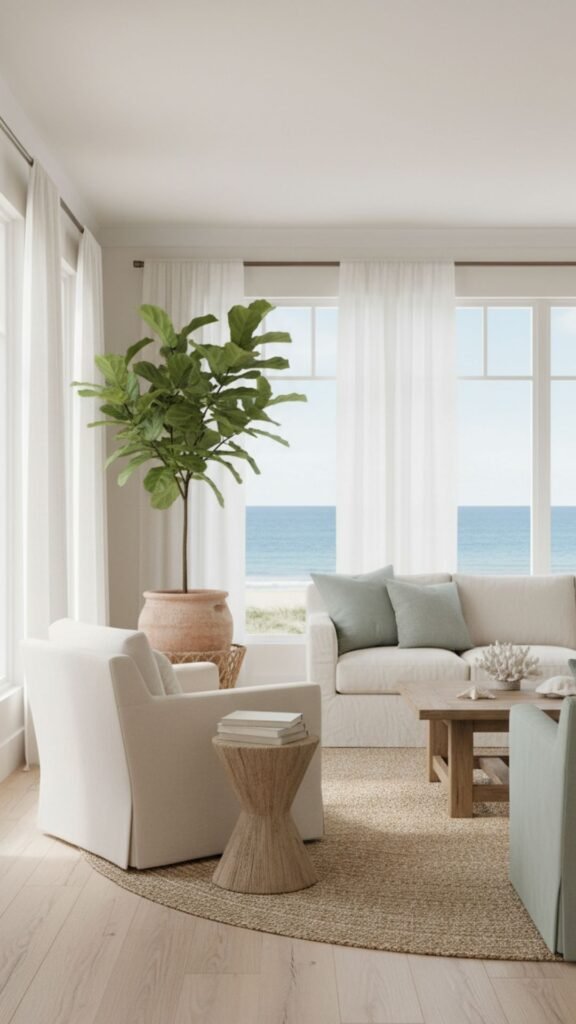
Perfection can sometimes feel too formal. An asymmetrical rug placement feels organic, lived-in, and effortlessly chic, perfectly matching the laid-back coastal lifestyle.
Steps To Achieve The Look:
- Position your rug slightly off-center from the sofa.
- Have only one side chair resting on the rug while the other sits completely off it.
- Balance the visual weight with a large potted indoor plant on the bare side of the floor.
10. Wall-to-Wall Illusion
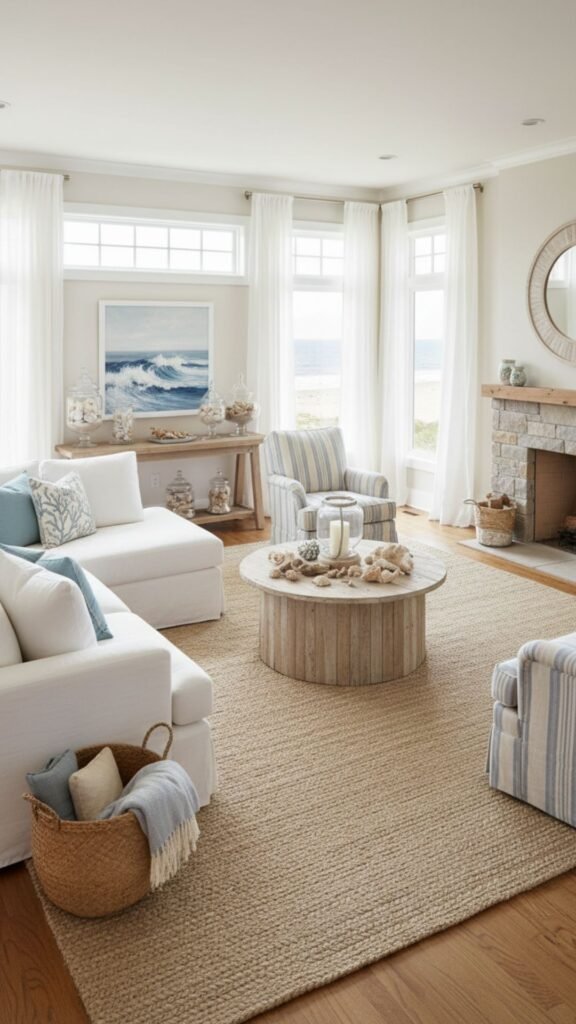
To maximize the feeling of expansive, sandy beaches, you can use a massive rug that nearly covers the entire room. This makes a small living room feel significantly larger and highly comfortable.
Steps To Achieve The Look:
- Measure your room and select a rug that leaves only two to three inches of bare floor around the perimeter.
- Lay down a flat-weave rug in a solid, light neutral color.
- Arrange all furniture completely on top of the expansive rug.
11. The Dual Rug Split
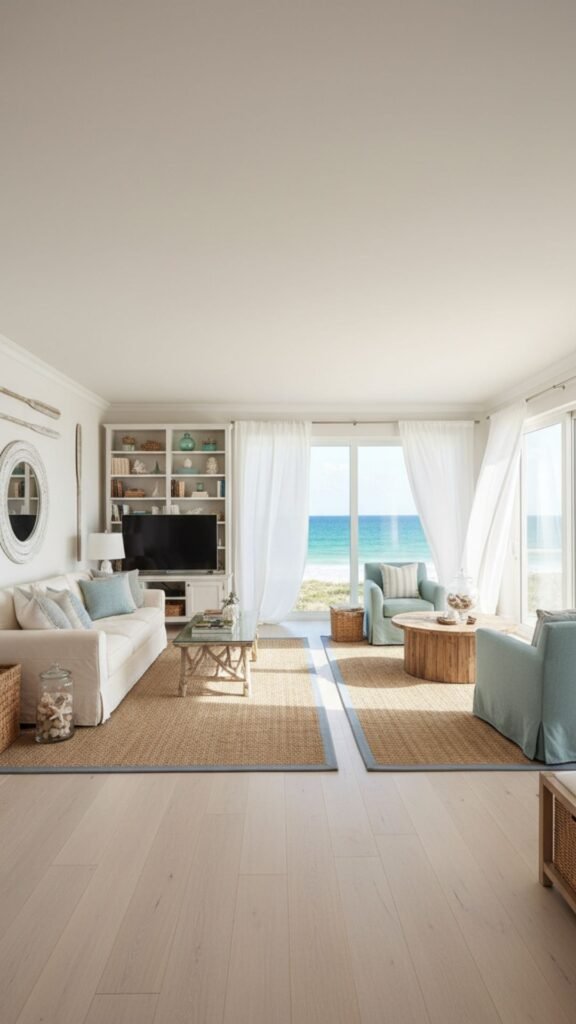
If you have a long, rectangular living room, one rug might not be enough. Using two identical or complementary rugs splits the room into two distinct, functional lounging areas.
Steps To Achieve The Look:
- Choose two medium-sized rugs in the same coastal color palette.
- Place one beneath the primary sofa and TV area.
- Place the second under a secondary seating arrangement or a game table at the other end of the room.
Bring the Beach Home
Designing a coastal living room is all about creating a space where you can truly unwind. Experimenting with these different rug placements allows you to control the flow and energy of your room. Grab a tape measure, try out a few of these setups, and transform your living space into the ultimate seaside retreat today.
Frequently Asked Questions (FAQs)
What materials work best for coastal rugs?
Natural fibers are the cornerstone of coastal design. Jute, sisal, seagrass, and soft cotton blends are excellent choices because they bring organic texture and durability to the room while mimicking the look of sand and driftwood.
Should all living room furniture sit on the rug?
It depends on the size of your room and your rug. Placing all furniture on the rug creates a highly unified look. However, the front-legs-only approach is perfectly acceptable and often makes a room feel larger and more open.
Can I layer rugs in a coastal living room?
Absolutely. Layering rugs is a fantastic way to add depth. A common coastal technique is layering a smaller, patterned cotton rug over a large, neutral jute rug to combine comfort with a beachy aesthetic.
What colors are best for a coastal rug?
Stick to a palette inspired by nature. Sandy beiges, crisp whites, oceanic blues, seafoam greens, and soft grays all work beautifully to evoke a calm, seaside atmosphere.
How do I clean natural fiber rugs?
Regular vacuuming is the best way to maintain natural fiber rugs like jute or sisal. For spills, blot the area immediately with a clean, dry cloth. Avoid using excessive water, as natural fibers can easily absorb moisture and become damaged.