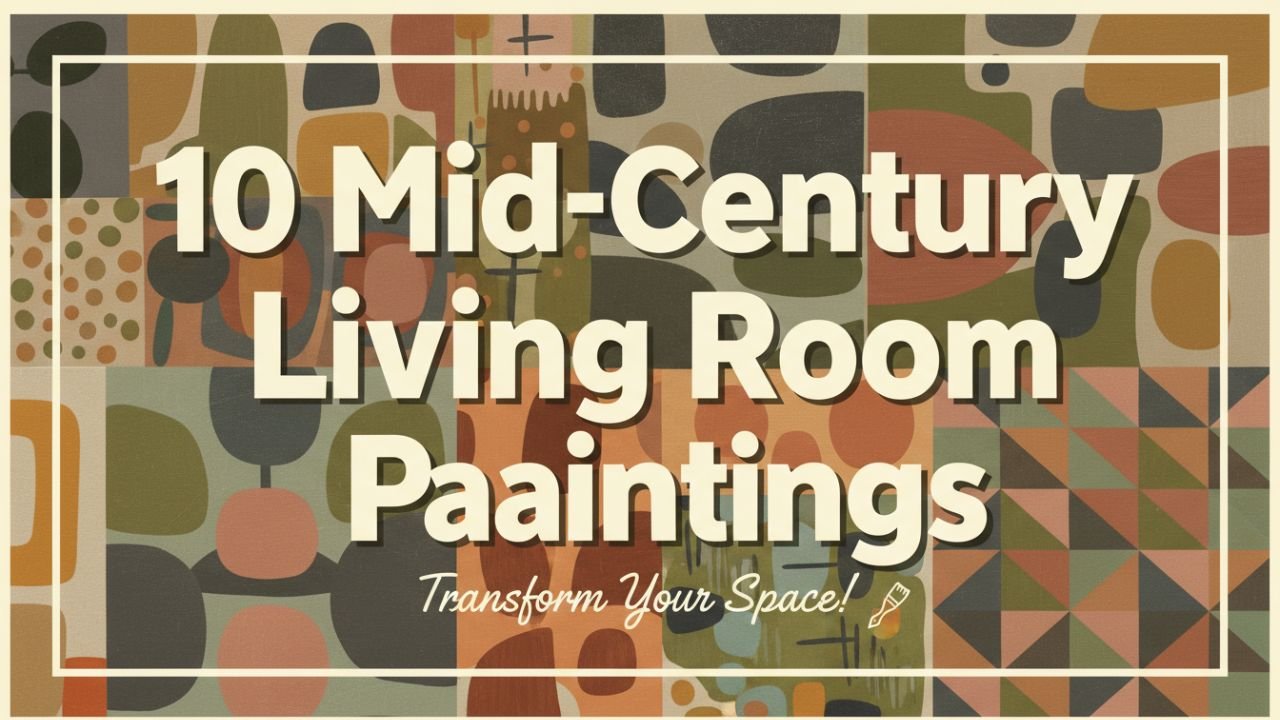
Mid-century modern design continues to captivate homeowners with its clean lines, organic curves, and undeniable cool factor. If your living space feels a bit dull, introducing vintage-inspired artwork is a brilliant way to inject character and warmth. The right canvas acts as an anchor, tying together your furniture and decor while establishing a distinct mood.
Finding the perfect retro art piece doesn’t require a time machine or a massive budget. By focusing on specific styles from the 1950s and 60s, you can easily recreate that classic aesthetic. Here are ten painting styles that will instantly give your living room those coveted mid-century vibes.
1. Geometric Abstraction
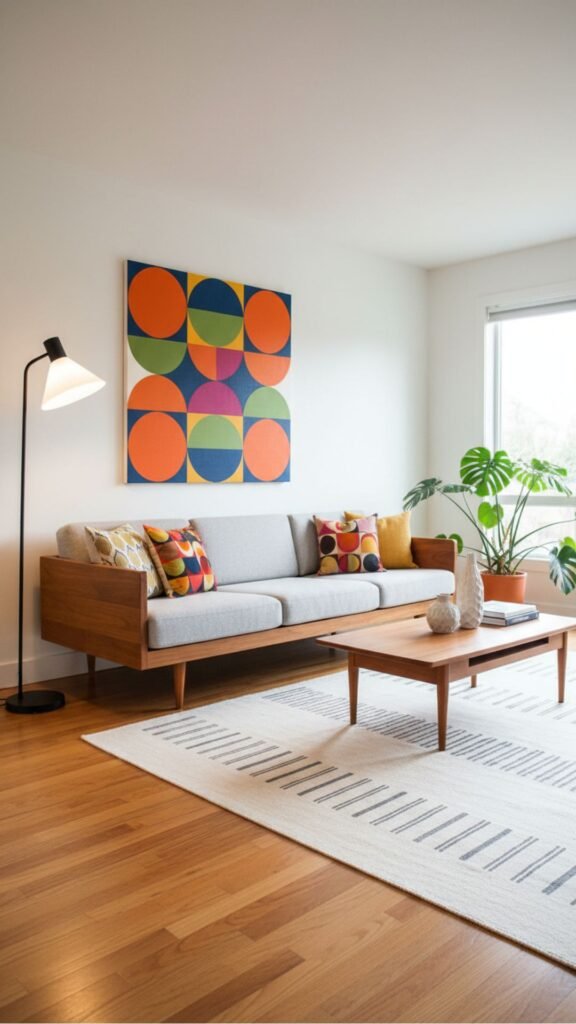
Geometric abstract paintings use bold shapes and intersecting lines to create visual interest without relying on realistic subjects. These pieces often feature overlapping circles, triangles, and asymmetrical forms that draw the eye. They perfectly complement the structured nature of mid-century furniture, adding a layer of sophisticated energy to the room.
Steps To Achieve The Look:
- Hang a large, primary-colored geometric canvas above a low-profile teak sofa.
- Pair the artwork with patterned throw pillows that echo the painting’s shapes.
- Keep surrounding wall decor minimal so the painting stands out.
2. Atomic Age Motifs
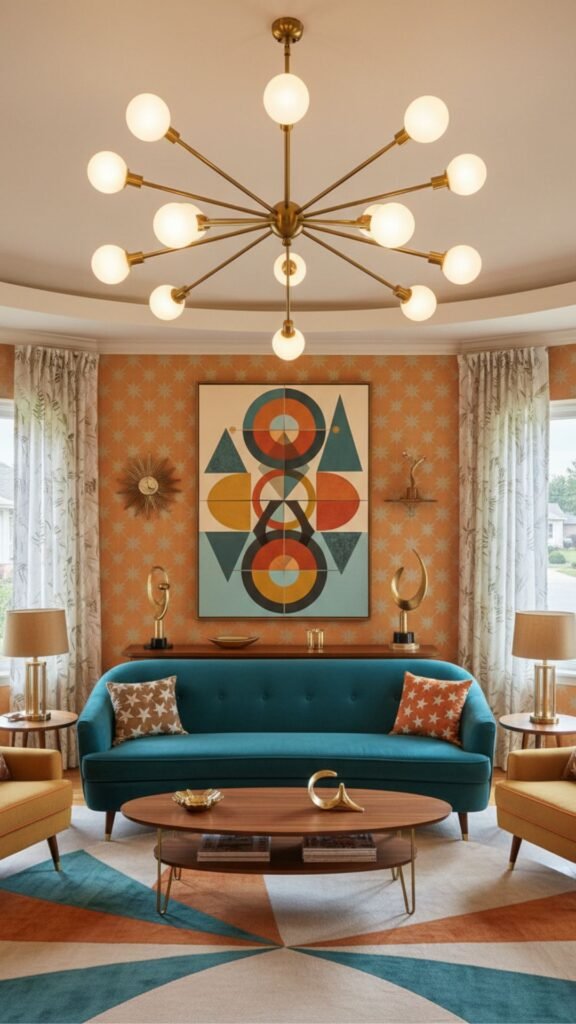
Inspired by the scientific advancements of the 1950s, atomic age art features boomerang shapes, starbursts, and molecular structures. These playful paintings bring a sense of optimism and futuristic charm to your home. The energetic patterns work beautifully in spaces that need a touch of whimsical flair.
Steps To Achieve The Look:
- Choose a painting with a dark background to make the bright atomic shapes pop.
- Display it near a sputnik chandelier or a classic starburst wall clock.
- Incorporate metallic accents in the room, like brass lamp bases or copper planters.
3. Earth-Toned Landscapes
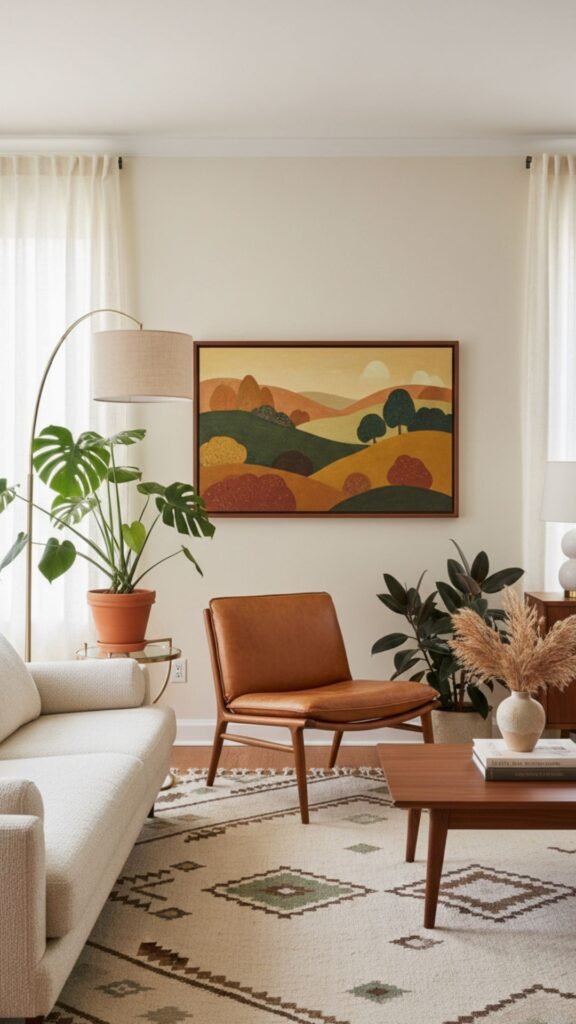
Mid-century design places a strong emphasis on bringing the outdoors inside. Earth-toned landscape paintings featuring stylized mountains, deserts, or forests capture this philosophy perfectly. Using warm ochres, deep greens, and burnt oranges, these artworks create a cozy, grounded atmosphere in your living area.
Steps To Achieve The Look:
- Frame the landscape painting in natural walnut or oak wood.
- Position the art near a large window or alongside indoor houseplants.
- Match the painting’s warm hues with a vintage leather lounge chair.
4. Minimalist Line Art
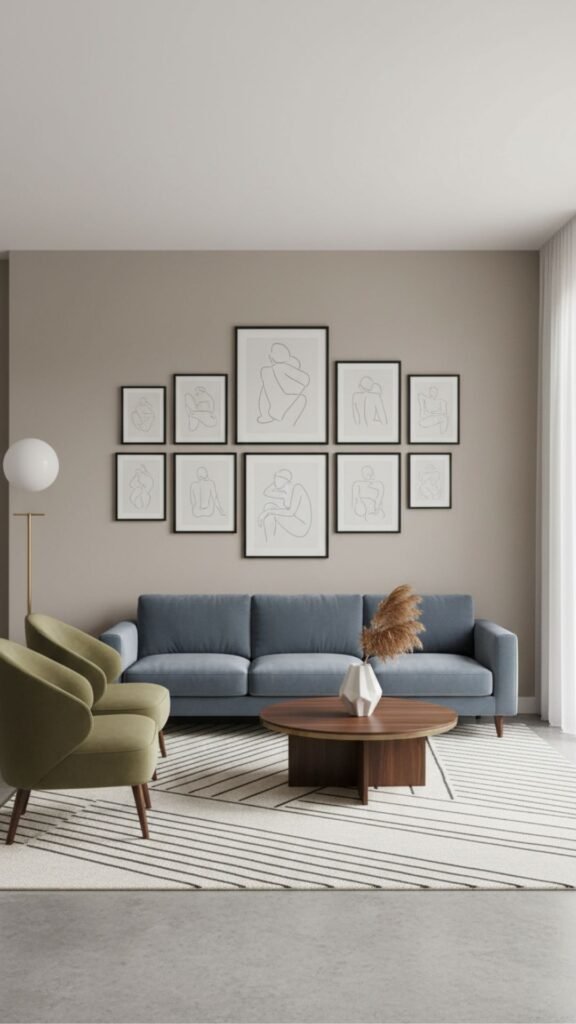
Sometimes, less truly is more. Minimalist line art relies on continuous, fluid strokes to depict faces, figures, or abstract forms on a neutral canvas. This style offers a quiet elegance that balances out heavier, darker mid-century furniture pieces without overwhelming the space.
Steps To Achieve The Look:
- Group three smaller line art pieces together to form a cohesive gallery wall.
- Use thin, matte black frames to highlight the delicate line work.
- Surround the display with plenty of negative wall space for a clean aesthetic.
5. Pop Art Portraits
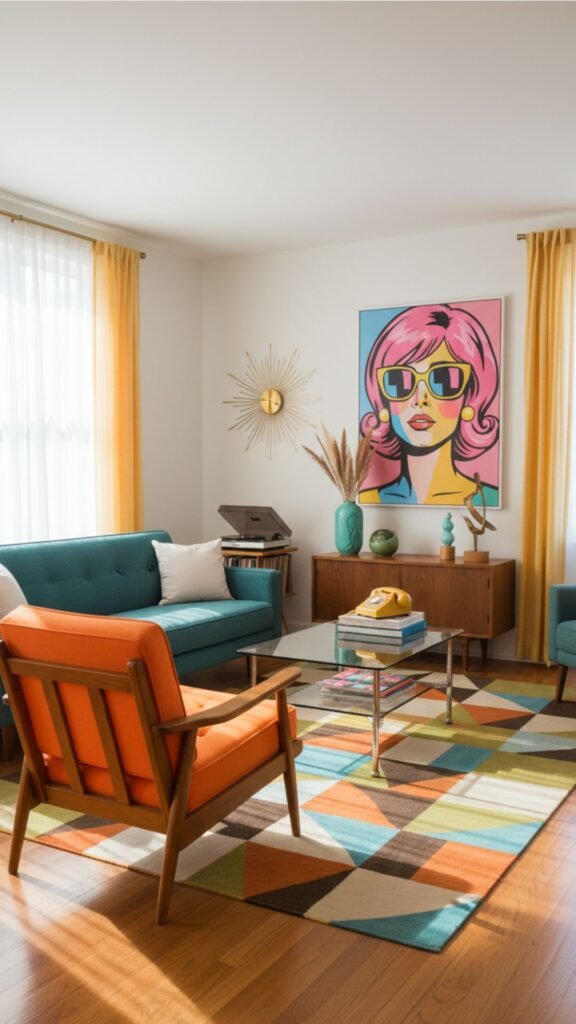
Emerging in the late 1950s, pop art brought bold, comic-book-style colors and commercial imagery into the fine art world. A vibrant pop art portrait adds an instant dose of retro fun and rebellious energy. It is an excellent choice for those who want their living room to feel lively and eclectic.
Steps To Achieve The Look:
- Make the pop art piece the focal point by hanging it on a stark white wall.
- Pull one bright color from the painting to use as an accent color for rugs or vases.
- Pair the art with molded plastic chairs or a colorful fiberglass coffee table.
6. Bauhaus-Inspired Color Blocks
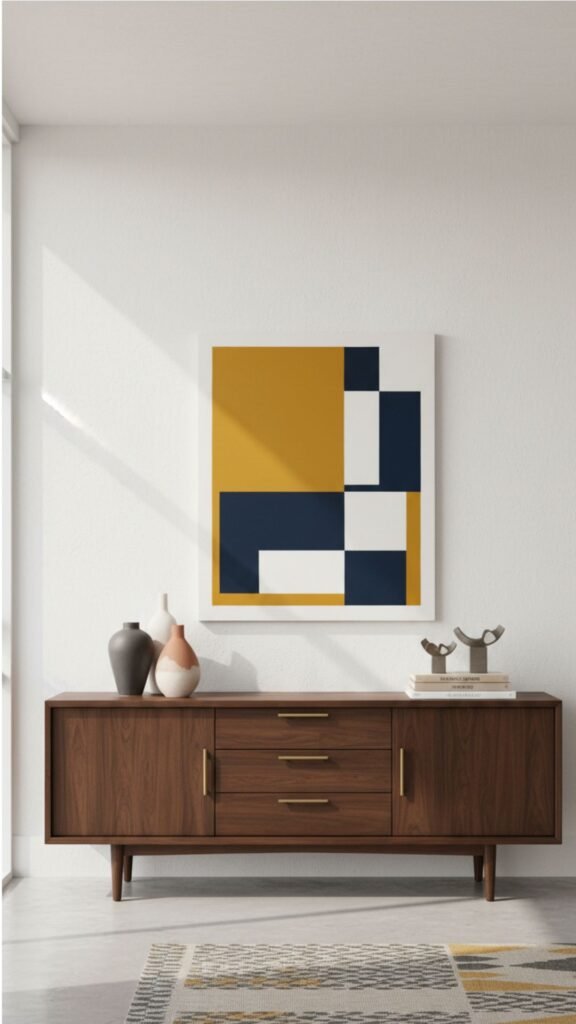
Bauhaus principles heavily influenced mid-century modernism, focusing on function, simplicity, and stark color contrasts. Color block paintings featuring solid squares and rectangles of contrasting hues offer a highly organized, intellectual aesthetic. They provide a striking visual rhythm that anchors a room.
Steps To Achieve The Look:
- Select a canvas with mustard yellow, navy blue, and stark white blocks.
- Center the artwork above a minimalist, straight-lined credenza.
- Decorate the credenza with simple, unadorned ceramic pottery.
7. Abstract Expressionist Splatters
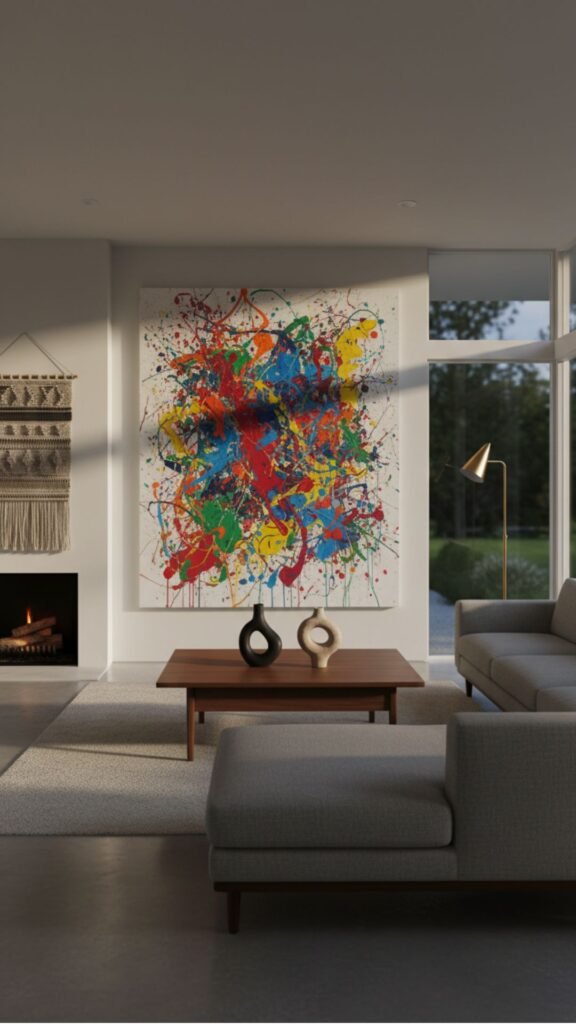
For a more chaotic and emotional vibe, abstract expressionist pieces use sweeping brushstrokes, drips, and splatters. Made famous by artists in the mid-20th century, this style adds movement and raw texture. It creates a brilliant contrast against the highly controlled lines of mid-century architecture.
Steps To Achieve The Look:
- Opt for a massive, oversized canvas to serve as a dramatic statement piece.
- Keep the room’s color palette muted so the vibrant splatters take center stage.
- Use strategic track lighting to highlight the texture of the thick paint.
8. Sunburst and Starburst Designs
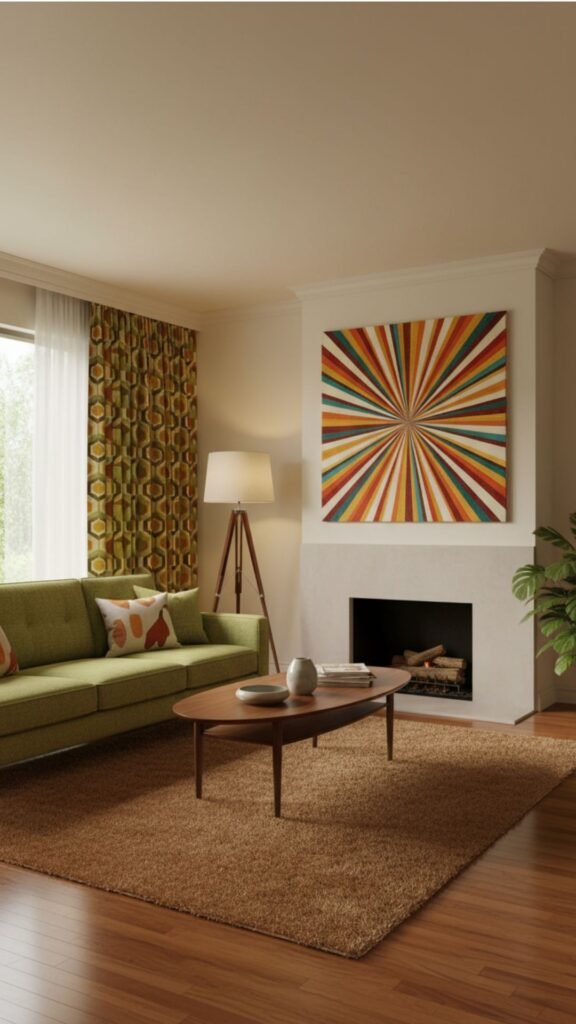
While often seen in clocks and mirrors, the starburst motif is equally stunning in painted form. These artworks feature radiating lines projecting from a central point, symbolizing mid-century optimism. A painted starburst canvas adds dynamic energy and acts as a brilliant visual anchor.
Steps To Achieve The Look:
- Mount the painting above the fireplace mantel to create a natural focal point.
- Complement the painting with geometric-patterned curtains.
- Add a plush flokati rug to soften the sharp lines of the starburst art.
9. Retro Botanical Prints
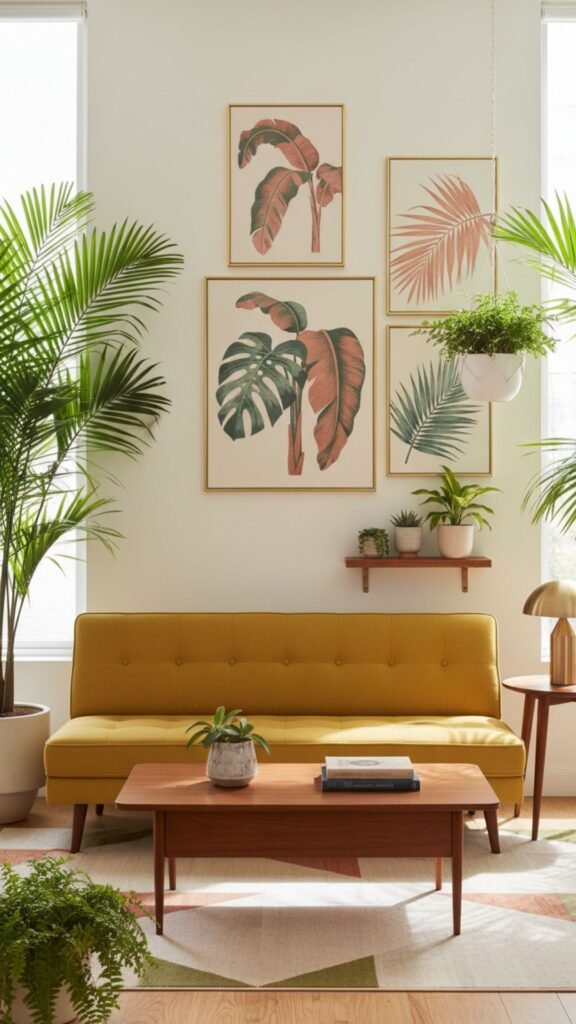
Retro botanical paintings offer a stylized, graphic take on nature, featuring oversized leaves, ferns, and tropical flora. These pieces usually employ a muted vintage color palette rather than realistic greens. They bring a soft, organic touch to rooms dominated by hard wooden furniture.
Steps To Achieve The Look:
- Hang a set of two matching botanical paintings side-by-side.
- Frame them in brass or gold to elevate the natural theme.
- Pair the art with genuine indoor palms or snake plants.
10. Mid-Century Cityscapes
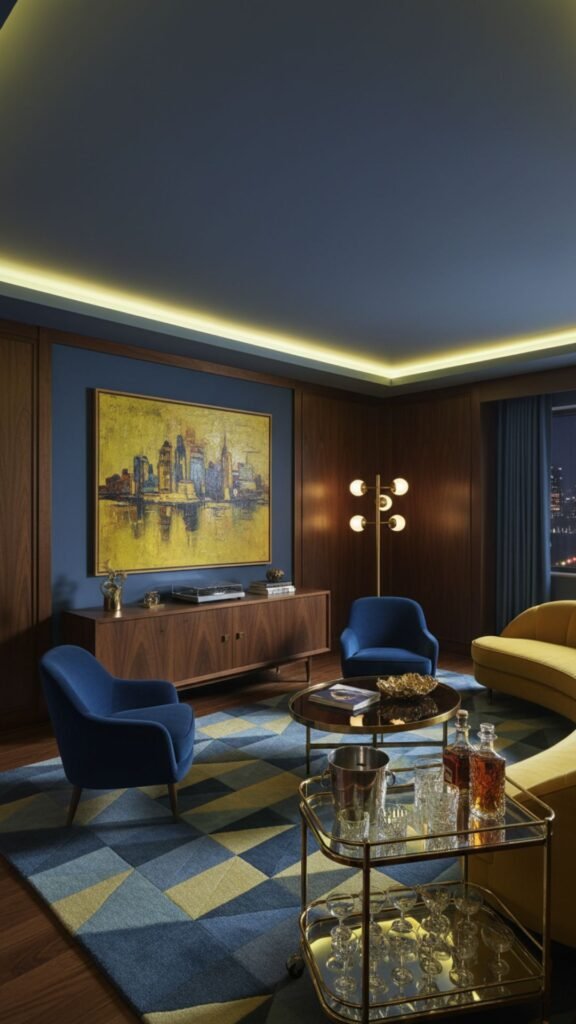
Stylized paintings of 1950s city skylines, bridges, and bustling streets capture the urban excitement of the era. These pieces often use a mix of twilight blues and glowing neon yellows to create a moody, jazz-club atmosphere. They are perfect for sophisticated evening entertaining spaces.
Steps To Achieve The Look:
- Display the cityscape above a retro-inspired bar cart.
- Use dim, warm ambient lighting in the room to enhance the painting’s mood.
- Complete the look with velvet seating and brass barware.
Bring Your Retro Vision to Life
Transforming your living room into a mid-century haven is all about selecting pieces that resonate with the era’s unique design philosophies. Whether you prefer the loud colors of pop art or the soothing tones of a stylized landscape, the right painting will completely elevate your space. Start hunting for that perfect canvas today, and watch your retro living room come to life.
Frequently Asked Questions (FAQs)
- What defines mid-century modern art?
Mid-century modern art is characterized by bold geometric shapes, clean lines, and a mix of traditional and non-traditional materials. It often embraces minimalism, abstract forms, and color palettes ranging from muted earth tones to vibrant primary colors. - Where can I find authentic mid-century paintings?
You can find authentic vintage pieces at estate sales, antique shops, specialized online marketplaces, and local flea markets. Alternatively, many contemporary artists create high-quality reproductions and new pieces inspired by the era. - Do I need vintage frames for my artwork?
While vintage frames add authenticity, they are not strictly necessary. Simple, thin frames in wood (like walnut or teak), matte black, or brushed brass perfectly complement the mid-century aesthetic without distracting from the art. - How large should a living room painting be?
A general rule is that the artwork should span about two-thirds to three-quarters of the width of the furniture it hangs above. Oversized art is highly encouraged in mid-century design to create a bold, uncluttered statement. - Can I mix mid-century art with contemporary furniture?
Absolutely. Mid-century modern art pairs beautifully with contemporary furniture due to their shared emphasis on clean lines and minimalism. Mixing eras can actually make your space feel more curated and intentionally designed.