
Your bedroom should feel like a retreat—calm, considered, and free from clutter. Japandi design delivers exactly that.

A blend of Japanese minimalism and Scandinavian simplicity, it’s a style built on clean lines, natural materials, and a muted palette that makes any room feel instantly peaceful. Here are 10 Japandi bedroom vibes to inspire your next refresh.
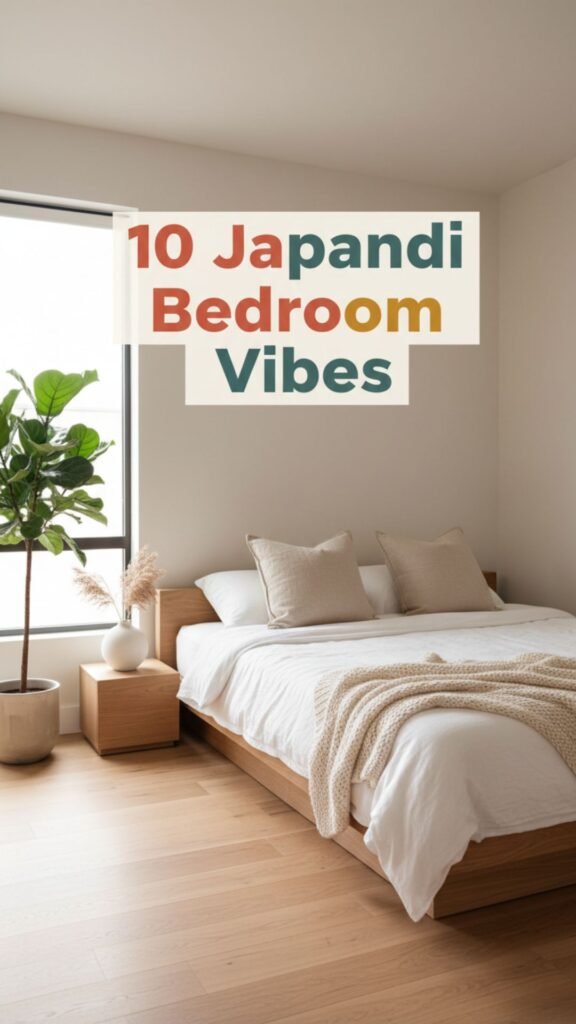
1. The Neutral Foundation
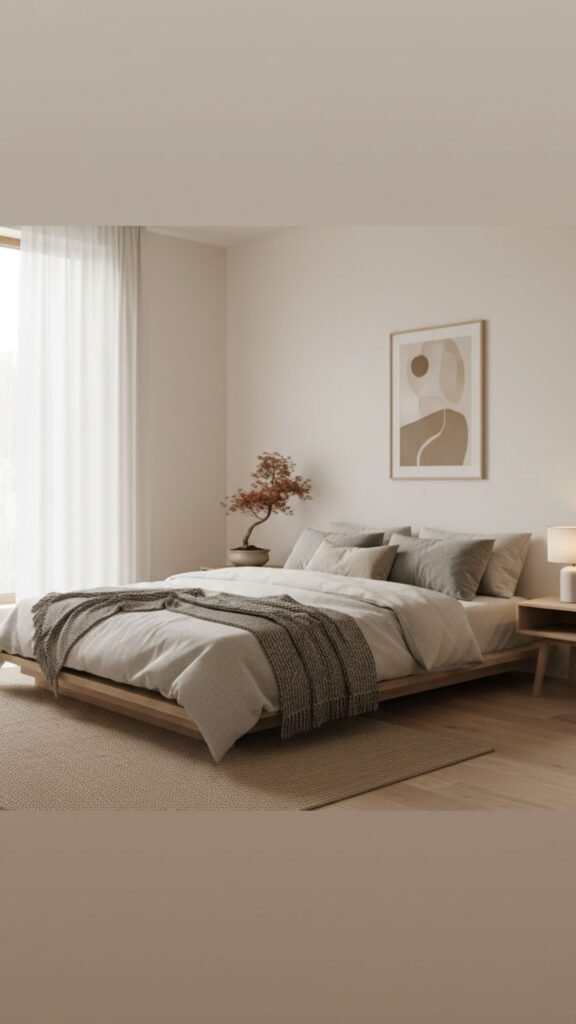
Japandi starts with the walls. Soft, warm neutrals—think warm white, sand, and greige—create a backdrop that feels grounded without being cold. These tones let natural light do the heavy lifting.
Steps To Achieve The Look:
- Paint walls in warm off-whites or earthy beige tones
- Avoid bright whites or cool grays, which can feel stark
- Layer in cream or linen bedding to reinforce the palette
2. The Low-Profile Bed Frame
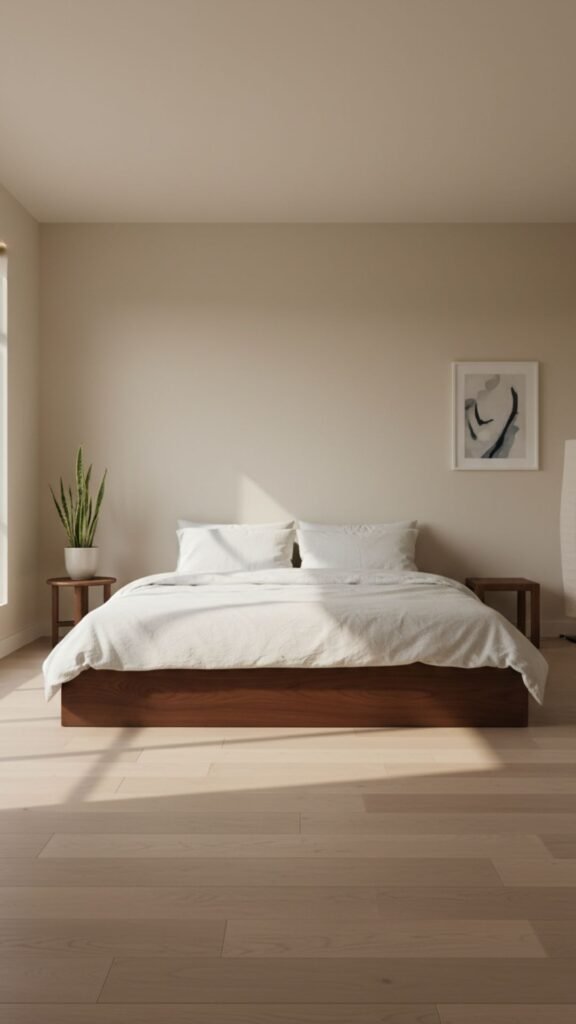
A low, platform-style bed frame is the cornerstone of any Japandi bedroom. It anchors the room, creates a sense of calm, and nods directly to Japanese sleeping traditions.
Steps To Achieve The Look:
- Choose a solid wood frame in oak, walnut, or ash
- Skip the headboard, or opt for a simple, upholstered panel
- Keep the bed low to the floor for that grounded, zen feel
3. The Wabi-Sabi Accent
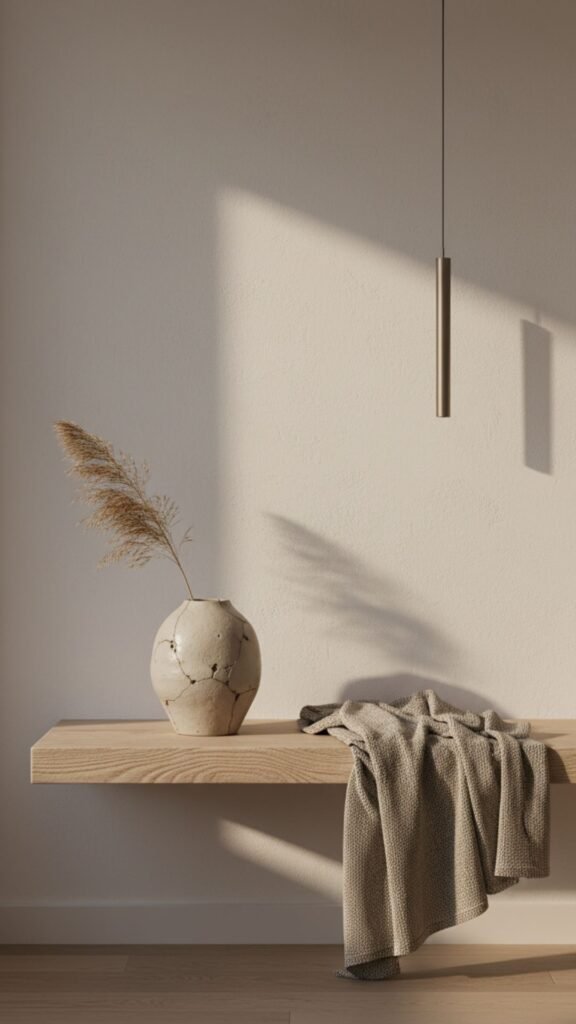
Wabi-sabi—the Japanese appreciation for imperfection—adds warmth and soul to a Japandi space. A cracked ceramic vase or an uneven linen throw keeps things from feeling too polished.
Steps To Achieve The Look:
- Display handmade or artisan ceramics on a bedside shelf
- Choose textiles with natural, irregular textures
- Embrace items that show age or slight imperfection
4. The Nature-Inspired Corner
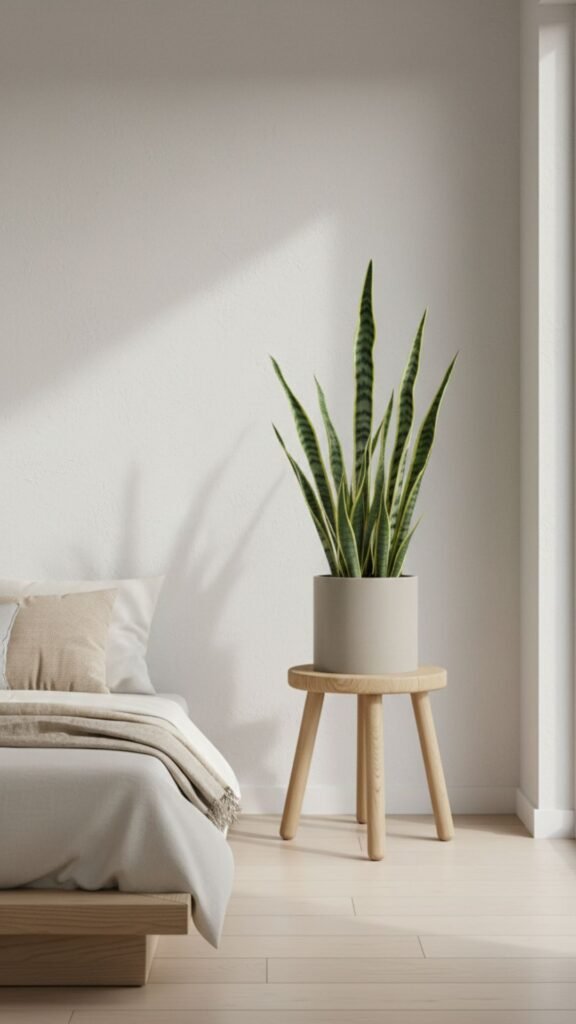
Bringing the outside in is central to both Japanese and Scandinavian design philosophies. A single plant or natural element can completely transform a corner.
Steps To Achieve The Look:
- Add a sculptural houseplant like a fiddle leaf fig or snake plant
- Use a wooden stool or pedestal as a plant stand
- Keep it to one or two plants—restraint is key
5. The Functional Minimalist Shelf
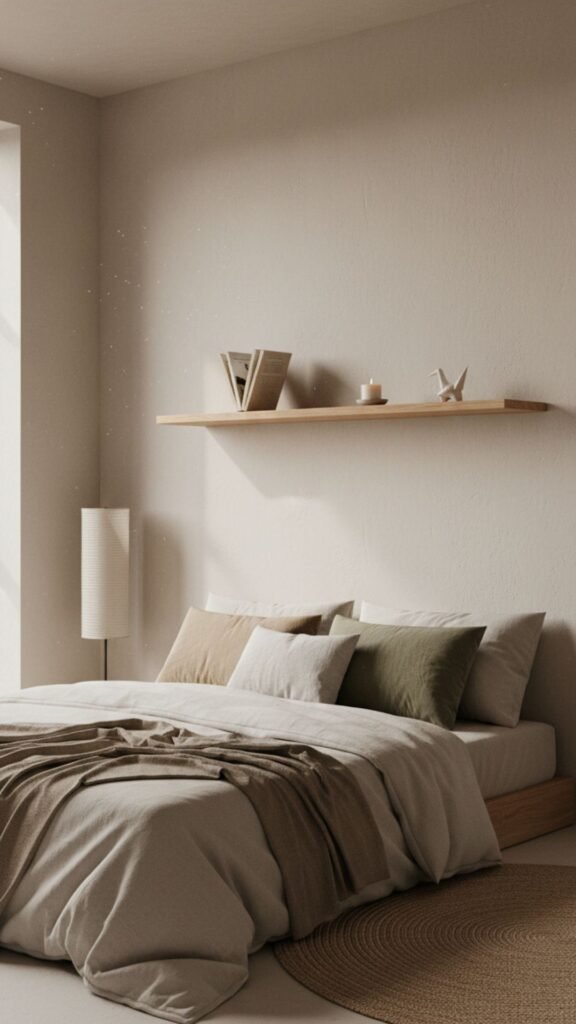
Japandi bedrooms are intentional about every surface. A simple floating shelf styled with just a few meaningful objects replaces the cluttered nightstand entirely.
Steps To Achieve The Look:
- Mount a thin wooden shelf at bedside height
- Style with one book, one candle, and one small object
- Leave negative space—empty shelf is part of the design
6. The Cozy Hygge Nook
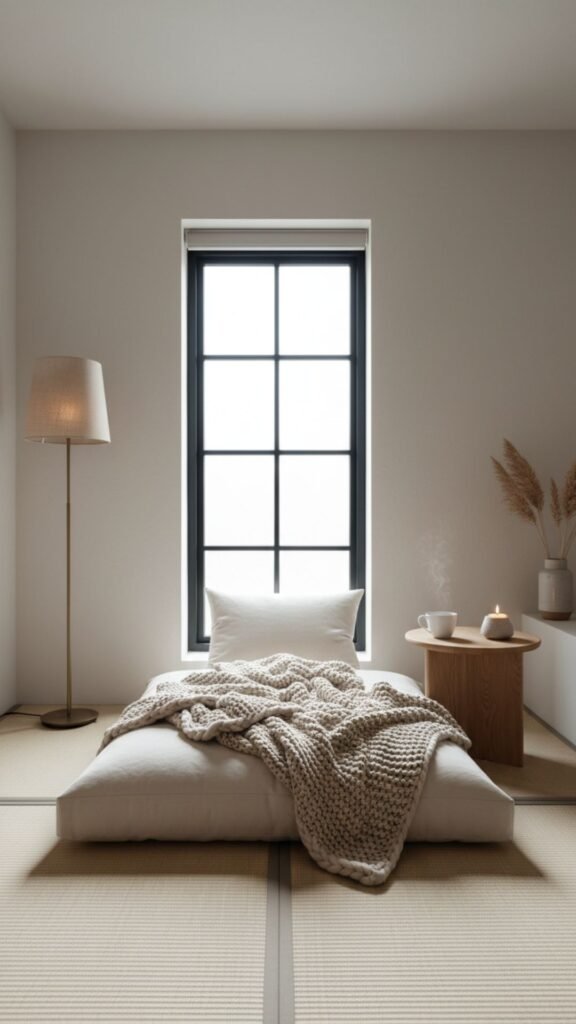
Hygge, the Scandinavian concept of comfort and coziness, brings softness to the minimalist Japandi aesthetic. A reading nook keeps things functional and inviting.
Steps To Achieve The Look:
- Place a low chair or floor cushion near natural light
- Layer a chunky knit throw over the seat
- Add a small side table for a warm-toned candle or cup of tea
7. The Muted Textile Layers

Texture is how Japandi bedrooms stay warm without adding color. Layering muted textiles in similar tones creates depth and visual interest without visual noise.
Steps To Achieve The Look:
- Mix linen, cotton, and wool in the same tonal family
- Use a textured duvet cover paired with a lightweight throw
- Choose pillowcases with subtle weave detail over prints
8. The Warm Wood Detail
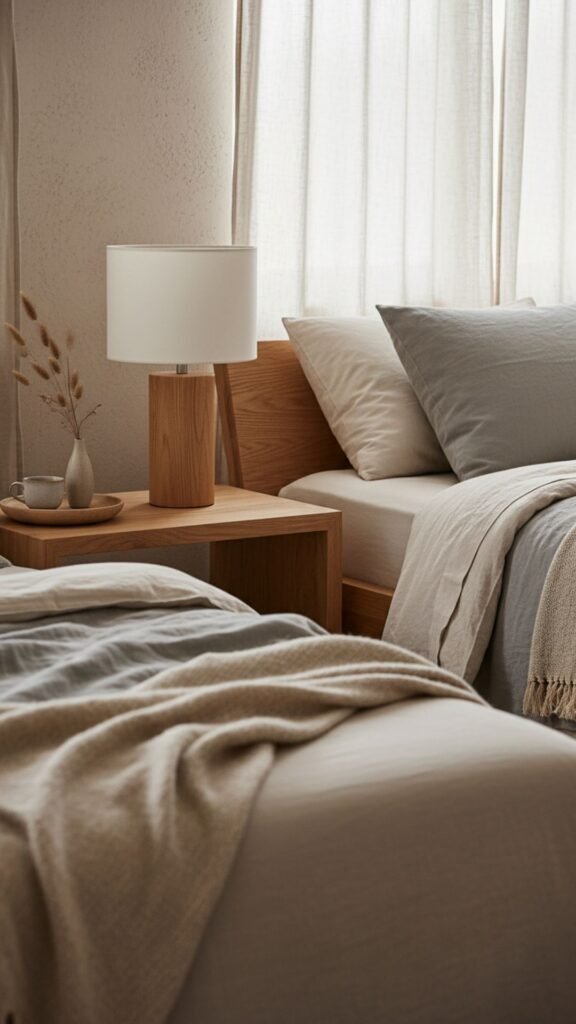
Natural wood is the material language of Japandi design. Used sparingly, it adds organic warmth and a tactile quality that no synthetic finish can replicate.
Steps To Achieve The Look:
- Introduce wood through a bedside table, lamp base, or tray
- Stick to one wood tone throughout the room for cohesion
- Opt for matte finishes over glossy lacquers
9. The Soft Ambient Lighting
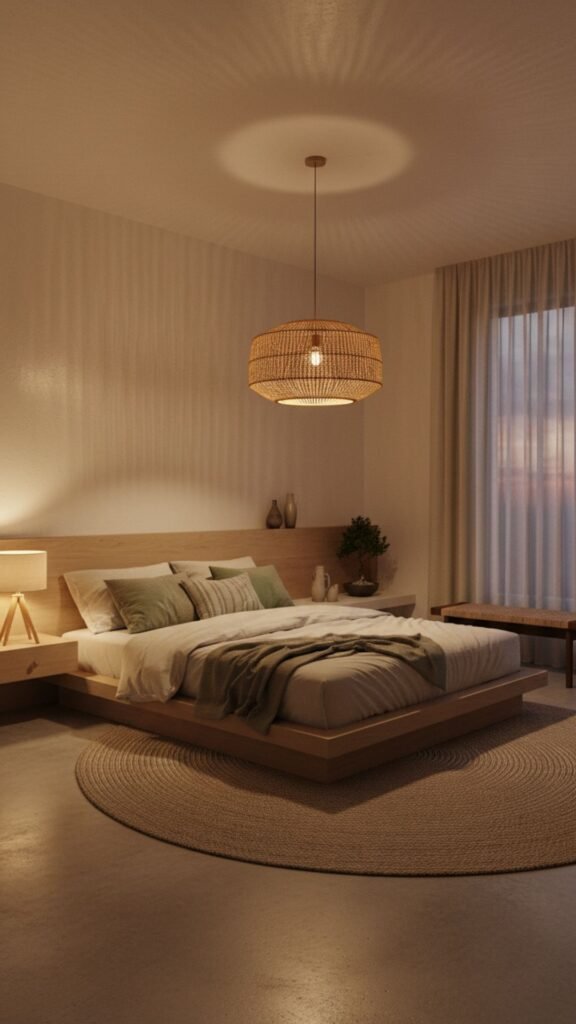
Harsh overhead lighting breaks the Japandi spell instantly. Warm, diffused light sources create the intimate, restful atmosphere the style is known for.
Steps To Achieve The Look:
- Use paper lanterns, rattan pendants, or linen shades
- Add a dimmable bedside lamp for layered evening light
- Swap cool-toned bulbs for warm white (2700K–3000K)
10. The Decluttered Dresser
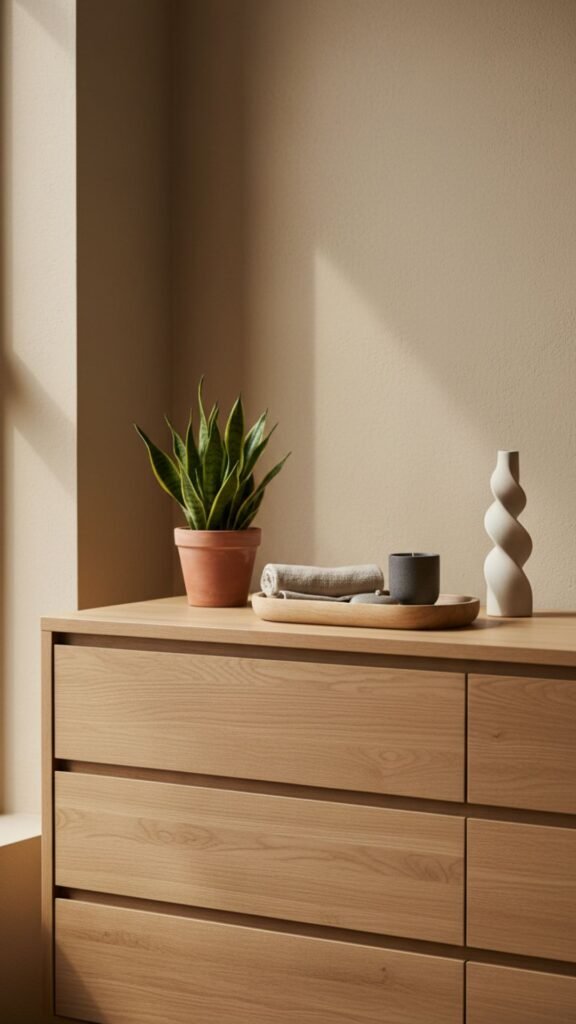
A dresser in a Japandi bedroom is styled, not stacked. The surface holds only what’s intentional—nothing more.
Steps To Achieve The Look:
- Clear everything off and start from scratch
- Style with one tray, one object, and one small plant
- Store everything else inside drawers or lidded boxes
Your Japandi Bedroom Starts With One Change
You don’t need a full renovation to bring Japandi into your bedroom. Start with one element—a low bed frame, a warm neutral wall, or a single ceramic piece—and build from there. The style rewards patience and restraint, and the result is a space that genuinely feels like somewhere you want to be.
Frequently Asked Questions (FAQs)
1. What is Japandi style?
Japandi is a design aesthetic that blends Japanese minimalism with Scandinavian simplicity. It prioritizes natural materials, neutral tones, clean lines, and functional beauty.
2. What colors work best in a Japandi bedroom?
Warm neutrals are the go-to choice—think sand, warm white, greige, and soft taupe. These tones create a calm, cohesive backdrop without feeling cold or stark.
3. What materials are most used in Japandi design?
Natural materials dominate: wood (especially oak and walnut), linen, cotton, wool, stone, and ceramic. The focus is always on texture and authenticity over synthetic finishes.
4. Is Japandi design expensive to achieve?
Not necessarily. The style favors fewer, higher-quality pieces over quantity. Investing in one or two key items—like a solid wood bed frame or quality linen bedding—can transform a room without a large budget.
5. How is Japandi different from pure minimalism?
Pure minimalism can feel cold and impersonal. Japandi adds warmth through natural materials, tactile textures, and the wabi-sabi principle of embracing imperfection, making spaces feel lived-in and human.