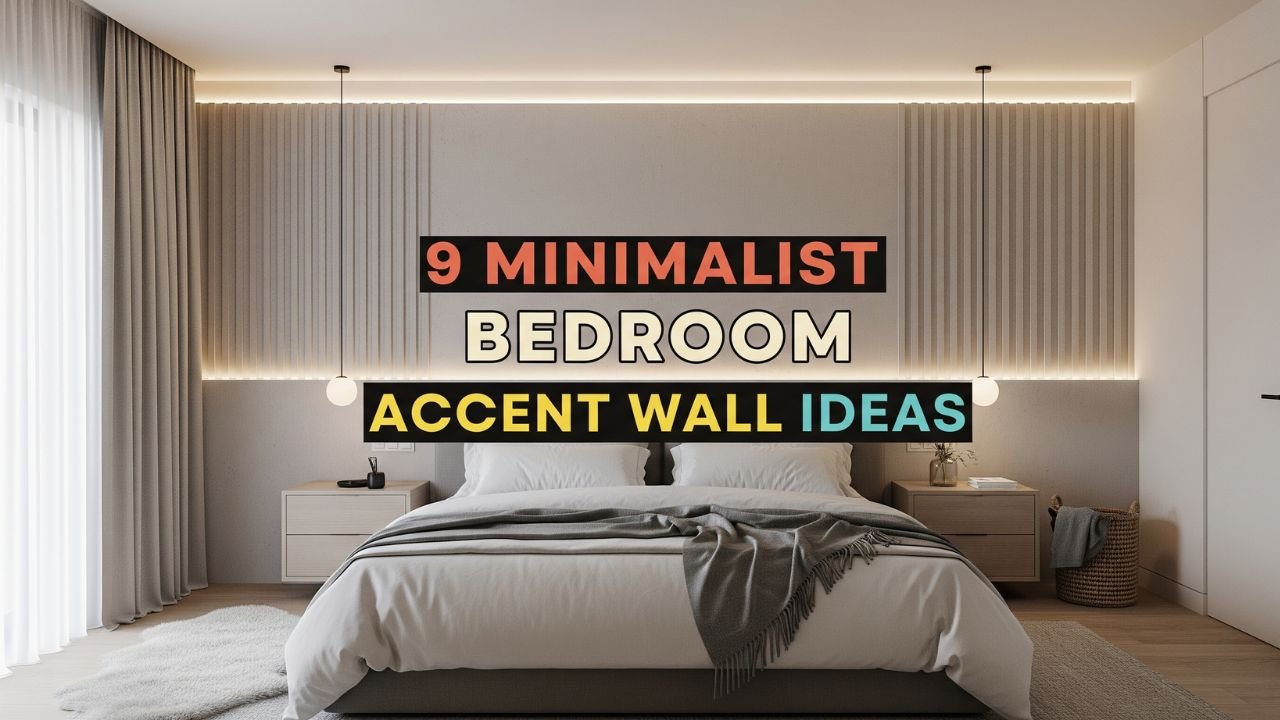
Creating a luxurious bedroom doesn’t require gold leaf ceilings or heavy velvet drapes. In fact, true luxury often lies in simplicity. A minimalist approach allows your space to breathe, making relaxation inevitable.
But minimalism doesn’t have to mean boring white walls. An accent wall is the perfect vehicle to introduce texture, depth, and sophistication without overwhelming the senses.
If you are looking to elevate your sanctuary, here are nine minimalist accent wall ideas that prove less really is more.

Table of Contents

9 Minimalist Bedroom Accent Wall Ideas
1. Textured Limewash
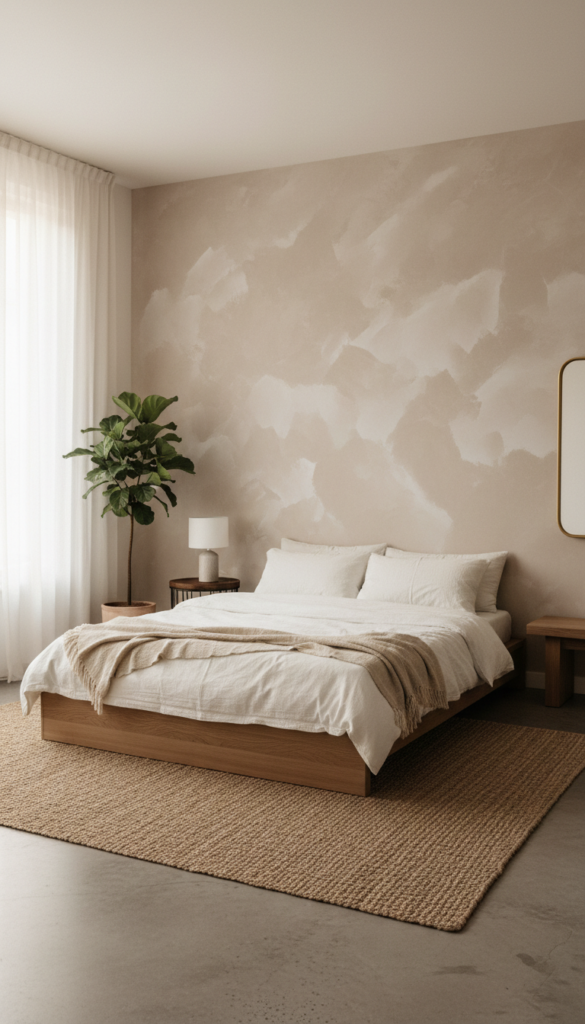
Limewash paint creates a cloudy, mottled effect that adds depth and movement to a flat wall. It feels organic and old-world yet perfectly modern. The chalky matte finish absorbs light beautifully, creating a soft, serene atmosphere ideal for sleeping.
How to achieve the look:
- Purchase a high-quality limewash paint in a neutral tone like beige, greige, or soft terracotta.
- Apply a primer specifically designed for limewash to ensure proper adhesion.
- Use a large block brush to apply the paint in cross-hatch strokes (X-patterns) to create that signature cloudy texture.
2. Vertical Wood Slats
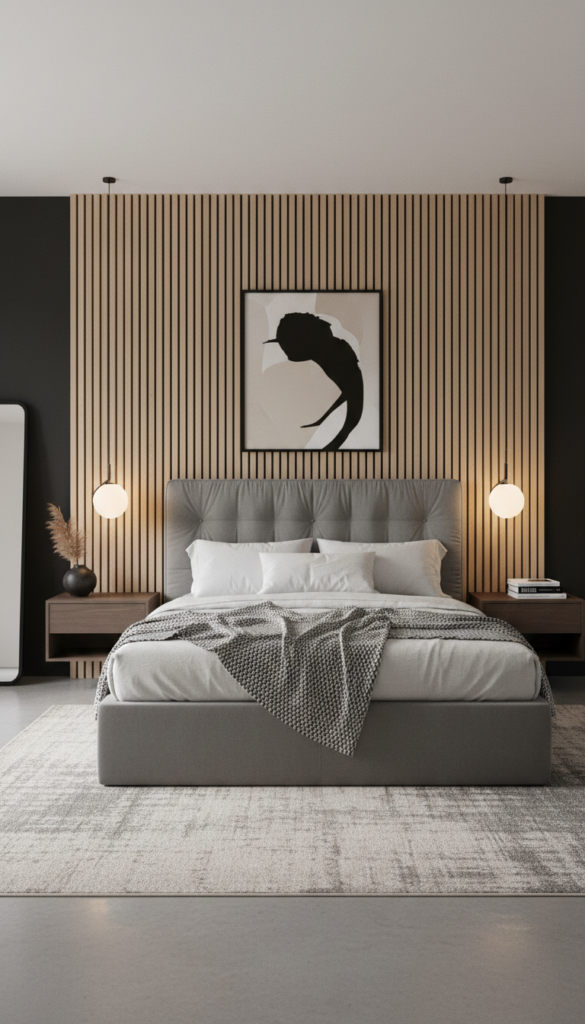
Wood slats bring warmth and architectural interest to a room. When spaced evenly, the vertical lines draw the eye upward, making ceilings appear higher. This look balances natural materials with clean, rigid geometry.
How to achieve the look:
- Measure your wall and cut thin wooden laths or purchase pre-made acoustic slat panels.
- Stain the wood in a light oak or walnut finish for a natural look, or paint them black for drama.
- Mount them vertically with uniform spacing (using a spacer block helps) directly onto a painted dark background for contrast.
3. Tone-on-Tone Board and Batten
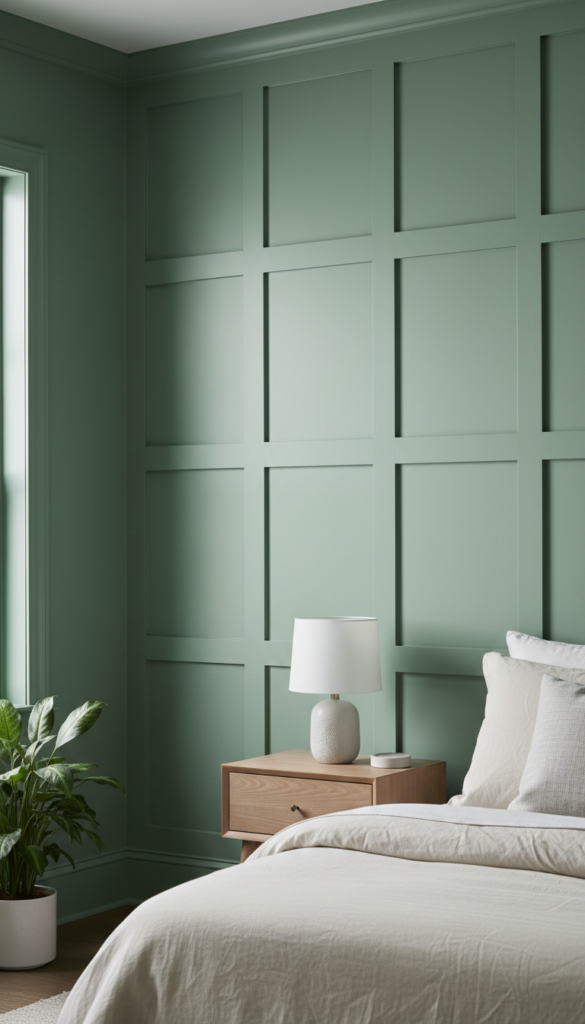
Board and batten is a classic treatment, but painting it the exact same color as the rest of the wall creates a subtle, monochromatic effect. It adds shadow and dimension without breaking the color palette.
How to achieve the look:
- Install vertical battens (wood strips) at regular intervals along the wall.
- Add a horizontal top rail if desired, or run them floor to ceiling.
- Caulk all seams and nail holes for a seamless finish.
- Paint the entire wall, including the trim, in a single matte color like sage green or charcoal.
4. The Half-Wall Headboard

Instead of buying a headboard, create one with paint or paneling. A horizontal line running across the lower third or half of the wall grounds the bed and visually widens the room.
How to achieve the look:
- Measure the height of your bed frame and pillows; mark a line slightly above this point.
- Use laser level tape to ensure a perfectly straight line across the wall.
- Paint the lower section a grounding color (like navy or forest green) and leave the top section white or neutral.
5. Subtle Concrete Finish
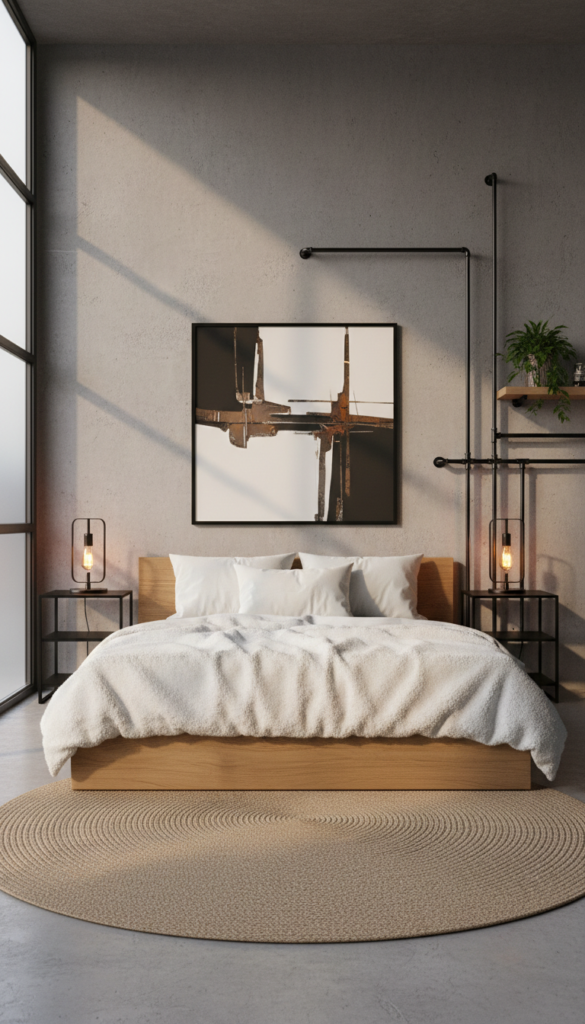
Industrial meets cozy. A faux concrete wall adds an edgy, urban feel but remains neutral enough to be calming. The cool gray tones pair exceptionally well with warm bedding and wood furniture.
How to achieve the look:
- Use a concrete-effect paint or a specialized plaster overlay.
- Apply the mixture with a trowel rather than a roller.
- Smooth it out to your desired texture—leaving a few trowel marks adds to the authentic concrete aesthetic.
6. Oversized Geometric Molding

Move away from busy wainscoting and opt for large-scale geometric shapes. Think large squares or rectangles created with thin trim. The scale makes it feel modern and less “farmhouse.”
How to achieve the look:
- Plan your grid on paper first to ensure symmetry.
- Install thin molding strips to create large rectangular boxes on the wall.
- Paint the molding and the wall the same color to keep the focus on the shadows rather than the trim itself.
7. Soft Upholstered Panels

For the ultimate hotel-like luxury, cover a section of the wall in fabric. This softens the acoustics of the room and creates a cozy, tactile focal point behind the bed.
How to achieve the look:
- Cut plywood panels to your desired size (usually tall, vertical rectangles).
- Wrap each panel in batting and a high-quality linen or velvet fabric; staple the fabric to the back.
- Mount the panels to the wall using Z-clips or a french cleat system.
8. The Arched Niche

Curves soften the harsh lines of a square room. Painting a simple arch shape on the wall behind the bed—or framing a literal arch—creates a gentle, encompassing focal point.
How to achieve the look:
- Tie a string to a pencil and pin the other end to the wall to draw a perfect arch.
- Use angled brushes to carefully paint the outline, then fill in the center with a contrasting (but muted) color.
- Alternatively, use flexible trim molding to create a 3D arch frame.
9. Wallpaper with Micro-Pattern

Minimalist doesn’t mean pattern-free. A wallpaper with a micro-texture or a barely-there pattern (like a linen weave or faint pinstripe) reads as a solid color from a distance but offers rich detail up close.
How to achieve the look:
- Select a “paste-the-wall” wallpaper for easier installation.
- Choose a design where the pattern color is only a shade or two different from the background color.
- Align seams carefully to maintain the illusion of a continuous texture.
Refining Your Sanctuary
A bedroom should be a retreat from the noise of the outside world. By focusing on texture, subtle color shifts, and clean lines, these accent walls provide visual interest without the clutter. Whether you choose the organic warmth of wood slats or the quiet sophistication of limewash, the result is a space that feels intentionally designed and effortlessly luxurious.
Frequently Asked Questions (FAQs)
1. Should an accent wall be darker or lighter than the other walls?
Generally, a darker accent wall anchors the room and creates a focal point, making it feel cozier. However, a lighter, textured wall (like white brick or pale wood) can make a small room feel airier while still adding interest.
2. Can I put an accent wall in a small bedroom?
Absolutely. In a small room, avoid high-contrast busy patterns which can feel closing. Stick to texture (like shiplap or limewash) or a solid color that is just a few shades deeper than the other walls to add depth without shrinking the space.
3. Which wall should be the accent wall?
In a bedroom, the wall behind the headboard is the natural choice. It is usually the first thing you see when you walk in and anchors the bed as the primary piece of furniture.
4. Is shiplap still in style for minimalist bedrooms?
Yes, but the application has shifted. Instead of the rustic “farmhouse” white horizontal boards, modern minimalism often uses vertical shiplap or paints the shiplap in moody, dark colors for a sleeker, contemporary look.
5. How do I choose the right color for a minimalist accent wall?
Look to nature. Earth tones—terracotta, sage, stone gray, sand, and deep navy—always work well in minimalist designs. The goal is to induce calm, so avoid overly bright or neon hues.