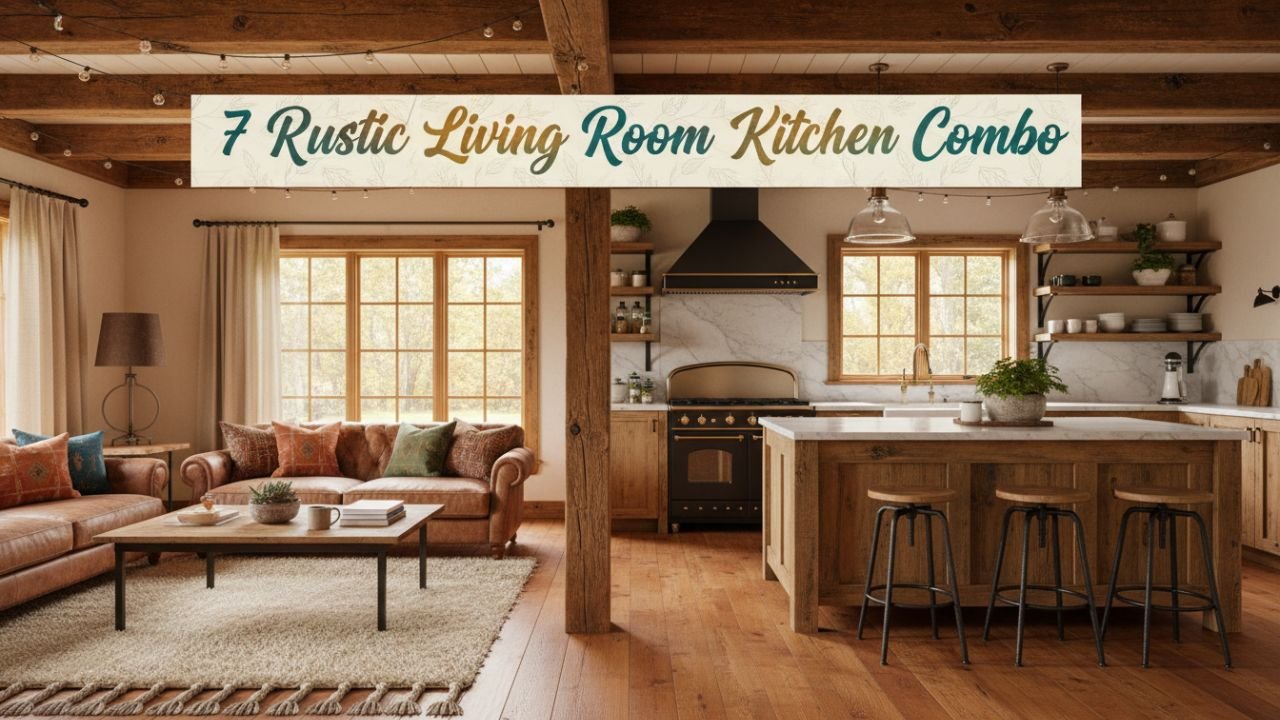
Combining your cooking and lounging areas creates a natural gathering hub for family and friends. A rustic aesthetic brings undeniable comfort to an open floor plan.
By incorporating natural elements and earthy materials, you can establish a seamless transition between the living room and kitchen. Here are seven design ideas to infuse your open-concept space with cozy, rustic charm.
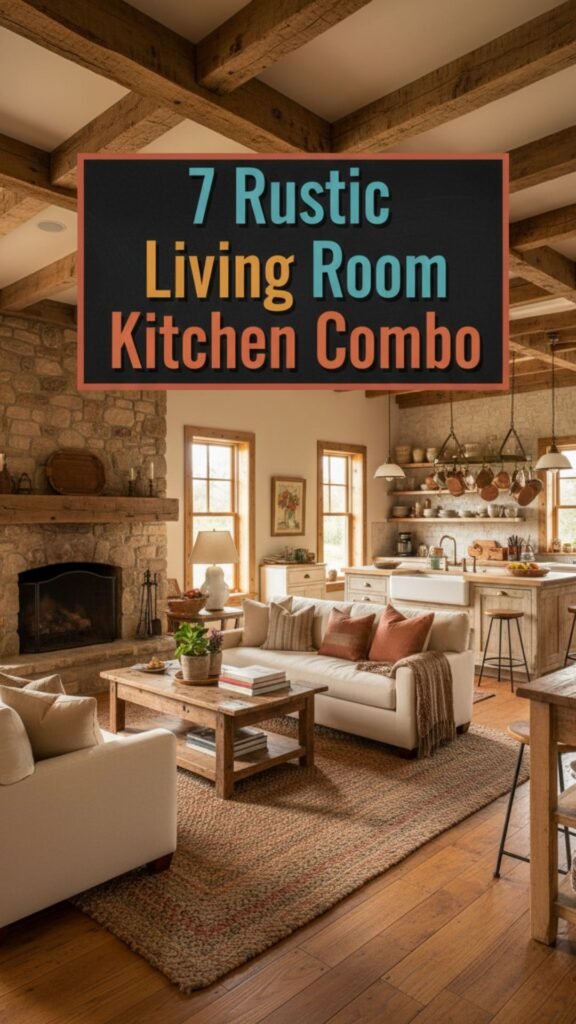
1. Exposed Wooden Beams and Stone Accents
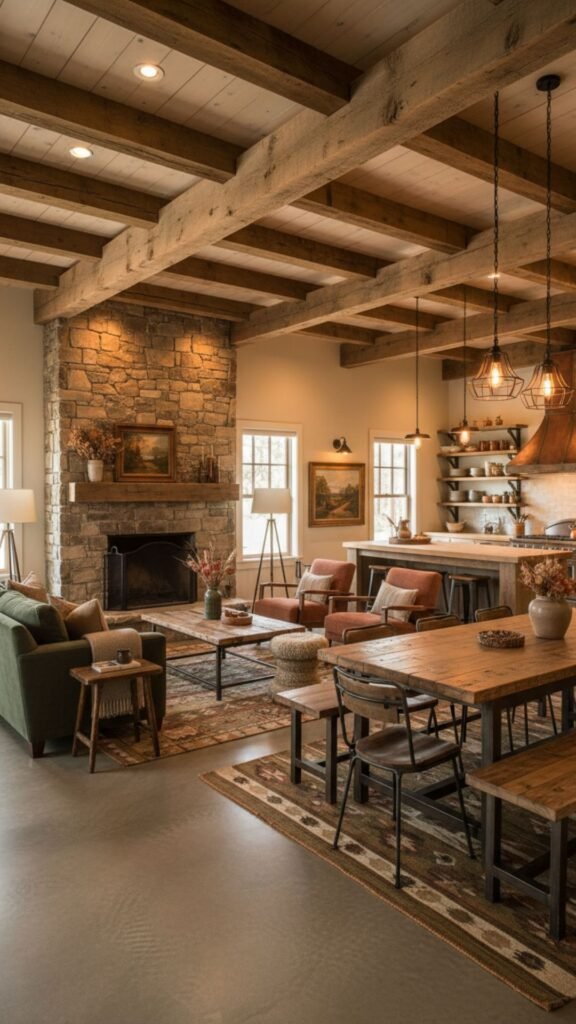
Drawing the eye upward with exposed structural beams adds instant architectural interest. Pairing these overhead timber details with a natural stone fireplace anchors the room in rugged beauty. This combination naturally bridges the cooking and seating zones.
Steps To Achieve The Look:
- Install faux or reclaimed wood beams across the shared ceiling.
- Add a stacked stone veneer to your kitchen island or living room fireplace.
- Choose matte finish sealants to keep the natural look of the wood and stone.
2. Reclaimed Wood Cabinetry and Leather Seating
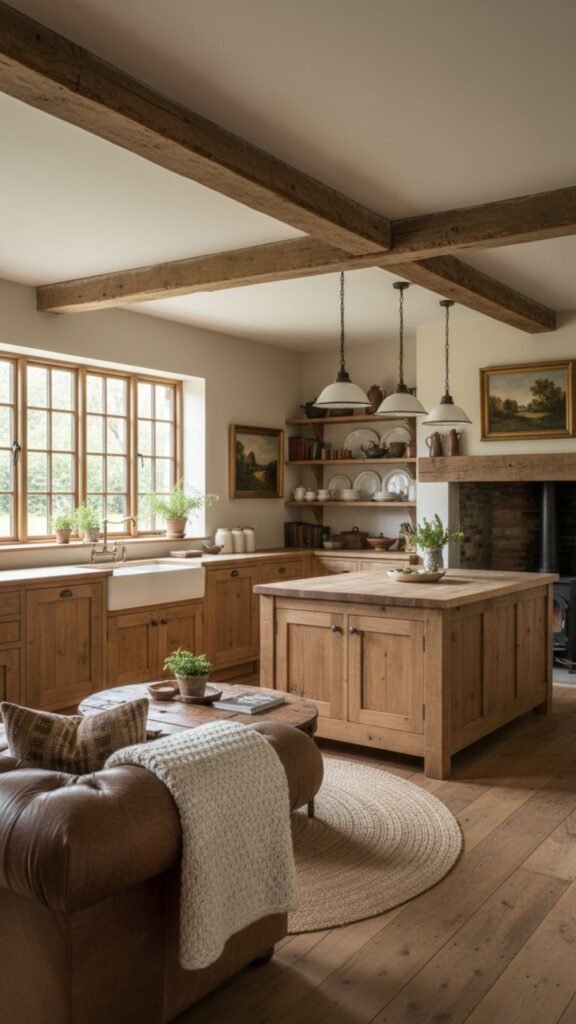
Utilizing salvaged wood for your kitchen cabinets brings history and texture to your culinary space. Complementing this with rich, distressed leather sofas in the living area establishes a cohesive, tactile experience. The contrasting materials age beautifully together over time.
Steps To Achieve The Look:
- Select unpainted, reclaimed oak or pine for kitchen cabinetry.
- Invest in a high-quality distressed leather sofa or armchair.
- Condition both the wood and leather annually to maintain their rich patina.
3. Earthy Terracotta Floors and Wrought Iron Fixtures
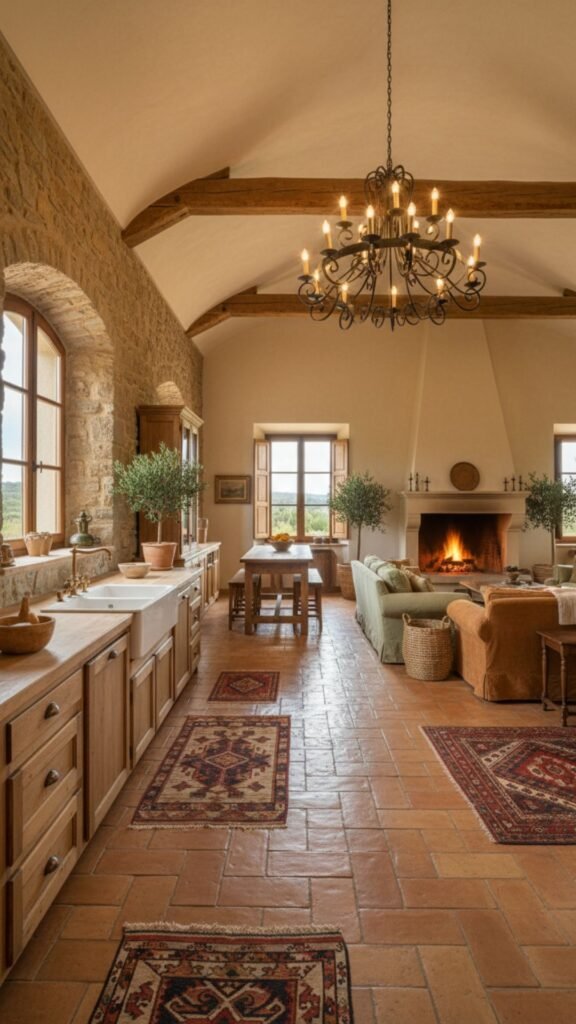
Terracotta tiles offer a warm, baked-clay hue that grounds a large, open space. Adding dark, wrought iron lighting fixtures and cabinet hardware creates a striking visual contrast. This pairing evokes the feeling of a traditional countryside villa.
Steps To Achieve The Look:
- Lay large-format terracotta tiles throughout both the kitchen and living room.
- Hang a wrought iron chandelier over the central kitchen island or dining area.
- Swap out shiny cabinet pulls for matte black or wrought iron handles.
4. Brick Backsplashes and Chunky Knit Throws
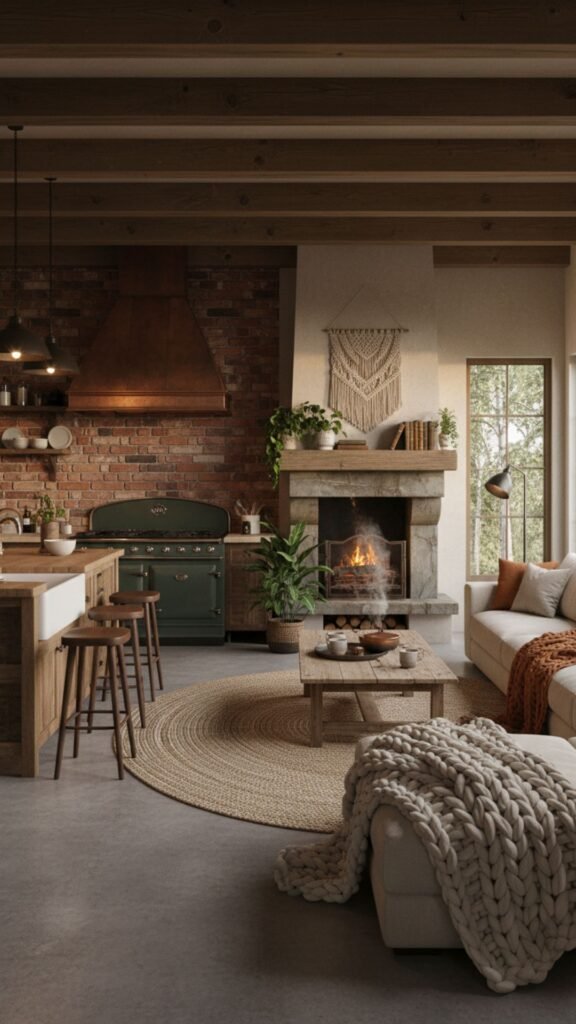
A raw brick backsplash in the kitchen provides a highly textured, industrial-rustic focal point. Softening this hard masonry with oversized, chunky knit blankets draped over living room furniture ensures the space remains inviting. The balance of hard and soft textures is key to a comfortable home.
Steps To Achieve The Look:
- Apply real brick or brick-veneer panels behind the stove and countertops.
- Layer heavy, hand-knit woolen throws over your seating arrangements.
- Incorporate soft ambient lighting to highlight the uneven surface of the bricks.
5. Vintage Farmhouse Sinks and Distressed Rugs
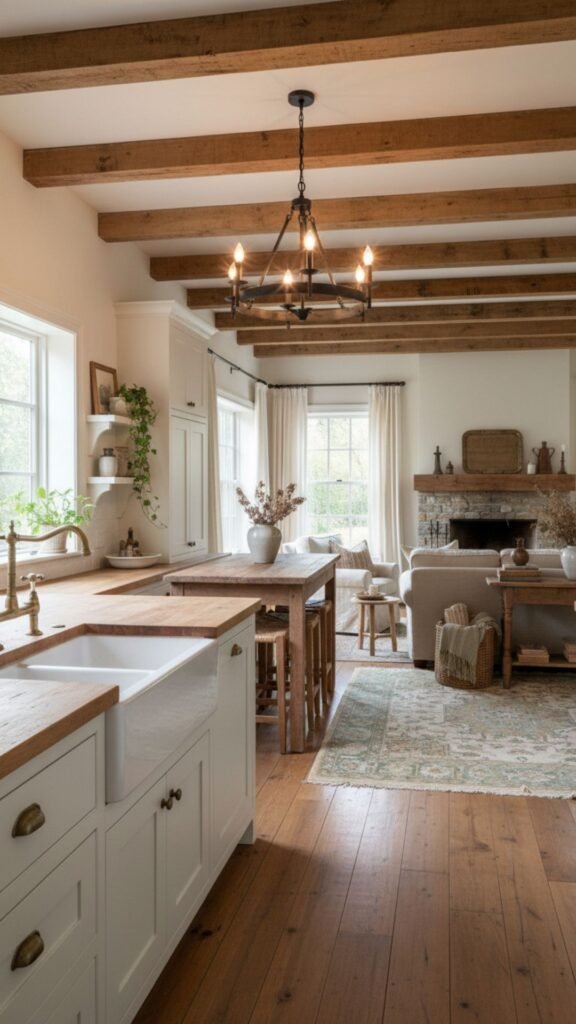
A classic apron-front farmhouse sink serves as a nostalgic centerpiece for the kitchen. Echoing this vintage vibe in the living room with a faded, distressed area rug ties the two spaces together. These elements suggest a lived-in, welcoming environment.
Steps To Achieve The Look:
- Install a deep fireclay or copper farmhouse sink.
- Place a vintage-style, low-pile distressed rug in the center of the living area.
- Use antique brass or oil-rubbed bronze faucets to complement the sink.
6. Copper Pendant Lighting and Cozy Plaid Accents
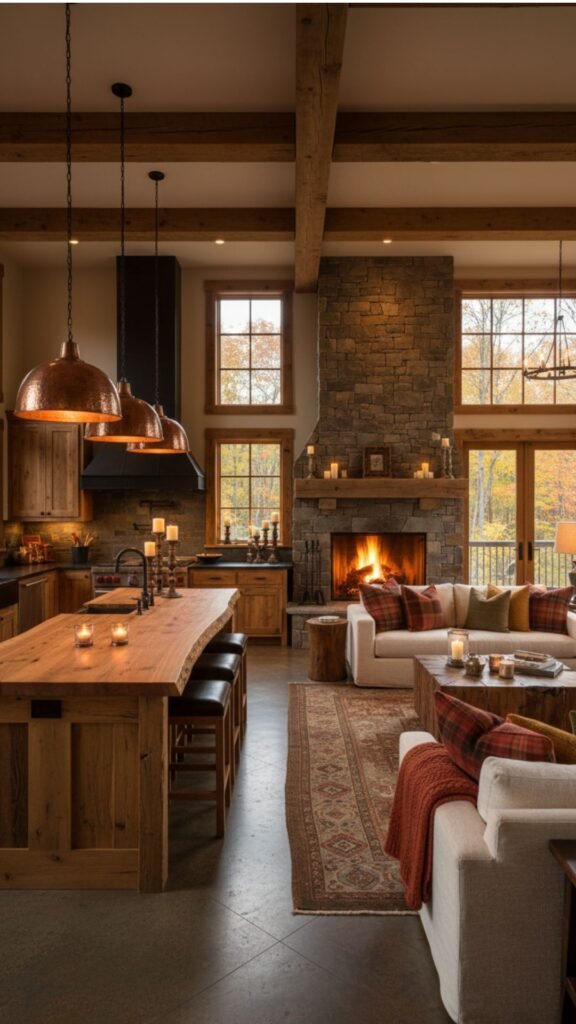
Copper elements naturally reflect warm light, making them perfect for illuminating a kitchen island. Repeating warm copper tones through red and brown plaid pillows or curtains in the living area unifies the color palette. This design choice feels especially cozy during the cooler months.
Steps To Achieve The Look:
- Suspend two or three hammered copper pendants above the kitchen counter.
- Toss plaid throw pillows onto your couches and reading chairs.
- Display copper cookware on an open kitchen rack to carry the metallic tone further.
7. Shiplap Walls and Live-Edge Dining Tables
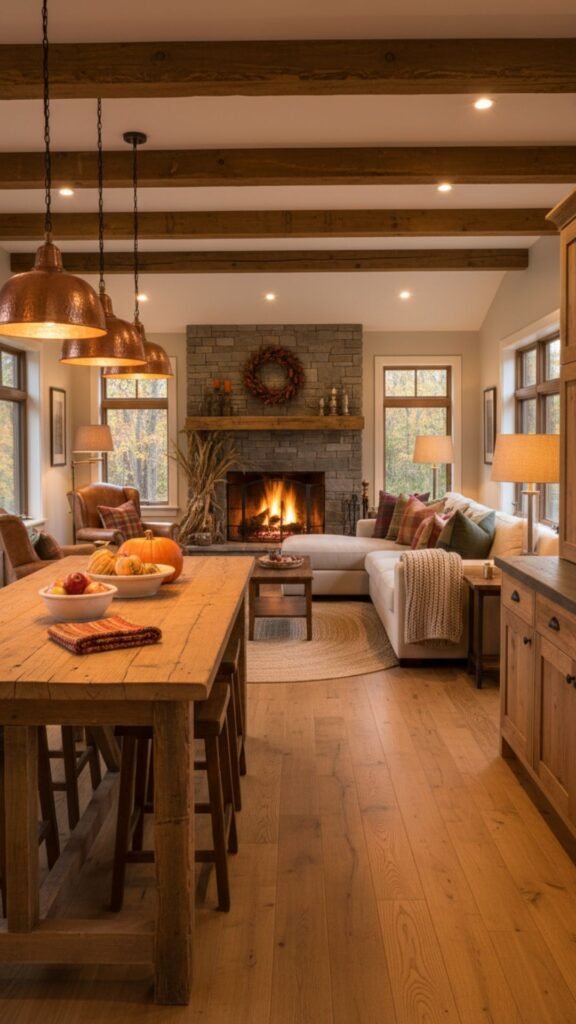
Horizontal wooden shiplap planks add subtle texture to walls without overwhelming the room. Introducing a live-edge wooden table as the bridge between the kitchen and living area acts as a stunning, organic focal point. The raw edges of the wood celebrate nature’s imperfections.
Steps To Achieve The Look:
- Panel a shared accent wall or the kitchen ceiling with painted shiplap.
- Source a live-edge slab table made from walnut or acacia wood.
- Keep table decorations minimal to let the natural wood grain stand out.
Bring Warmth to Your Open Floor Plan
A successful kitchen and living room combo relies on a unified flow of colors and textures. By blending rugged materials like stone and reclaimed wood with soft leathers and textiles, you build a space that feels both expansive and intimate. Start by choosing one or two focal textures, and gradually layer complementary elements to complete your rustic retreat.
Frequently Asked Questions (FAQs)
- What colors work best for a rustic open-concept space?
Warm neutrals like beige, cream, and taupe form a great foundation. You can accent these with nature-inspired tones such as forest green, deep rust, and warm terracotta to maintain the rustic feel. - How do I transition floors between a rustic kitchen and living room?
Using the same flooring throughout, like wide-plank hardwood or terracotta tiles, creates the most seamless flow. If you must use different materials, break up the transition naturally with a kitchen island or a large, textured area rug. - Can I mix modern appliances with rustic design?
Yes. Stainless steel or matte black appliances can blend beautifully with rustic elements. You can also opt for custom wood panels to conceal refrigerators and dishwashers for a more traditional look. - How do I add lighting to a rustic kitchen-living combo?
Layer your lighting. Use wrought iron or copper overhead pendants for task lighting, and add warm-toned floor lamps and wall sconces in the living area to create a soft, inviting glow. - What is the best way to make a large rustic room feel cozy?
Layering textures is essential. Combine heavy woven rugs, leather seating, soft knit throws, and plenty of natural wood accents to make a sprawling open floor plan feel warm and contained.