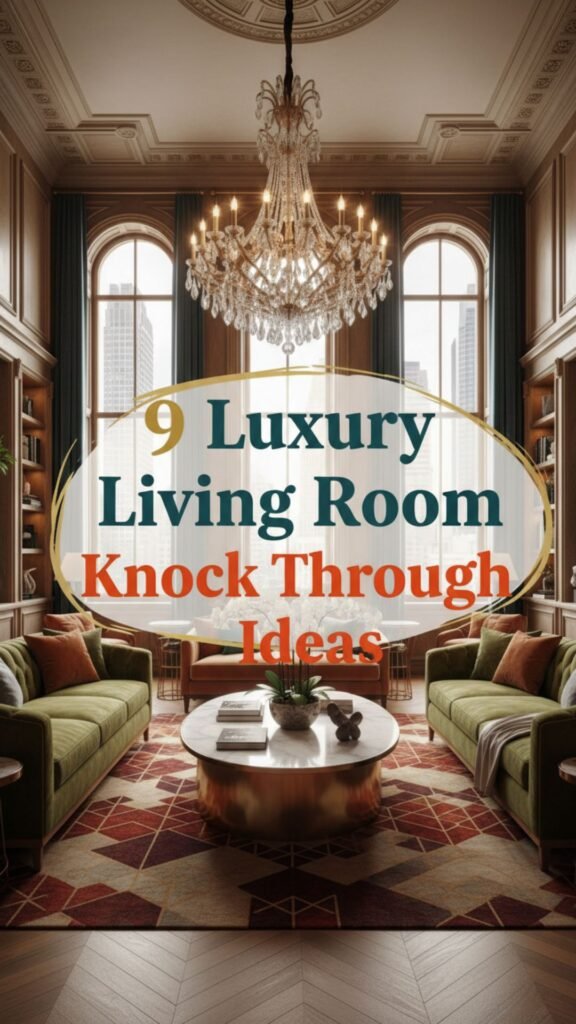
Breaking down the walls of a traditional home instantly transforms how you experience your living space. A thoughtful knock through does more than just add square footage. It brings in abundant natural light, creates effortless flow, and offers a blank canvas for high-end design.

If you want to merge your living room with a dining area or kitchen, careful planning ensures the resulting open-plan space feels sophisticated rather than empty. Here are nine luxury concepts to inspire your next major home renovation.
1. Seamless Glass Partitions
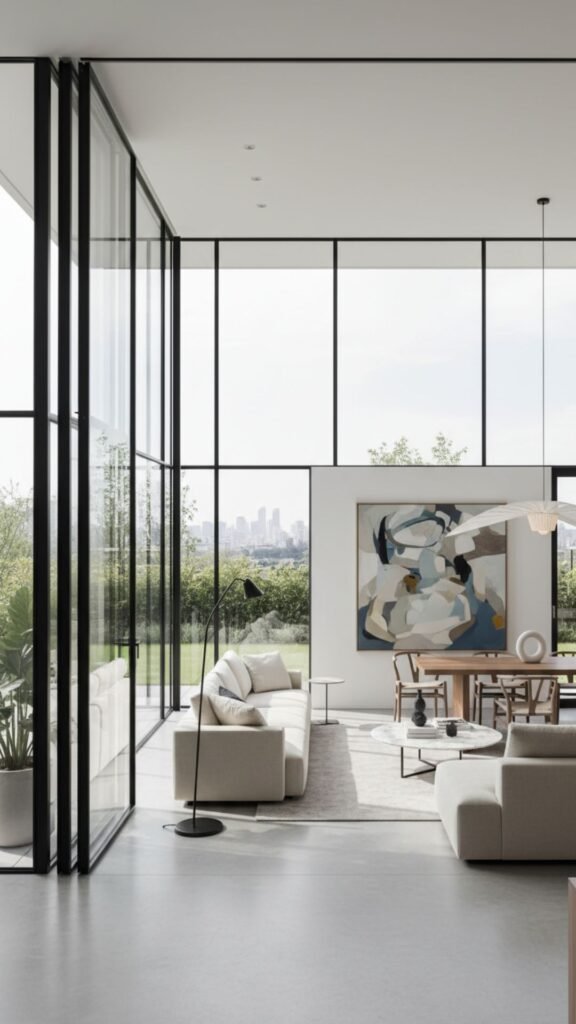
Replacing a solid wall with a floor-to-ceiling glass partition maintains the visual flow of an open plan while keeping spaces functionally distinct. The glass blocks sound and cooking odors without sacrificing sunlight. Dark metal framing adds a touch of industrial elegance to a modern luxury home.
Steps To Achieve The Look:
- Install a custom steel or matte black frame to hold large glass panels.
- Opt for acoustic glass to minimize noise transfer between the living and dining areas.
- Use sliding or pivoting glass doors to maximize walkway space.
2. Double-Sided Fireplace Divider
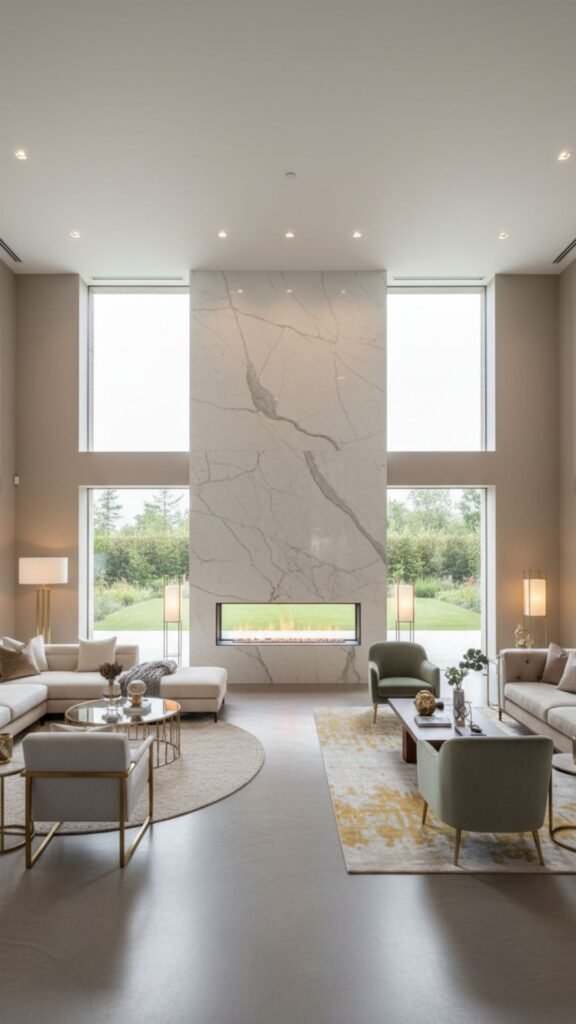
A double-sided fireplace acts as a stunning focal point that anchors a large knock through space. It provides warmth and ambiance to both the living area and the adjacent room simultaneously. By building the fireplace into a central structural pillar, you subtly define zones without closing them off.
Steps To Achieve The Look:
- Choose a modern, linear gas or bioethanol fireplace for a clean aesthetic.
- Clad the surrounding structure in luxury materials like marble, travertine, or textured slate.
- Position seating arrangements on both sides to take full advantage of the feature.
3. Split-Level Elegance
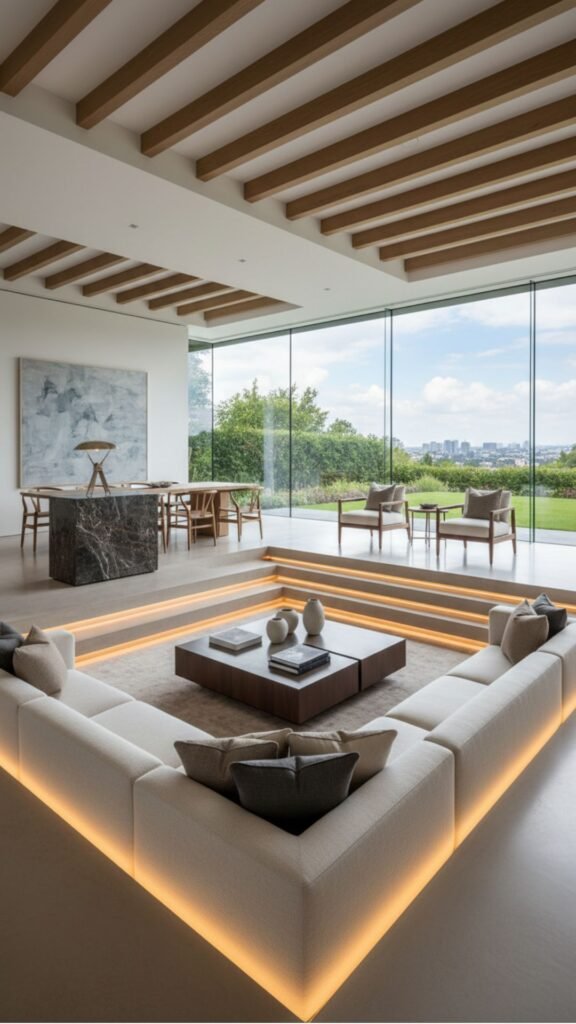
Introducing a slight change in floor elevation naturally separates the living room from the rest of the open-plan area. A sunken or raised living room brings architectural interest and a cozy, intimate feel to a sprawling footprint. It clearly defines the relaxation zone while keeping sightlines entirely open.
Steps To Achieve The Look:
- Add a two-step elevation change during the floor restructuring phase.
- Edge the step with hidden LED strip lighting to highlight the transition.
- Use the same luxury flooring material across both levels for visual continuity.
4. Grand Archway Transitions
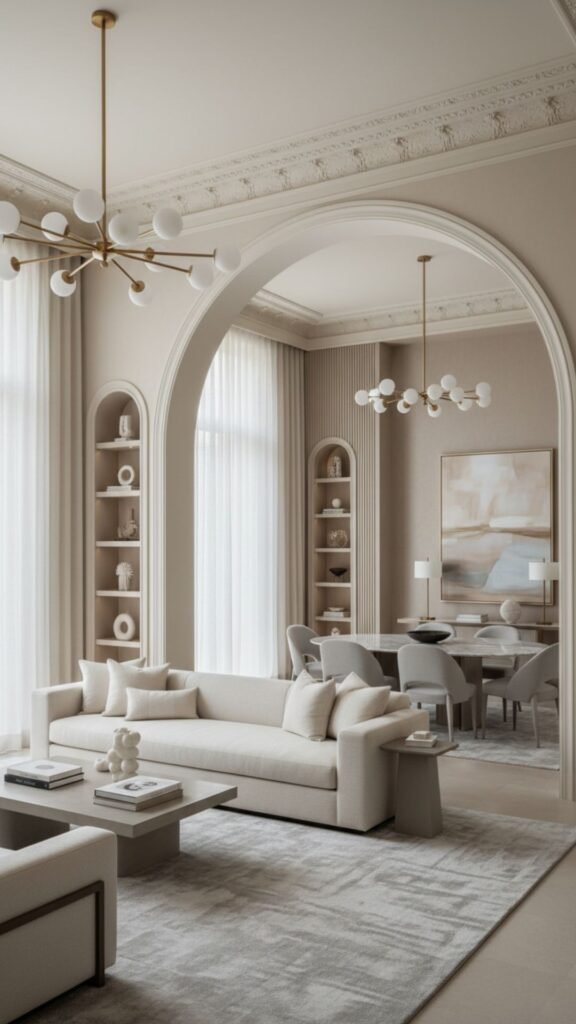
Instead of completely erasing the knocked-through wall, leave a wide, sweeping archway to frame the transition between rooms. This classic architectural detail adds a sense of grandeur and history to the property. It softens the hard angles of modern homes and creates a beautifully framed view of the adjoining space.
Steps To Achieve The Look:
- Work with a structural engineer to curve the supportive beam casing.
- Finish the arch with smooth plaster for a minimalist look or detailed molding for traditional luxury.
- Paint the archway in a slightly contrasting shade to make the architectural feature pop.
5. Continuous Herringbone Flooring
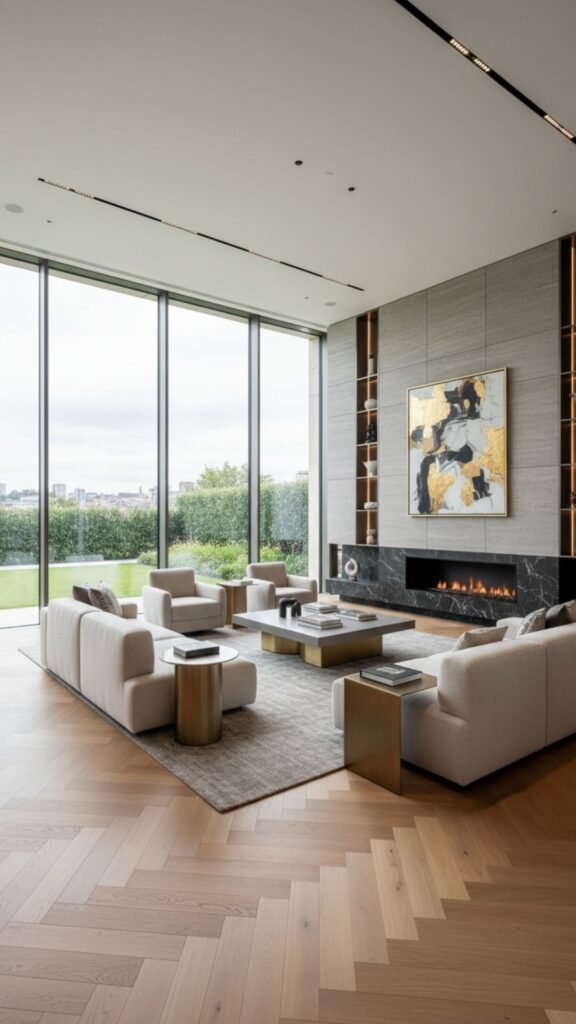
Nothing disrupts the luxury feel of an open-plan space more than disjointed flooring where the old wall used to be. Laying a continuous, high-quality floor throughout the entire knock through unifies the zones perfectly. A herringbone or chevron wood pattern directs the eye outward, making the expansive room feel even larger.
Steps To Achieve The Look:
- Remove all existing flooring to prepare a single, level subfloor.
- Select premium engineered oak or solid hardwood in a timeless finish.
- Run the pattern parallel to the longest wall to elongate the room.
6. Statement Ceiling Beams
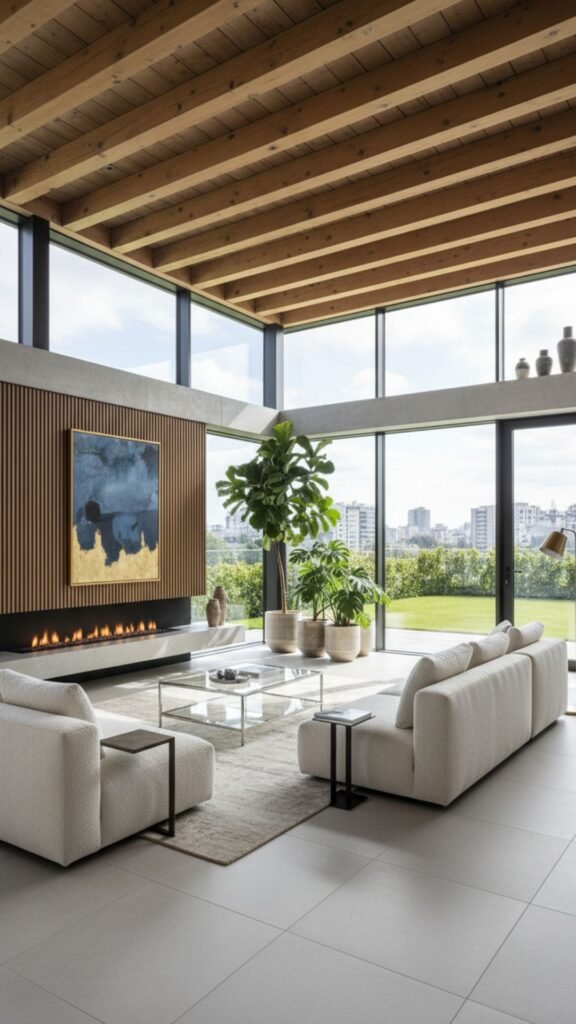
When walls come down, the expansive flat ceiling can sometimes feel cold or clinical. Adding decorative or structural ceiling beams introduces warmth, texture, and visual interest from above. They can also cleverly disguise the necessary steel support beams required for the knock through.
Steps To Achieve The Look:
- Wrap structural steel supports in hollow faux-wood beams.
- Space additional decorative beams evenly across the ceiling to create a cohesive grid.
- Match the wood tone of the beams to your flooring or key furniture pieces.
7. Monochromatic Color Drenching
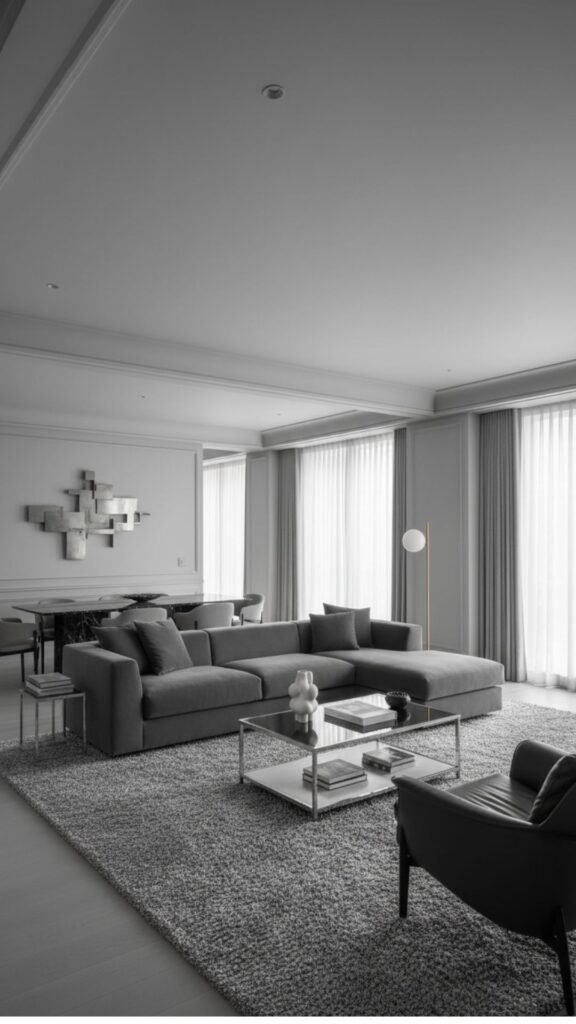
Color drenching involves painting the walls, ceiling, and trim in a single, sophisticated hue. In a large open-plan space, this technique creates an enveloping, cohesive atmosphere that feels incredibly high-end. It prevents the distinct zones from looking cluttered by providing a calm, unified backdrop.
Steps To Achieve The Look:
- Select a rich, complex neutral color like warm taupe, deep sage, or soft charcoal.
- Apply a matte finish to the walls and a subtle satin finish to the trim for slight textural contrast.
- Choose furniture in complementary tonal shades to maintain the seamless look.
8. Integrated Custom Cabinetry
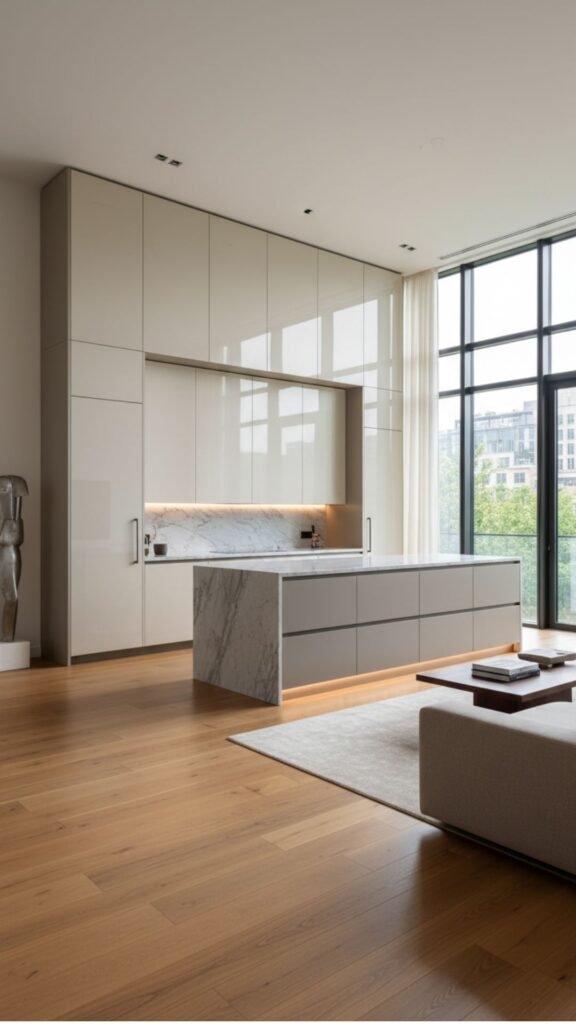
A knock through often results in the loss of wall space typically used for storage. Designing low-profile, custom-built cabinetry that spans the length of the new open space solves this problem beautifully. The continuous lines of the millwork draw the different areas together while hiding daily clutter.
Steps To Achieve The Look:
- Commission bespoke floating cabinets that run from the living area into the dining space.
- Top the units with a continuous slab of quartz or natural stone.
- Use handle-less doors with push-to-open mechanisms for a sleek, modern profile.
9. Indoor-Outdoor Synergy
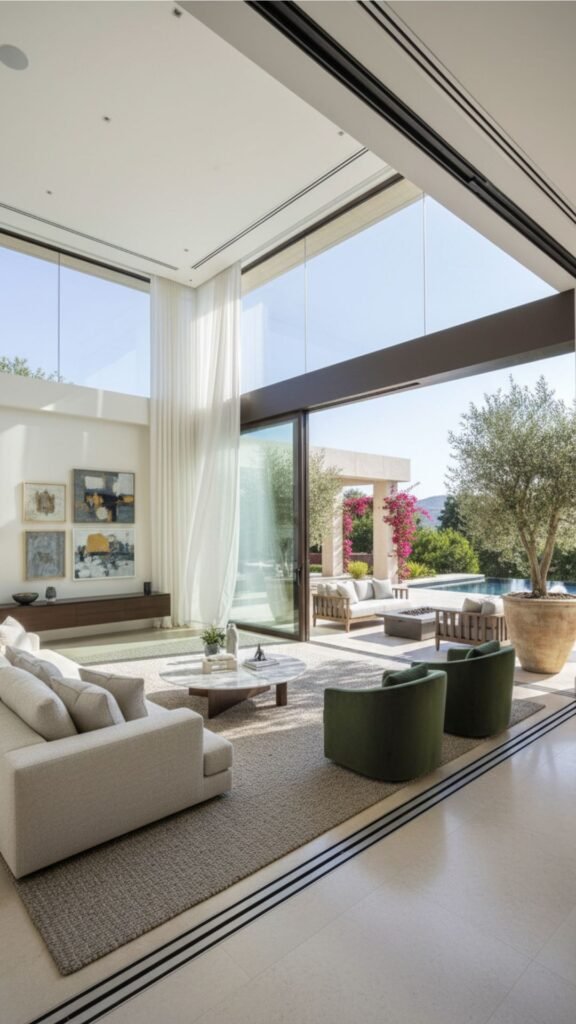
A luxury living room knock through should ideally connect not just interior rooms, but the exterior as well. Extending the open plan out to a patio or garden through massive sliding doors maximizes the sense of space. It invites nature inside and makes the living area feel boundless.
Steps To Achieve The Look:
- Install wall-to-wall, floor-to-ceiling sliding or bi-fold glass doors.
- Match the interior floor tiles or wood stain to the exterior decking or patio stone.
- Keep window treatments minimal, such as recessed motorized roller shades.
Bring Your Open-Plan Vision to Life
Knocking through a wall is a significant structural change, but the payoff is a breathtaking, light-filled living environment. By incorporating unified flooring, clever zoning, and high-end materials, your newly opened space will feel purposeful and luxurious. Start by consulting with a structural engineer to understand the possibilities for your specific floor plan, and then begin gathering material samples to build your perfect aesthetic.
Frequently Asked Questions (FAQs)
1. Do I need planning permission for a living room knock through?
It depends on your local building regulations and whether the property is a listed building. Internal modifications often fall under permitted development, but you must always obtain building regulations approval for structural changes and steel beam installations.
2. How do I support the ceiling when removing a wall?
A structural engineer will calculate the load-bearing requirements and specify the correct size for a rolled steel joist (RSJ). Builders will install this steel beam to safely support the upper floors and roof before completely removing the original wall.
3. Will knocking through walls make my home colder?
Open-plan spaces can be harder to heat if not properly insulated. To maintain a comfortable and luxurious environment, consider upgrading your radiators, installing underfloor heating, or adding high-quality thermal curtains to large windows.
4. How can I hide the structural steel beam?
You can recess the beam into the ceiling cavity so it sits flush with the plasterboard, though this requires more plumbing and electrical rerouting. Alternatively, you can drop the ceiling slightly, or wrap the exposed beam in wood to make it a decorative feature.
5. How do I stop cooking smells from reaching the open-plan living room?
Invest in a high-powered, ducted kitchen extractor fan to pull odors outside immediately. Additionally, strategically placed glass partitions or pocket doors can be closed during heavy cooking to contain smells without blocking light.