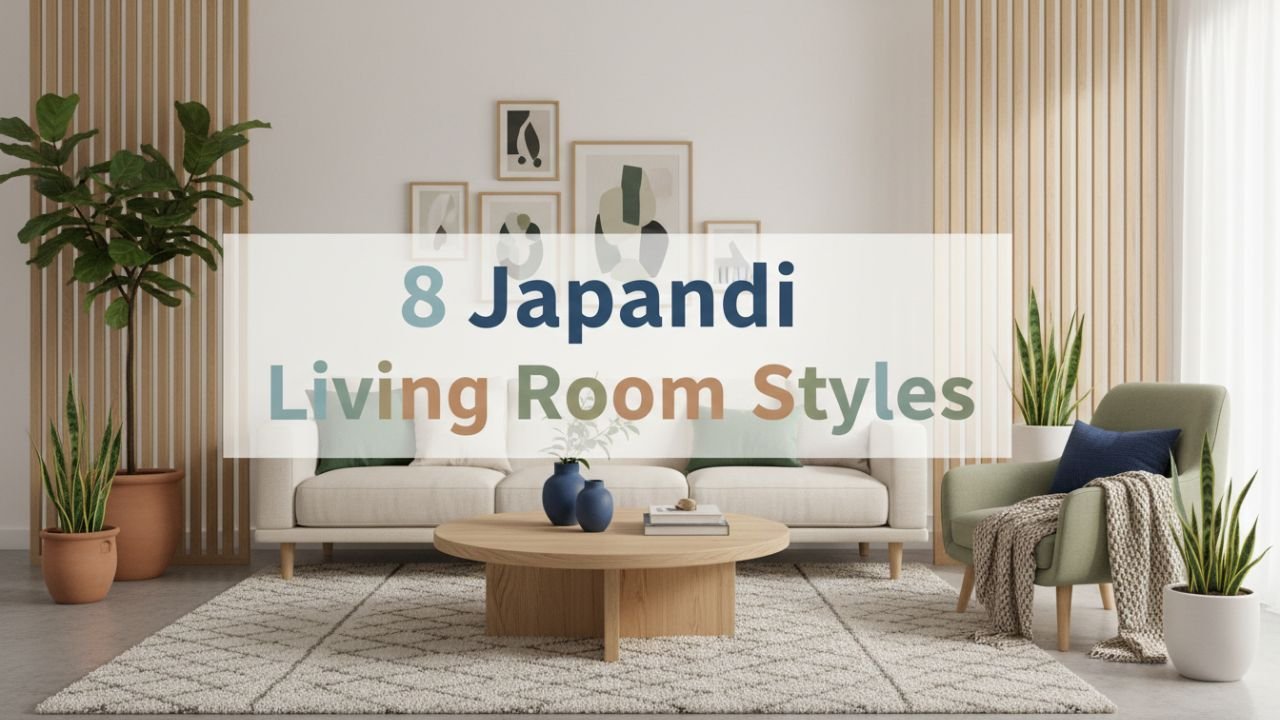
Japandi is the design philosophy that proves less truly is more. A fusion of Japanese minimalism and Scandinavian simplicity, it strips away the excess to reveal spaces that feel both grounded and effortlessly beautiful.
If your living room needs a refresh, these eight styles will show you exactly how to get there.
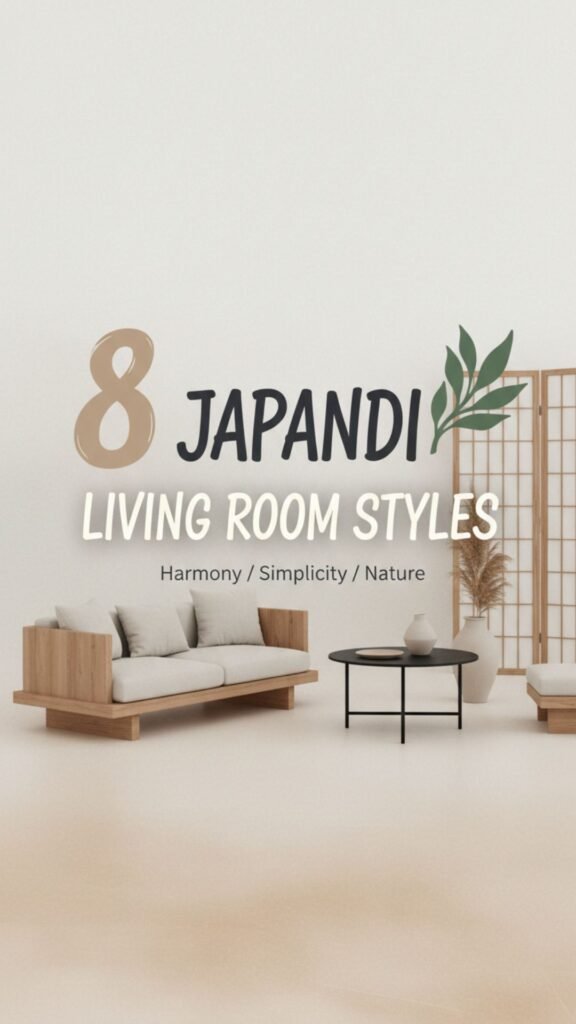
1. Neutral Color Palette
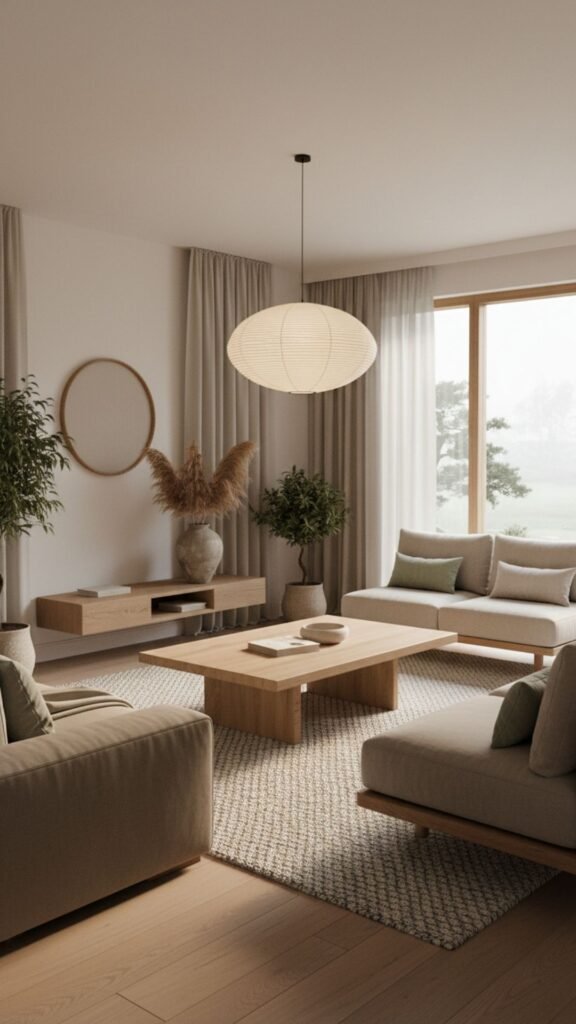
Japandi living rooms thrive on a foundation of warm whites, soft beiges, earthy taupes, and muted greens. These tones create a calm, cohesive backdrop that lets textures and natural materials do the talking.
Steps To Achieve The Look:
- Paint walls in warm white or greige tones
- Choose furniture in natural wood or linen finishes
- Add depth with layered textiles in complementary neutral shades
- Avoid bright accent colors—keep contrast subtle
2. Low-Profile Furniture
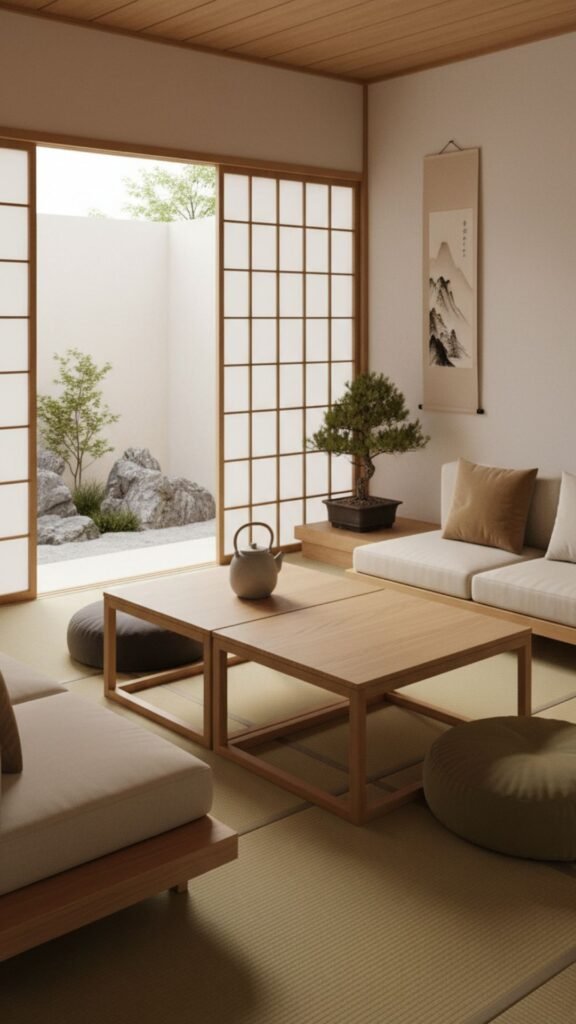
Furniture that sits close to the ground is a hallmark of Japanese interior design, and it translates beautifully into the Japandi aesthetic. Low sofas, floor cushions, and flat-framed coffee tables create a sense of openness and ease.
Steps To Achieve The Look:
- Opt for a low-slung sofa with clean, straight lines
- Swap a traditional coffee table for a flat wooden slab or tatami-style table
- Layer floor cushions for flexible, casual seating
- Keep legs short or go legless for a grounded effect
3. Natural Wood Accents
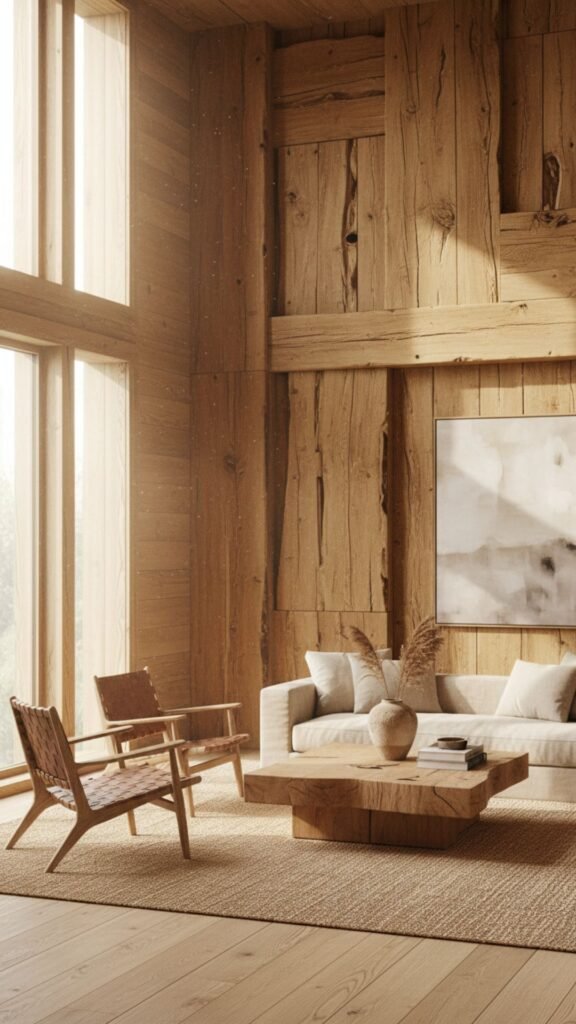
Raw, unfinished wood brings warmth and organic texture to a Japandi space. Think light oak, ash, or birch—woods that feel natural without being too rustic.
Steps To Achieve The Look:
- Introduce a wood-grain side table or shelving unit
- Choose frames, bowls, or trays in natural timber finishes
- Mix light and medium wood tones for depth
- Avoid heavily lacquered or dark stained woods
4. Wabi-Sabi Decor
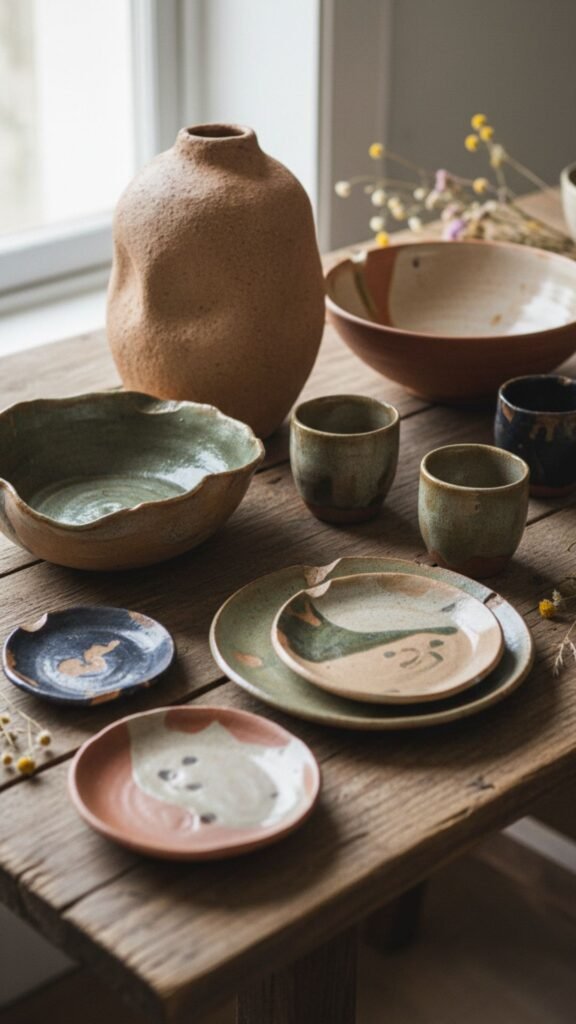
Wabi-sabi is the Japanese art of finding beauty in imperfection. Handmade ceramics, worn textures, and imperfectly shaped objects all have a place here—and that’s exactly the point.
Steps To Achieve The Look:
- Display handmade pottery or rough-edged ceramic vases
- Choose textiles with visible weave textures or subtle irregularities
- Leave a few intentional “imperfect” objects as focal points
- Resist over-styling—a simple, slightly asymmetrical arrangement works best
5. Minimalist Shelving
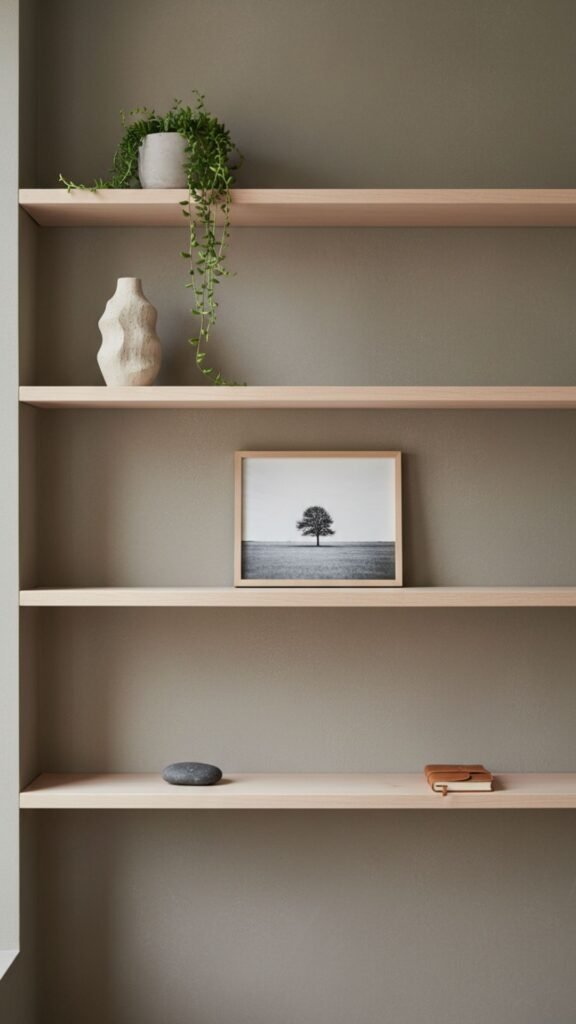
In Japandi design, shelving is purposeful, not performative. A few carefully chosen objects displayed with breathing room between them creates visual calm without feeling sparse.
Steps To Achieve The Look:
- Install floating shelves in light wood or white
- Limit each shelf to two or three items
- Mix functional and decorative pieces (a book, a plant, a ceramic)
- Leave some shelf space empty
6. Soft Textile Layers
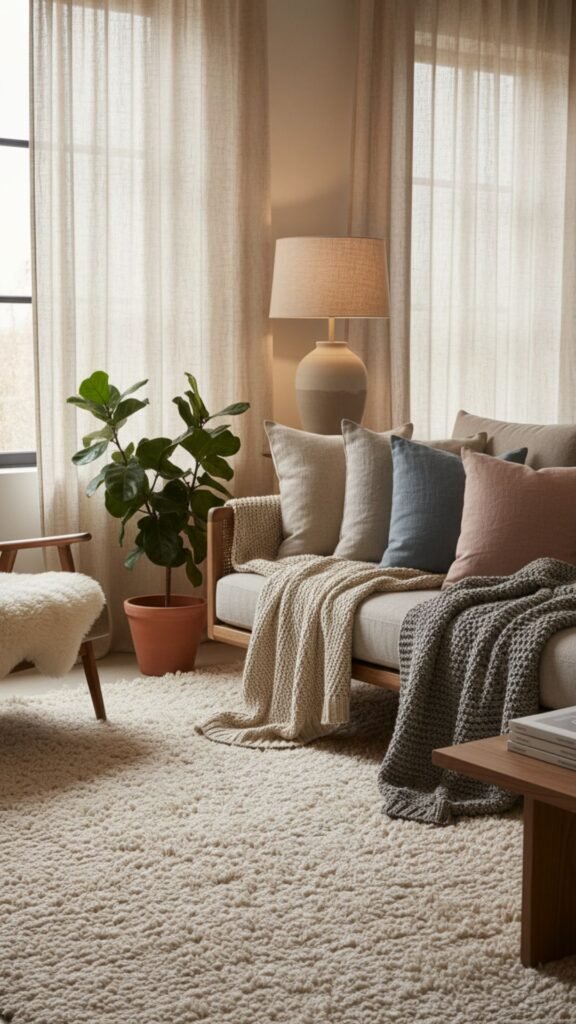
Comfort is non-negotiable in Japandi spaces. Chunky knit throws, linen cushions, and wool rugs add warmth and tactility without introducing visual clutter.
Steps To Achieve The Look:
- Drape a textured throw over the sofa in a neutral tone
- Layer a jute or wool rug beneath the coffee table
- Choose cushion covers in muted solids or simple patterns
- Stick to natural fibers: linen, cotton, wool, and jute
7. Indoor Plants and Greenery
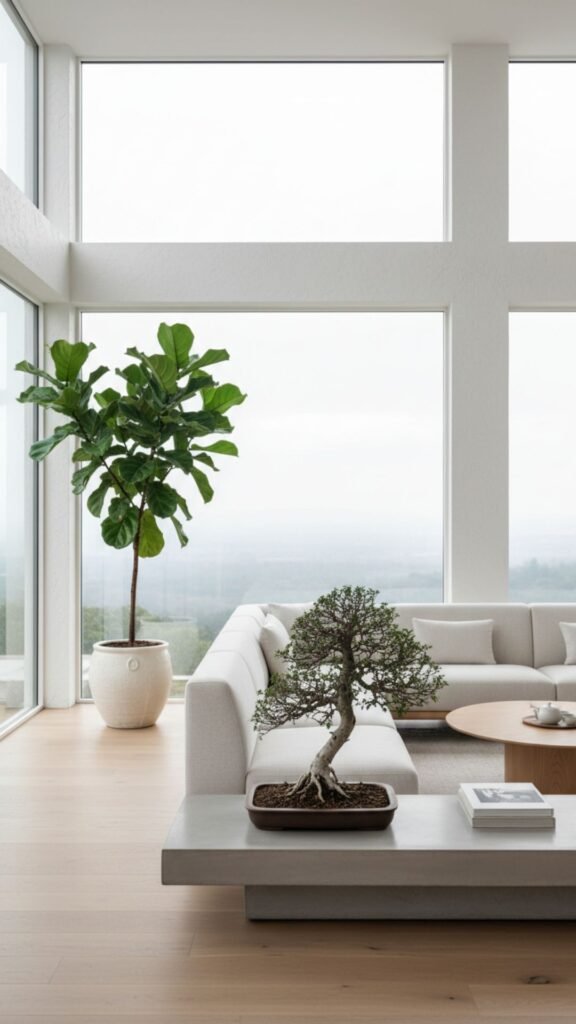
A single well-placed plant can transform a room. Japandi interiors favor sculptural greenery—plants with strong, simple forms that complement the clean lines of the space.
Steps To Achieve The Look:
- Choose statement plants like a fiddle-leaf fig, snake plant, or bonsai
- Use simple ceramic or terracotta planters
- Avoid overcrowding—one or two plants per space is enough
- Position plants near natural light sources for a fresh, airy feel
8. Functional Lighting
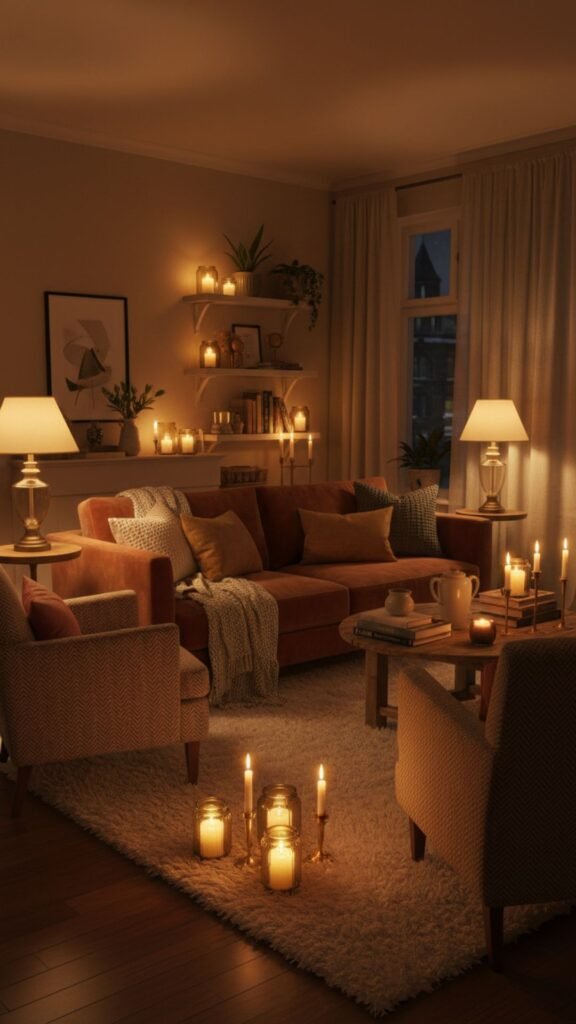
Lighting in Japandi design is soft, intentional, and layered. Harsh overhead lights are out; warm, diffused glow is in.
Steps To Achieve The Look:
- Use paper or linen lampshades to diffuse light softly
- Layer floor lamps, table lamps, and candles for depth
- Choose bulbs with a warm color temperature (2700K–3000K)
- Consider rattan or wooden pendant lights as a design focal point
Build Your Japandi Space, One Layer at a Time
You don’t need to renovate your entire living room to embrace Japandi design. Start with one change—a neutral throw, a low-profile coffee table, or a single sculptural plant. Each small shift moves you closer to a space that feels calm, considered, and quietly beautiful.
Frequently Asked Questions (FAQs)
1. What is Japandi style?
Japandi is a design fusion of Japanese minimalism and Scandinavian functionality. It prioritizes natural materials, neutral tones, and intentional simplicity to create spaces that feel both warm and serene.
2. Is Japandi style expensive to achieve?
Not necessarily. Many Japandi elements—like neutral paint, secondhand wood furniture, or simple ceramics—are budget-friendly. The key is curation, not cost.
3. What colors are used in Japandi design?
Japandi palettes lean on warm whites, soft beiges, muted greens, charcoal, and earthy taupes. The goal is harmony, so bold or bright colors are typically avoided.
4. How is Japandi different from Scandinavian or Japanese design alone?
Scandinavian design prioritizes hygge—cozy comfort. Japanese design emphasizes wabi-sabi and mindfulness. Japandi merges both, combining the warmth of Scandi interiors with the refined restraint of Japanese aesthetics.
5. Can I add personal items to a Japandi living room without ruining the aesthetic?
Absolutely. Japandi is about intentionality, not sterility. Display meaningful objects—just give them space to breathe and ensure they align with the natural, simple palette of the room.