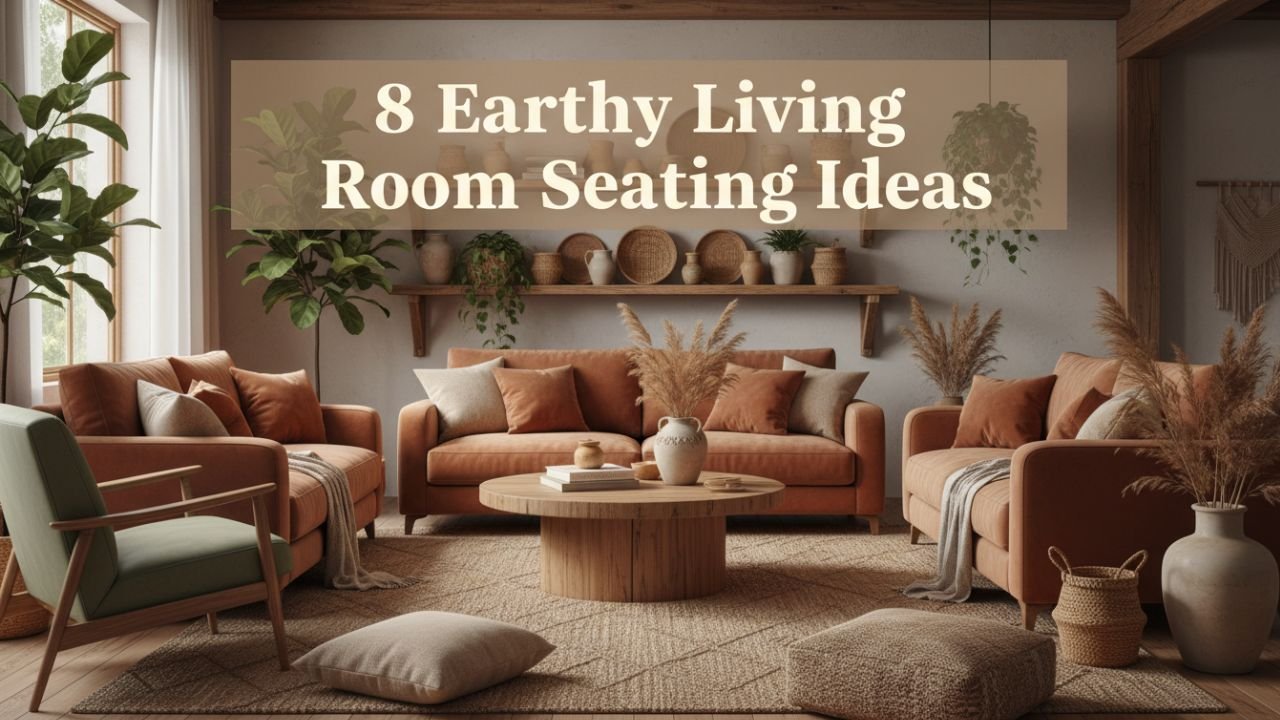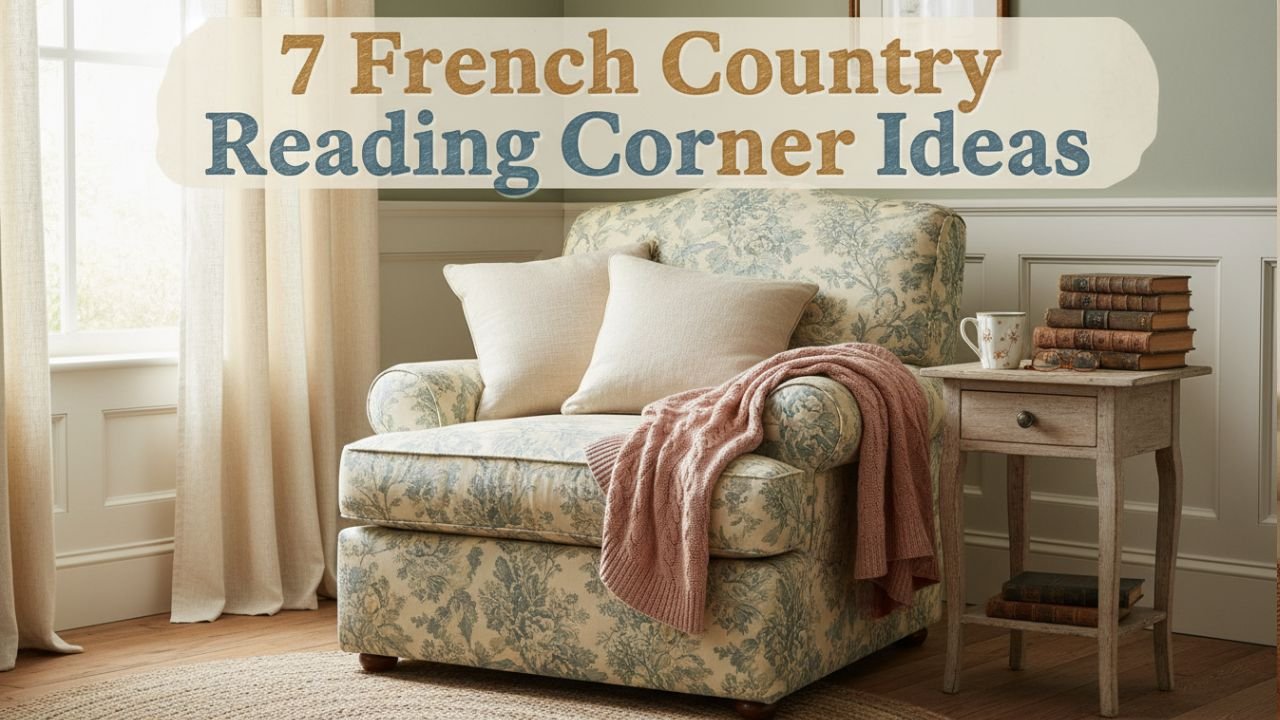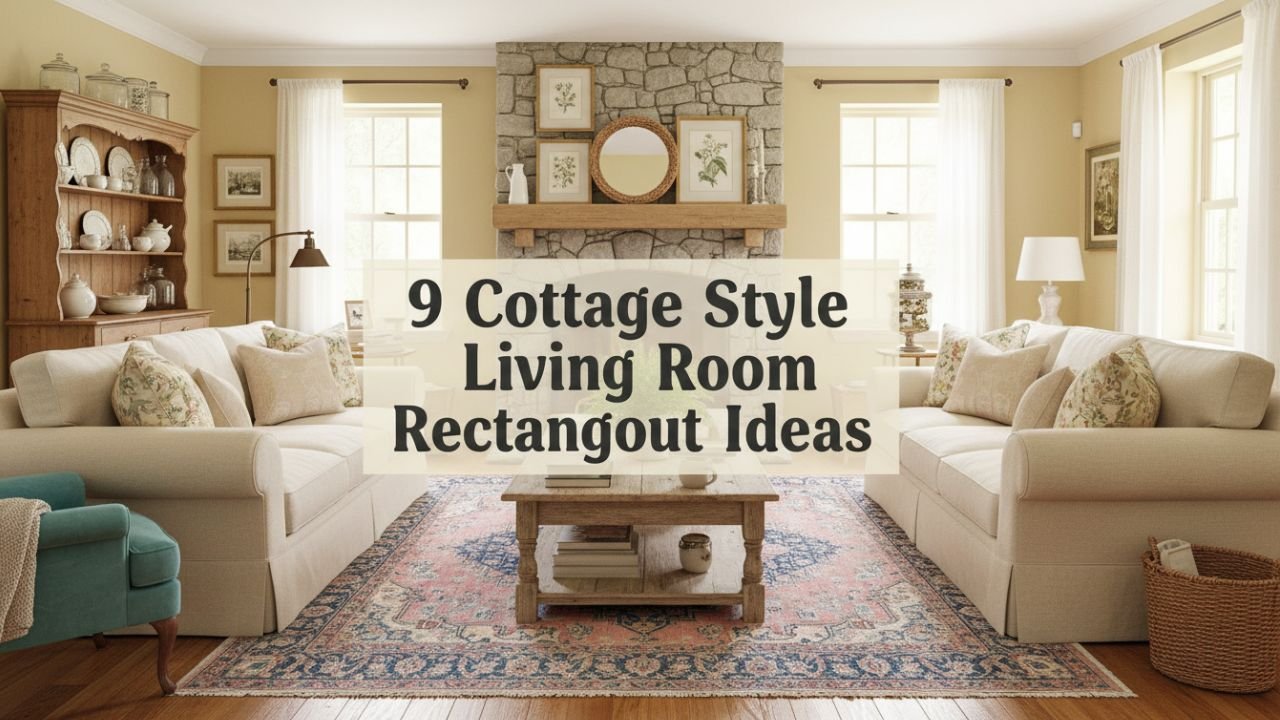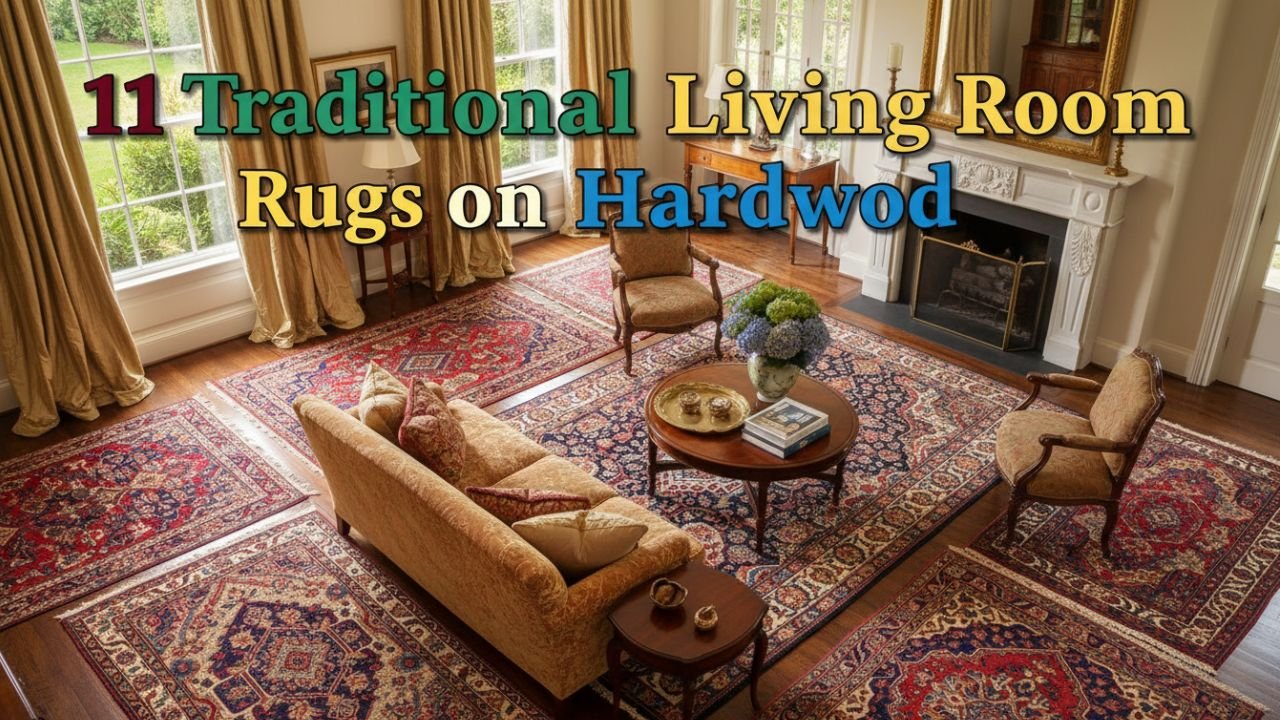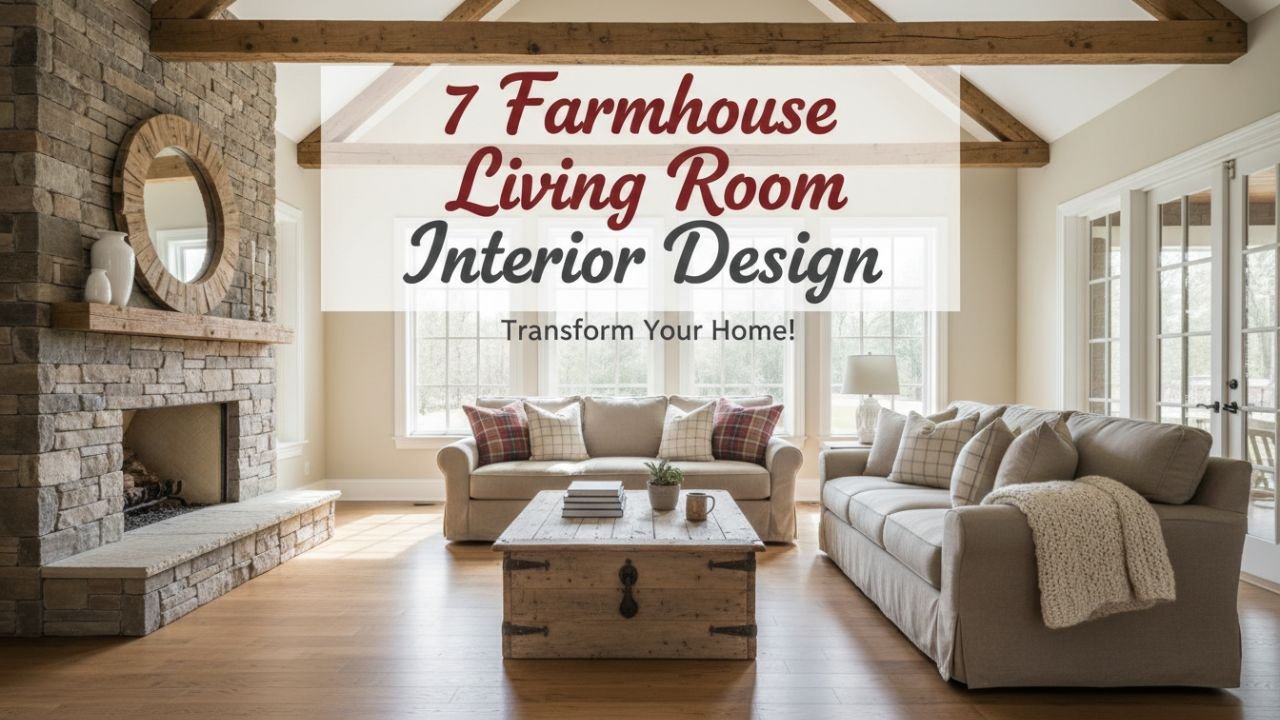
There’s something about a farmhouse living room that just feels right. The worn wood, the soft textures, the natural light spilling across a linen sofa—it’s a look that’s both effortless and intentional.
Whether you’re starting from scratch or refreshing a tired space, these seven farmhouse design ideas will help you create a living room that’s warm, inviting, and full of character.

1. Shiplap Accent Walls
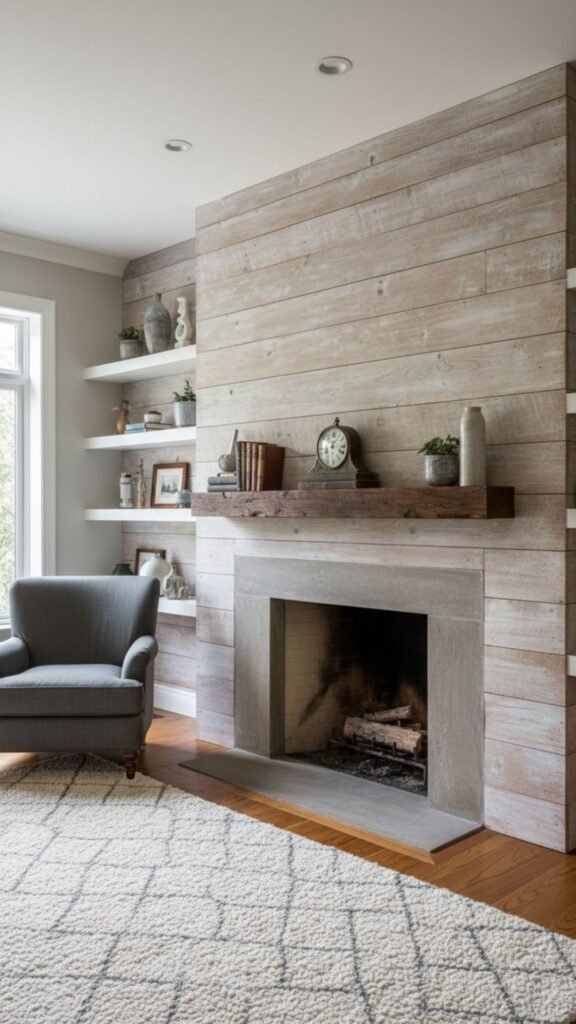
Shiplap is the cornerstone of farmhouse design. Its clean, horizontal lines add texture and depth without overwhelming a space. Painted in crisp white or a soft greige, a shiplap wall instantly grounds the room and gives it that signature rustic-yet-refined look.
Steps To Achieve The Look:
- Choose one focal wall (behind the sofa or fireplace works well)
- Use real wood planks or MDF shiplap boards for a budget-friendly option
- Paint in white, off-white, or a warm neutral tone
- Finish with simple floating shelves or a reclaimed wood mantel
2. Neutral Color Palette With Warm Undertones
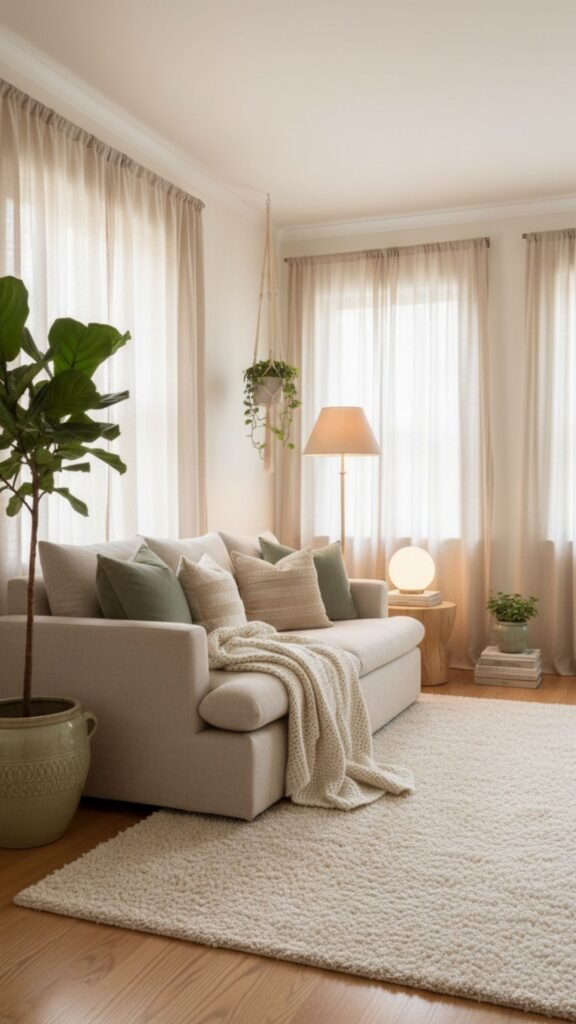
Farmhouse living rooms thrive on restraint. A neutral palette—think creamy whites, warm beiges, and soft greens—creates a calm, cohesive backdrop that lets textures and natural materials do the talking.
Steps To Achieve The Look:
- Start with walls in a warm white (Benjamin Moore’s “White Dove” is a popular pick)
- Layer in warm accents through throw pillows, rugs, and curtains
- Avoid cool grays, which can feel stark in a farmhouse setting
- Add warmth with wood tones in furniture and decor
3. Reclaimed Wood Coffee Table
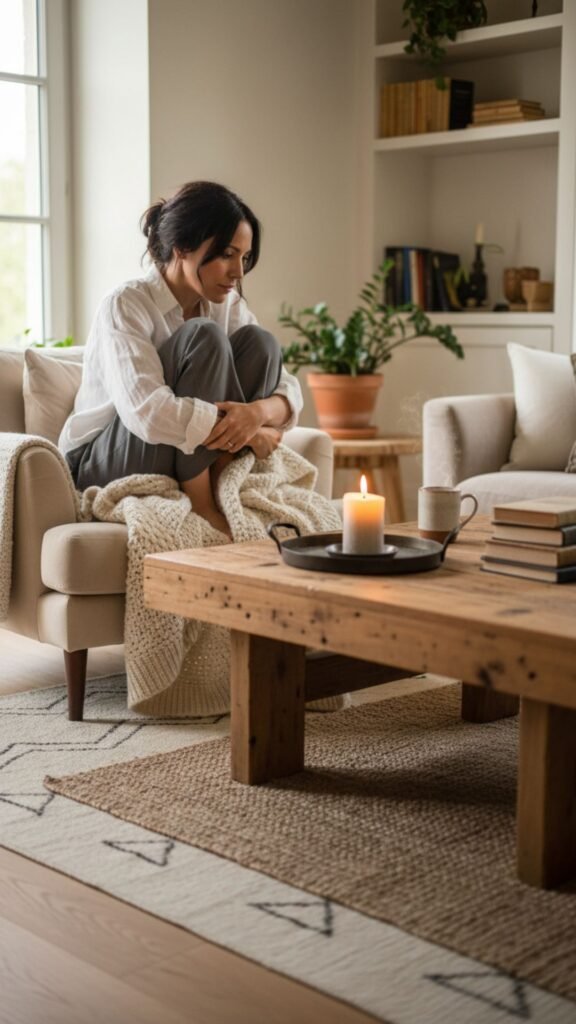
A reclaimed wood coffee table does double duty in a farmhouse living room—it adds visual warmth and tells a story. The natural imperfections in the grain give it character that no factory-made piece can replicate.
Steps To Achieve The Look:
- Source a solid reclaimed wood coffee table from a local antique store or online marketplaces
- Pair with a neutral area rug (jute or wool work beautifully)
- Style the surface simply: a tray, a few candles, a stack of books
- Balance the rustic wood with softer elements like linen throw blankets
4. Cozy Linen Sofas and Slipcovers
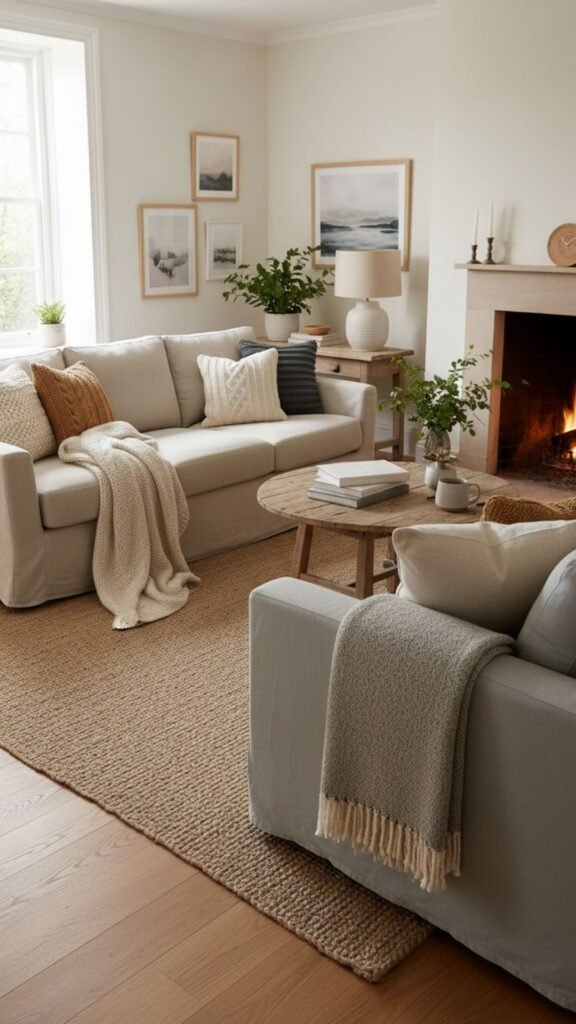
Upholstery plays a huge role in setting the farmhouse mood. Linen sofas in natural, undyed tones have that lived-in quality that makes a room feel genuinely comfortable rather than staged.
Steps To Achieve The Look:
- Opt for a slipcovered sofa for an easy, relaxed look (and easy washing)
- Choose fabrics in cream, oatmeal, or dusty sage
- Layer throw pillows in complementary textures: chunky knit, cotton, linen
- Add a woven throw blanket draped casually over one armrest
5. Vintage and Antique Accents
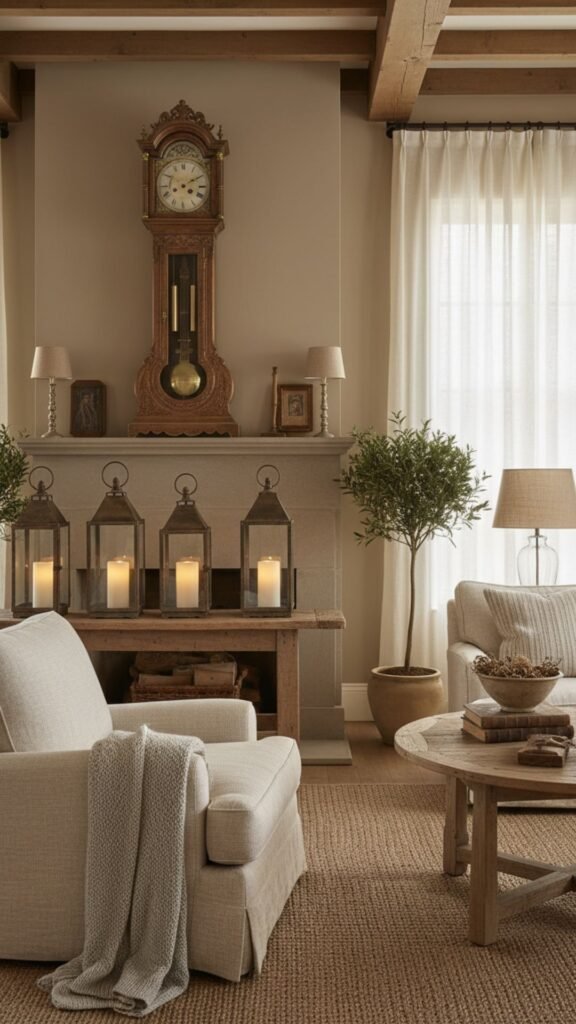
Farmhouse style has always had a soft spot for the old and well-loved. A vintage clock, an antique lantern, or a flea market find can instantly add authenticity to a space that might otherwise feel too polished.
Steps To Achieve The Look:
- Visit local thrift stores, estate sales, or antique markets for one-of-a-kind finds
- Focus on functional vintage pieces: wooden crates, old clocks, ceramic pitchers
- Mix old and new to keep the space feeling fresh, not dated
- Stick to your neutral color palette when selecting vintage decor
6. Exposed Wooden Beams
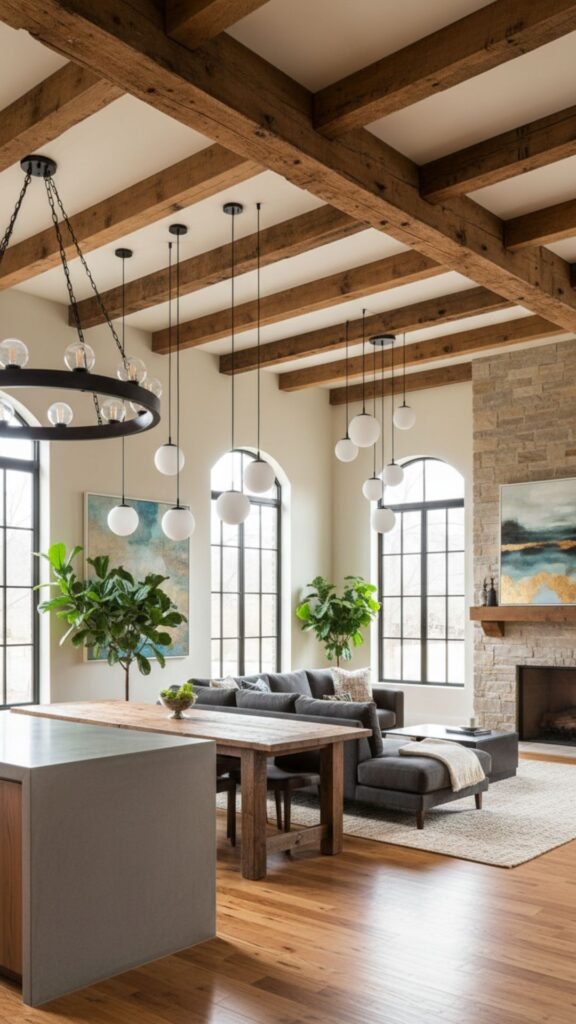
Few things say “farmhouse” quite like exposed ceiling beams. They add architectural interest, draw the eye upward, and lend a sense of history to even a brand-new build.
Steps To Achieve The Look:
- Use real wood beams for an authentic look, or install lightweight faux beams as an affordable alternative
- Stain in a warm walnut or honey oak to complement your flooring
- Keep the rest of the ceiling light (white works best) to avoid a heavy feel
- Pair with pendant lighting in black iron or aged brass for a cohesive finish
7. Layered Rugs and Natural Textures
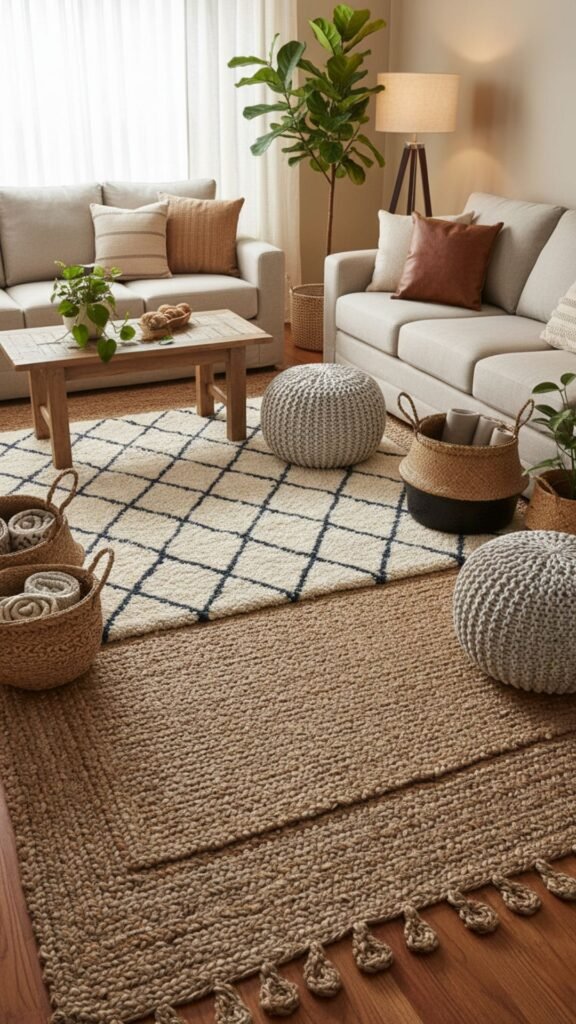
Layering rugs is one of the simplest ways to add depth and coziness to a farmhouse living room. Combine a flat-weave cotton rug with a chunky jute or wool rug underneath for a look that’s relaxed and pulled together at the same time.
Steps To Achieve The Look:
- Start with a large jute or sisal rug as your base layer
- Layer a smaller, softer rug on top in a subtle pattern (stripes or simple geometric)
- Incorporate other natural textures: wicker baskets, linen curtains, cotton poufs
- Keep colors consistent to avoid visual clutter
Bring the Farmhouse Feel Home
You don’t need a complete renovation to transform your living room. Start with one or two of these ideas, and build from there. The best farmhouse spaces aren’t designed overnight—they’re layered thoughtfully over time. Pick what resonates with your style, source pieces you genuinely love, and let the room evolve naturally.
Frequently Asked Questions (FAQs)
1. What defines a farmhouse living room style?
A farmhouse living room is defined by its use of natural materials, neutral tones, and a mix of rustic and comfortable elements. Think reclaimed wood, linen upholstery, vintage accents, and a warm, welcoming atmosphere. It’s a style that prioritizes comfort and character over formality.
2. How do I add farmhouse style on a budget?
Start small. A shiplap accent wall, a jute rug, or a secondhand wood coffee table can go a long way. Thrift stores, Facebook Marketplace, and estate sales are great sources for affordable farmhouse-style finds. Paint is also one of the most cost-effective ways to shift the feel of a room.
3. What colors work best for a farmhouse living room?
Warm neutrals are your best bet—creamy whites, soft beiges, warm taupes, and muted greens. These shades create a calm, cohesive base that’s easy to build on. Avoid cool grays and stark whites, which can make a farmhouse space feel cold.
4. Can farmhouse style work in a small living room?
Absolutely. Stick to a light color palette to keep the space feeling open, choose furniture with clean lines, and use mirrors to reflect light. A single shiplap wall or a well-chosen vintage accent piece can bring the farmhouse feel to even a compact room.
5. How do I mix modern and farmhouse styles?
Focus on balance. Keep the bones of the room clean and modern—simple furniture silhouettes, minimal clutter—and layer in farmhouse elements through textures, materials, and accents. A sleek sofa with linen cushions, or a minimalist shelving unit styled with vintage ceramics, bridges both aesthetics naturally.