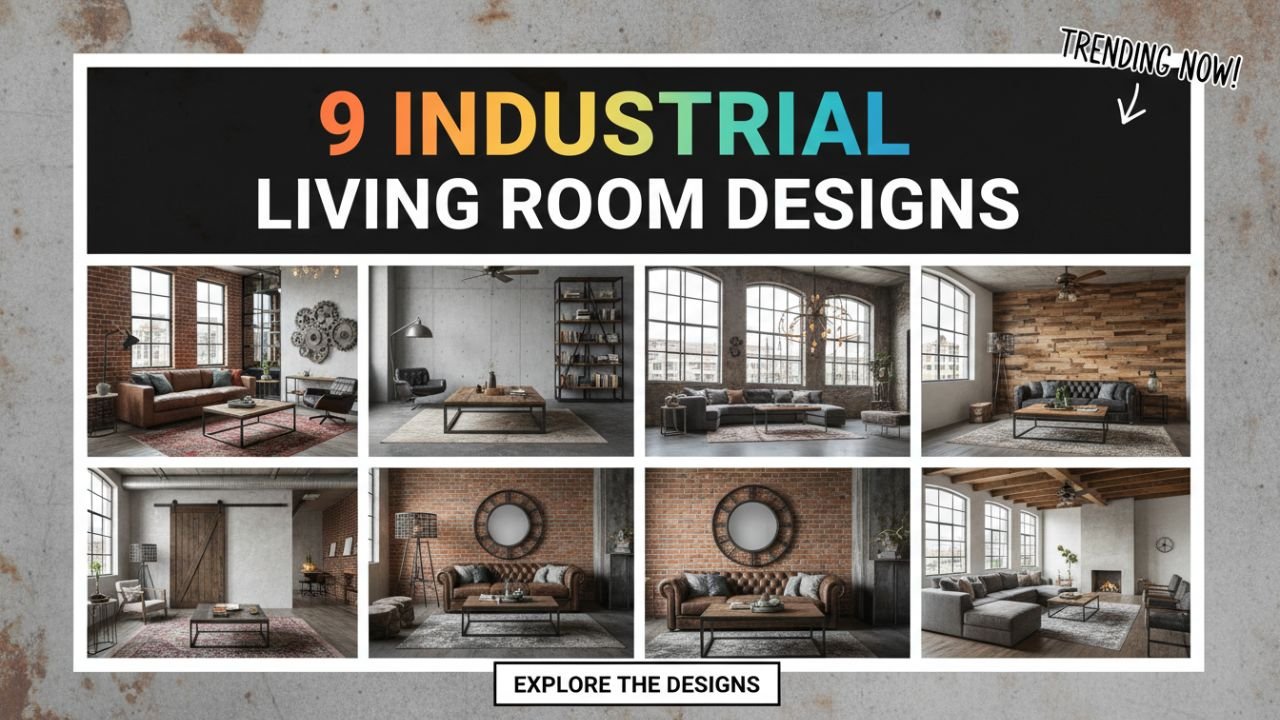
Raw edges, exposed brick, and a palette that means business—industrial design has a way of making a space feel both lived-in and effortlessly cool.
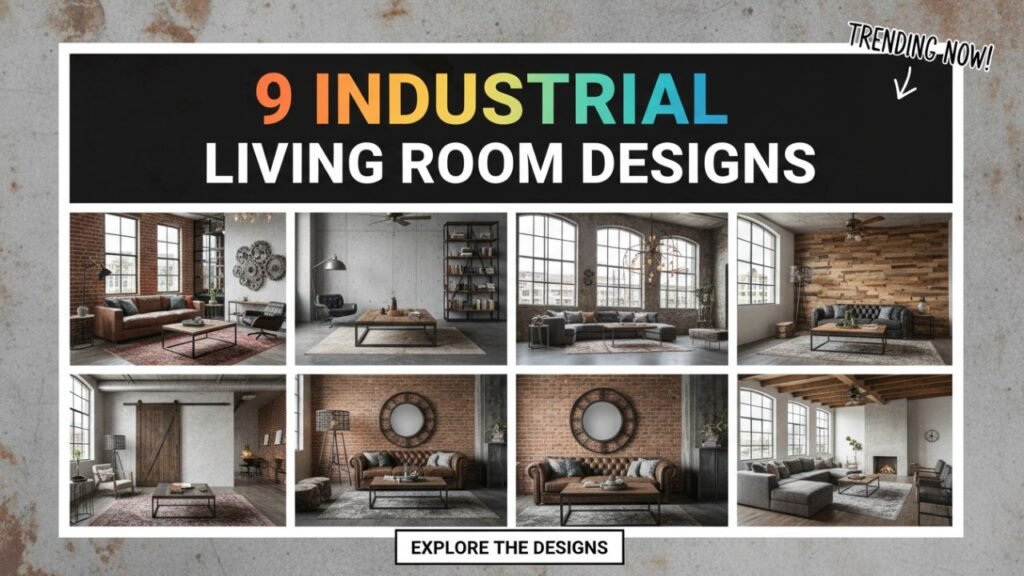
Whether you’re working with a loft apartment or a standard suburban home, these nine design ideas will help you nail that chic urban aesthetic without the guesswork.
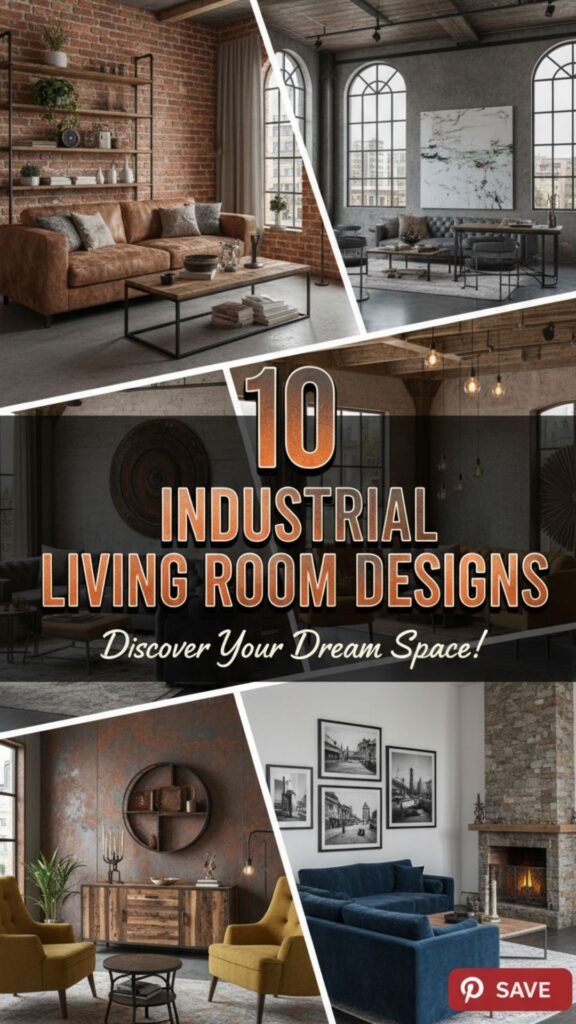
1. Exposed Brick Feature Wall
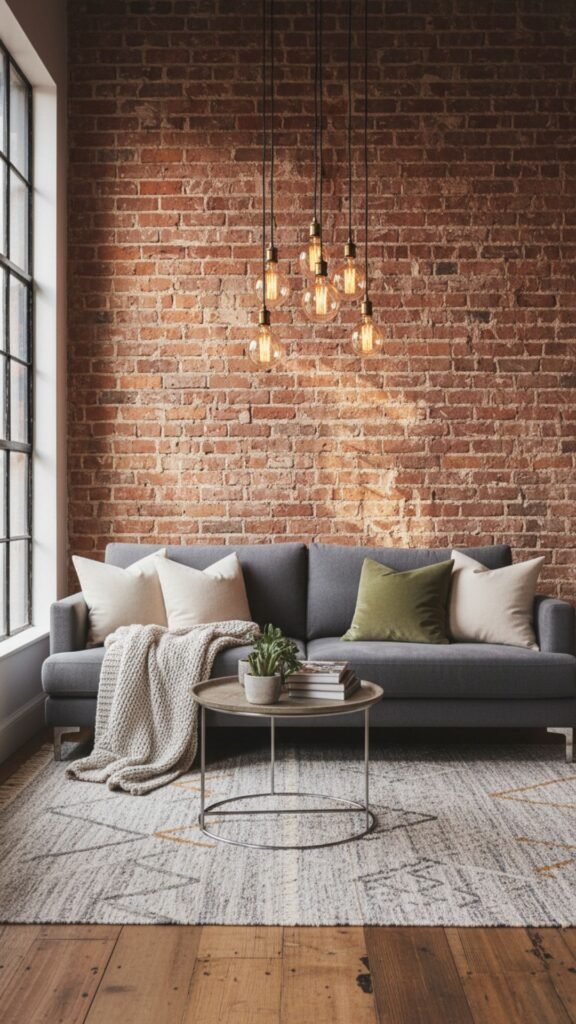
Nothing anchors an industrial living room quite like raw, exposed brick. It adds instant texture and warmth, creating a backdrop that pairs well with both leather furniture and soft textiles. This look works especially well behind a sofa or fireplace.
Steps To Achieve The Look:
- Strip back existing plaster to reveal the original brickwork, or install faux brick panels
- Leave the brick in its natural state or apply a light whitewash for a softer finish
- Pair with warm Edison bulb lighting to highlight the texture
- Accessorize with metal-framed mirrors or wall art to complement the rawness
2. Concrete Floors With Area Rugs
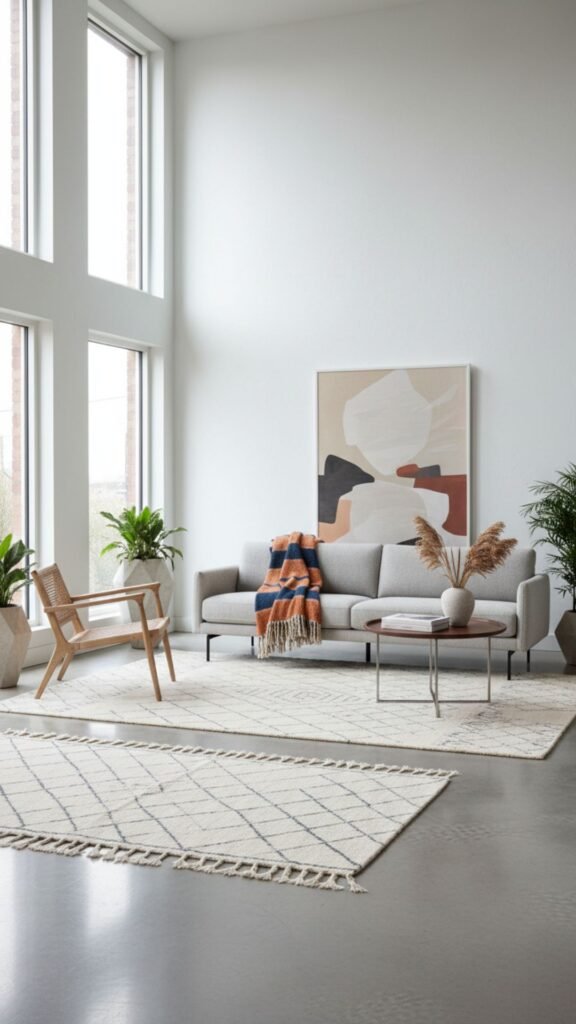
Polished concrete floors are a hallmark of industrial interiors. They’re sleek, durable, and surprisingly versatile—especially when layered with a bold or textured area rug to soften the space.
Steps To Achieve The Look:
- Polish or stain existing concrete floors, or install concrete-look vinyl planks
- Choose a large, low-pile rug in neutral or muted tones to anchor the seating area
- Add contrast with a sheepskin or woven throw rug for texture
- Keep furniture legs visible to maintain that open, airy feel
3. Black Metal Accents
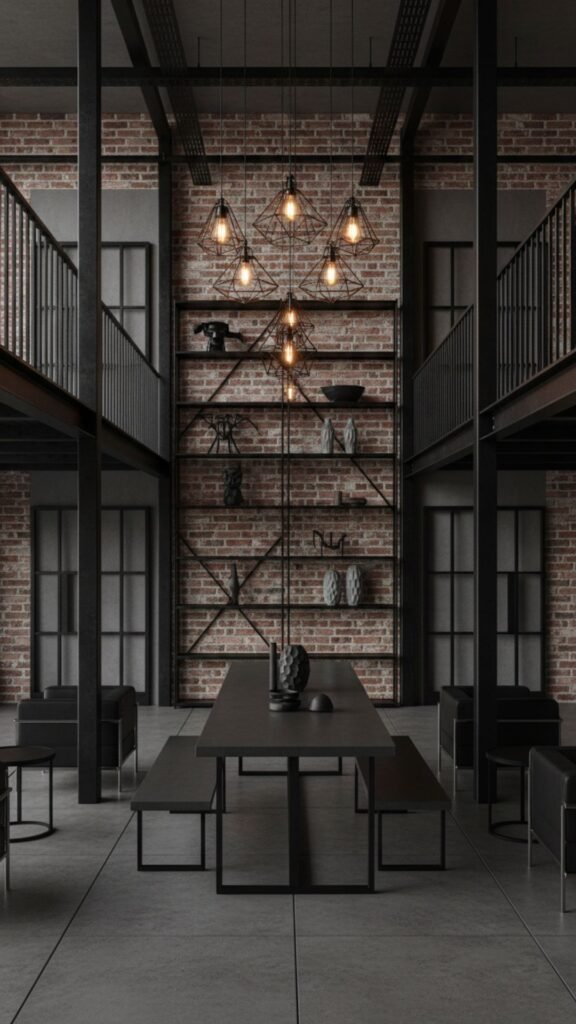
Metal is the backbone of industrial design. Black powder-coated frames, shelving brackets, and light fixtures give the room a structured, intentional feel without overwhelming the space.
Steps To Achieve The Look:
- Swap wooden or brass hardware for matte black alternatives
- Incorporate black metal shelving units or pipe-style bookcases
- Choose pendant lights with black metal shades over the coffee table
- Use metal-framed sofas or side tables as key furniture pieces
4. Reclaimed Wood Elements
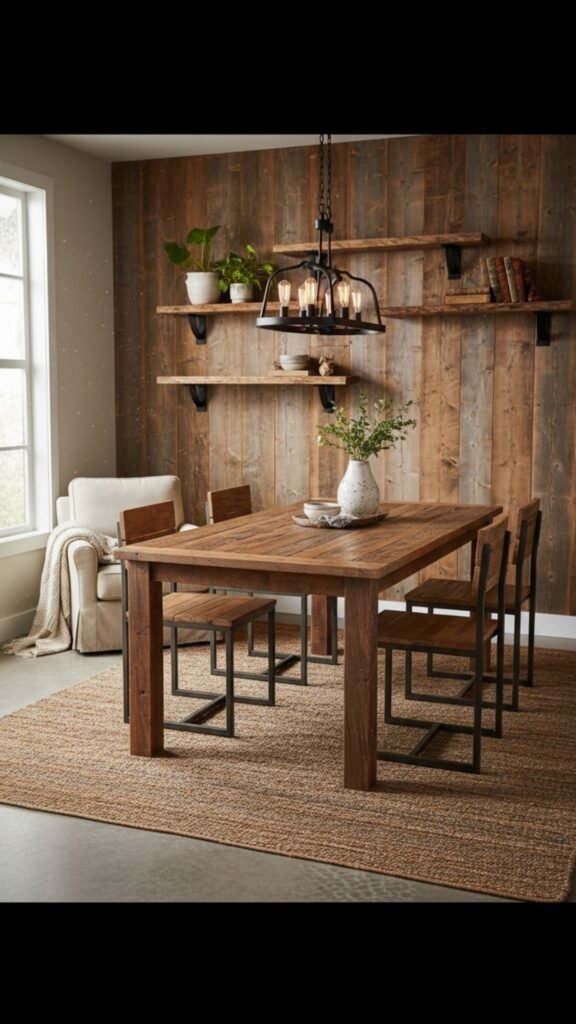
Reclaimed wood brings warmth and history to an otherwise cool, utilitarian space. It balances the hardness of metal and concrete beautifully.
Steps To Achieve The Look:
- Source a reclaimed wood coffee table or console as a statement piece
- Install floating shelves made from salvaged timber
- Use wood-paneled ceilings or a shiplap accent wall for added depth
- Pair with dark metal brackets or supports to stay on theme
5. Open Shelving With Purposeful Styling
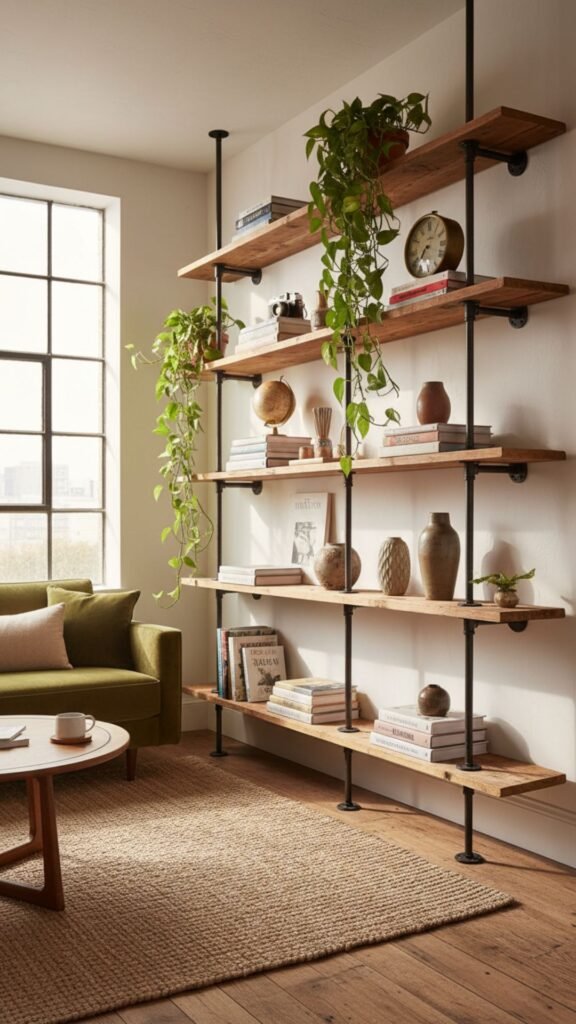
Open shelving keeps the industrial look functional and visually interesting. When styled with care, it doubles as both storage and art.
Steps To Achieve The Look:
- Install pipe-and-plank shelving units along a main wall
- Mix books, plants, ceramics, and vintage objects for a curated look
- Avoid overfilling—leave breathing room between items
- Stick to a consistent color palette across displayed objects
6. Leather and Linen Furniture
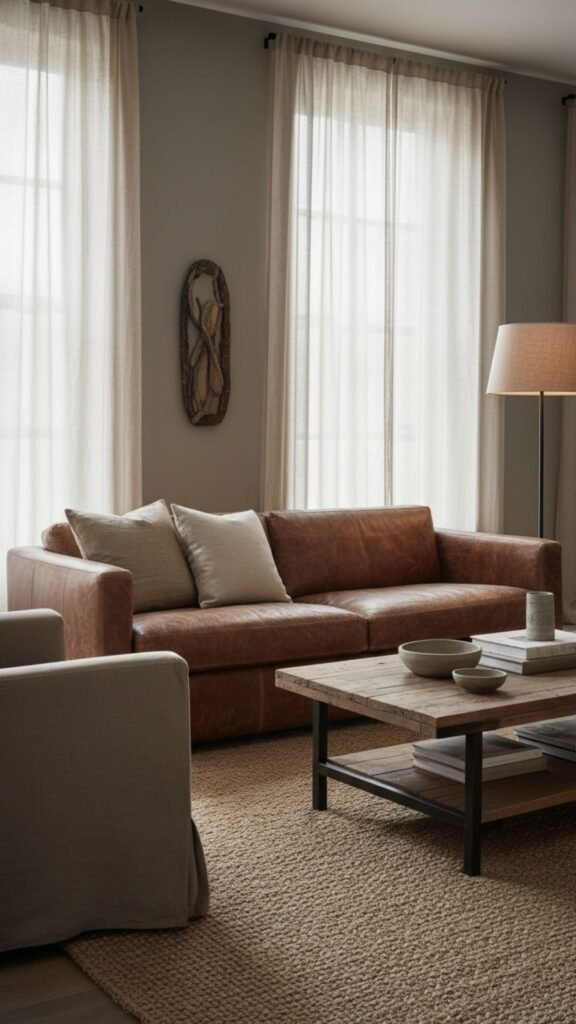
The right furniture softens industrial interiors without losing their edge. Leather and linen strike the perfect balance between rugged and refined.
Steps To Achieve The Look:
- Choose a worn leather sofa in caramel, chocolate, or black
- Layer linen cushions in earthy tones like rust, sage, or cream
- Opt for low-profile furniture with clean, simple lines
- Avoid overly ornate or plush pieces that clash with the raw aesthetic
7. Statement Industrial Lighting
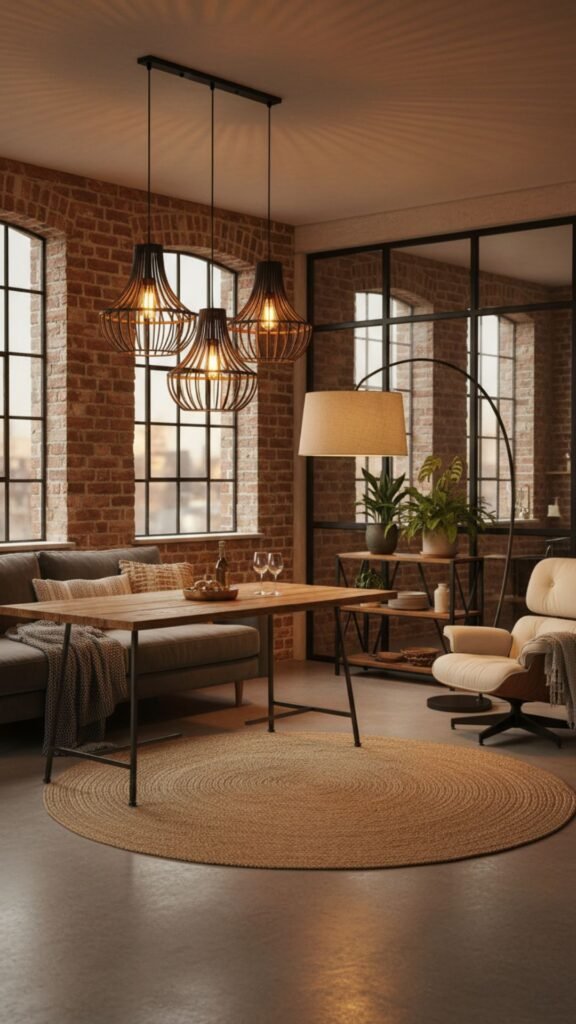
Lighting defines the mood. Industrial fixtures—think cage pendants, filament bulbs, and arc floor lamps—add character while doubling as sculptural elements.
Steps To Achieve The Look:
- Hang an oversized cage pendant or cluster of Edison bulbs above the coffee table
- Place a black metal arc floor lamp beside the sofa for layered lighting
- Install dimmer switches to control ambiance throughout the day
- Choose warm-toned bulbs (2700K) for a cozy, inviting glow
8. Neutral and Moody Color Palette
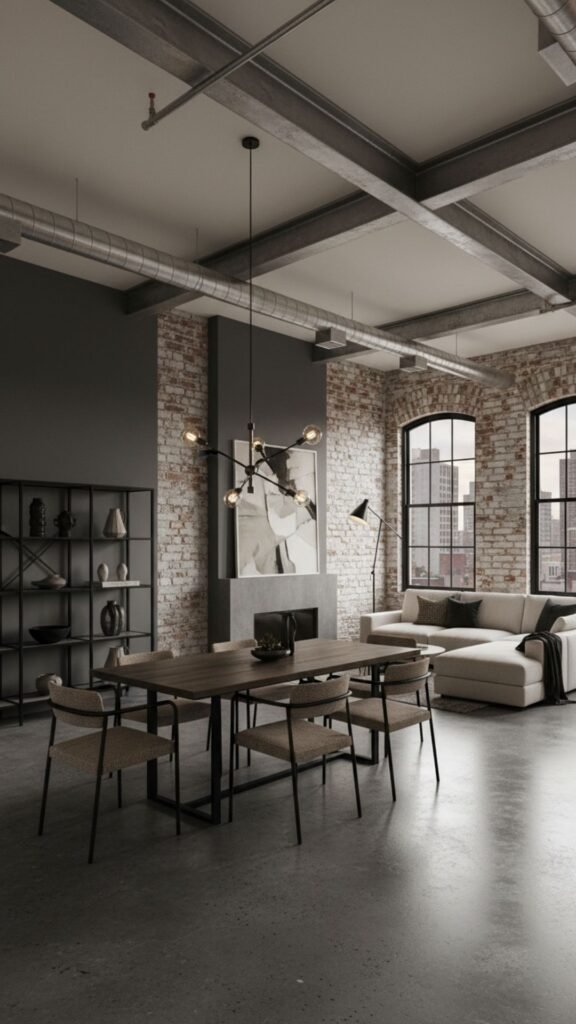
Industrial interiors thrive on a restrained palette—charcoals, warm grays, deep navies, and off-whites. These tones let the textures and materials do the talking.
Steps To Achieve The Look:
- Paint walls in charcoal, warm gray, or deep greige
- Use off-white or cream on ceilings to lift the space
- Introduce moody accents through cushions, rugs, and artwork
- Avoid overly bright or saturated colors that disrupt the industrial calm
9. Greenery and Natural Contrasts
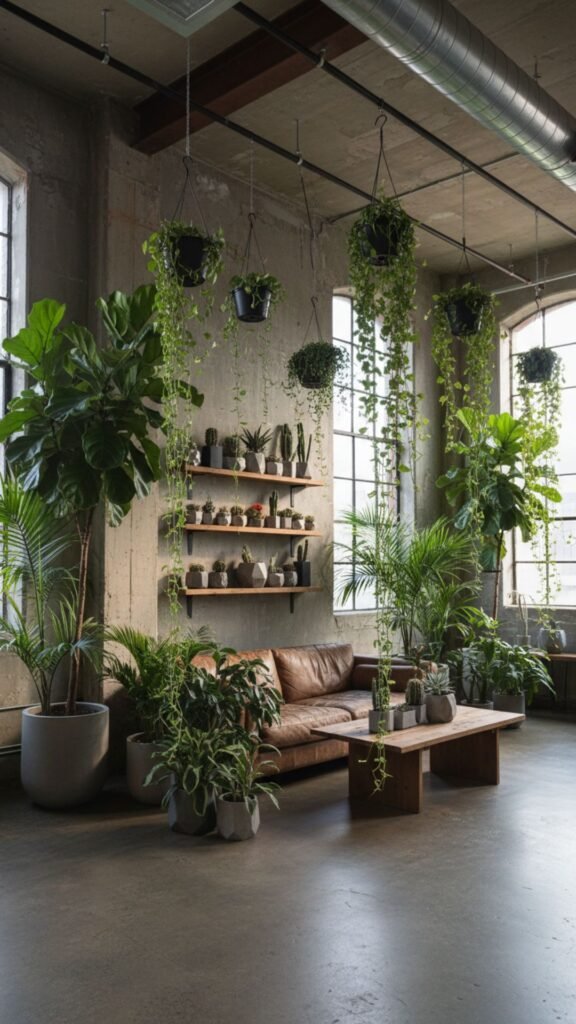
Plants are the secret weapon of great industrial interiors. The organic softness of greenery contrasts beautifully against hard surfaces, making the space feel alive.
Steps To Achieve The Look:
- Place large-leafed plants like fiddle-leaf figs or monstera in woven or concrete pots
- Use hanging planters near windows to draw the eye upward
- Group smaller succulents and cacti on open shelving
- Opt for simple, earthy planters that don’t compete with the industrial backdrop
Bring Your Industrial Vision to Life
Industrial design rewards those who commit to the details. Start with one or two elements—an exposed brick wall, a leather sofa, a statement light fixture—and build from there. The beauty of this style is its flexibility; it evolves naturally as you layer textures, materials, and personal touches over time.
Frequently Asked Questions (FAQs)
1. What defines an industrial living room style?
Industrial style draws from raw, utilitarian aesthetics—exposed structural elements like brick, concrete, and metal paired with weathered wood and neutral tones. It’s a look that celebrates imperfection and embraces the beauty of unfinished materials.
2. Can industrial design work in a small living room?
Absolutely. In smaller spaces, focus on a few key elements rather than going all-in. A feature wall, black metal accents, and open shelving can create an industrial feel without overwhelming a compact room.
3. How do I make an industrial living room feel cozy?
Warmth comes from layering textures. Add a chunky rug, leather cushions, warm Edison bulb lighting, and a few plants. These soft elements balance the harder materials and make the space feel inviting rather than cold.
4. What colors work best in an industrial living room?
Stick to a neutral, earthy palette—charcoal, warm gray, off-white, and deep navy are all strong choices. You can introduce subtle pops of warmth through rust, terracotta, or forest green in your soft furnishings.
5. Is industrial interior design expensive to achieve?
Not necessarily. Many industrial elements—like faux brick panels, pipe shelving kits, and secondhand leather furniture—are budget-friendly options. Thrift stores and salvage yards are great sources for reclaimed wood and vintage metal pieces.