
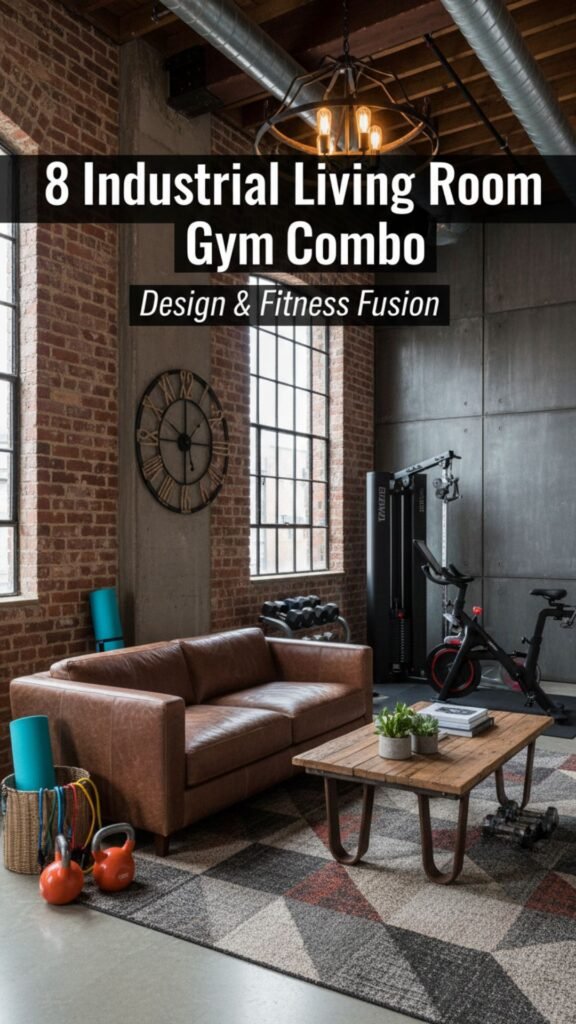
Balancing a love for fitness with a passion for interior design often feels like a heavy lift. You want a dedicated space to sweat, but you do not want your home to look like a commercial fitness center. Blending your workout gear into your daily living area is completely achievable when you use the right design language.

The industrial aesthetic—characterized by raw materials, exposed structural elements, and a utilitarian charm—pairs perfectly with heavy metal fitness equipment. By leaning into this rugged style, your weights and benches become part of the decor rather than an eyesore. Read on to discover eight creative ways to seamlessly integrate a functional gym into your loft-style lounge.
1. The Exposed Brick Barbell Station
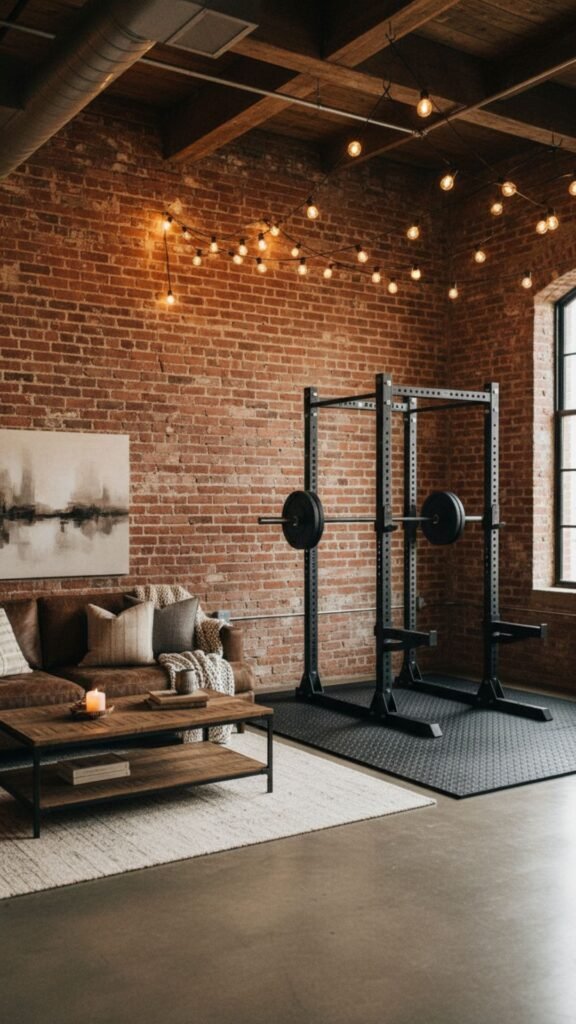
Exposed brick walls are a staple of industrial design and serve as an excellent backdrop for heavy lifting gear. The rough texture of the brick complements the smooth, cold steel of a barbell and weight plates. This setup creates a gritty, old-school boxing gym atmosphere right in your home.
Steps To Achieve The Look:
- Position a sleek, dark metal squat rack against an exposed brick wall.
- Use rubberized black floor mats to define the lifting zone and protect the flooring.
- Hang vintage-style Edison bulb string lights above the rack for warm, moody lighting.
2. The Matte Black Cardio Corner
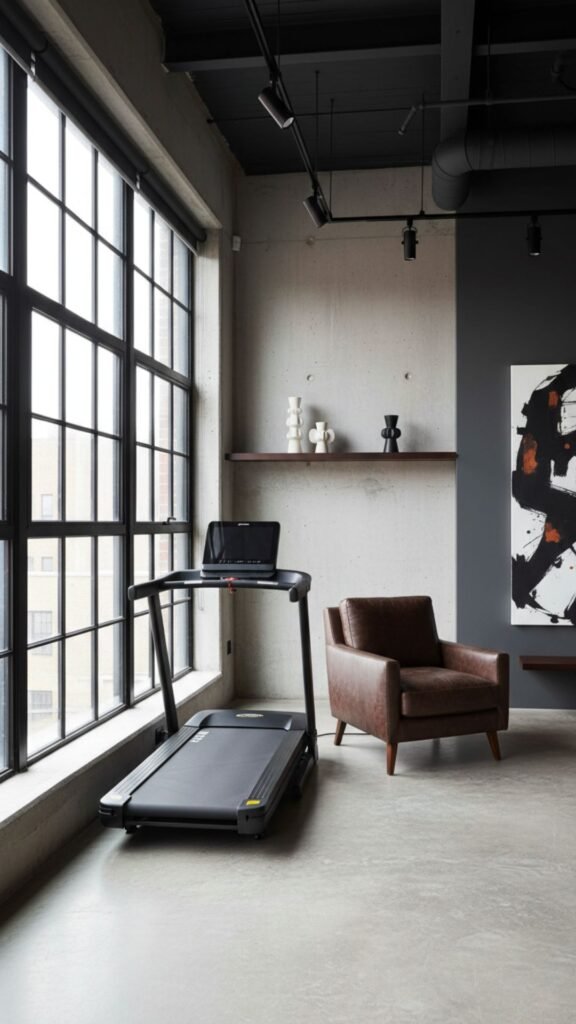
Cardio machines are notoriously difficult to blend into a living space due to their bulky nature. However, selecting equipment with a matte black finish helps them camouflage perfectly into an industrial theme. This approach keeps the room looking cohesive and intentionally designed.
Steps To Achieve The Look:
- Purchase a treadmill or stationary bike with a completely black, unbranded aesthetic.
- Place the machine next to a large, black-framed factory-style window if possible.
- Add a dark leather accent chair nearby to bridge the gap between gym and living room.
3. The Pipe and Wood Yoga Nook
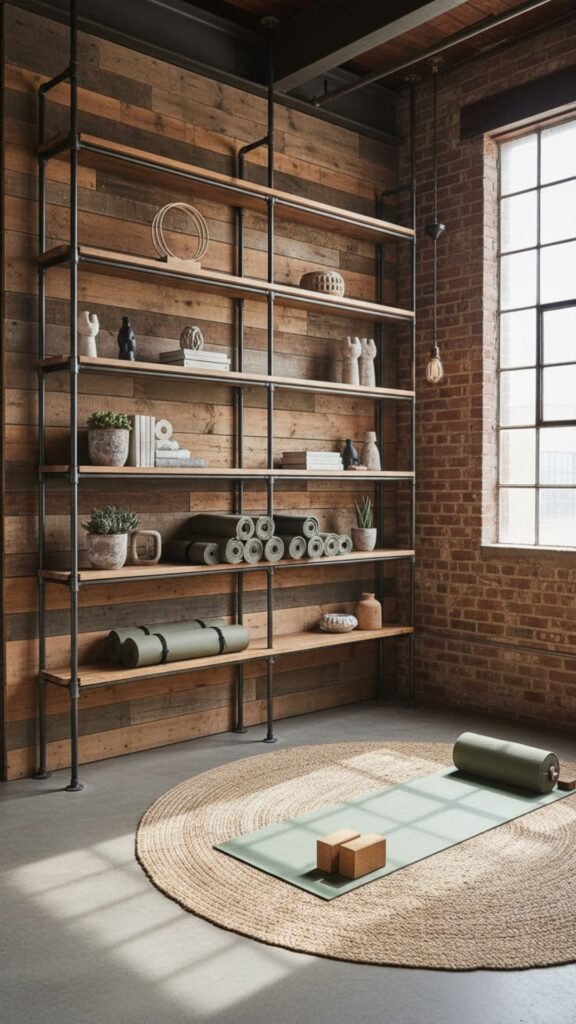
Industrial design does not always mean heavy iron and concrete; it can also incorporate warm woods and distressed pipes. This combination is perfect for creating a grounding, earthy space for yoga and stretching. It softens the room while maintaining that distinct warehouse vibe.
Steps To Achieve The Look:
- Build a custom shelving unit using galvanized steel pipes and reclaimed wood planks.
- Store your rolled-up yoga mats, foam rollers, and blocks neatly on the shelves.
- Lay down a high-quality, muted-tone yoga mat on the floor permanently to define the space.
4. The Concrete Floor Kettlebell Zone
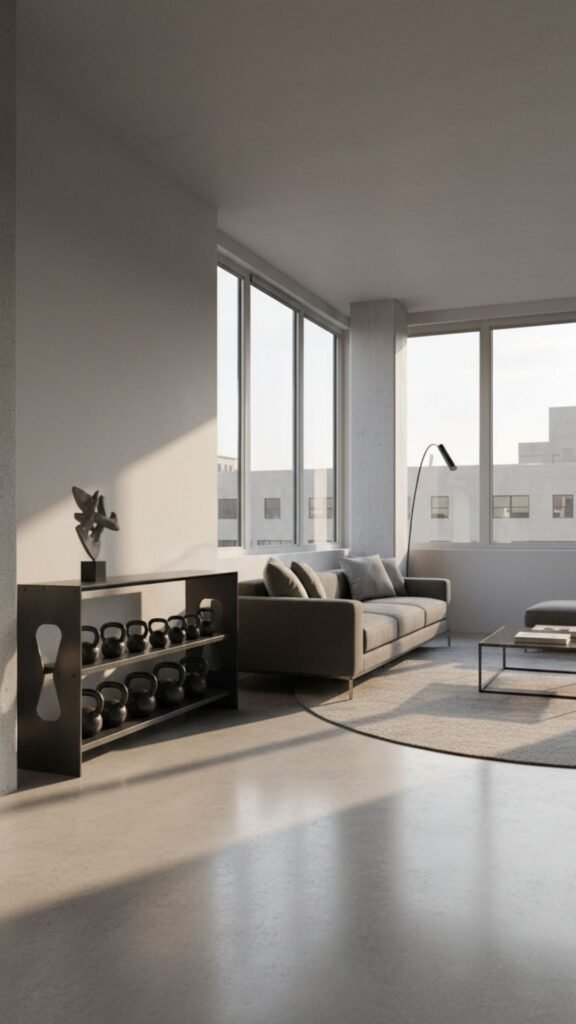
Nothing says industrial quite like polished concrete floors. They are incredibly durable, making them the perfect foundation for a kettlebell workout area. The gray tones of the concrete pair beautifully with cast iron weights.
Steps To Achieve The Look:
- Dedicate a corner of your concrete-floored living room strictly to free weights.
- Arrange cast iron kettlebells in a neat row or on a low-profile metal rack.
- Keep the surrounding furniture minimal to highlight the raw, open feel of the space.
5. The Leather and Iron Resistance Area
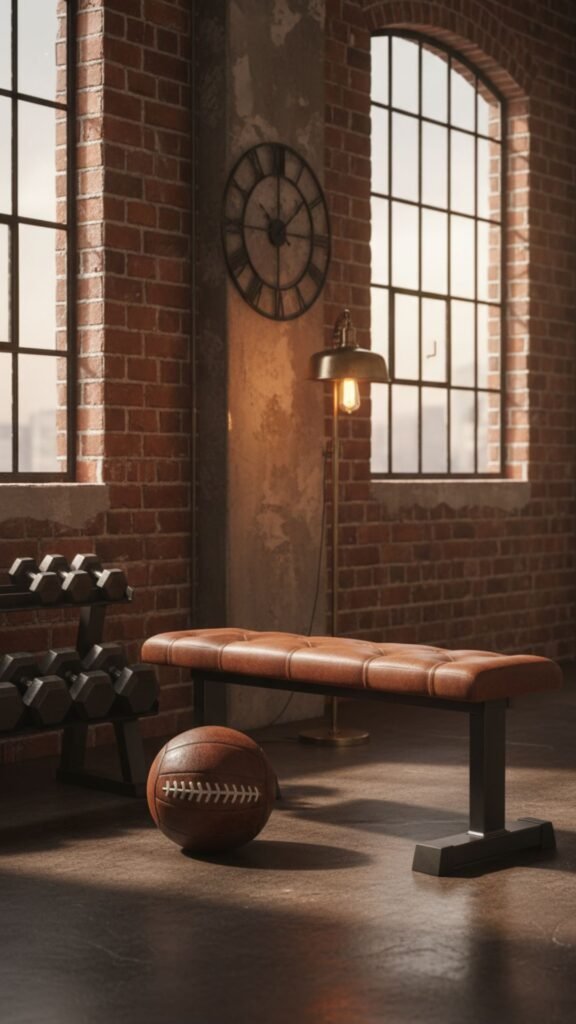
Mixing worn leather with dark iron is a classic industrial design technique. You can easily apply this to a home gym setup by choosing equipment that features these exact materials. It makes the gym gear feel like high-end vintage furniture.
Steps To Achieve The Look:
- Invest in a weight bench that features distressed brown leather upholstery.
- Pair the bench with a set of classic iron hex dumbbells.
- Place a vintage leather medicine ball on the floor as a functional decor piece.
6. The Wire Mesh Storage Wall
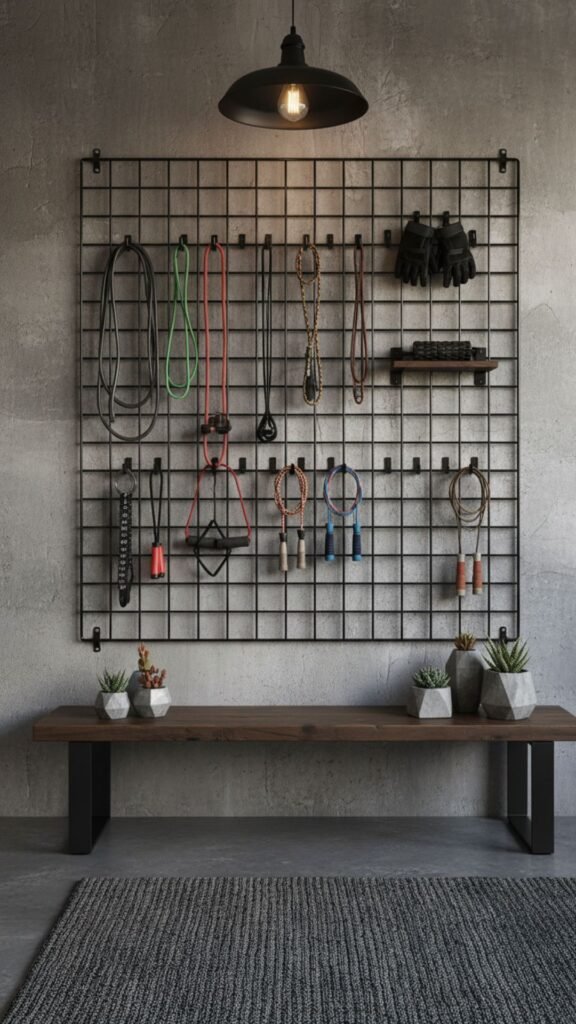
Keeping your gym accessories organized is crucial for maintaining a tidy living room. Wire mesh panels offer a highly functional and stylistically appropriate storage solution. They keep your gear off the floor while adding a cool, factory-floor element to the wall.
Steps To Achieve The Look:
- Mount a heavy-duty wire mesh grid panel securely to your living room wall.
- Use metal S-hooks to hang resistance bands, jump ropes, and lifting belts.
- Paint the mesh grid flat black to match other metal accents in the room.
7. The Vintage Locker Room Vibe
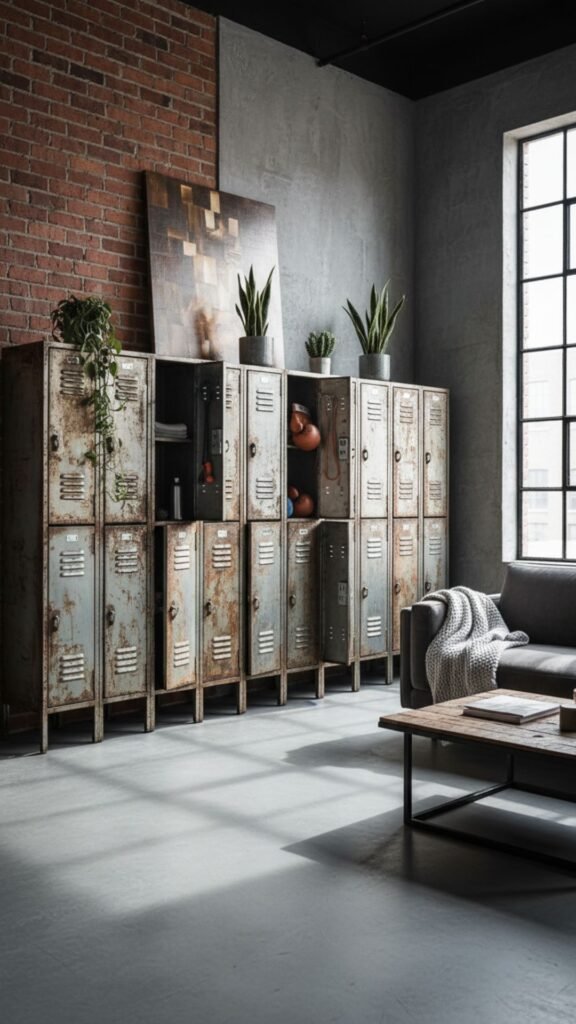
Bring the nostalgic feel of an old-school gymnasium into your living space with metal storage lockers. Lockers provide excellent hidden storage for unsightly gear while serving as a bold industrial statement piece.
Steps To Achieve The Look:
- Source a set of vintage or distressed metal school lockers.
- Use the lockers to hide bright-colored gear, towels, and gym shoes.
- Top the lockers with a few low-maintenance indoor plants to soften the metal exterior.
8. The Minimalist Monochrome Rack
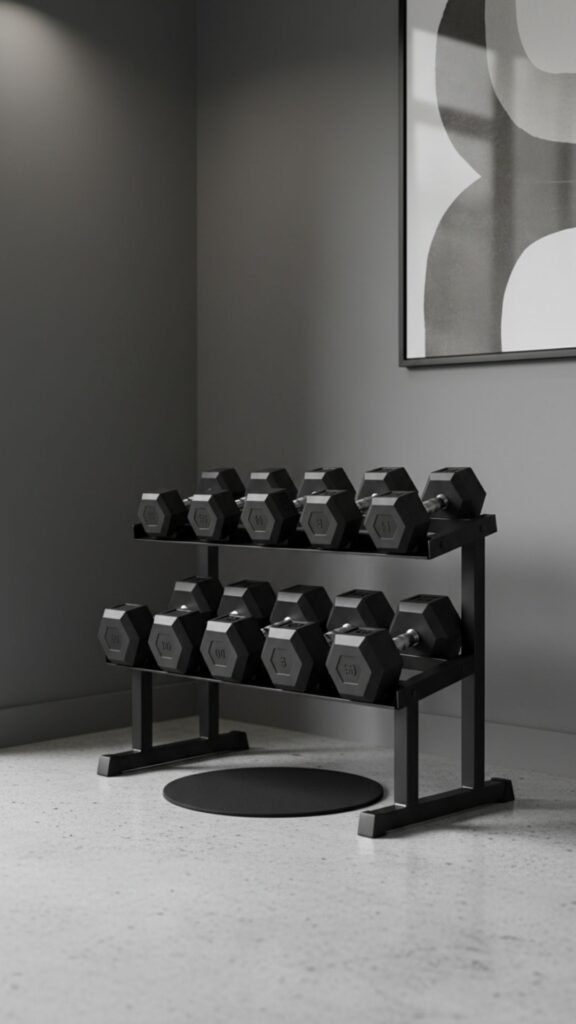
Sometimes the best way to make a living room gym pop is to keep it incredibly simple. A monochromatic color scheme minimizes visual clutter, allowing the industrial textures to stand out. This approach works well in smaller apartments.
Steps To Achieve The Look:
- Choose an all-black metal dumbbell tree or A-frame rack.
- Stock it exclusively with matching black dumbbells to avoid a chaotic look.
- Set the rack against a simple gray or white wall to make the hardware stand out.
Wrapping Up Your Workout Lounge
Creating a cohesive living room gym combo is all about embracing raw materials and intentional design. By matching your equipment to the rugged textures of the industrial style, you can build a space that is both beautiful and functional. Start by upgrading your storage or swapping out one piece of equipment to begin your aesthetic transformation.
Frequently Asked Questions (FAQs)
1. How do I protect my floors from heavy gym equipment?
You should always use high-density rubber gym mats under heavy equipment like squat racks and benches. For a living room setting, consider interlocking mats with a faux-wood or sleek black finish to blend in better with your decor.
2. What are the best colors for an industrial gym living room?
Stick to a neutral and moody palette. Charcoal grays, matte blacks, warm browns from leather or wood, and natural brick reds work best to create that authentic warehouse atmosphere.
3. Can I hide my gym equipment when guests come over?
Yes, using vintage metal lockers or distressed wood cabinets is a great way to conceal smaller items like dumbbells and bands. For larger items, a stylish folding room divider made of canvas and metal piping can quickly hide a cardio machine.
4. How much space do I need for a living room gym?
You can create a highly effective kettlebell or yoga nook in as little as 4×6 feet. For a treadmill or a basic bench setup, aim for a clear area of at least 6×8 feet to ensure safe movement.
5. Is it safe to keep a treadmill in the living room?
Yes, it is perfectly safe as long as you leave enough clearance behind the machine (usually around 6 feet) to prevent injury if you slip. Always ensure the treadmill’s power cord is safely tucked away to prevent tripping hazards.