The ceiling is often the most overlooked surface in interior design. However, treating this “fifth wall” with a touch of classic elegance can completely alter the atmosphere of your home.

Vintage false ceiling designs bring warmth, character, and architectural interest to spaces that might otherwise feel flat. If you want to give your living area a timeless upgrade, exploring these historic styles is a great place to start.
1. Exposed Wooden Beams
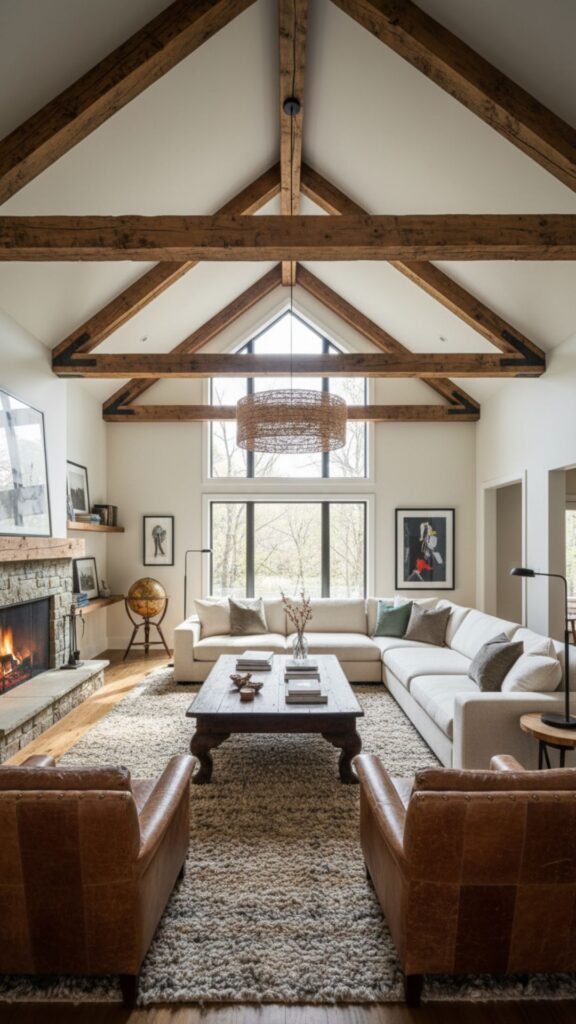
Wooden beams offer a rustic, old-world charm that instantly grounds a large living room. They add structural interest and a warm, organic texture to the space. You can use reclaimed wood for an authentic historic feel or lightweight faux beams for easier installation.
Steps To Achieve The Look:
- Measure your ceiling to space the beams evenly.
- Choose a wood stain that complements your living room furniture.
- Secure faux or solid wood beams directly to the ceiling joists.
2. Intricate Plaster Medallions
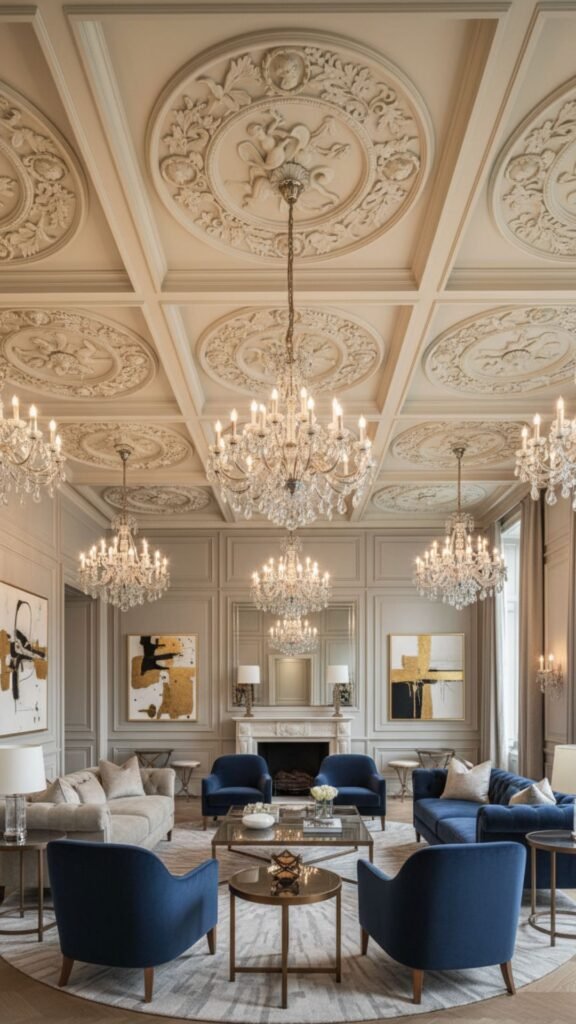
A plaster medallion serves as a stunning focal point, usually anchoring a grand chandelier. This Victorian-inspired design element draws the eye upward, adding a layer of delicate sophistication. It works beautifully in traditional and transitional spaces alike.
Steps To Achieve The Look:
- Select a medallion size proportionate to your light fixture.
- Use strong construction adhesive to attach the medallion.
- Paint it the same color as the ceiling to create a seamless finish.
3. Tin Ceiling Tiles
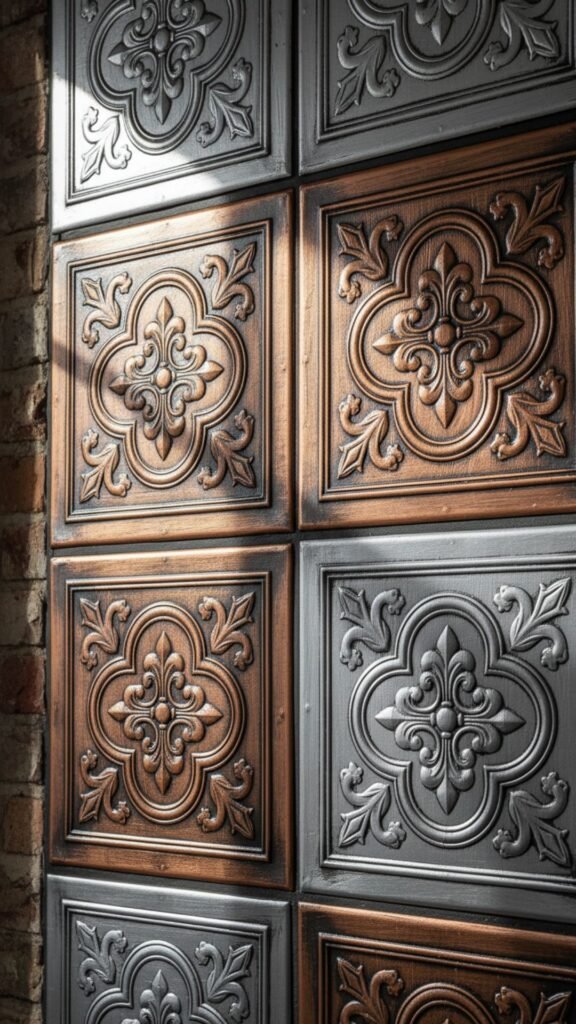
Pressed tin tiles became highly popular in the late 19th century as an affordable alternative to plasterwork. They reflect light beautifully and add a distinct, industrial-chic or Victorian flair. Modern versions are often made of lightweight aluminum or faux-tin PVC.
Steps To Achieve The Look:
- Choose a metallic finish like antique copper or brushed silver.
- Install plywood over your existing ceiling to act as a nailing base.
- Nail or glue the overlapping tiles in a straight, uniform grid.
4. Coffered Ceilings
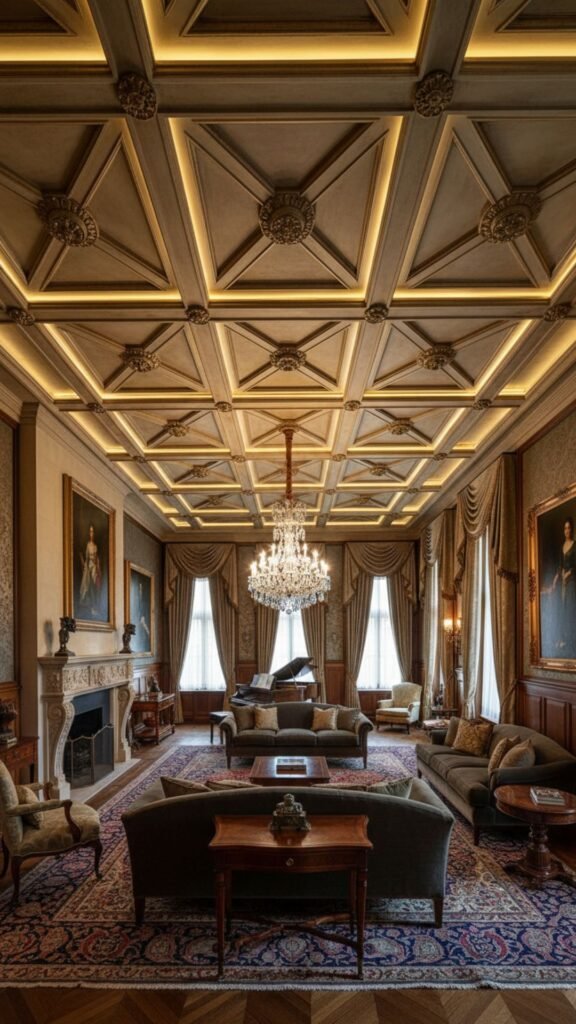
Coffered ceilings feature a grid of sunken panels that add dramatic depth and dimension. This architectural detail is reminiscent of grand libraries and historic estates. It provides excellent acoustics and a highly tailored appearance.
Steps To Achieve The Look:
- Plan a symmetrical grid layout based on your room’s dimensions.
- Install the main intersecting beams securely to the ceiling.
- Finish the inner panels with crown molding for a polished look.
5. Beadboard Paneling
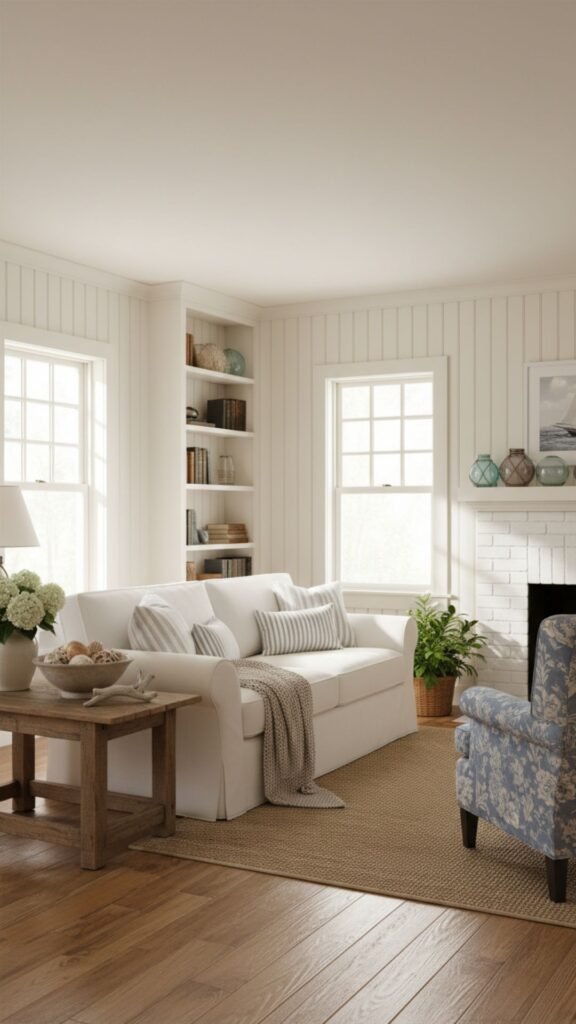
Beadboard brings a cozy, cottage-style aesthetic to any living room. The continuous vertical lines create subtle texture without overwhelming the space. It is particularly effective in coastal or farmhouse-inspired interiors.
Steps To Achieve The Look:
- Purchase pre-primed beadboard sheets or individual planks.
- Secure the panels perpendicular to the ceiling joists.
- Apply a fresh coat of semi-gloss white paint to reflect natural light.
6. Stenciled Borders
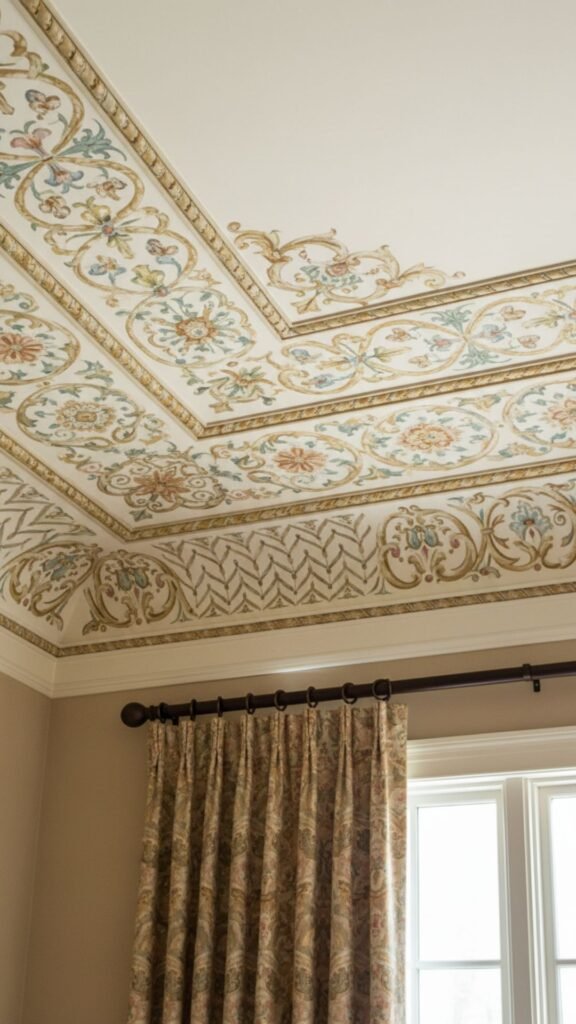
Hand-stenciled borders mimic the intricate hand-painted ceilings of the Renaissance and Arts and Crafts movements. This technique allows for endless customization of colors and patterns. It is an artistic way to frame the room and highlight the ceiling’s perimeter.
Steps To Achieve The Look:
- Paint the base ceiling a soft, neutral color.
- Tape your chosen vintage stencil firmly along the ceiling edge.
- Use a dry brush technique to apply contrasting paint, then peel the stencil carefully.
7. Art Deco Geometric Patterns
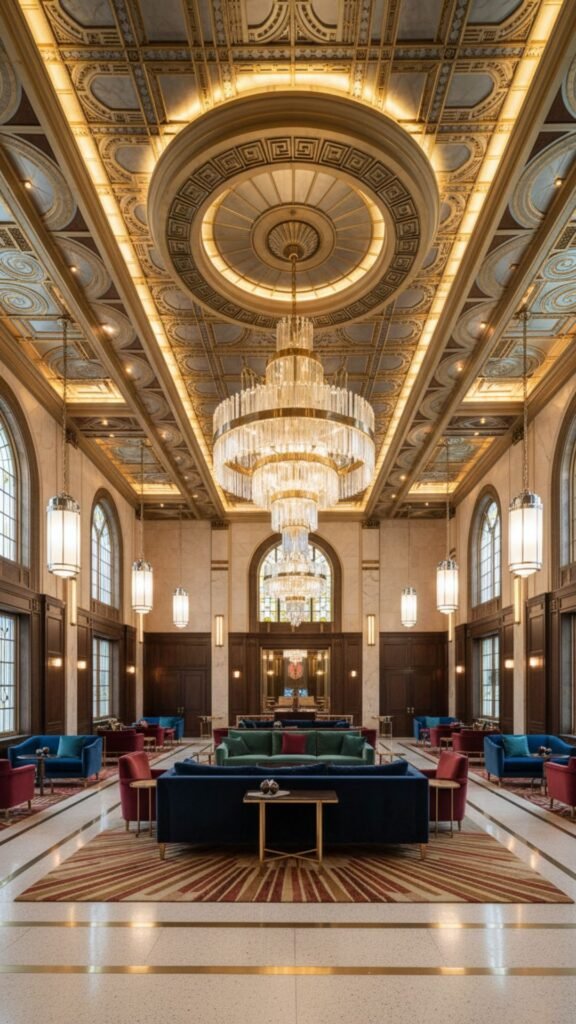
Art Deco ceilings celebrate bold lines, stepped profiles, and geometric symmetry. This 1920s style brings a sense of glamour and opulence to the living room. It pairs perfectly with metallic accents and statement lighting.
Steps To Achieve The Look:
- Design a stepped tray ceiling using drywall and corner beads.
- Incorporate sharp angles or octagonal shapes in the center.
- Add hidden LED strip lighting to highlight the layered tiers.
8. Whitewashed Shiplap
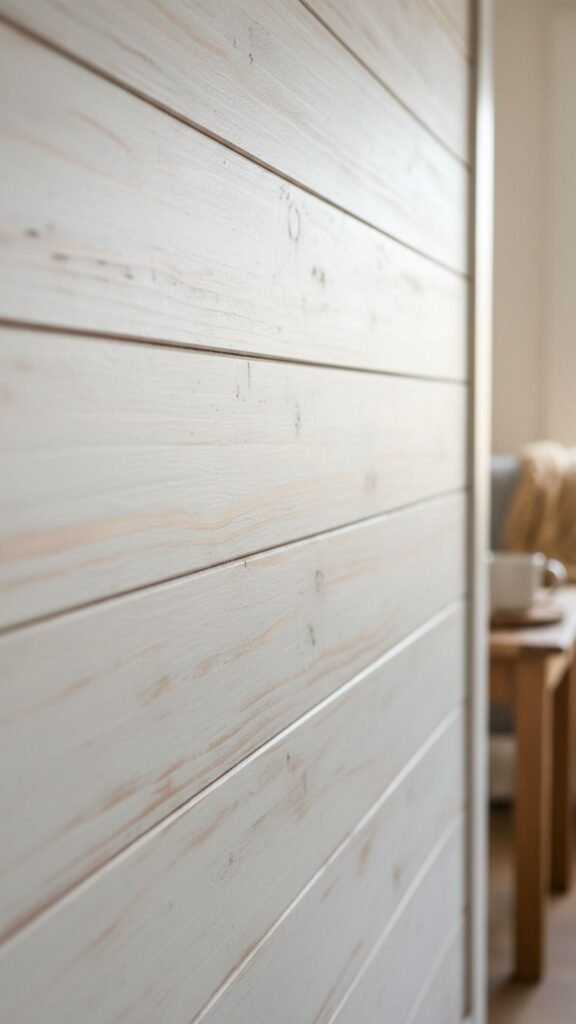
Whitewashed shiplap delivers a relaxed, historic charm that feels both airy and grounded. The slightly distressed finish allows the natural wood grain to show through, hinting at decades of history. It is a staple for shabby-chic or rustic interior designs.
Steps To Achieve The Look:
- Install raw wooden shiplap boards across the ceiling.
- Dilute white paint with water to create a wash.
- Brush the mixture onto the wood and wipe away the excess with a rag.
9. Victorian Cove Lighting
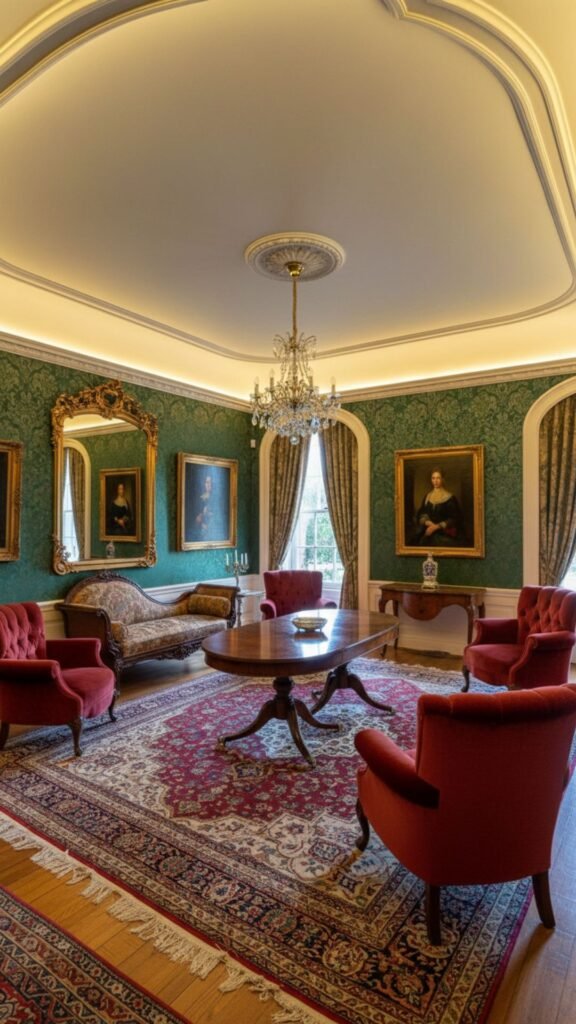
Victorian cove designs use heavily ornamented, curved plaster moldings to seamlessly blend the wall into the ceiling. This softens the hard angles of the room and creates a canopy-like effect. It is an incredibly luxurious way to elevate the space.
Steps To Achieve The Look:
- Install a curved plaster or polyurethane cove molding around the perimeter.
- Hide a soft LED light strip behind the molding’s lower edge.
- Paint the ceiling a lighter shade than the walls to enhance the glow.
Elevate Your Space with Timeless Charm
Choosing a vintage false ceiling is a powerful way to inject personality and history into your home. By thoughtfully selecting a design that matches your architectural style, you can turn an ordinary living room into an extraordinary gathering space. Grab your design plans, consult with a contractor, and start bringing that historic charm to life.
Frequently Asked Questions (FAQs)
1. Can I install a vintage false ceiling in a room with low height?
Yes, but you should choose designs that do not consume too much vertical space. Beadboard, stenciled borders, or flush tin tiles are excellent choices that add texture without making the ceiling feel oppressive.
2. Are tin ceiling tiles expensive to install?
Authentic antique tin tiles can be pricey, but modern alternatives made from PVC or aluminum are very budget-friendly. They are also lightweight, which significantly reduces labor and installation costs.
3. How do I maintain wooden ceiling beams?
Dust them regularly with a long-handled microfiber duster. Depending on the finish, you may want to apply a wood conditioner every few years to keep the wood from drying out or cracking.
4. Can I combine modern lighting with a vintage ceiling?
Absolutely. Mixing eras can create a beautifully curated, transitional look. For instance, pairing a sleek, contemporary chandelier with an intricate plaster medallion creates a striking visual contrast.
5. Is a coffered ceiling suitable for a small living room?
Coffered ceilings generally look best in larger rooms with high ceilings. If you have a small living room, use a shallow coffer design and paint the entire ceiling white to prevent the space from feeling cramped.