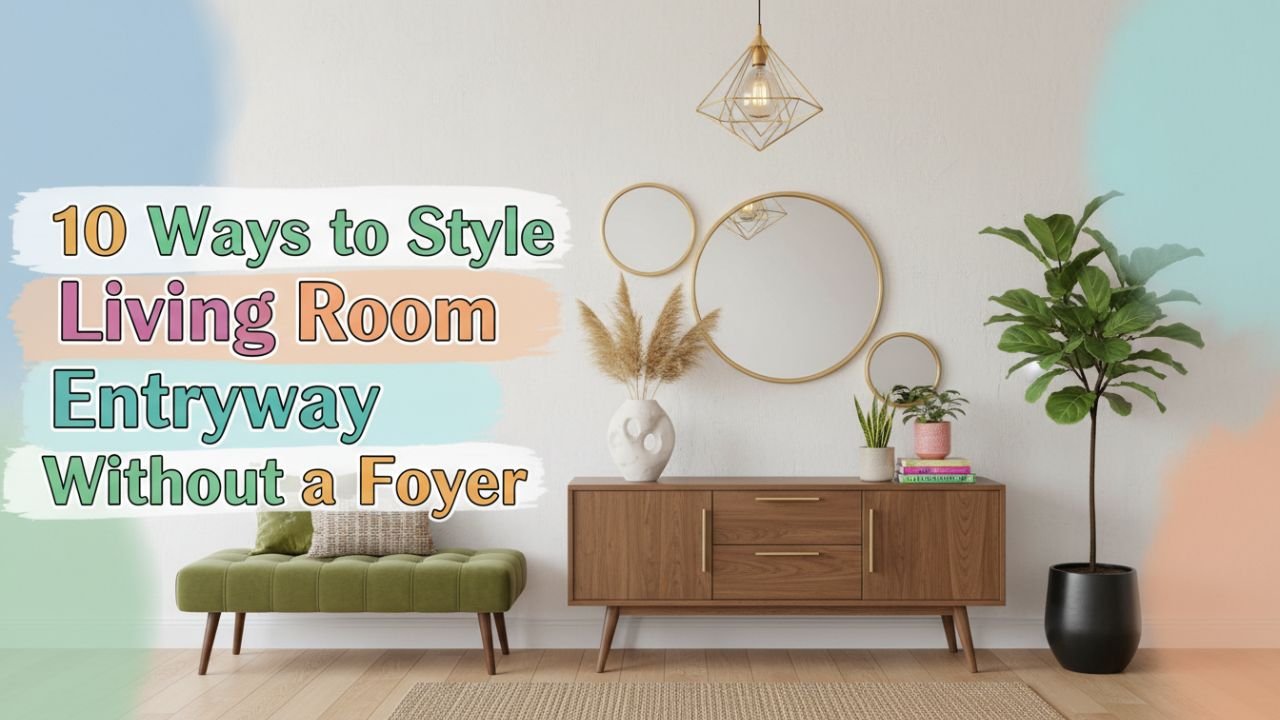
Walking straight through your front door and directly into the living room can feel abrupt. Without a dedicated foyer, the transition from the outside world into your relaxing sanctuary is completely lost. But lacking architectural boundaries doesn’t mean you have to sacrifice a beautiful, welcoming entrance.
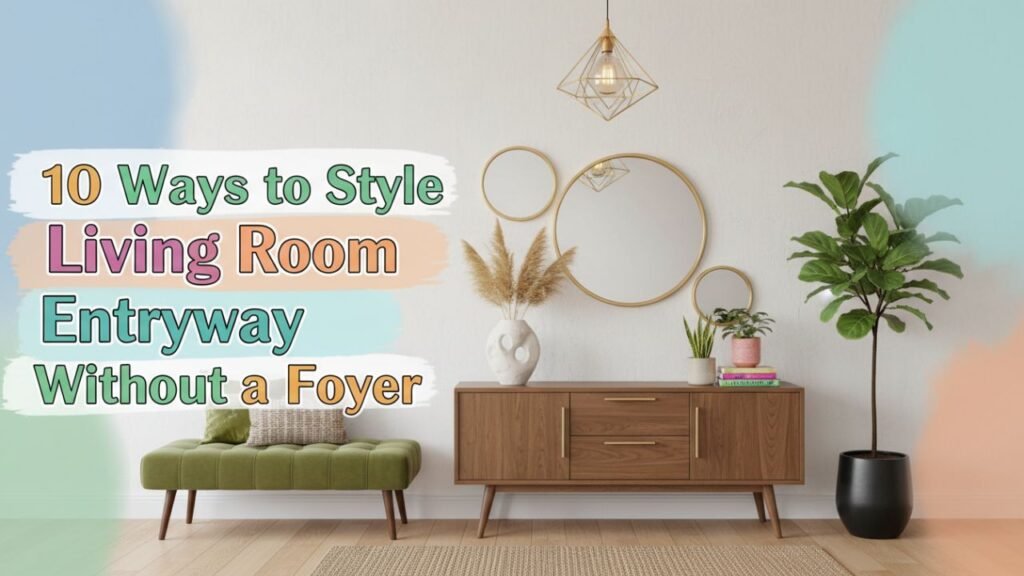
By using strategic furniture placement, clever visual cues, and functional decor, you can easily carve out a stylish drop zone right inside your door. Here are ten creative ways to establish a distinct entryway area that sets the perfect tone for your home.
1. Define a Zone with a Rug
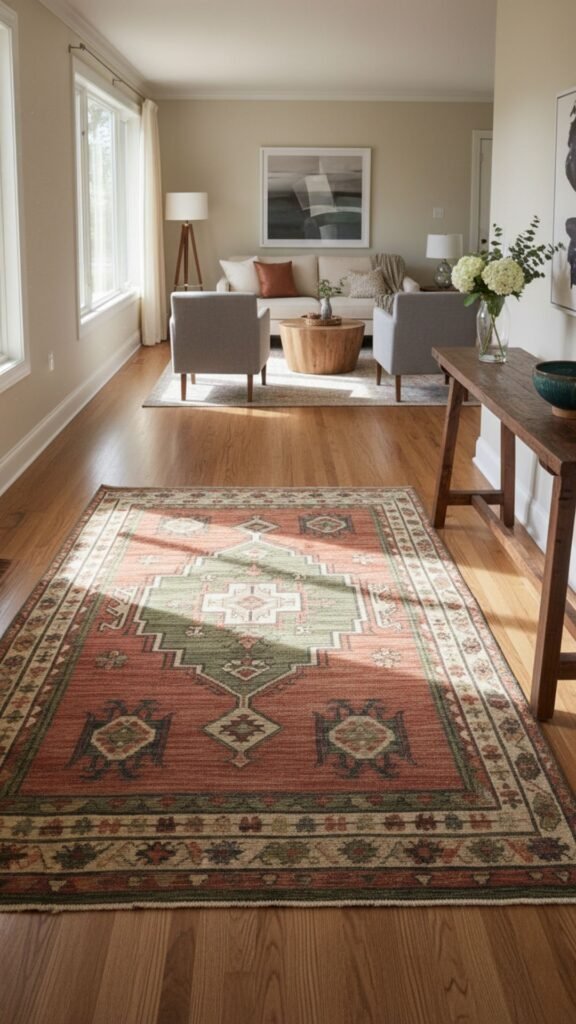
An area rug acts as a visual boundary, signaling exactly where the entryway ends and the living room begins. Choose a durable, low-pile option that can handle heavy foot traffic and trap dirt before it tracks into your main living space. This simple addition instantly anchors the area.
Steps To Achieve The Look:
- Select a rug size that fits the swing of your front door.
- Choose materials like jute or washable cotton for easy maintenance.
- Add a non-slip rug pad underneath to prevent shifting.
2. Use a Slim Console Table
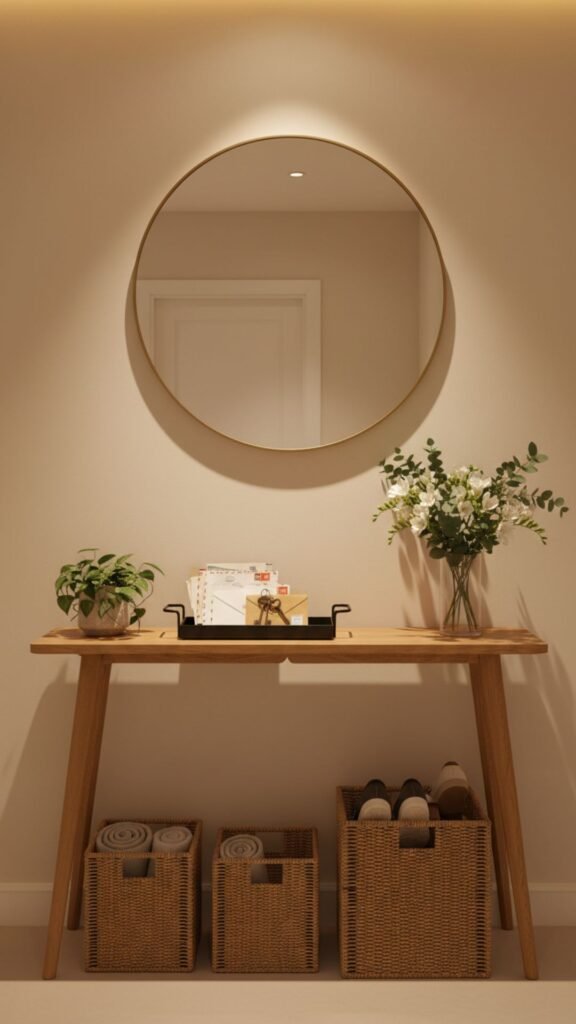
A narrow console table provides essential surface area for keys and mail without eating up valuable square footage. Pushing it against the wall nearest the door establishes a functional hub. You can slide baskets underneath for shoes and place a small tray on top for daily essentials.
Steps To Achieve The Look:
- Measure the wall space to ensure the table depth is under 15 inches.
- Place a decorative catchall bowl or tray on the surface.
- Tuck two matching woven baskets beneath the table for hidden storage.
3. Create a Drop Zone with Floating Shelves
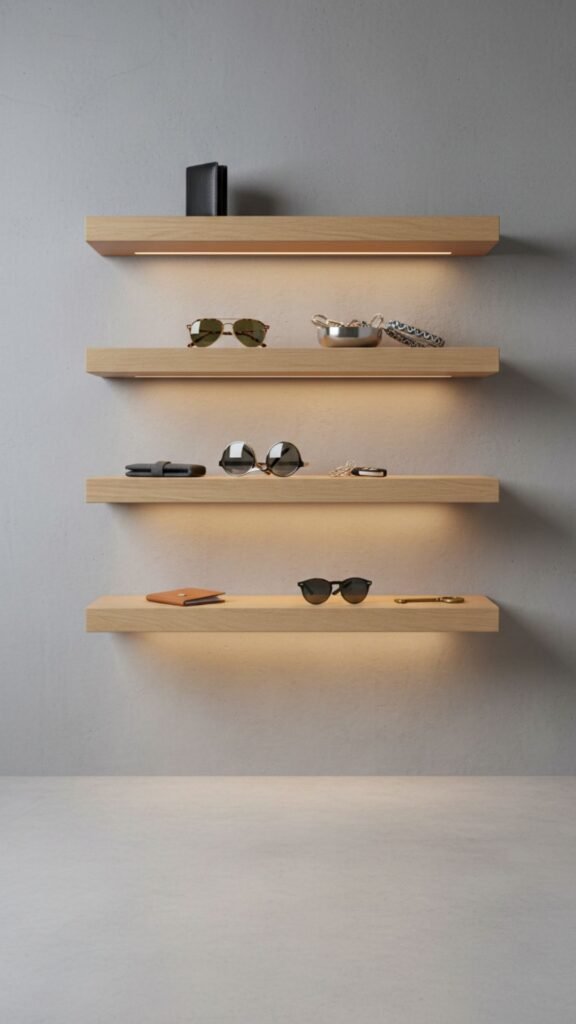
If floor space is non-existent, look to your walls. Floating shelves offer a minimalist alternative to bulky furniture, providing just enough room for your wallet, sunglasses, and a small decorative accent. This keeps the floor completely clear while still serving a vital purpose.
Steps To Achieve The Look:
- Install a sturdy floating shelf at waist height.
- Mount a second, smaller shelf slightly higher for decorative items.
- Keep the styling minimal to avoid a cluttered look right at the door.
4. Hang a Large Mirror
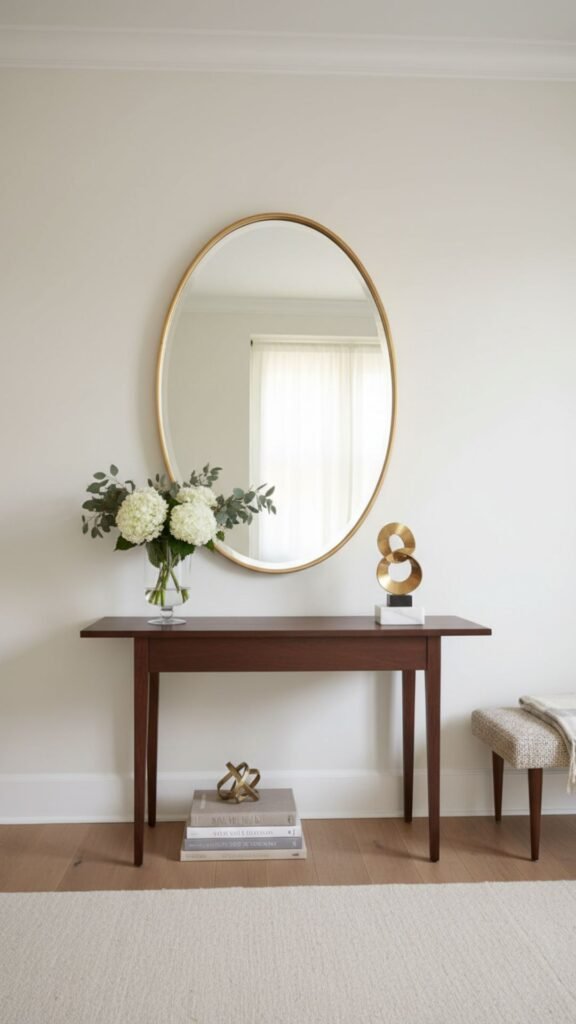
A strategically placed mirror bounces light around the room and creates the illusion of a larger, distinct space. It also gives you a convenient spot for a quick outfit check before heading out. Positioning it directly above a table or bench grounds the entryway vignette.
Steps To Achieve The Look:
- Choose a mirror with a frame that complements your living room decor.
- Hang it securely at eye level, centered over your entryway furniture.
- Ensure it reflects a pleasant view, like a window or a piece of art.
5. Incorporate a Small Bench or Stool
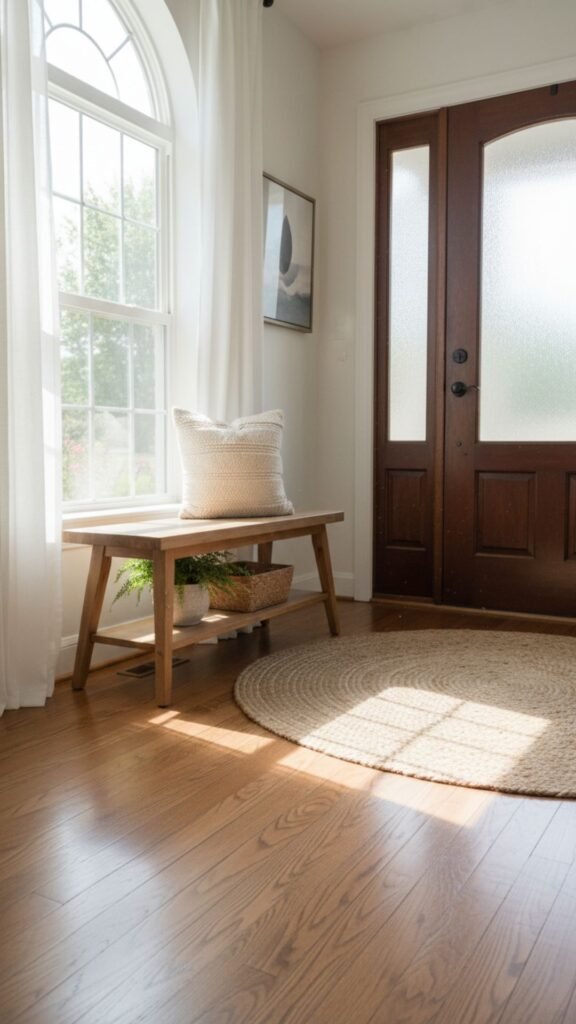
A place to sit down and take off shoes instantly validates the area as a mudroom or foyer alternative. A slim bench or a single stylish stool tucked beside the door provides comfort and function. It also offers a spot to temporarily rest heavy bags or groceries.
Steps To Achieve The Look:
- Pick a narrow, backless bench to maintain a spacious feel.
- Place a cozy throw pillow on top for added texture.
- Leave space under the bench to slide daily footwear out of the way.
6. Use Statement Lighting
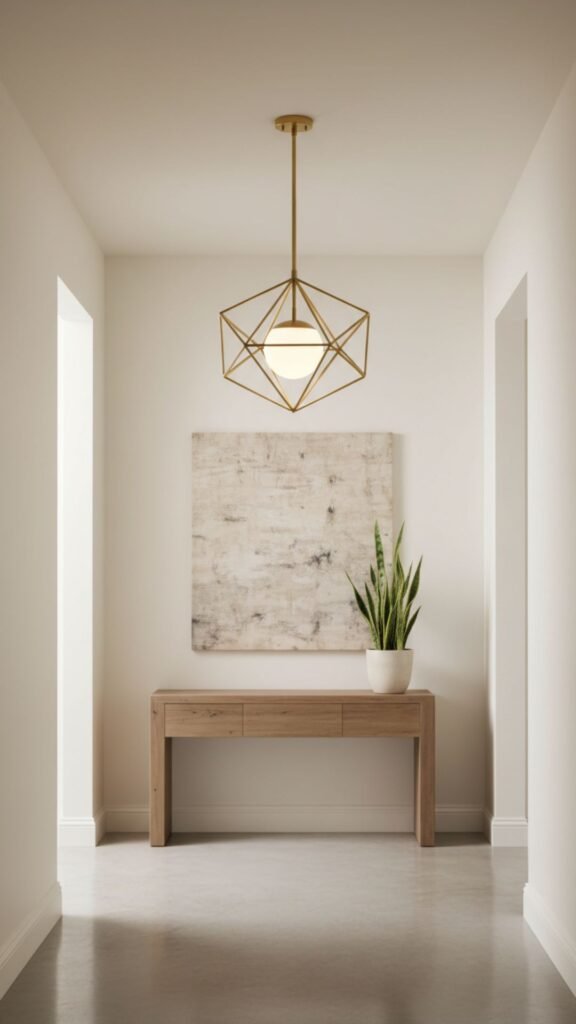
Hanging a distinct pendant light or installing an eye-catching sconce specifically over your entry area creates a separate “room” through illumination. The change in lighting draws the eye and highlights your entryway styling, setting it apart from the general living room lighting.
Steps To Achieve The Look:
- Hardwire a plug-in pendant or wall sconce near the door.
- Use a warm, welcoming lightbulb to create a cozy glow.
- Ensure the light fixture hangs high enough to clear the door swing.
7. Add Wall Hooks for Functionality
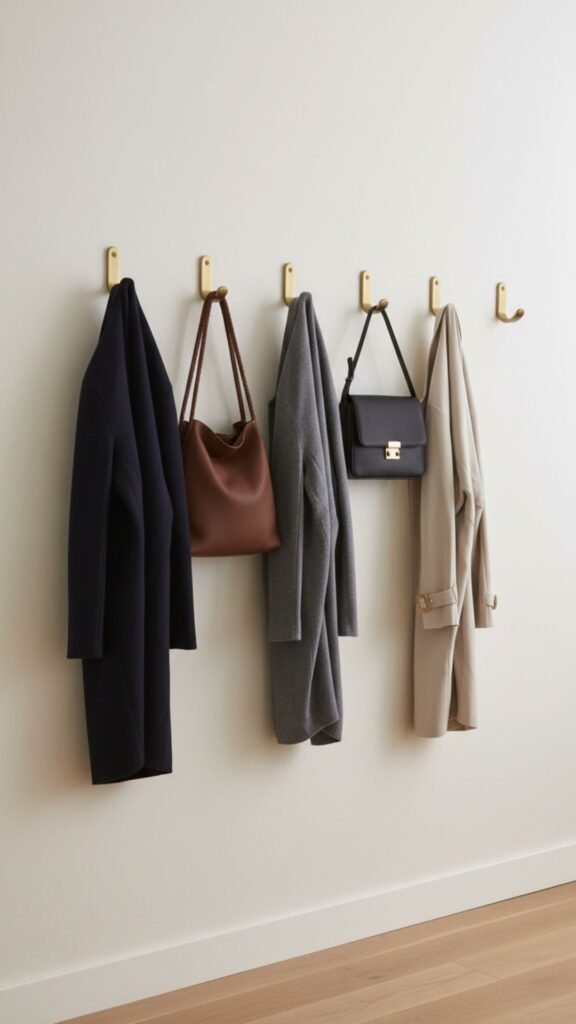
Coats and bags need a home, and a row of stylish wall hooks is the perfect solution for a space-starved entry. Instead of a bulky freestanding coat rack, wall pegs keep outerwear organized and flat against the wall. This turns vertical space into a highly functional storage zone.
Steps To Achieve The Look:
- Install a row of sturdy hooks around five feet off the ground.
- Space the hooks evenly to allow bulky winter coats room to hang.
- Use the hooks selectively; store out-of-season coats in a closet.
8. Define the Space with Paint
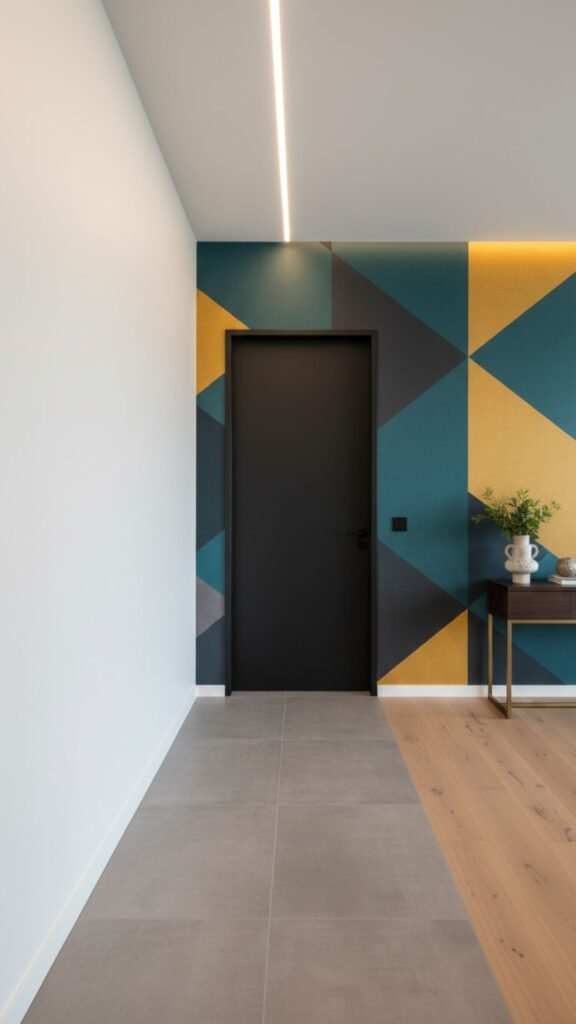
A clever paint job can act as architectural separation. Painting an arch, a solid block of color, or applying striking wallpaper to the specific wall area next to your door clearly designates the entryway. This color blocking technique is highly effective for open-concept layouts.
Steps To Achieve The Look:
- Use painter’s tape to map out a clear section of the wall.
- Choose a contrasting color that still ties into your living room palette.
- Paint the designated area and let it dry completely before adding furniture.
9. Bring in Greenery
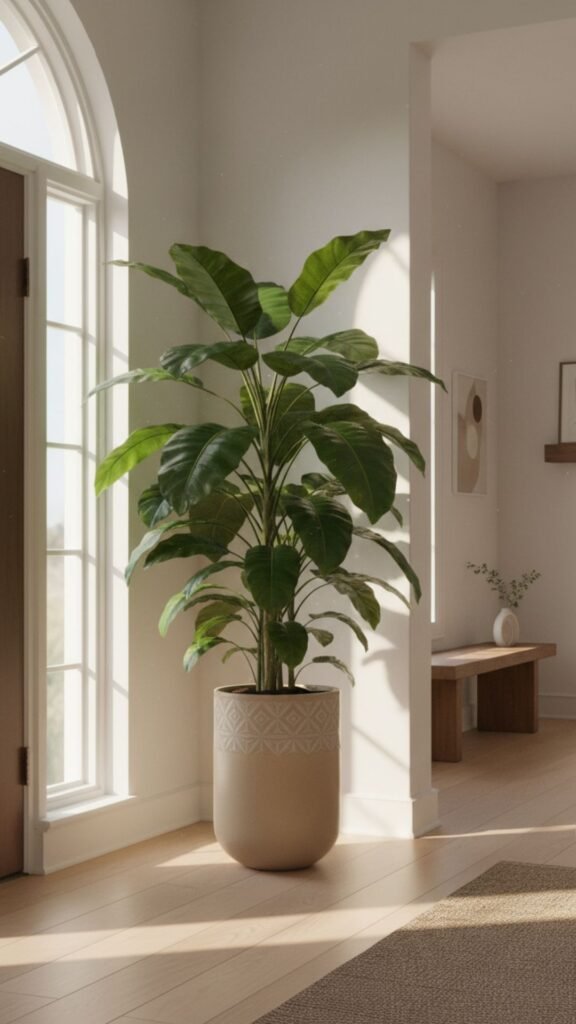
Plants breathe life into any space and can serve as natural dividers. Placing a tall potted plant right at the edge of your makeshift entryway creates a soft, organic barrier that gently separates the door area from the sofa. It adds vibrancy and warmth the moment you walk inside.
Steps To Achieve The Look:
- Select a low-maintenance, tall houseplant like a snake plant or fiddle leaf fig.
- Pot it in a heavy, stylish planter to prevent tipping.
- Position the plant at the boundary line of your entryway zone.
10. Set Up a Room Divider
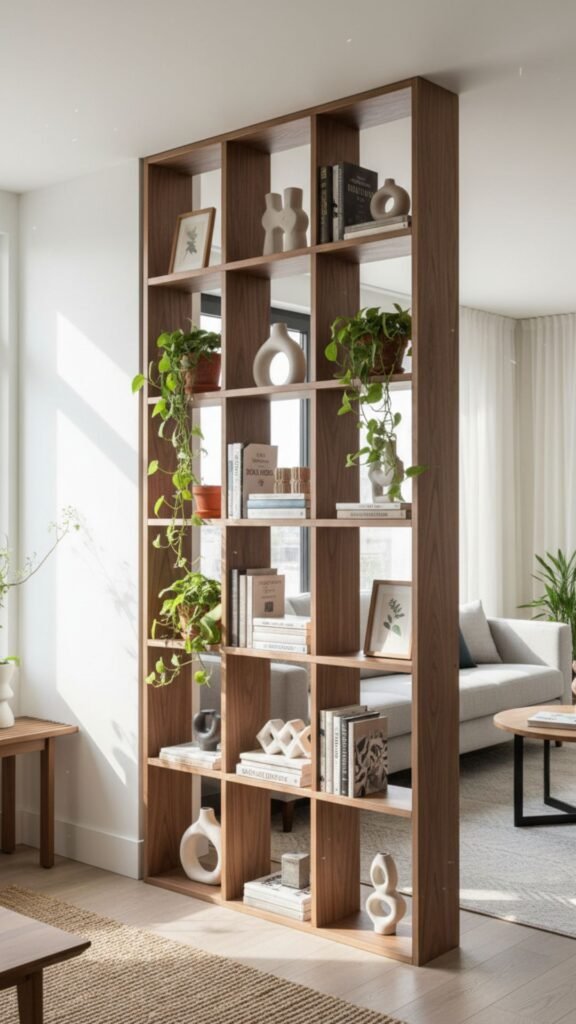
For a more physical separation, a slatted wood screen or an open bookshelf can act as a literal wall. This provides a distinct foyer feel and gives you a surface to place entry furniture against. Open designs ensure you don’t block natural light from the rest of the room.
Steps To Achieve The Look:
- Choose a freestanding room divider or open-backed bookcase.
- Position it perpendicular to the front door to create a mini hallway.
- Decorate the shelves sparsely to maintain a light, airy aesthetic.
Make Your Entrance Grand
You do not need an architect to build a beautiful foyer. By implementing a few of these creative zoning strategies, you can establish a practical and gorgeous entryway that keeps your home organized. Start by choosing just two or three elements from this list to transform the first few square feet of your living room today.
Frequently Asked Questions (FAQs)
1. How do I keep a small entryway from looking cluttered?
Start by limiting what you store by the door. Only keep in-season coats and your most frequently worn shoes in the entry area. Utilize closed storage like baskets or small cabinets to hide visually noisy items like mail and keys.
2. What type of rug is best for an entryway right in the living room?
Opt for an indoor/outdoor rug, a low-pile wool rug, or a washable cotton runner. These materials are highly durable, easy to clean, and low enough that your front door can easily swing over them without catching.
3. Can I create an entryway if my door opens directly into the middle of the room?
Yes. You can use the back of your living room sofa to create a “hallway” path. Alternatively, place a rug right at the door and position a small, round pedestal table nearby to act as a central drop zone.
4. Where should I put my shoes if I don’t have space for a bench?
Use a slim shoe cabinet that mounts to the wall or sits flush against the baseboards. You can also utilize a long, narrow tray on the floor tucked neatly against the wall to keep muddy shoes contained.
5. How much space do I need to create a makeshift foyer?
You only need about three to four square feet. Even a simple combination of a wall hook, a small mirror, and a floating shelf takes up virtually zero floor space but provides the full functionality of an entryway.