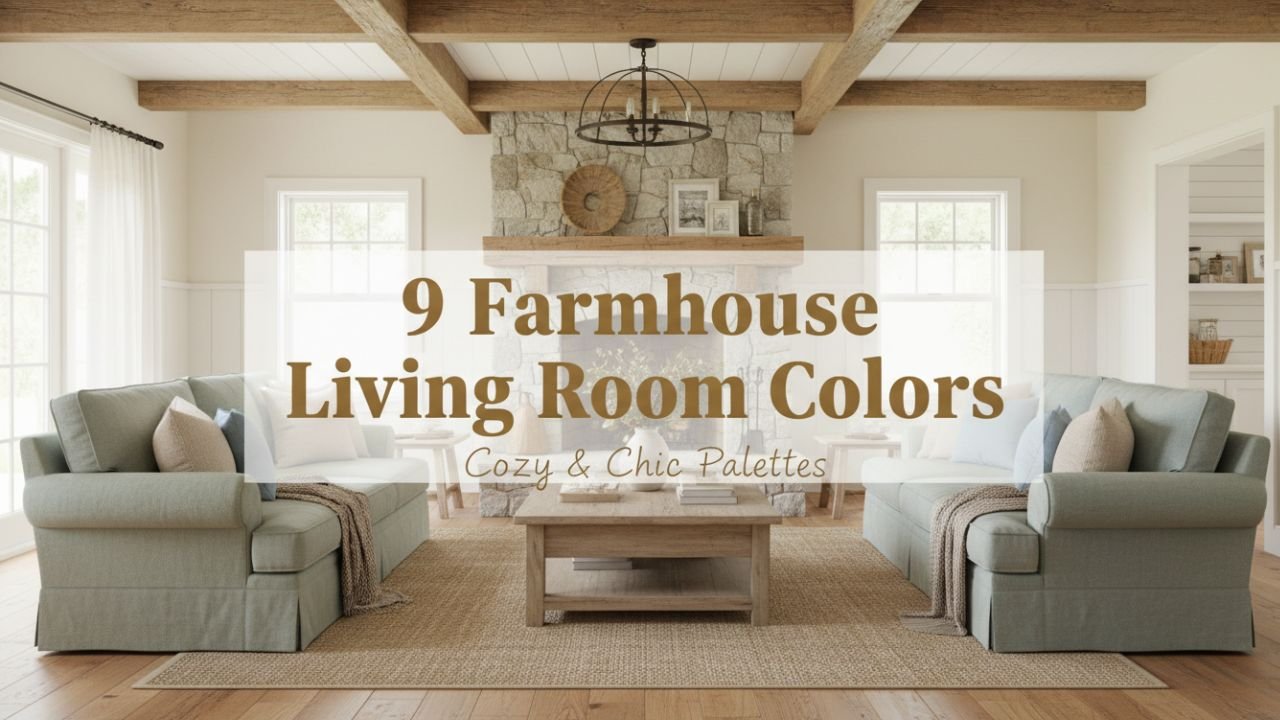
Finding the perfect paint shade is the first step in creating a cozy, rustic retreat. The farmhouse aesthetic relies heavily on tones that mimic nature, offering a sense of calm and comfort the moment you walk through the door. If your space feels a bit cold or uninspired, updating your walls can instantly change the atmosphere.
Choosing the right palette doesn’t have to be complicated. By sticking to grounded, nature-inspired hues, you can build a versatile foundation that pairs beautifully with natural wood, vintage textiles, and plush seating. Here are nine gorgeous colors to help you achieve that signature welcoming vibe.
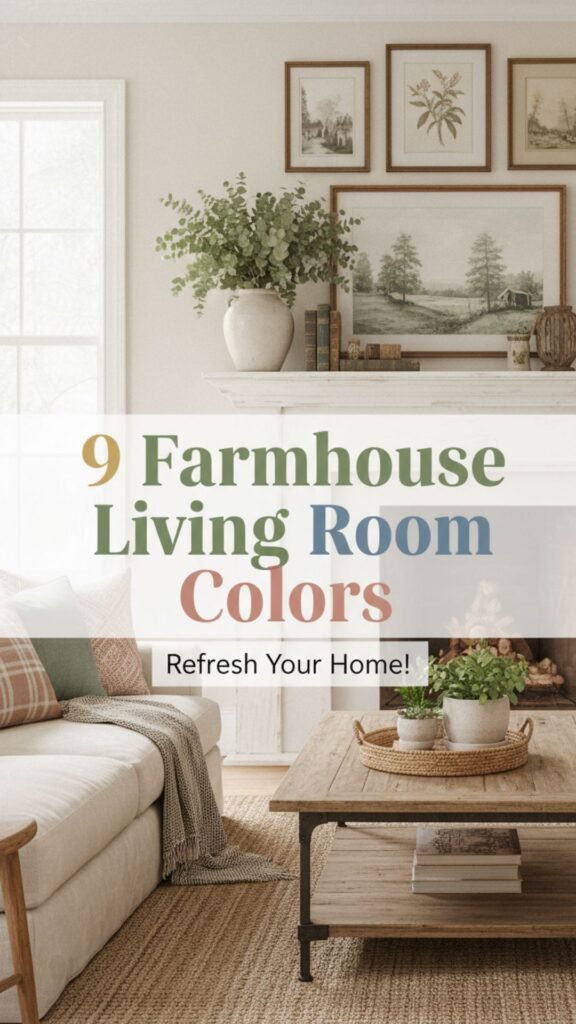
1. Creamy White
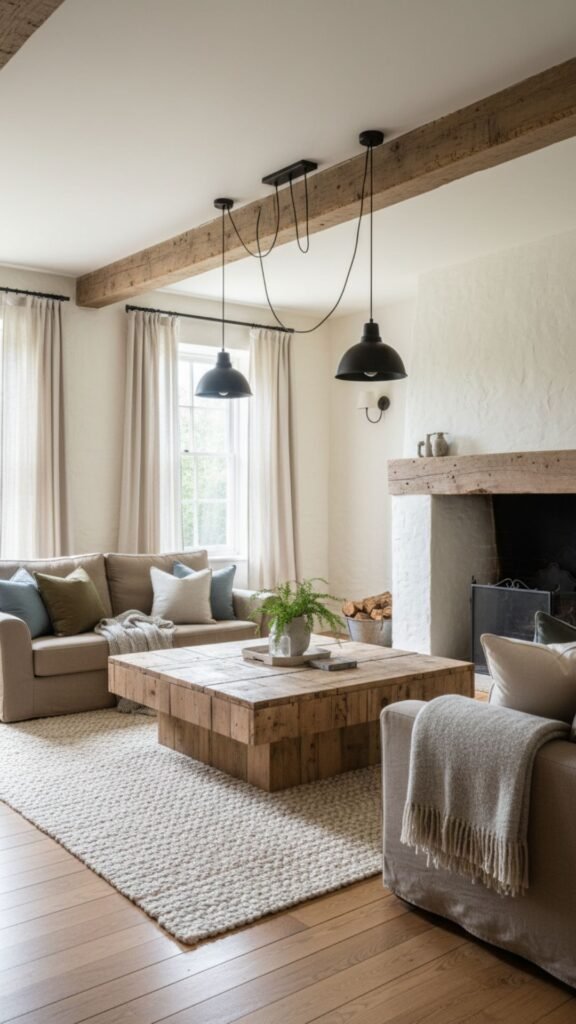
A soft, creamy white serves as the ultimate blank canvas for a farmhouse interior. Unlike stark, clinical whites, this warm variation reflects natural light beautifully while maintaining a soft, inviting energy. It allows your textured fabrics and wooden furniture to take center stage.
Steps To Achieve The Look:
- Pair with distressed wood beams or a reclaimed coffee table.
- Incorporate soft linen curtains to add movement and texture.
- Use matte black metal accents on light fixtures for contrast.
2. Soft Sage Green
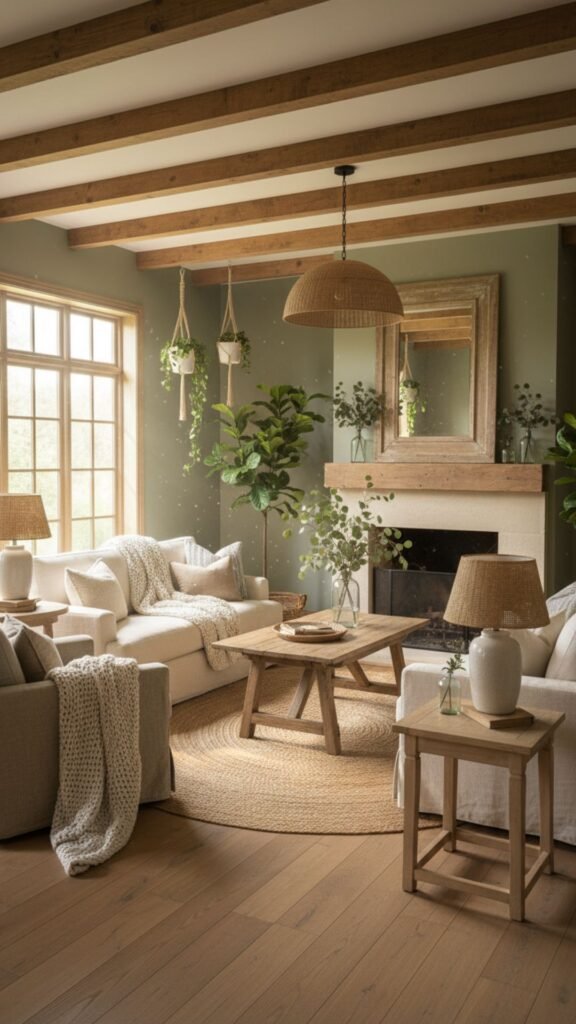
Bringing the outdoors inside is a staple of rustic design, and soft sage green does this flawlessly. This muted, earthy tone promotes relaxation and pairs exceptionally well with both dark and light wood finishes. It acts as a subtle neutral that still adds a touch of personality to your walls.
Steps To Achieve The Look:
- Add indoor plants or dried eucalyptus branches to amplify the earthy feel.
- Layer with chunky knit throws in cream or beige.
- Choose natural oak flooring or light wood side tables.
3. Warm Greige
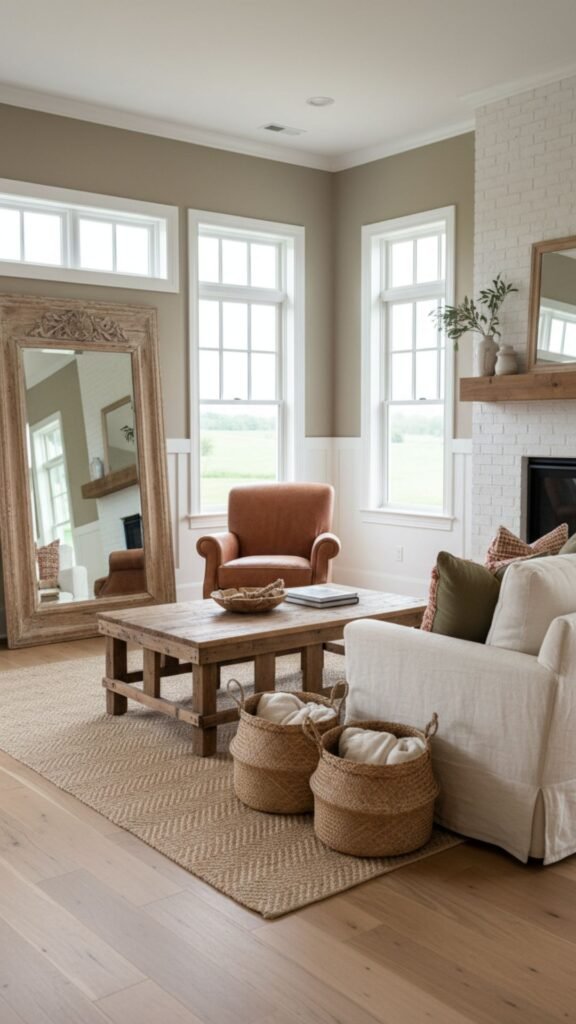
Greige combines the crispness of gray with the earthy warmth of beige. It is a highly adaptable color that shifts beautifully depending on the lighting in your room. This shade provides a sophisticated backdrop that feels both modern and deeply rooted in classic country style.
Steps To Achieve The Look:
- Contrast the walls with crisp white trim and baseboards.
- Introduce leather furniture, like a worn-in cognac armchair.
- Hang vintage-inspired mirrors with weathered wooden frames.
4. Muted Navy Blue
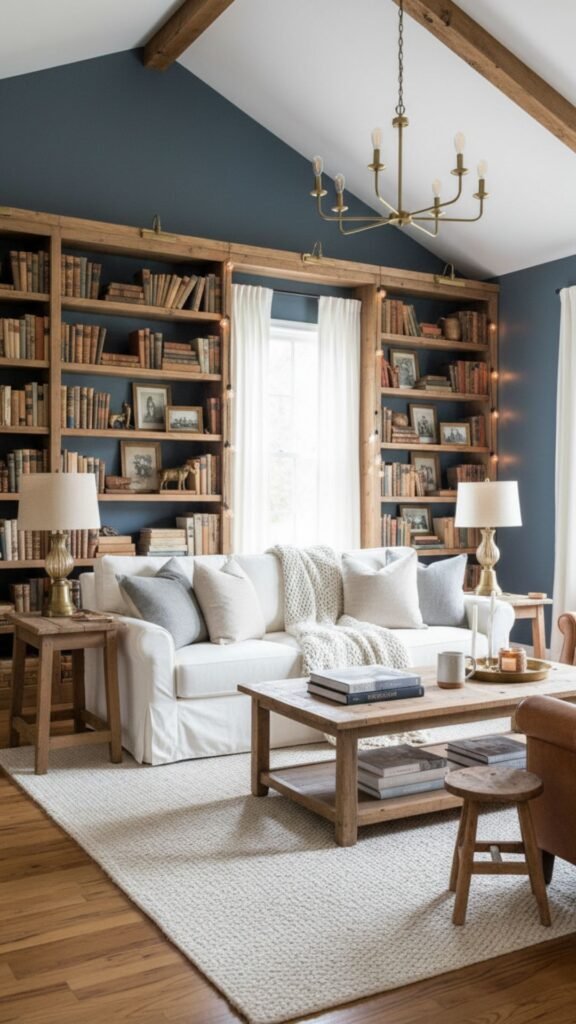
For those wanting a bit more drama without losing the cozy factor, muted navy blue is an excellent choice. This deep, rich color creates an intimate, library-like atmosphere. It works perfectly as an accent wall or across the entire room for a bold, enveloping feel.
Steps To Achieve The Look:
- Balance the dark walls with plenty of natural light and light-colored rugs.
- Use brass or antique gold hardware to add a touch of warmth.
- Accentuate with crisp white throw pillows and slipcovers.
5. Earthy Terracotta
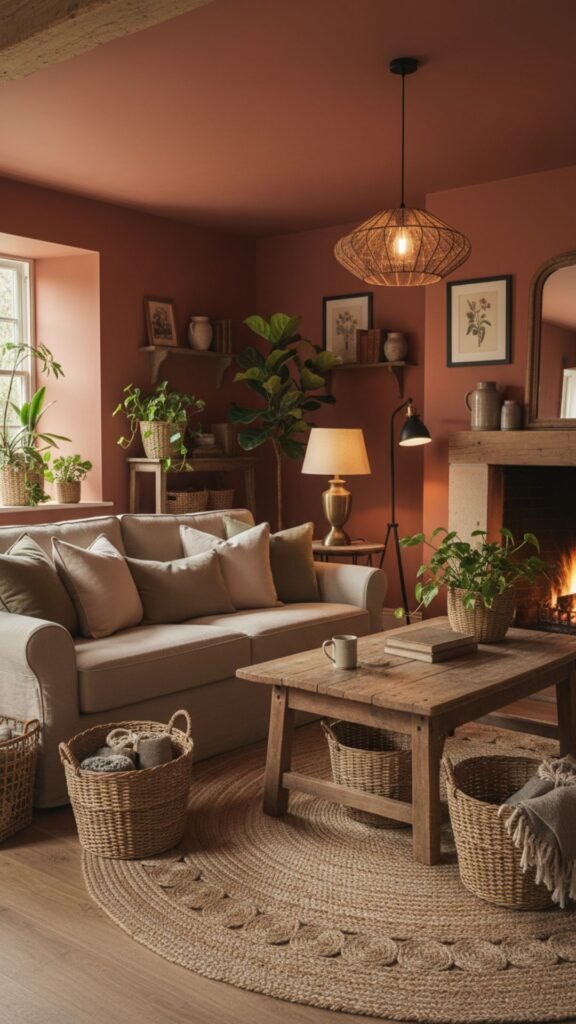
Terracotta brings the baked warmth of clay right into your home. This rich, rusty orange-brown adds an instant feeling of coziness and history. It is perfect for spaces where you want to encourage conversation and lingering, like a living room or den.
Steps To Achieve The Look:
- Pair with natural woven elements like jute rugs and rattan baskets.
- Keep larger furniture pieces neutral, such as a beige linen sofa.
- Add touches of deep green through textiles or houseplants.
6. Dusty Rose
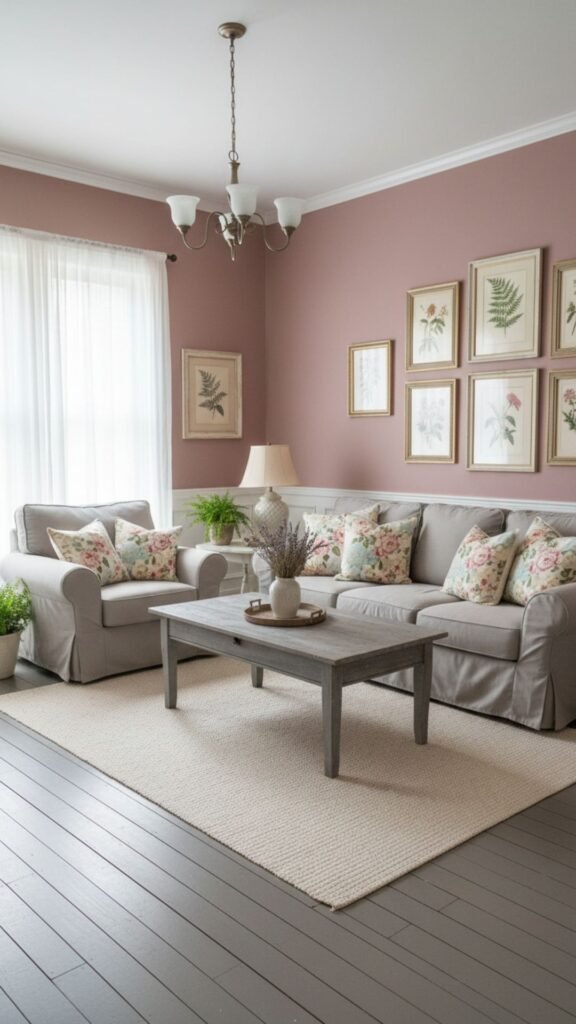
A subtle, dusty rose adds a gentle, romantic softness to the farmhouse aesthetic. It feels slightly vintage and historic, bringing a quiet charm without overwhelming the senses. This muted pink pairs surprisingly well with traditional rustic elements.
Steps To Achieve The Look:
- Combine with weathered gray wood accents.
- Use floral or botanical prints on throw pillows or wall art.
- Keep the ceiling and trim a bright, clean white.
7. Charcoal Gray
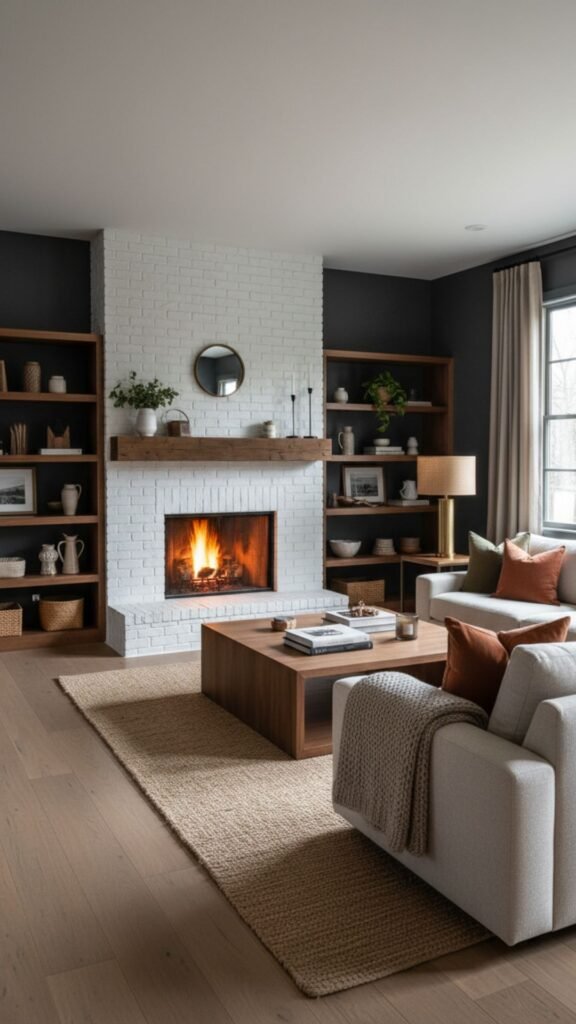
Charcoal gray offers a moody, modern twist on traditional country design. It provides a grounding effect that feels incredibly cozy, especially during the colder months. This deep shade creates a striking contrast that makes lighter furniture and decor pop.
Steps To Achieve The Look:
- Incorporate a white brick or stone fireplace to break up the dark walls.
- Use warm wood tones, like walnut or mahogany, for furniture.
- Add ample ambient lighting with table lamps and wall sconces.
8. Buttercream Yellow
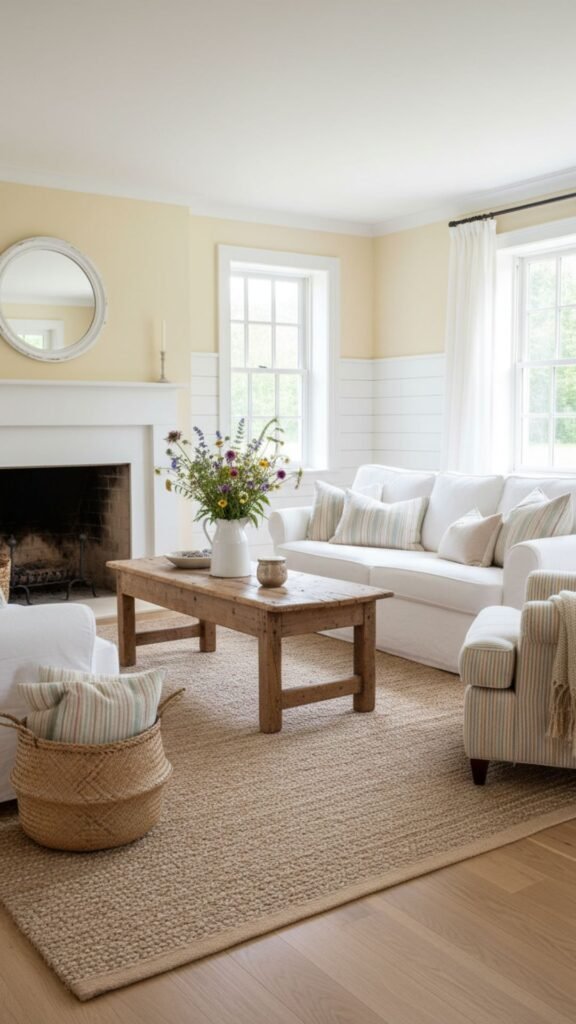
If your living room lacks natural sunlight, buttercream yellow can instantly brighten the space. This cheerful, buttery shade mimics the glow of golden hour. It feels nostalgic and inviting, reminiscent of classic country farmhouses.
Steps To Achieve The Look:
- Pair with bright white wainscoting or shiplap.
- Use simple, unpretentious fabrics like cotton and ticking stripe.
- Decorate with fresh wildflowers in ironstone pitchers.
9. Weathered Blue
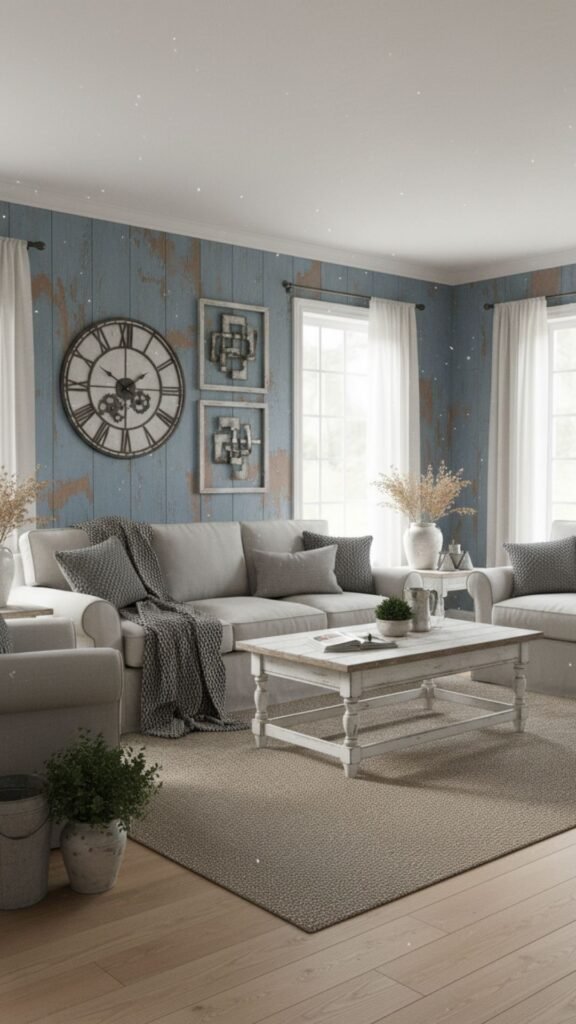
Weathered blue captures the essence of a faded denim jacket or an antique milk jug. This soft, dusty hue is incredibly soothing and easy on the eyes. It brings a gentle wash of color that feels lived-in and completely unpretentious.
Steps To Achieve The Look:
- Mix with whitewashed furniture for a cottage-farmhouse blend.
- Hang galvanized metal wall decor or oversized clocks.
- Layer with cozy, slate-gray blankets and textured cushions.
Bring Your Cozy Space to Life
Updating your color palette is the most effective way to establish a warm, rustic atmosphere. Start by selecting a hue that resonates with your personal taste and the natural light of your room. Grab a few paint samples, test them on your walls, and watch your living room transform into the ultimate comforting retreat.
Frequently Asked Questions (FAQs)
- What is the best lighting to pair with farmhouse colors?
Warm white LED bulbs (around 2700K to 3000K) are ideal for farmhouse colors. They enhance the cozy, inviting nature of earthy tones and creamy whites, whereas cool lighting can make these colors feel sterile. - Can I use dark colors in a small living room?
Yes, dark colors like charcoal gray or muted navy can actually blur the edges of a small room, making it feel expansive and deeply cozy. Just ensure you balance the dark walls with light-colored furniture and adequate lighting. - How do I transition farmhouse colors between open concept rooms?
Use a consistent neutral tone, like creamy white or greige, in the main areas to create flow. You can then introduce bolder farmhouse colors, like sage green or weathered blue, in distinct zones or on accent walls. - Should I paint the ceiling the same color as the walls?
For light colors like creamy white or greige, painting the ceiling the same color creates a seamless, airy look. For darker shades, keeping the ceiling white helps reflect light and prevents the room from feeling cave-like. - What trim color works best with these farmhouse shades?
A soft, warm white is the best choice for trim. It provides a clean, crisp contrast against both light neutrals and rich, moody colors without looking overly harsh.