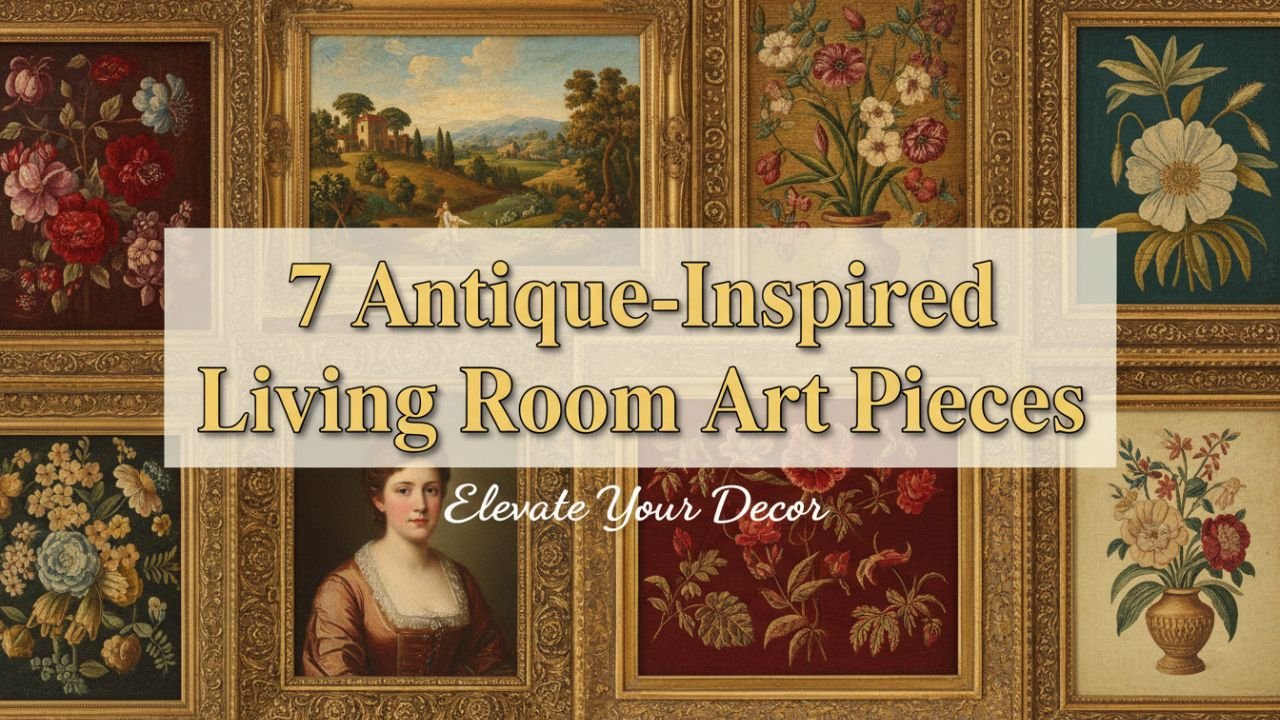
There is a unique charm in spaces that honor the past. Adding antique-inspired art to your living room instantly builds character, bringing a sense of history and warmth to your home. You do not need a time machine or a massive budget to achieve this aesthetic.

By selecting the right vintage-style pieces, you can easily transform a blank wall into a nostalgic focal point. Here are seven captivating art styles to help you curate the perfect retro living room.
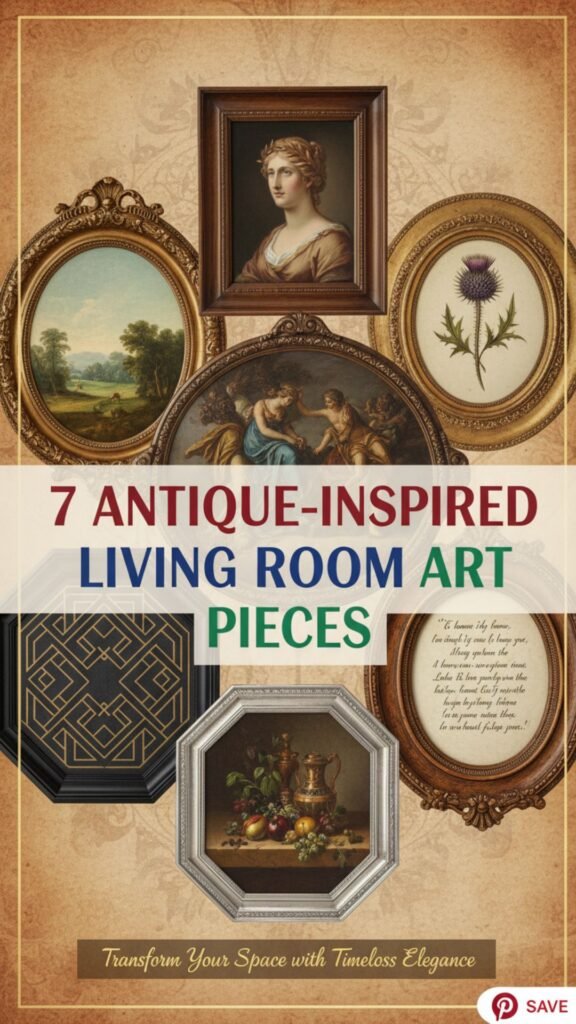
1. Ornate Gold-Framed Oil Portraits
Classic oil portrait reproductions carry an air of moody elegance. Featuring stately figures or mysterious silhouettes, these pieces anchor a room with deep, rich colors and traditional textures. The heavy, gilded frames are just as important as the artwork itself, adding a touch of vintage grandeur.
Steps To Achieve The Look:
- Source a high-quality canvas print of a Renaissance or Victorian-era portrait.
- Place it in a thick, distressed gold or brass frame.
- Hang the piece above a fireplace mantel or a dark wood console table.
- Add a warm wall sconce above the frame to highlight the brushstrokes.
2. Vintage Botanical Prints
Nature-inspired illustrations from the 18th and 19th centuries bring a soft, organic feel to your living space. These detailed sketches of ferns, flowers, and foliage usually feature slightly yellowed, parchment-style backgrounds. They work beautifully to brighten up a room while maintaining a distinctly historical vibe.
Steps To Achieve The Look:
- Gather a set of four to six matching botanical prints.
- Frame them in simple, thin wooden frames to keep the focus on the artwork.
- Arrange the frames in a symmetrical grid pattern on a large, empty wall.
- Pair the display with live indoor plants to bridge the gap between art and reality.
3. Mid-Century Abstract Canvas
Bold geometric shapes and muted color palettes capture the undeniable cool factor of the 1950s and 1960s. Mid-century abstract art often utilizes mustard yellows, burnt oranges, and olive greens. This style is perfect for homeowners wanting a retro look that still feels incredibly sleek.
Steps To Achieve The Look:
- Choose a large, oversized canvas to serve as the room’s primary focal point.
- Opt for a minimalist floating frame in walnut or black.
- Center the artwork directly above your sofa.
- Complement the colors in the painting with a few textured throw pillows.
4. Faded Tapestries and Textile Art
Woven wall hangings provide texture that traditional framed glass simply cannot offer. A faded, antique-style tapestry introduces a bohemian, old-world energy. The soft fabric absorbs sound and makes large living rooms feel much cozier and inviting.
Steps To Achieve The Look:
- Find a tapestry featuring medieval motifs, faded florals, or intricate rug patterns.
- Hang the textile using an iron rod or a vintage wooden hanger.
- Let the bottom of the tapestry hang loose to emphasize its soft texture.
- Keep surrounding wall decor minimal so the fabric remains the star.
5. Antique Map Reproductions
Old-world maps spark curiosity and serve as excellent conversation starters. Reproductions of 17th-century globes and nautical charts feature beautiful sepia tones, Latin typography, and intricate border illustrations. They lend a sophisticated, library-like atmosphere to your living area.
Steps To Achieve The Look:
- Select a map that holds personal significance, such as your home state or a favorite travel destination.
- Use a dark mahogany frame with a wide, off-white matboard.
- Display the map near a reading nook or a leather armchair.
- Accent the space with a vintage brass standing lamp.
6. Art Deco Mirrors with Etched Details
Mirrors double as functional art, reflecting light while showcasing stunning design. Art Deco mirrors from the 1920s often feature geometric shapes, etched glass details, and silver or gold accents. They bring an element of glamorous nostalgia to any wall.
Steps To Achieve The Look:
- Look for a mirror with scalloped edges or a fan-shaped crest.
- Mount it securely opposite a window to maximize natural light.
- Place a mirrored or glass-tiered bar cart directly underneath it.
- Keep the glass polished to maintain that high-end, vintage sparkle.
7. Classic Typography and Advertisement Posters
Retro advertising posters inject playful nostalgia and vibrant color into a room. Whether it is an old French wine advertisement or a vintage travel poster, these pieces celebrate the typography and graphic design of the early 20th century.
Steps To Achieve The Look:
- Pick a poster with bold, contrasting colors and large, vintage lettering.
- Use a simple black gallery frame to make the colors pop.
- Incorporate the poster into an eclectic gallery wall alongside smaller photographs.
- Match one accent color from the poster to a nearby rug or blanket.
Bring Your Retro Vision to Life
Creating a retro living room is all about blending textures, eras, and stories. By incorporating antique-inspired art, you give your space a curated, collected-over-time aesthetic. Start with one statement piece, slowly build your collection, and watch your living room transform into a stylish nod to the past.
Frequently Asked Questions (FAQs)
1. Can I mix different eras of antique art in one room?
Yes, mixing eras creates a curated, eclectic look. The key is to tie them together using a cohesive color palette or matching frame finishes so the collection feels intentional rather than cluttered.
2. Where is the best place to find antique-inspired art?
You can find high-quality reproductions at online art retailers, thrift stores, flea markets, and independent artist shops on platforms like Etsy. Museum gift shops also sell excellent vintage prints.
3. How do I make new art look like an authentic antique?
Choose prints on textured or matte paper rather than glossy finishes. Framing the piece in a distressed, secondhand frame or removing the glass can also help replicate the look of aged artwork.
4. Should all my picture frames match?
They do not need to match perfectly. A mix of wood, brass, and painted frames adds to the vintage charm. However, keeping the frames in the same general style or thickness helps maintain visual harmony.
5. How high should I hang my living room art?
Artwork should generally be hung at eye level, which is about 57 to 60 inches from the floor to the center of the piece. If hanging art above a sofa, leave roughly 6 to 8 inches of space between the furniture and the bottom of the frame.