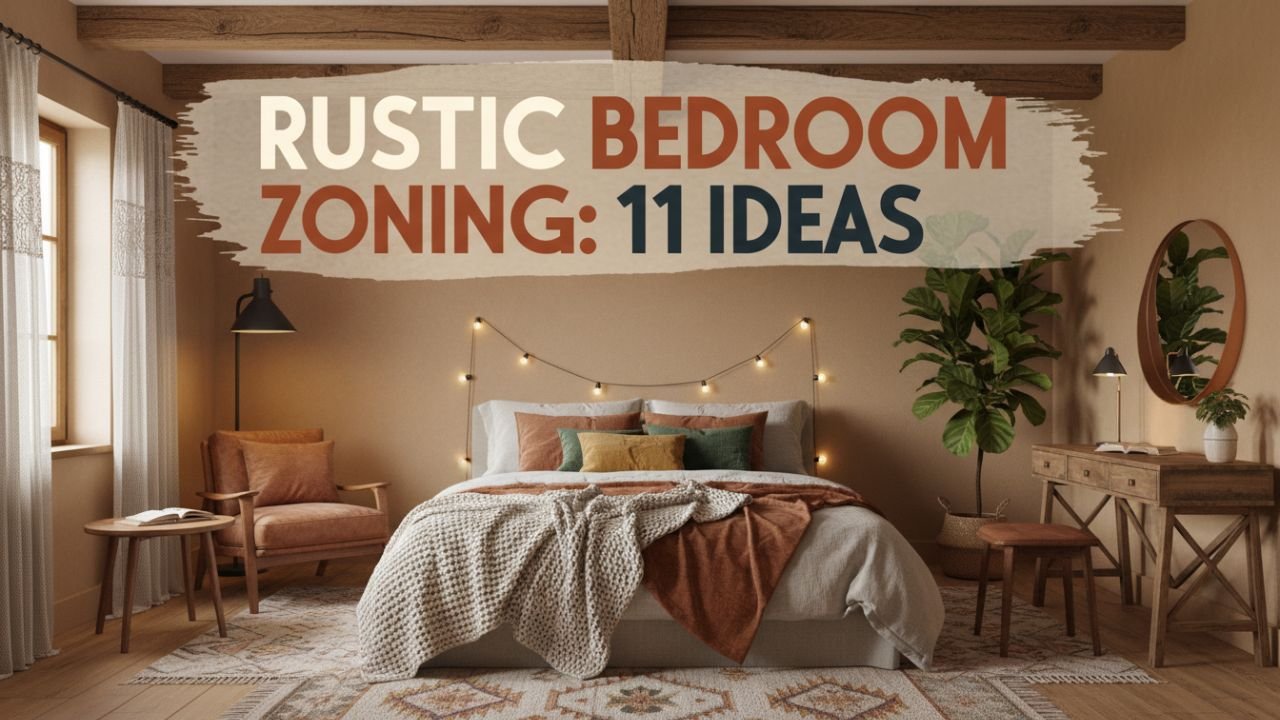
Creating a functional yet cozy bedroom often requires clever space management. Rustic bedroom zoning helps you divide your personal space into distinct, usable areas while maintaining a warm, nature-inspired aesthetic.
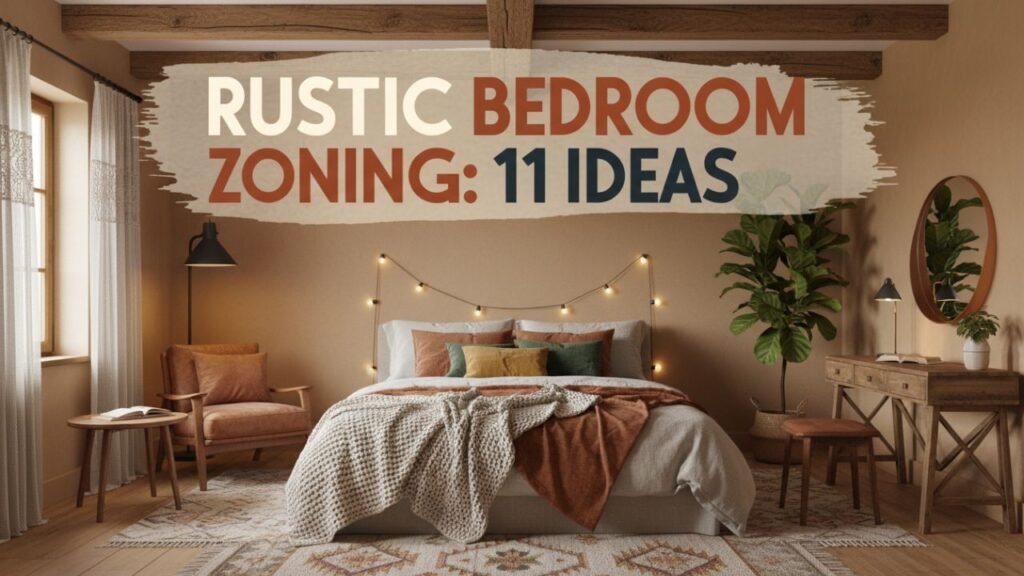
By using natural materials, earthy textures, and strategic furniture placement, you can craft a sanctuary that feels both organized and deeply relaxing. Here are eleven ways to zone your rustic bedroom for maximum comfort.

1. Wood Panel Dividers
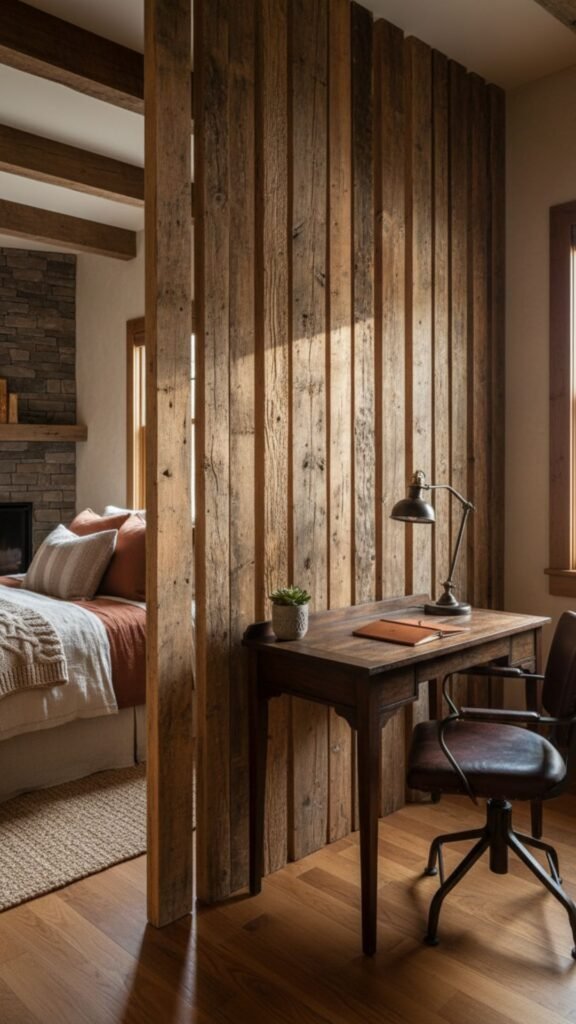
A slatted wood room divider instantly creates a visual boundary without blocking natural light. Reclaimed wood adds authentic texture, giving the space a cabin-like feel. This method works perfectly for separating a sleeping area from a small home workspace.
Steps To Achieve The Look:
- Source a freestanding folding screen made of reclaimed timber.
- Place the divider between your bed and desk or seating area.
- Drape a lightweight linen throw over one corner to soften the wooden edges.
2. Woven Rug Separation
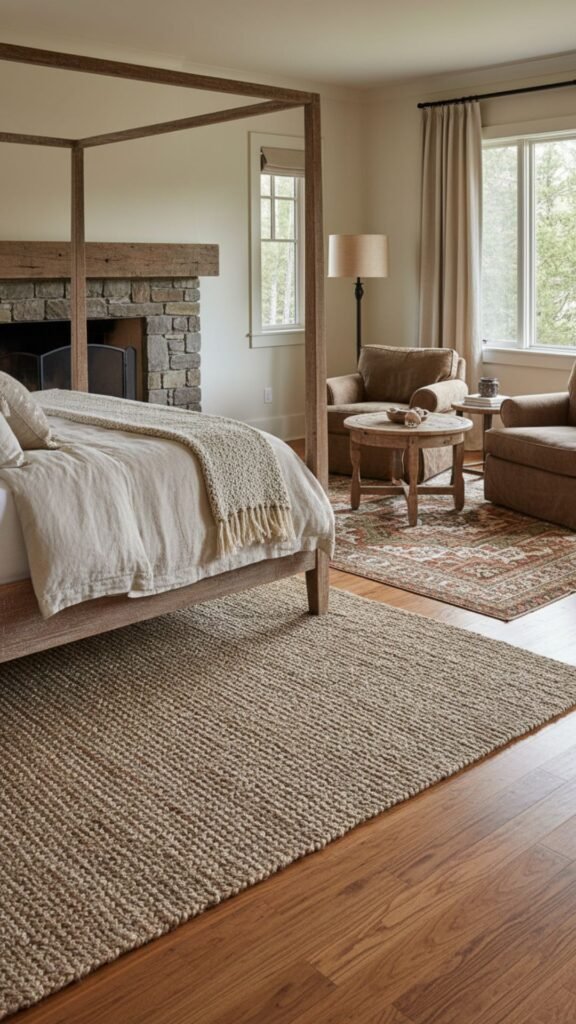
Using different area rugs is an effortless way to designate specific zones on an open floor plan. A large, chunky jute or wool rug anchors the bed, while a smaller, contrasting vintage rug defines a seating area. This adds layers of warmth to cold hardwood floors.
Steps To Achieve The Look:
- Place a large, neutral woven rug under the bottom two-thirds of your bed.
- Lay a smaller, patterned wool rug in an empty corner.
- Add a cozy armchair on top of the smaller rug to complete the zone.
3. Canopy Bed Oasis
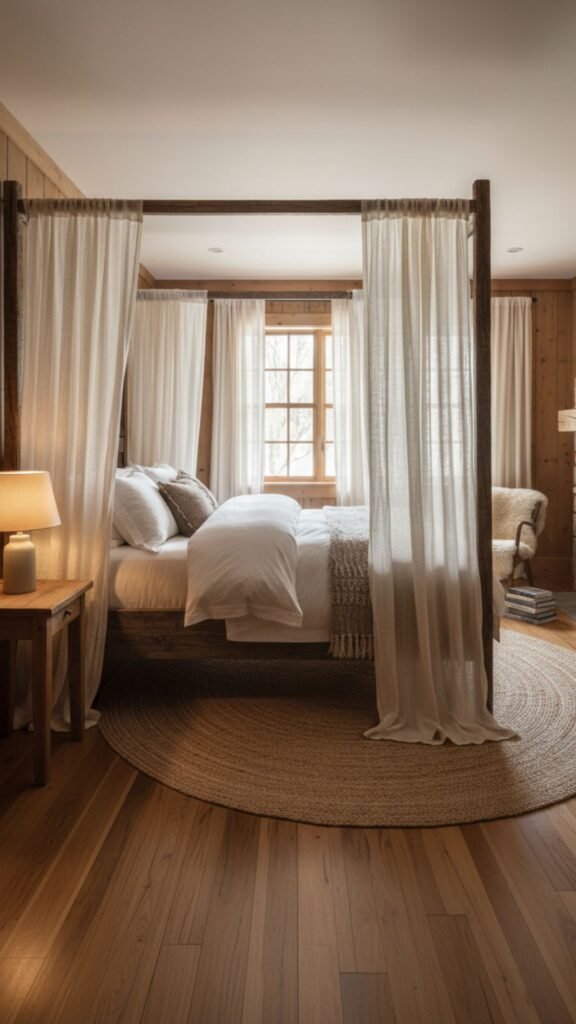
A canopy bed frame naturally creates a room within a room. The structural lines draw the eye upward, defining the sleeping space from the rest of the bedroom. Adding sheer fabrics introduces a romantic, wilderness-lodge atmosphere.
Steps To Achieve The Look:
- Choose a sturdy, dark wood or wrought iron canopy bed frame.
- Hang natural linen or cotton fabric loosely over the top beams.
- Keep surrounding furniture minimal so the bed remains the focal point.
4. Reading Nook by the Window
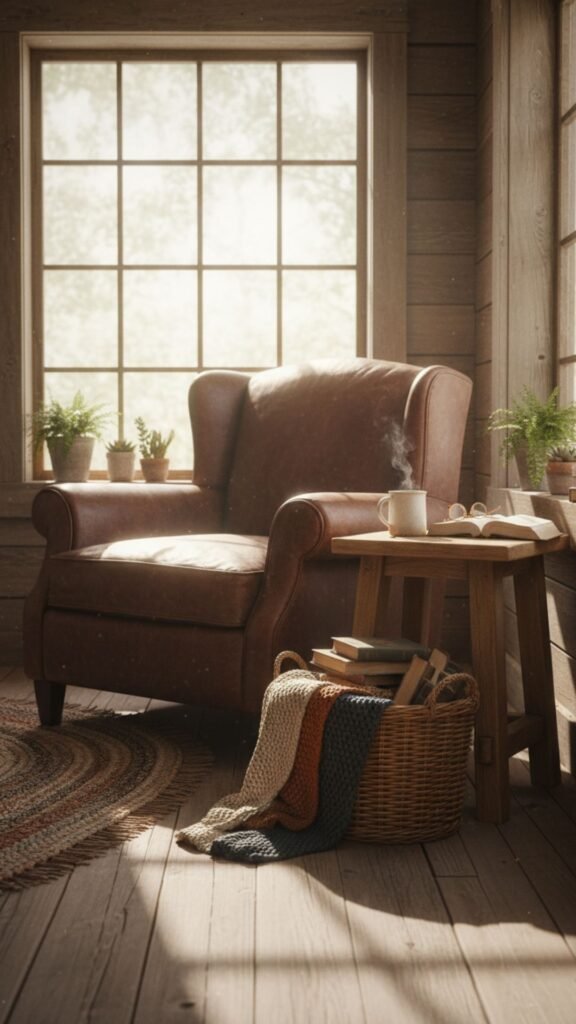
Transforming a bright corner into a dedicated reading nook maximizes unused space. A rustic leather or distressed fabric armchair paired with a natural wood side table sets a relaxing tone. This zone encourages screen-free relaxation at the end of the day.
Steps To Achieve The Look:
- Position a comfortable accent chair directly facing or next to a window.
- Place a small stump-style side table beside the chair.
- Add a woven basket nearby to hold extra blankets and books.
5. Freestanding Fireplace Wall
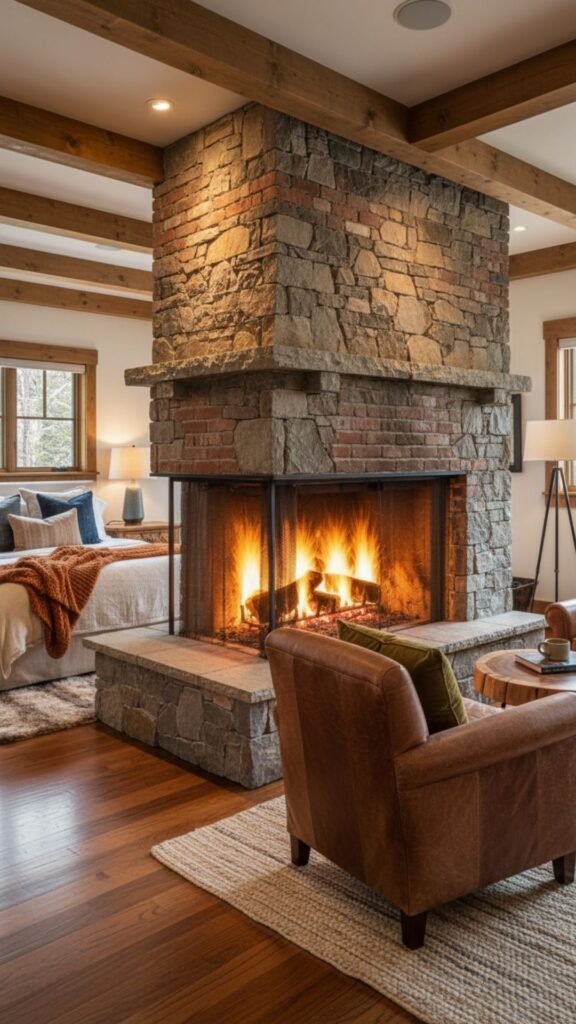
A double-sided or freestanding fireplace acts as a striking room divider in larger bedrooms. The stone or brick textures enhance the rustic charm while physically separating the bed from a dressing or lounge area. It also provides an unbeatable heat source for chilly nights.
Steps To Achieve The Look:
- Install a standalone electric or gas stove with a matte black finish.
- Build a faux stone surround to mimic a traditional hearth.
- Arrange your bed on one side and a seating layout on the opposite side.
6. Earthy Color Blocking
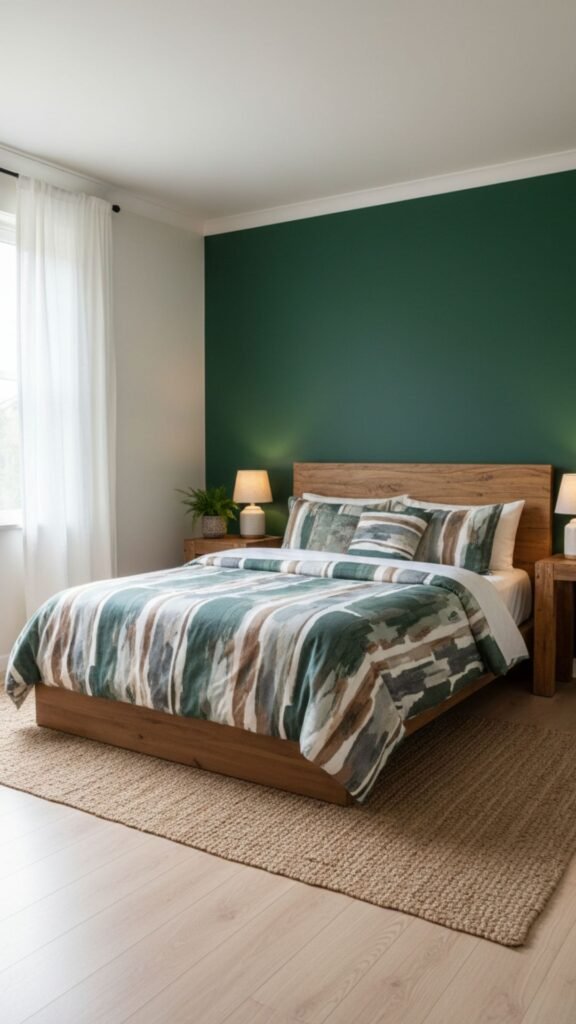
Paint is a powerful tool for zoning without taking up physical space. Applying a deep forest green or warm terracotta shade to just the wall behind your bed defines the sleep zone. Keep the rest of the room a soft, creamy white to maintain brightness.
Steps To Achieve The Look:
- Select a muted, earth-toned paint color.
- Paint the wall directly behind your headboard to create an accent wall.
- Match your bedding accents to the new wall color for a cohesive look.
7. Exposed Beam Framing
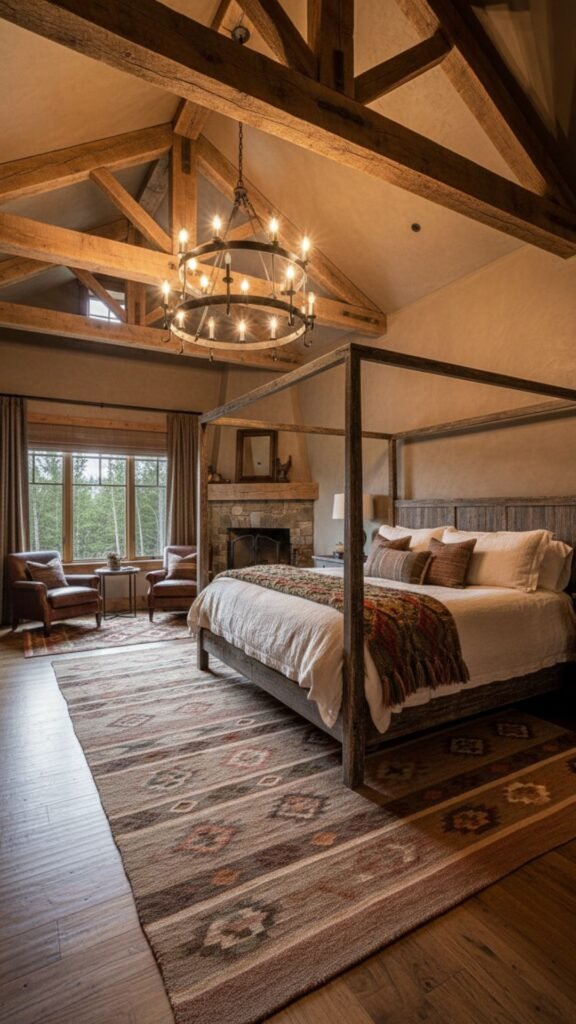
If you have high ceilings, exposed wooden beams can mentally map out the room from above. Framing a specific area—like the bed or a vanity—with overhead timber creates an intimate, lowered ceiling effect. It brings architectural interest directly into the rustic theme.
Steps To Achieve The Look:
- Install lightweight faux wood beams across the ceiling above the bed.
- Hang a wrought iron chandelier from the center beam.
- Align the edges of your area rug with the overhead beams to mirror the zone.
8. Sliding Barn Door Enclosures
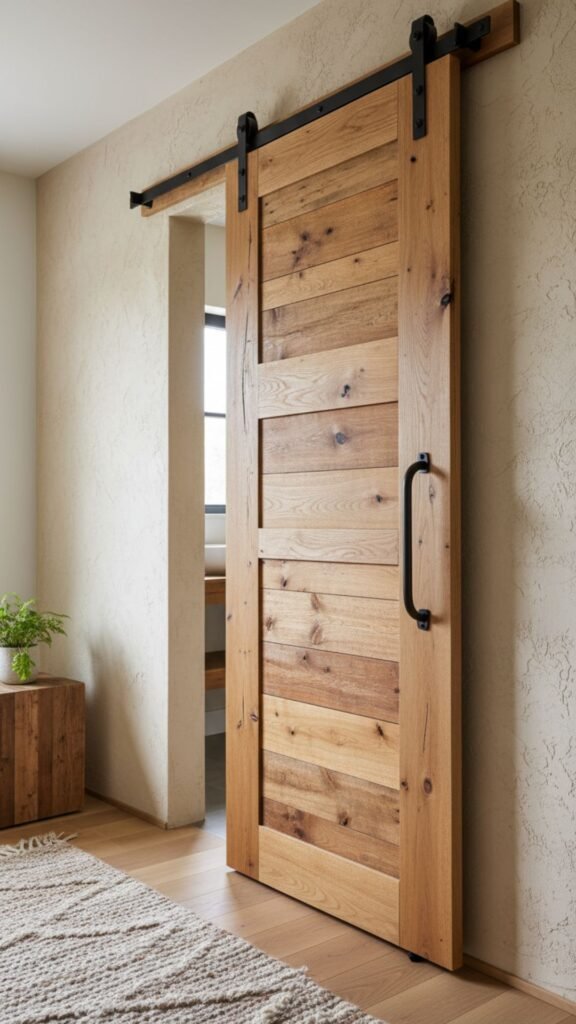
Barn doors are iconic rustic elements that can hide functional zones like a closet or an ensuite bathroom. When closed, the heavy wood grain serves as a textured accent wall. When open, it seamlessly connects the spaces.
Steps To Achieve The Look:
- Mount heavy-duty matte black sliding hardware above your doorway.
- Hang a solid oak or distressed pine barn door.
- Leave the wood unfinished or stain it in a rich walnut tone.
9. Potted Plant Borders
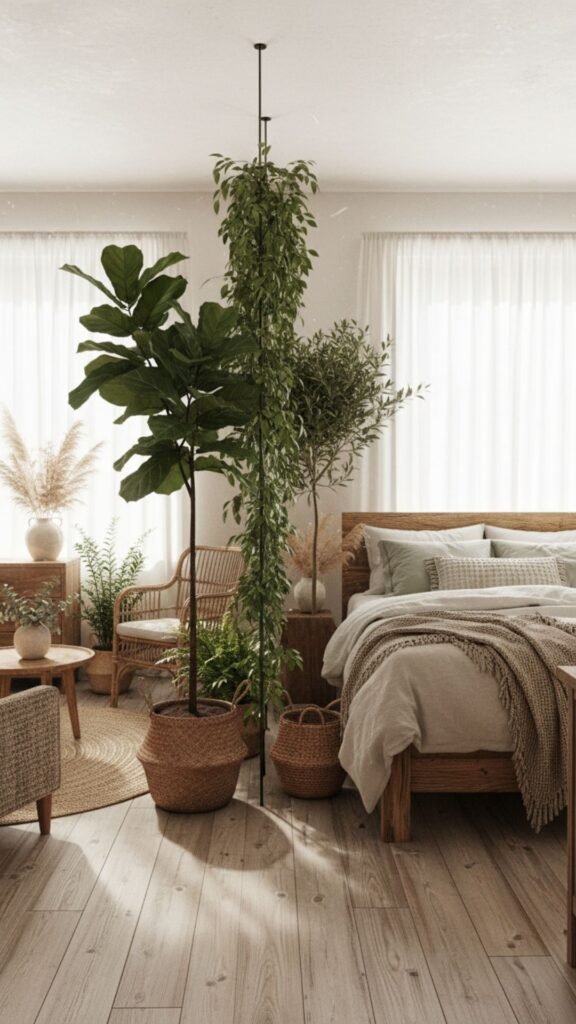
Indoor plants breathe life into a bedroom and can act as soft, natural barriers. Grouping tall, leafy plants like fiddle leaf figs or olive trees creates a living screen between areas. This reinforces the connection to nature that defines rustic design.
Steps To Achieve The Look:
- Gather three to five tall indoor plants.
- Pot them in textured terracotta or woven wicker planters.
- Arrange them in a line between your bed and your closet space.
10. Antique Trunk Storage Zones
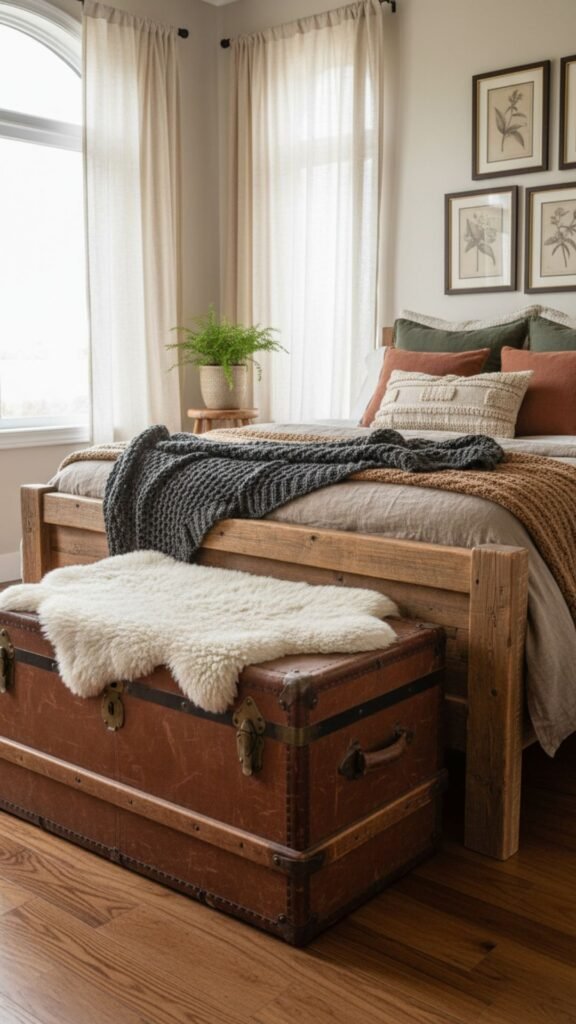
An old wooden or leather trunk placed at the foot of the bed provides storage while marking the end of the sleep zone. It serves as a visual stop sign, transitioning the eye to the next area of the room. It also offers a convenient spot to sit while putting on shoes.
Steps To Achieve The Look:
- Find a vintage steamer trunk or a distressed wood chest.
- Place it flush against the footboard of your bed.
- Store your off-season blankets and linens inside.
11. Ambient Lantern Lighting Paths
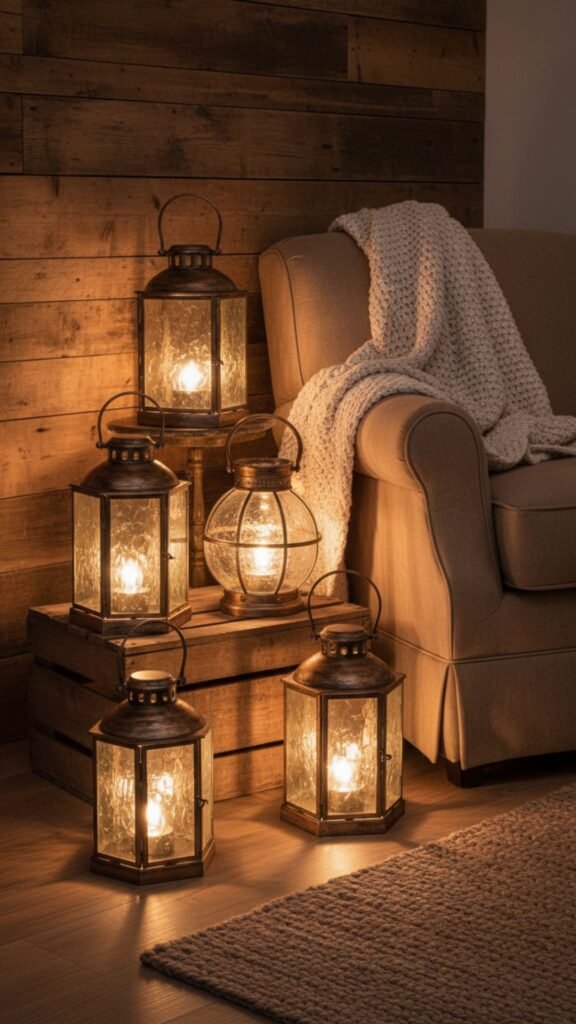
Lighting dictates how a space feels and functions. Using floor lanterns or low-hanging pendant lights can isolate a specific section of the room, like a dressing area, in a warm glow. The metal and glass textures of traditional lanterns fit perfectly with rustic decor.
Steps To Achieve The Look:
- Place a cluster of metal floor lanterns in an empty corner.
- Equip them with warm-toned LED pillar candles.
- Turn them on at night to create a soft, separated relaxation zone.
Bring Your Rustic Retreat to Life
Zoning your rustic bedroom is about balancing functionality with the soothing elements of nature. By using physical dividers, lighting, and natural materials, you can create a highly organized space that still feels like a cozy cabin getaway. Start by implementing just one or two of these zones to see how they transform the flow of your daily routine.
Frequently Asked Questions (FAQs)
1. What is bedroom zoning?
Bedroom zoning is the practice of dividing a single room into distinct areas based on function, such as sleeping, working, or relaxing, using furniture, rugs, or lighting.
2. Can I zone a small rustic bedroom?
Yes. In small bedrooms, rely on visual zoning methods like area rugs, color blocking, or overhead lighting rather than bulky physical dividers that take up floor space.
3. What materials work best for rustic decor?
Reclaimed wood, wrought iron, leather, stone, and natural fibers like wool, jute, and linen are the foundational materials for a rustic aesthetic.
4. How do I keep a rustic bedroom from feeling too dark?
Balance heavy, dark wood elements with soft cream walls, sheer linen curtains, and layered warm lighting to keep the space feeling bright and inviting.
5. Do I need to buy new furniture to create zones?
Not at all. You can easily create zones by rearranging your existing furniture, grouping plants together, or laying down different rugs to separate spaces.