
Living in a small home doesn’t mean you have to sacrifice a dedicated nursery for your little one. With thoughtful planning and creative design, you can transform your bedroom into a functional and beautiful shared space that works for both you and your baby.

These seven bedroom nursery combo ideas will help you maximize every square foot while creating a cozy environment for your growing family.

1. The Corner Crib Setup

Utilize an underused corner of your bedroom to create a defined nursery zone. This layout keeps the crib tucked away while maintaining easy access during nighttime feedings.
How To Achieve This Look:
- Position a compact crib in the corner farthest from your bed
- Add a small area rug to visually separate the baby’s space
- Install floating shelves above the crib for storage and decor
- Use a corner-mounted diaper caddy to save floor space
Items To Buy
- Compact cribs
- Small nursery area rugs
- Floating nursery shelves
- Corner diaper caddy organizer
- Wall-mounted baby monitor
- Corner storage baskets
- Crib mobile
- Nursery night light
- Baby room thermometer
- Crib sheets set
2. Room Divider Magic

Create a sense of separation without permanent walls by using stylish room dividers. This approach gives you privacy while keeping the space feeling open and airy.
How To Achieve This Look:
- Choose a folding screen or curtain room divider that complements your decor
- Position the divider to shield the crib area from direct bedroom light
- Opt for a semi-transparent design to maintain visual flow
- Add hooks to the divider for hanging baby essentials
Items To Buy
- Folding room dividers
- Nursery curtain dividers
- Bookshelf room divider
- Hanging storage organizer
- Room divider hooks
- Privacy screen
- Fabric room divider
- Portable partition
- Decorative room separator
- Tension rod room divider
3. The Minimalist Bassinet Approach

For the first few months, a bassinet beside your bed offers convenience and saves valuable space. This setup is perfect for parents who want their newborn close by during those early days.
How To Achieve This Look:
- Select a sleek, modern bassinet that fits snugly next to your bed
- Use a bedside changing caddy instead of a full changing table
- Store baby clothes in drawer organizers within your existing dresser
- Keep a small basket of nighttime essentials within arm’s reach
Items To Buy
- Bedside bassinet
- Bedside changing caddy
- Drawer divider organizers
- Bedside storage basket
- Portable diaper changing pad
- Bassinet sheets
- Baby care organizer
- Nighttime essentials caddy
- Collapsible storage bins
- Under bed storage
4. Vertical Storage Solutions

When floor space is limited, look up. Maximize your walls with vertical storage to keep baby essentials organized without cluttering your bedroom.
How To Achieve This Look:
- Install tall, narrow shelving units for diapers, wipes, and clothing
- Mount pegboards or wall organizers for frequently used items
- Use over-the-door organizers for additional storage
- Add wall-mounted bins for toys and books
Items To Buy
- Tall narrow shelving unit
- Wall pegboard organizer
- Over door organizer nursery
- Wall mounted storage bins
- Vertical baby storage
- Hanging closet organizer
- Wall hooks nursery
- Ladder shelf nursery
- Cube storage organizer
- Wall mounted bookshelf
5. Multi-Functional Furniture

Invest in furniture pieces that serve double duty. This strategy helps you meet both adult and baby needs without overcrowding your bedroom.
How To Achieve This Look:
- Choose a dresser that can function as both storage and a changing table
- Select a glider or rocking chair that matches your bedroom decor
- Use an ottoman with hidden storage for baby supplies
- Consider a convertible crib that transitions into a toddler bed
Items To Buy
- Dresser with changing table top
- Bedroom glider chair
- Storage ottoman nursery
- Convertible crib
- Multi-purpose baby furniture
- Changing table topper
- Nursing chair with storage
- Bedside sleeper and bassinet
- Compact changing station
- Foldable baby furniture
6. The Closet Nursery Nook

Transform part of your closet into a mini nursery station. This clever solution hides baby items behind closed doors, keeping your bedroom looking tidy.
How To Achieve This Look:
- Dedicate one section of your closet to baby clothes and supplies
- Install additional rods and shelves to maximize vertical space
- Use clear storage containers for visibility and organization
- Add adhesive hooks inside closet doors for hanging items
Items To Buy
- Closet organizer system
- Baby closet dividers
- Clear storage containers
- Adhesive closet hooks
- Hanging closet shelves
- Baby clothes hangers
- Closet rod extender
- Stackable storage bins
- Shoe organizer for baby items
- Closet drawer organizer
7. Cohesive Color Palette
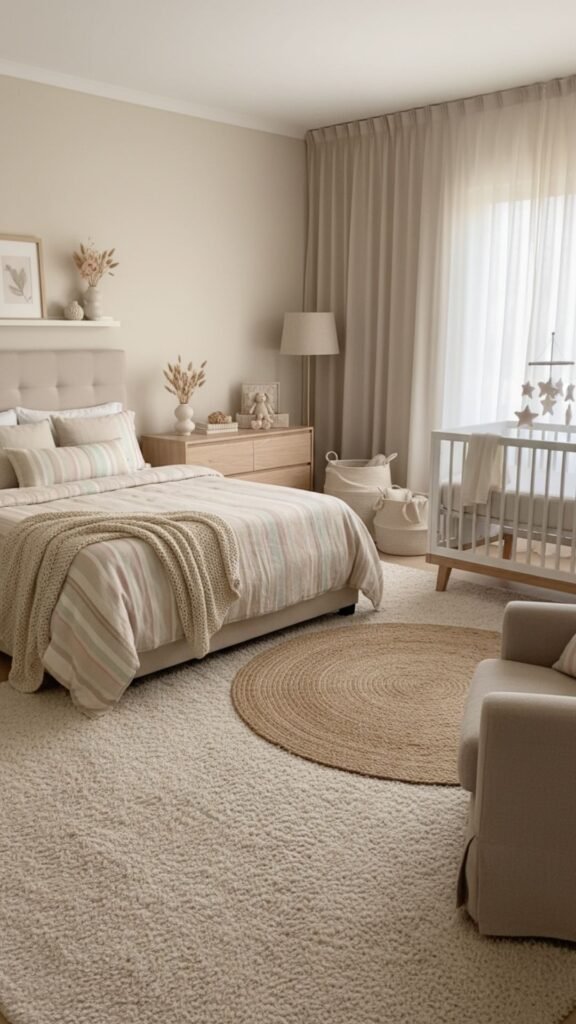
Create harmony between your bedroom and nursery area by using a unified color scheme. This approach makes the shared space feel intentional rather than cramped.
How To Achieve This Look:
- Select neutral tones that appeal to both adult and baby aesthetics
- Add pops of color through easily changeable accessories
- Use matching storage bins and baskets throughout the room
- Choose crib bedding that complements your existing bedroom linens
Items To Buy
- Neutral nursery decor
- Matching storage baskets
- Coordinating crib bedding
- Neutral color wall art
- Bedroom and nursery decor set
- Fabric storage cubes
- Color coordinated organizers
- Matching throw pillows
- Neutral nursery rug
- Coordinating lampshades
Make the Most of Your Space
Creating a bedroom nursery combo requires creativity, but it’s entirely achievable with the right approach. Focus on smart storage, multi-functional furniture, and cohesive design to build a space that works beautifully for your entire family. Remember, this arrangement is temporary—before you know it, your little one will be ready for their own room. Until then, enjoy the convenience of having your baby close by while maintaining your personal sanctuary.
Frequently Asked Questions (FAQs)
How long can a baby stay in a bedroom nursery combo?
Most families keep their baby in a shared bedroom for 6-12 months, though some continue for up to two years. The arrangement works as long as everyone sleeps well and the space remains functional for your family’s needs.
What’s the minimum space needed for a crib in a bedroom?
You need approximately 4 feet by 6 feet to accommodate a standard crib and allow safe access from at least one side. Mini cribs require less space, around 3 feet by 5 feet.
How can I reduce noise from waking the baby?
Use white noise machines for both you and your baby, add soft textiles like rugs and curtains to absorb sound, and consider wearing slippers instead of walking barefoot on hard floors.
What safety considerations should I keep in mind?
Keep the crib away from windows, curtain cords, and electrical outlets. Ensure there’s adequate ventilation, maintain a comfortable room temperature, and never place pillows, blankets, or stuffed animals in the crib with your baby.
How do I maintain privacy in a shared bedroom nursery?
Install blackout curtains or room dividers, establish a bedtime routine that works for everyone, and communicate with your partner about schedules and sleep needs. Many parents find that babies adapt well to some adult activity in the room.