Living in a small bedroom doesn’t mean sacrificing style or comfort. With the right layout and smart furniture choices, you can transform even the tiniest space into a functional, beautiful retreat.
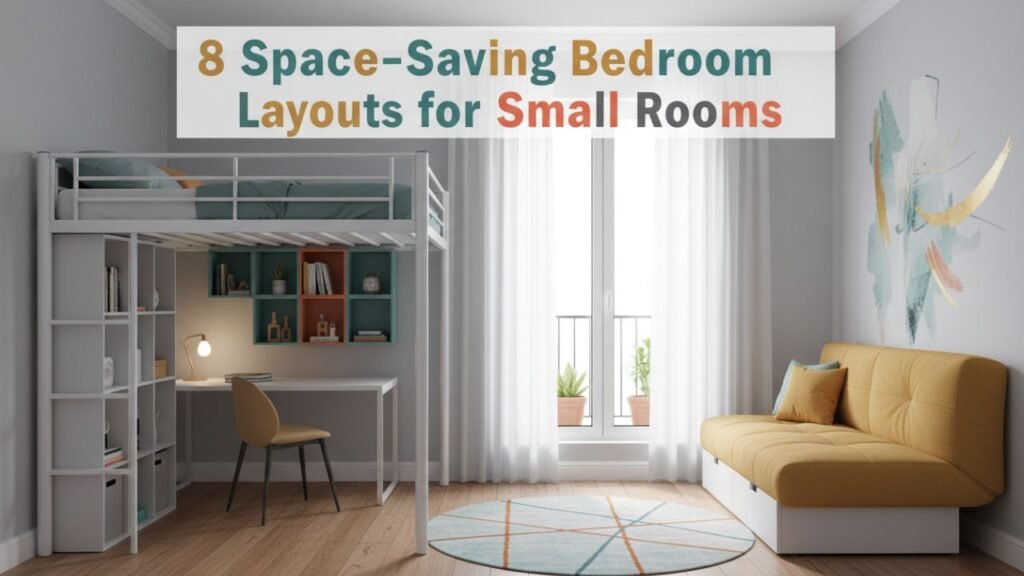
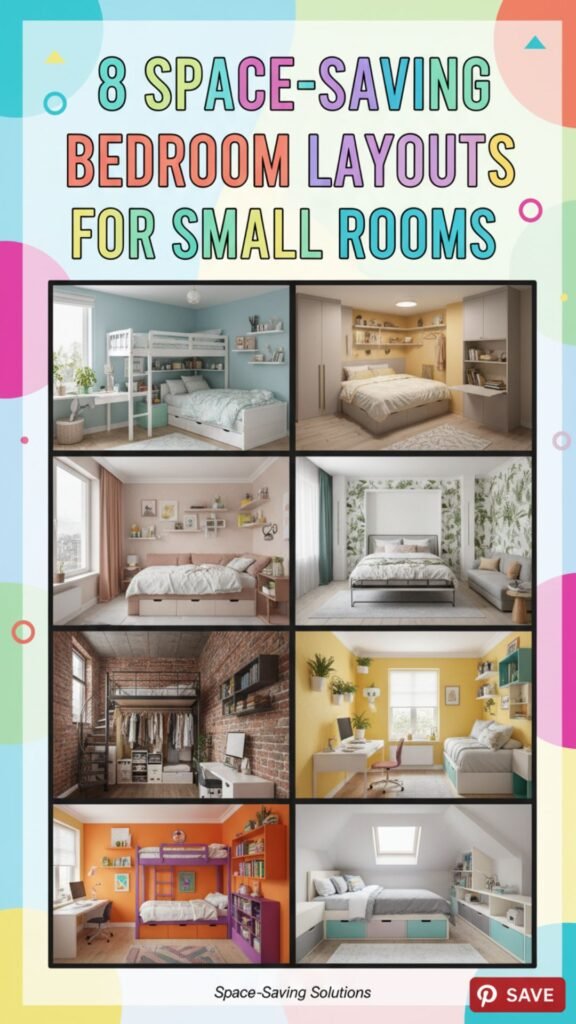
These eight space-saving bedroom layouts will help you maximize every square inch while keeping your room organized and inviting.
1. The Minimalist Haven
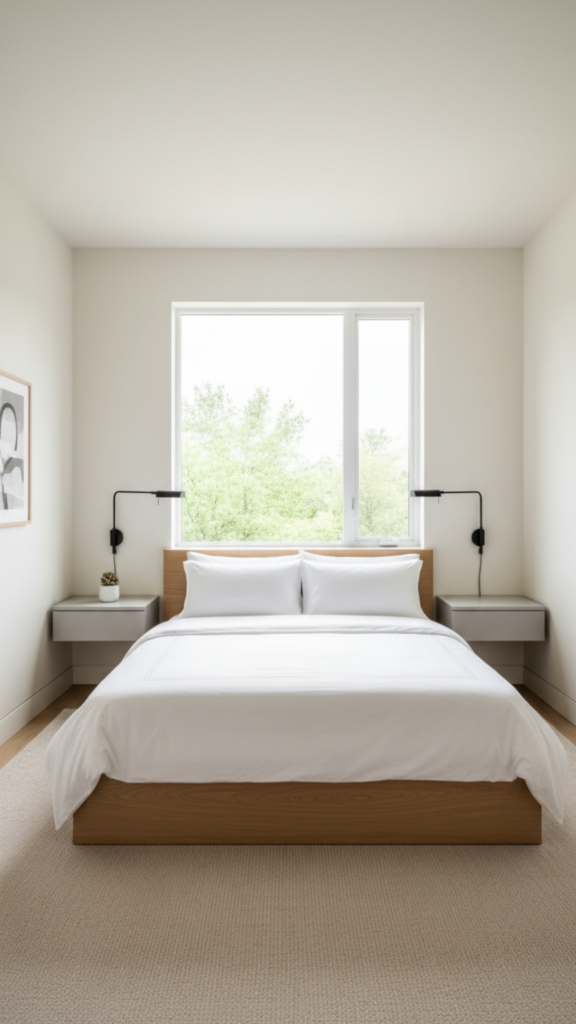
Keep things simple with a minimalist approach that focuses on essential furniture only. A low-profile bed frame, floating nightstands, and wall-mounted lighting free up floor space and create an airy feel.
How To Achieve This Look:
- Choose a platform bed without bulky headboards or footboards
- Install floating shelves instead of traditional nightstands
- Use wall-mounted reading lights to eliminate table lamps
- Keep decor minimal with one or two statement pieces
Items To Buy
- Platform bed frames
- Floating wall shelves
- Wall-mounted reading lights
- Minimalist nightstands
- Under-bed storage boxes
- Simple wall art
- Slim hangers
- Bedside caddy
- Cable management boxes
- LED strip lights
2. The Murphy Bed Marvel
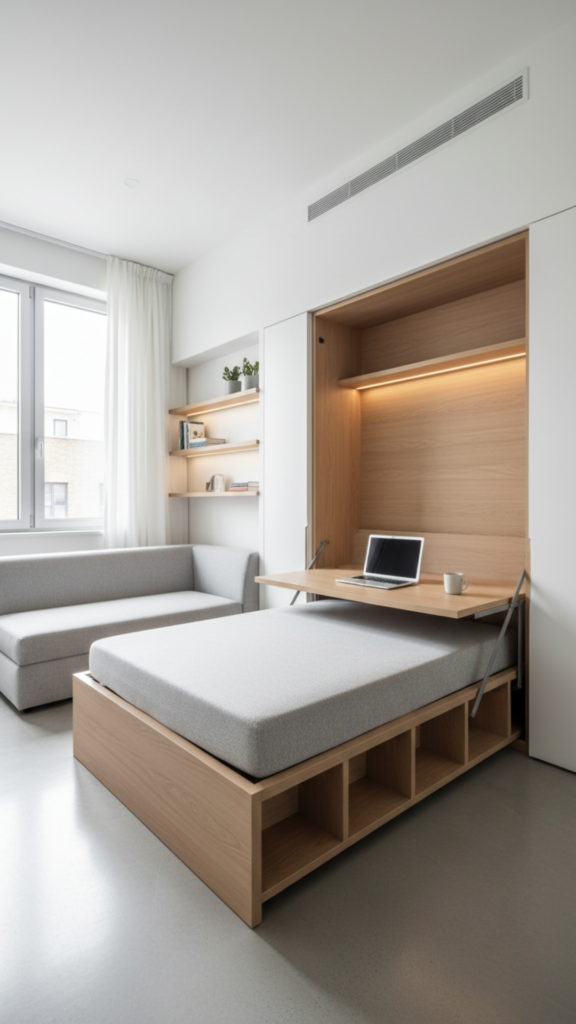
A murphy bed (also called a wall bed) is perfect for studio apartments or multipurpose rooms. During the day, fold it up to reveal workspace or living area, then pull it down when it’s time to sleep.
How To Achieve This Look:
- Install a quality murphy bed system with built-in storage
- Add a fold-down desk that doubles as a nightstand
- Use the wall space for shelving and decorative elements
- Choose bedding that’s easy to keep in place when folding
Items To Buy
- Murphy bed kits
- Wall bed with desk
- Fold-down table
- Sheet straps
- Wall-mounted organizers
- Compact desk chair
- Pull-down closet rod
- Wall hooks
- Murphy bed hardware
- Space-saving mattress
3. The Corner Configuration
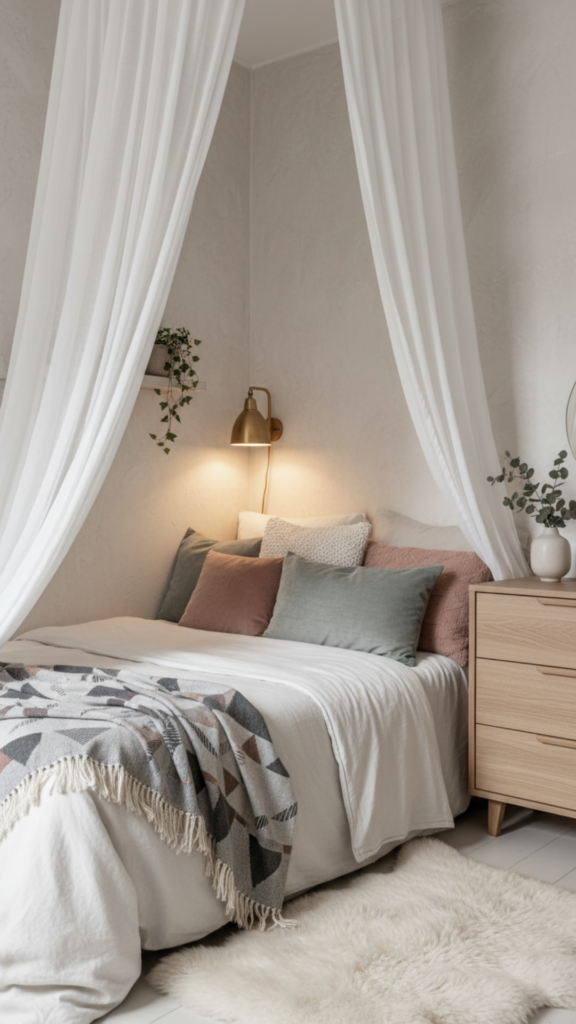
Push your bed into a corner to create more usable floor space in the center of the room. This layout works especially well with twin or full-size beds and creates a cozy sleeping nook.
How To Achieve This Look:
- Position the bed against two walls in the corner
- Use decorative pillows against the walls to create a daybed effect
- Place a small dresser or desk opposite the bed
- Hang curtains from the ceiling to create a canopy feel
Items To Buy
- Corner headboard
- Daybed pillows
- Compact dresser
- Corner shelving unit
- Bed canopy
- Wall-mounted corner desk
- Throw pillows
- Corner lamp
- Bolster pillows
- Corner storage ottoman
4. The Lofted Luxury
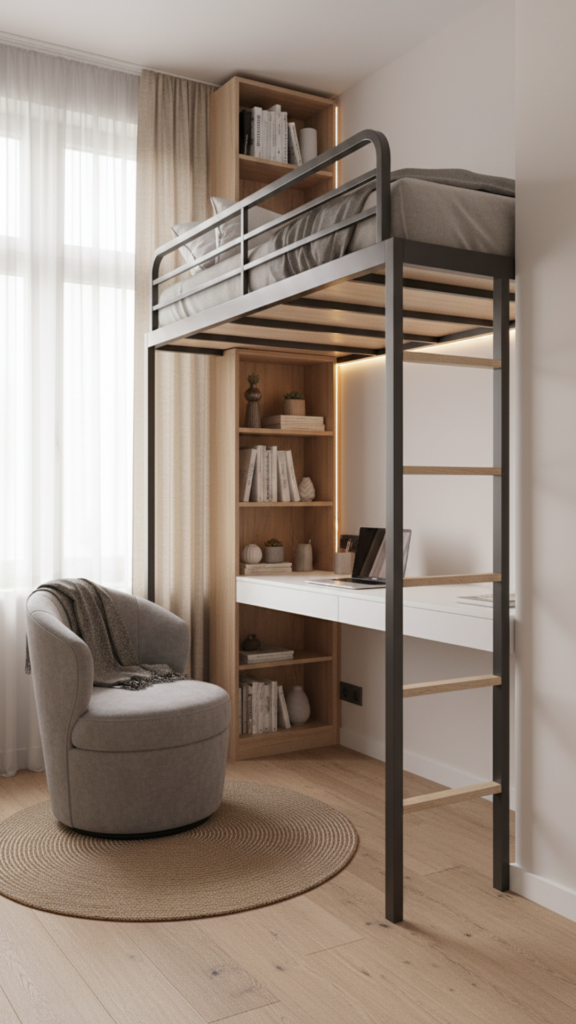
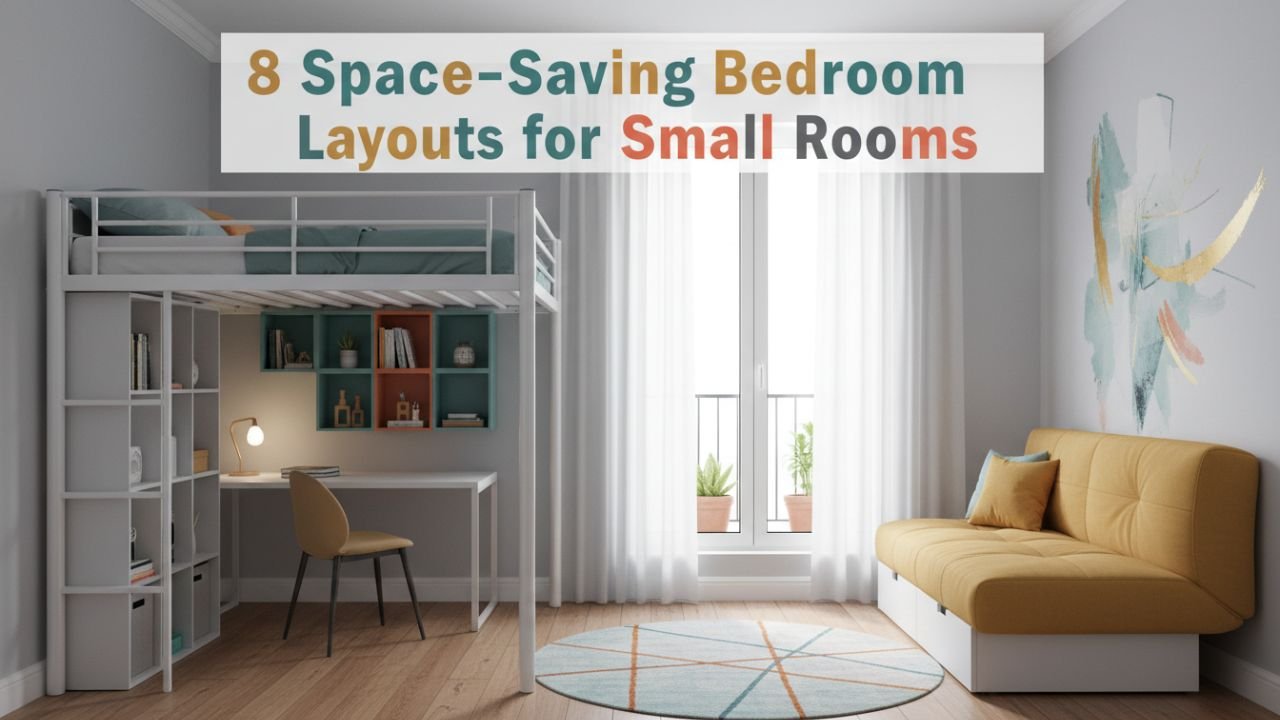
Elevate your bed to create valuable space underneath for a desk, seating area, or storage. Loft beds aren’t just for kids—adult versions offer sophisticated style with practical functionality.
How To Achieve This Look:
- Install a sturdy loft bed frame at least 6 feet high
- Create a workspace or reading nook underneath
- Use the vertical wall space for shelving
- Add good lighting to the lower area
Items To Buy
- Adult loft bed frame
- Loft bed with desk
- Loft bed ladder
- Compact desk
- Under-loft lighting
- Storage cubes
- Reading chair
- Loft bed curtains
- Bed rail guards
- Rolling storage cart
5. The Built-In Beauty

Custom built-ins around your bed create maximum storage without taking up additional floor space. This layout works particularly well for rooms with alcoves or awkward dimensions.
How To Achieve This Look:
- Frame the bed with floor-to-ceiling storage units
- Include drawers, shelves, and closed cabinets for variety
- Add overhead storage above the headboard
- Use the built-ins as a headboard alternative
Items To Buy
- Bookcase headboard
- Tall storage cabinets
- Cube storage organizers
- Floating cabinets
- Storage baskets
- Drawer organizers
- LED closet lights
- Cabinet door organizers
- Modular shelving units
- Storage bench
6. The Multi-Functional Magic
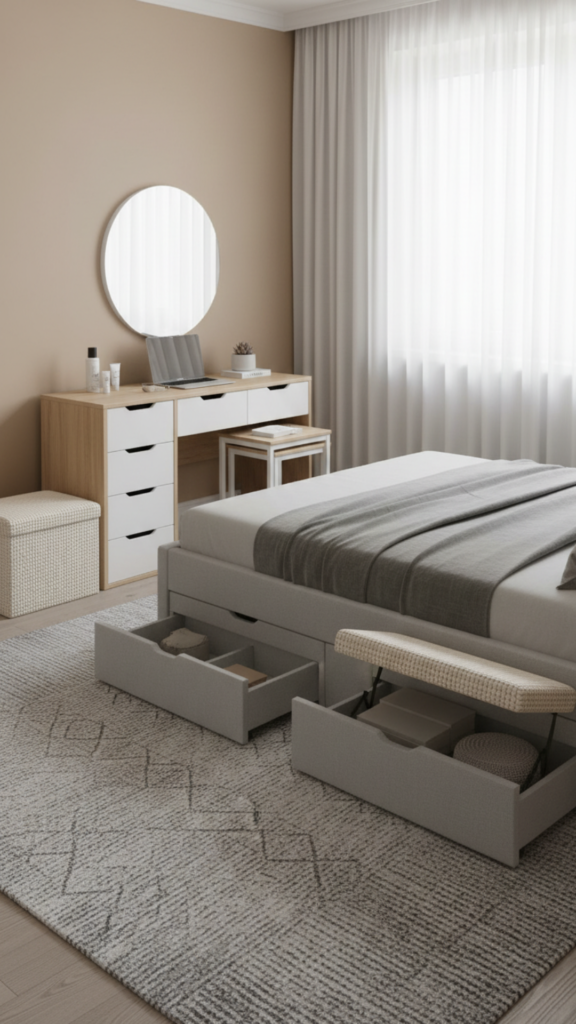
Choose furniture pieces that serve double duty. A storage ottoman, bed frame with drawers, and a desk that converts to a vanity help you get more from less.
How To Achieve This Look:
- Select a bed frame with built-in storage drawers
- Use a storage ottoman as both seating and clothes storage
- Install a fold-down desk or vanity
- Choose nesting tables that tuck away when not needed
Items To Buy
- Storage bed frame
- Storage ottoman
- Convertible desk vanity
- Nesting tables
- Wardrobe with mirror
- Storage headboard
- Folding chairs
- Trunk coffee table
- Jewelry armoire mirror
- Over-door storage
7. The Vertical Vision
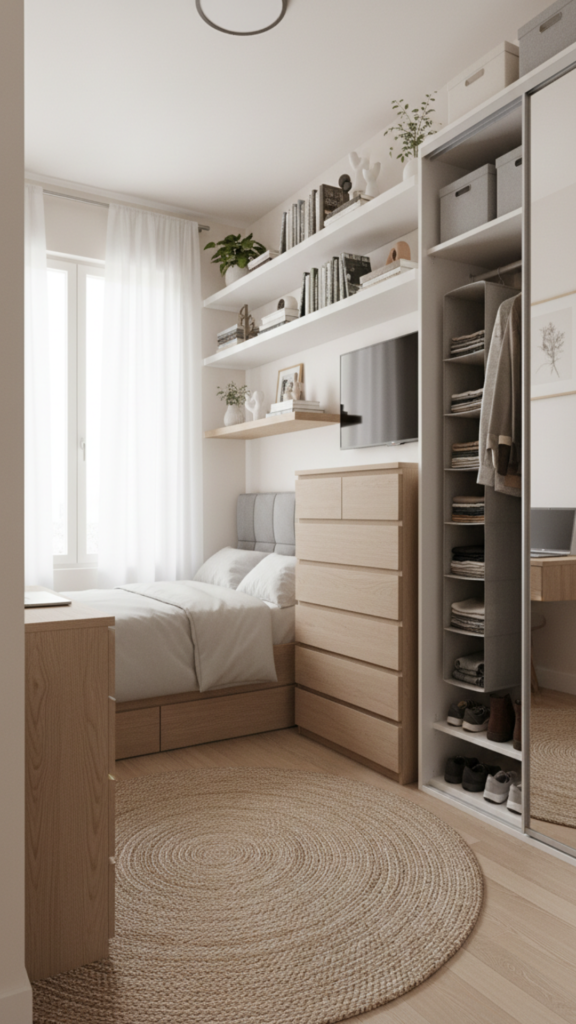
When you can’t go out, go up. Maximize vertical space with tall dressers, high shelving, and hanging organizers that draw the eye upward and keep the floor clear.
How To Achieve This Look:
- Replace wide dressers with tall, narrow ones
- Install shelves near the ceiling for seasonal items
- Use hanging organizers in the closet
- Mount the TV on the wall instead of using a stand
Items To Buy
- Tall narrow dresser
- High wall shelves
- Hanging closet organizer
- Wall-mounted TV bracket
- Over-door hooks
- Vertical shoe rack
- Tall bookshelf
- Ceiling storage hooks
- Ladder shelf
- Hanging planters
8. The Open Concept
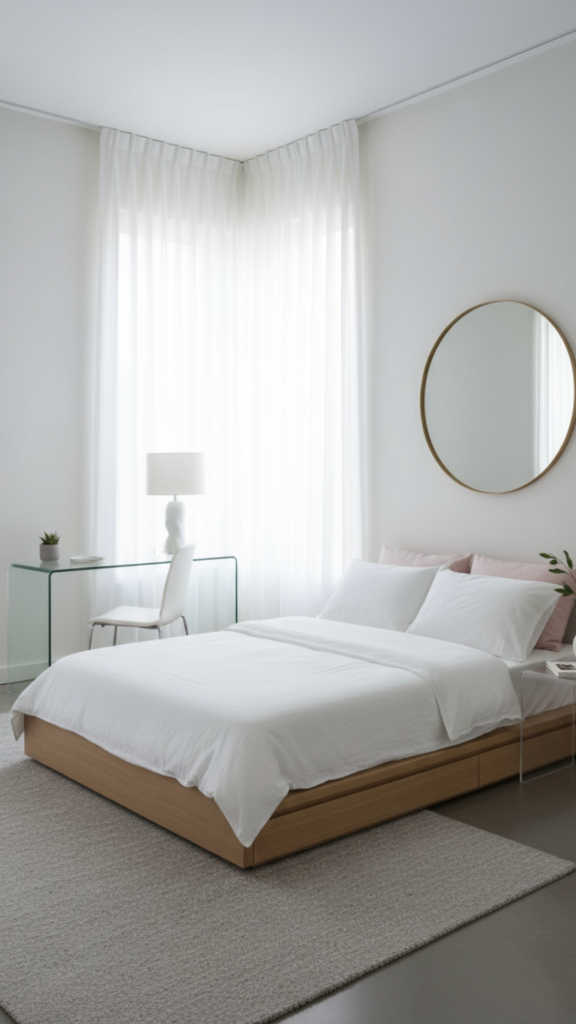
Create the illusion of more space by keeping furniture low and sightlines clear. Glass or acrylic furniture, mirrors, and light colors make the room feel larger than it is.
How To Achieve This Look:
- Choose furniture with exposed legs rather than solid bases
- Incorporate acrylic or glass pieces like side tables
- Hang a large mirror to reflect light
- Keep window treatments minimal or sheer
Items To Buy
- Acrylic side table
- Low profile bed
- Large wall mirror
- Glass desk
- Sheer curtains
- Open frame nightstand
- Clear storage bins
- Mirror closet doors
- Lucite chair
- Mirrored dresser
Make Your Small Bedroom Work Harder
Small bedrooms require creative thinking, but they don’t require compromise. By choosing the right layout and furniture for your space, you can create a bedroom that’s both functional and stylish. Start with the layout that best suits your lifestyle, invest in quality multi-functional pieces, and remember that vertical space is your best friend. Your small bedroom has more potential than you think.
Frequently Asked Questions (FAQs)
What is the best bed size for a small bedroom?
A full or queen bed typically works best for small bedrooms. While a twin saves the most space, a full-size bed offers comfortable sleeping space without overwhelming the room. Measure your room and leave at least 24 inches of walking space on each side of the bed.
How can I make my small bedroom look bigger?
Use light colors on walls and bedding, hang large mirrors to reflect light, keep furniture low to the ground, and minimize clutter. Vertical storage and multi-functional furniture also help maximize space without making the room feel cramped.
Where should I put my bed in a small bedroom?
Position your bed against the longest wall or in a corner to maximize floor space. Avoid placing it directly in front of the door or under a window unless necessary. The goal is to create a clear pathway and maintain good flow throughout the room.
How do I add storage to a small bedroom without a closet?
Use a freestanding wardrobe, install wall-mounted shelves and hooks, choose a bed frame with built-in drawers, and utilize vertical space with tall dressers. Under-bed storage containers and over-door organizers also provide valuable storage without taking up floor space.
What furniture is essential for a small bedroom?
Focus on the basics: a bed, one nightstand or small side table, and storage for clothes (either a dresser or wardrobe). Everything else is optional and should be added only if space permits and it serves a clear purpose in your daily routine.