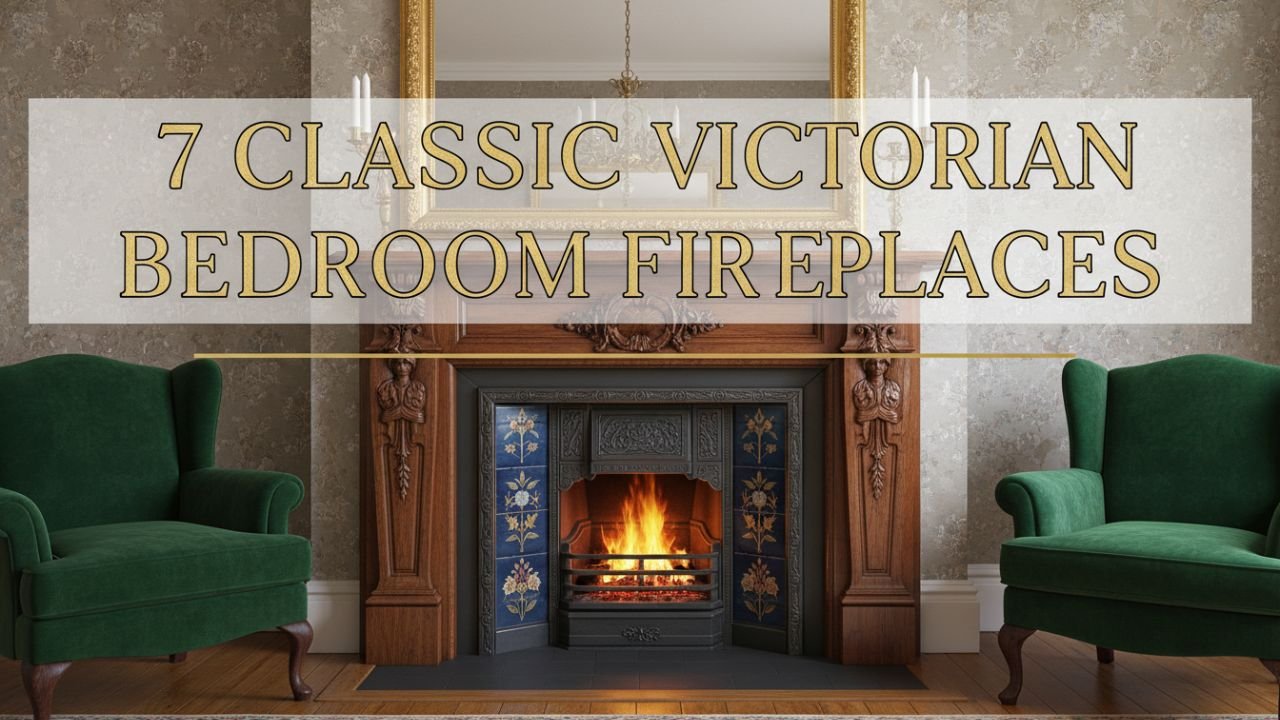
There is something undeniably romantic about a Victorian bedroom. It conjures images of high ceilings, heavy velvet drapes, and, most importantly, a stunning fireplace serving as the room’s focal point. While modern heating has made them less essential for warmth, the aesthetic appeal of a Victorian fireplace remains unmatched.

Whether you are restoring a period property or adding a touch of vintage charm to a modern home, these designs offer a perfect blend of elegance and history. From intricate cast iron to imposing marble, here are seven classic styles to inspire your renovation.
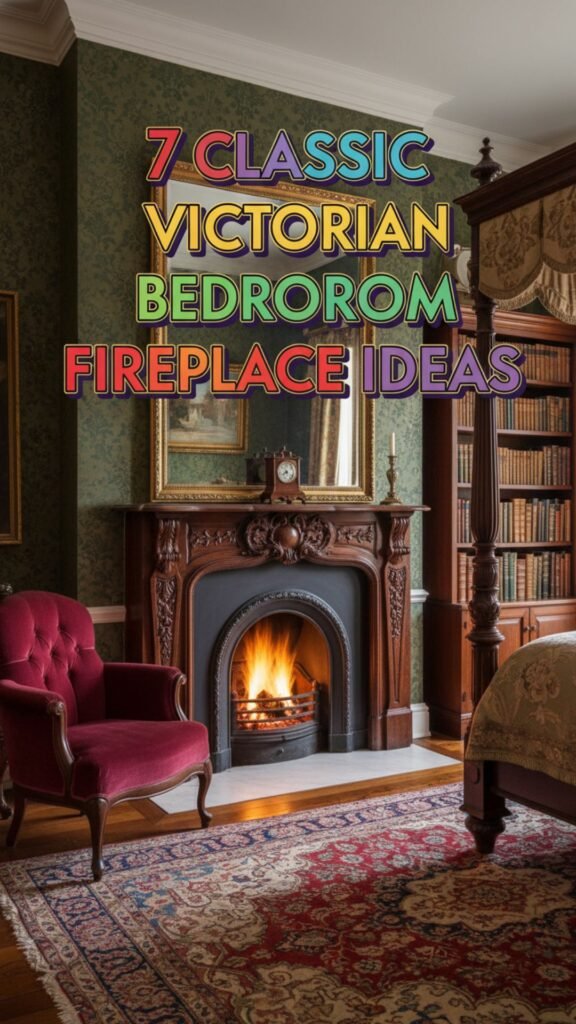
1. The Cast Iron Arch
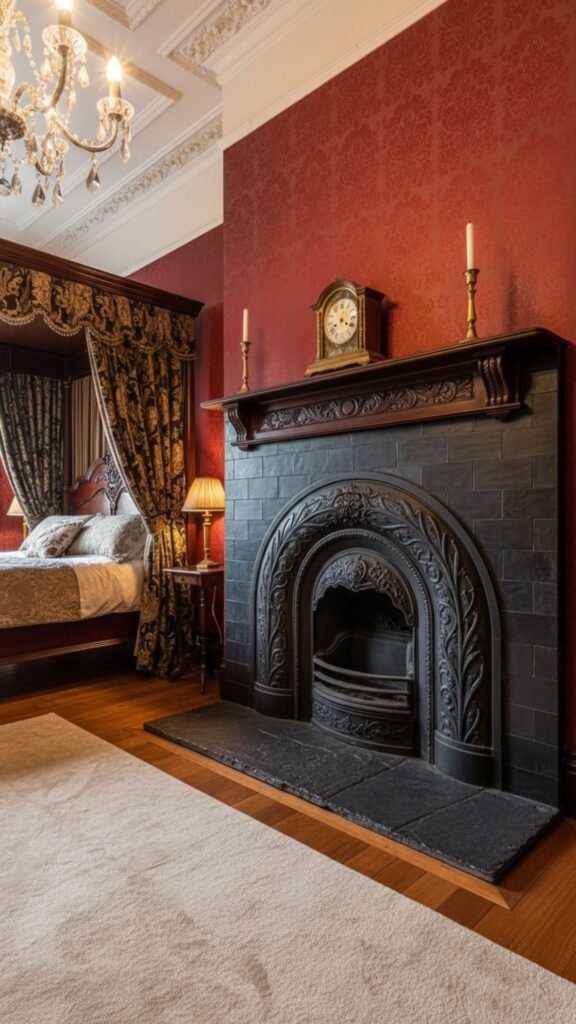
This is perhaps the most recognizable Victorian style. The cast iron insert typically features a graceful arched opening, often embellished with intricate floral or geometric molding. It strikes a balance between industrial strength and delicate artistry, making it perfect for a cozy bedroom setting.
How To Achieve This Look:
- Opt for a matte black finish on the ironwork to maintain authenticity.
- Pair the insert with a simple slate or granite hearth to ground the design.
- Keep the mantel decor minimal—a vintage clock or a pair of brass candlesticks is enough.
Items To Buy
- Cast iron fireplace insert
- Black fireplace paint
- Slate hearth tiles
- Antique mantle clock
- Brass candlesticks
- Victorian style mirror
- Fireplace screen
- Cast iron cleaner
- Decorative fireplace grate
- Vintage bedroom decor
2. The Marble Mantelpiece
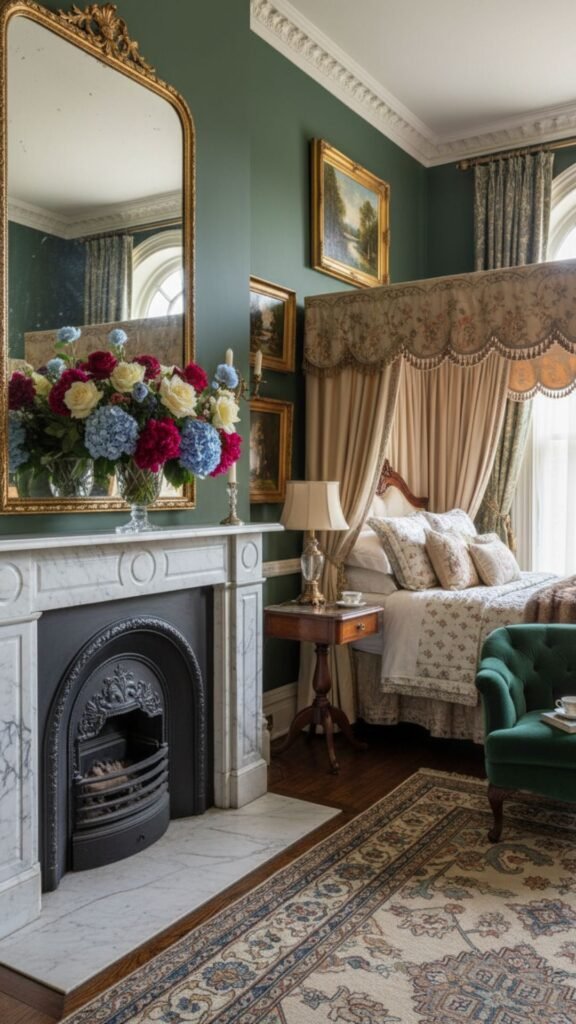
For a touch of luxury, nothing beats a marble surround. In the Victorian era, Carrara marble was a sign of wealth and status. In a bedroom, a white or grey-veined marble mantel adds softness and light, contrasting beautifully with darker Victorian wall colors.
How To Achieve This Look:
- Choose a surround with corbels (brackets) supporting the mantel shelf.
- Use a cast iron insert inside the marble surround for contrast.
- Style with fresh flowers in crystal vases to enhance the elegant vibe.
Items To Buy
- Faux marble fireplace mantel
- White fireplace surround
- Carrara marble contact paper
- Crystal flower vase
- White marble cleaner
- Victorian corbels
- Electric fireplace insert white
- Luxury candle holder
- Mantel decor white
- Stone polish
3. The Tiled Surround

Mid-to-late Victorian fireplaces often featured vibrant tiles running down either side of the grate. These “tube-lined” tiles added a splash of color and personality to the room, often featuring botanical themes or Art Nouveau patterns.
How To Achieve This Look:
- Look for reproduction tiles in deep greens, burgundies, or blues.
- Keep the wall color neutral to let the fireplace tiles pop.
- Use a brass fender on the hearth to complement the colorful ceramic.
Items To Buy
- Decorative ceramic tiles
- Patterned tile stickers
- Fireplace fender
- Floral tiles 6×6
- Art Nouveau tiles
- Tile grout pen
- Brass fireplace accessories
- Victorian style tiles
- Hearth rug
- Fireplace tool set brass
4. The Wooden Surround with Overmantel

Wood surrounds, usually made of oak, pine, or mahogany, offered a warmer alternative to stone. A classic Victorian feature was the overmantel mirror built directly into the woodwork, drawing the eye upward and making the room feel larger.
How To Achieve This Look:
- Stain the wood in a rich, dark tone like walnut or mahogany.
- Ensure the mirror glass has a slight antique finish or bevel.
- Flank the mantel with sconce lighting to highlight the wood grain.
Items To Buy
- Wood fireplace mantel shelf
- Dark wood stain
- Overmantel mirror
- Wall sconces antique
- Mahogany finish wax
- Carved wood appliques
- Vintage wall mirror
- Wood polish
- Traditional fireplace surround
- Electric log set
5. The Bedroom Register Grate
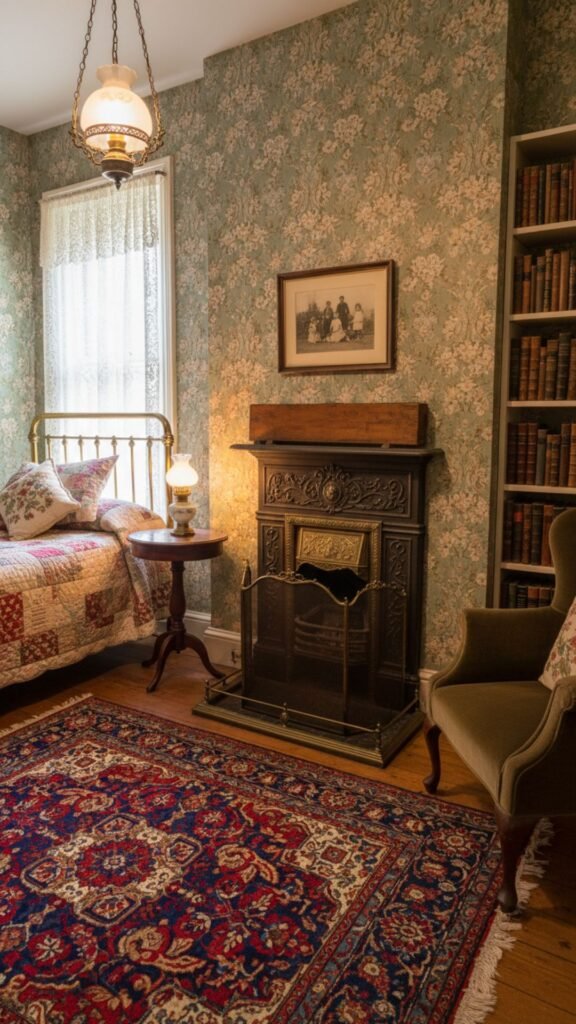
Space was often at a premium in smaller bedrooms, leading to the popularity of the “register grate.” This design integrates the grate and back panel into a single, smaller unit, often without a large protruding mantel. It is modest, functional, and charming.
How To Achieve This Look:
- Focus on the metalwork details; keep them clean and polished.
- Do not overcrowd the area; a simple picture frame on the small shelf is enough.
- Use a smaller, patterned rug in front of the hearth to define the space.
Items To Buy
- Small electric stove heater
- Metal polish
- Small photo frames vintage
- Patterned area rug small
- Cast iron paint
- Fireplace grate small
- Compact electric fireplace
- Hearth pad
- Vintage room decor
- Bedside rug
6. The Gothic Revival
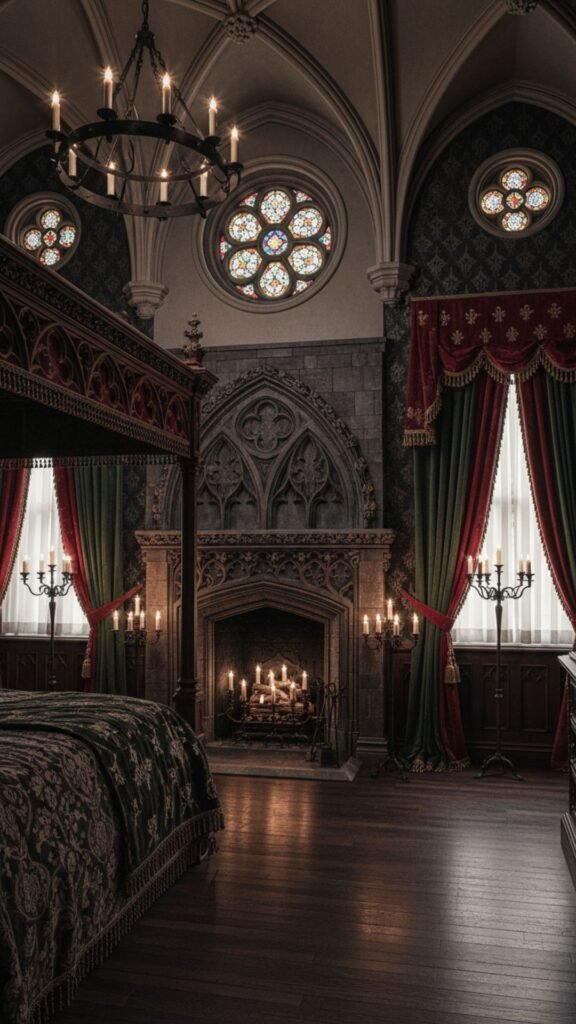
Influenced by architects like A.W.N. Pugin, Gothic Revival fireplaces brought the drama of medieval cathedrals into the home. Look for pointed arches, heavy stone (or stone-effect) surrounds, and carved trefoil motifs.
How To Achieve This Look:
- Use heavy velvet drapery in the room to match the dramatic mood.
- Select dark stone or limestone materials for the surround.
- Accessorize with iron candelabras rather than delicate glass.
Items To Buy
- Gothic home decor
- Stone fireplace surround
- Iron candelabra
- Velvet curtains dark
- Gothic mirror
- Limestone cleaner
- Medieval style decor
- Heavy drape curtains
- Gothic arch wall decor
- Pillar candle holder black
7. The Art Nouveau Influence
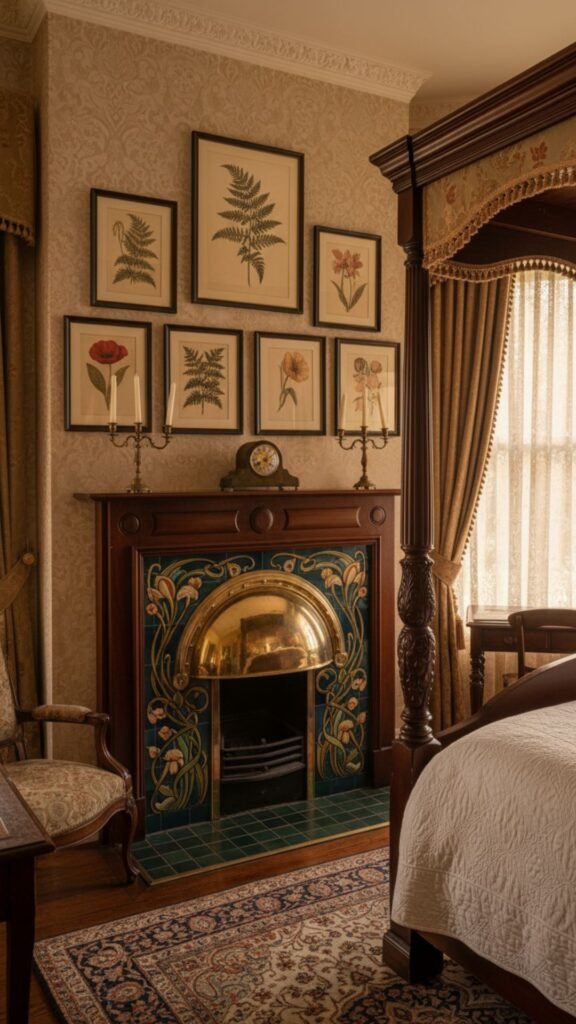
Toward the end of the Victorian era, Art Nouveau began to influence design. Fireplaces became less rigid, featuring sinuous lines, organic shapes, and stylized floral motifs like tulips or lilies in the casting or tiling.
How To Achieve This Look:
- Look for distinctive copper or brass hoods on the fireplace insert.
- Choose decor with curved lines rather than sharp angles.
- Incorporating botanical prints in the room complements this style perfectly.
Items To Buy
- Art Nouveau decor
- Copper fireplace accessories
- Botanical wall art vintage
- Curved fireplace screen
- Floral fireplace tiles
- Vintage brass vase
- Nature inspired home decor
- Tulip motif decor
- Antique copper polish
- Art Nouveau mirror
Timeless Elegance for Modern Living
Integrating a Victorian fireplace into your bedroom design is a sure way to add character and depth. Whether you prefer the dark drama of Gothic Revival or the sweet simplicity of a tiled insert, these designs prove that good style truly is timeless.
Frequently Asked Questions (FAQs)
1. Can I install a Victorian fireplace in a modern home?
Absolutely. Many homeowners install reproduction Victorian fireplaces as decorative focal points. You can choose electric or bio-ethanol versions if you want the look without the need for a working chimney.
2. Are original Victorian fireplaces safe to use?
If you have an original fireplace, you must have the chimney swept and inspected by a professional before lighting a fire. Old brickwork can degrade, and carbon monoxide leaks are a serious risk.
3. How do I clean a cast iron fireplace?
Use a stiff brush to remove dust and debris. For the black ironwork, apply a specifically designed grate polish or black lead paste. Buff it with a lint-free cloth to restore its silvery-black shine.
4. What colors work best with Victorian fireplaces?
Victorian palettes were often rich and dark. Deep greens, navy blues, and burgundies look stunning against white marble or black iron. However, soft greys and creams can create a beautiful, modern contrast.
5. What is the difference between early and late Victorian fireplaces?
Early Victorian designs (1837–1860) were often simpler and more ornate, focusing on rococo scrolls. Mid-Victorian saw the rise of the arched insert. Late Victorian (1880–1901) designs became simpler again, often incorporating Arts and Crafts or Art Nouveau elements with straighter lines and nature motifs.