Does your bedroom feel a little uninspired? It is easy to fall into the trap of safe choices. We often stick to whites, beiges, and soft greys because we know they work. But playing it safe rarely leads to a space that truly reflects your personality or sparks joy when you wake up in the morning.

Color is the single most impactful tool in interior design. It changes the mood of a room instantly. While there is nothing wrong with neutrals, stepping outside your comfort zone can transform your sanctuary into something magazine-worthy. You don’t need to be a professional designer to pull off a bold look; you just need the right pairing.
We have curated a list of color duos that might sound strange on paper but look absolutely stunning in reality. These combinations balance warm and cool tones, creating dynamic energy without overwhelming the senses. Ready to ditch the magnolia walls? Let’s explore eight unexpected pairings that will redefine your sleeping space.

1. Navy Blue and Coral
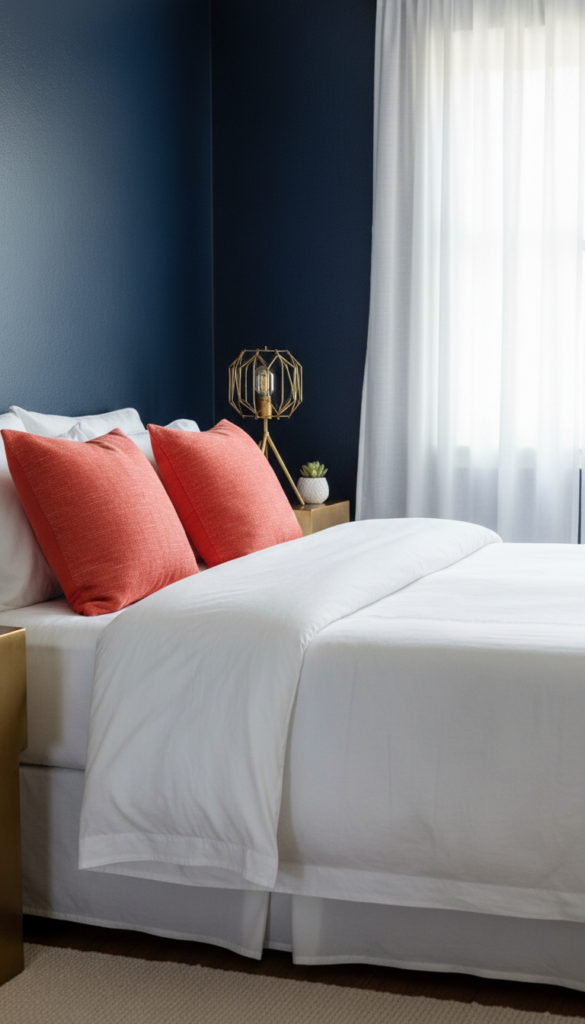
This pairing offers the perfect balance between masculine and feminine energies. The deep, moody navy provides a grounding backdrop, while the vibrant coral adds a punch of playful energy that prevents the room from feeling too dark.
How To Achieve This Look:
- Paint a feature wall in matte navy blue to anchor the bed.
- Use coral for accent pieces like throw pillows or a bedside lamp.
- Keep the remaining walls crisp white to let the colors pop.
Items To Buy
2. Olive Green and Blush Pink

Move over, forest green. Olive brings a sophisticated, earthy quality that pairs surprisingly well with the soft romanticism of blush pink. This combination feels organic and calming, making it ideal for a restful retreat.
How To Achieve This Look:
- Opt for olive green bedding or a velvet headboard.
- Layer blush pink sheets or a rug to soften the military vibes of the green.
- Incorporate natural wood textures to enhance the earthy feel.
Items To Buy
3. Charcoal Grey and Mustard Yellow
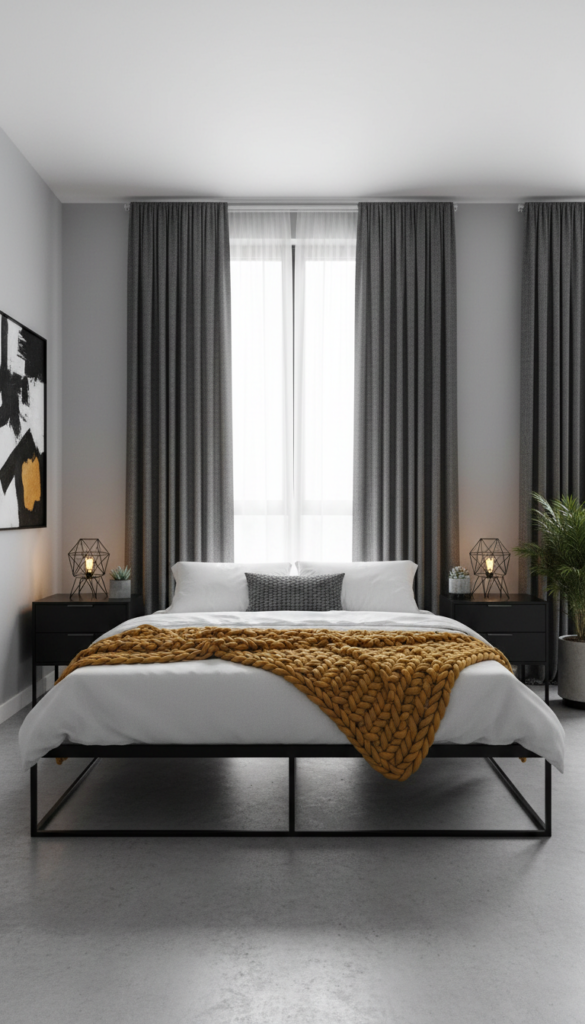
If you prefer a modern, industrial aesthetic, this combo is for you. The charcoal provides a moody, sophisticated base, while the mustard yellow acts as a ray of sunshine, adding warmth and vitality.
How To Achieve This Look:
- Use dark charcoal for your curtains or an area rug.
- Add mustard yellow through knitted throws or artwork.
- Keep furniture sleek and black or metallic.
Items To Buy
4. Teal and Burnt Orange
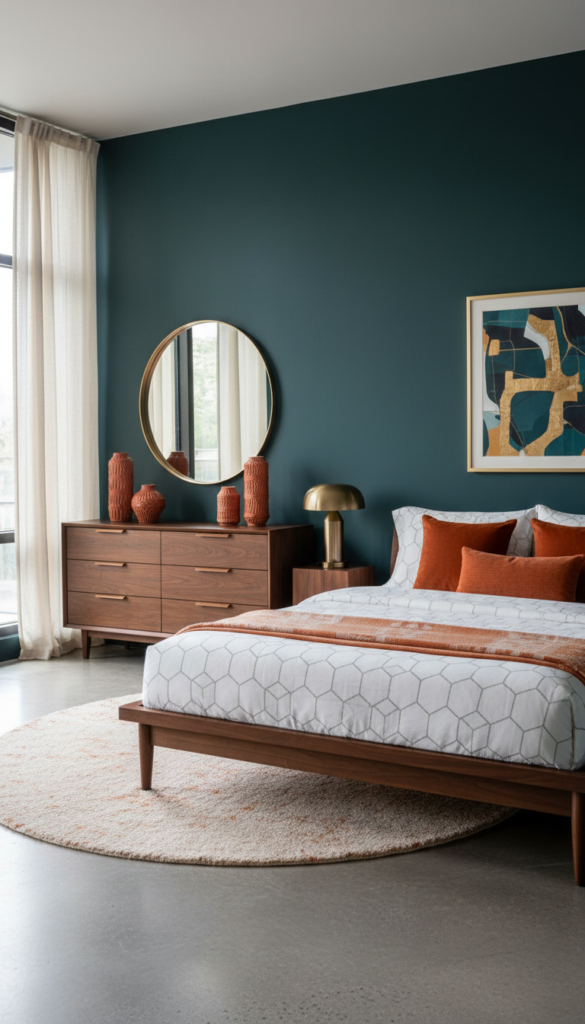
Channel a mid-century modern vibe with this high-contrast duo. Teal is rich and intellectual, while burnt orange is cozy and welcoming. Together, they create a space that feels curated and artistic.
How To Achieve This Look:
- Paint the walls a deep teal.
- Choose burnt orange or terracotta ceramics and cushions.
- Use dark walnut wood furniture to bridge the two colors.
Items To Buy
5. Lavender and Chartreuse
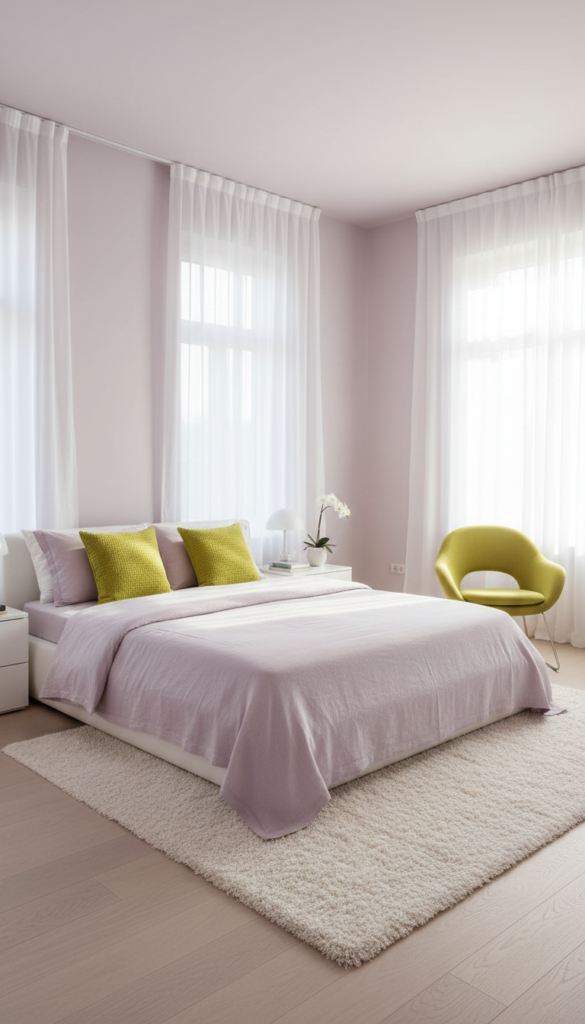
This is perhaps the boldest choice on the list. The softness of lavender clashes beautifully with the electric “ugly-cool” vibe of chartreuse (a yellow-green). It feels fresh, spring-like, and incredibly unique.
How To Achieve This Look:
- Keep the lavender pale and on the walls or bedding.
- Use chartreuse sparingly as an accent color in art or a single chair.
- Use plenty of white to keep the room feeling airy.
Items To Buy
6. Terracotta and Sage Green
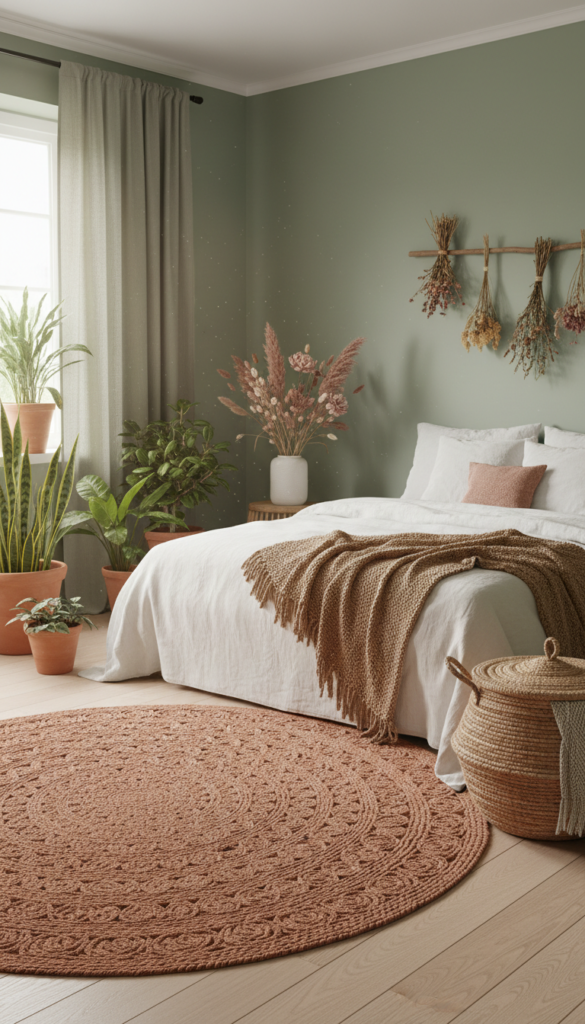
Bring the desert and the garden together. Terracotta adds a baked-earth warmth that envelopes the room, while sage green provides a cooling, refreshing counterpoint. It is the ultimate nature-inspired palette.
How To Achieve This Look:
- Use terracotta for a statement rug or plant pots.
- Paint walls sage green or use sage linen curtains.
- Accessorize with dried flowers and jute textures.
Items To Buy
7. Plum and Gold
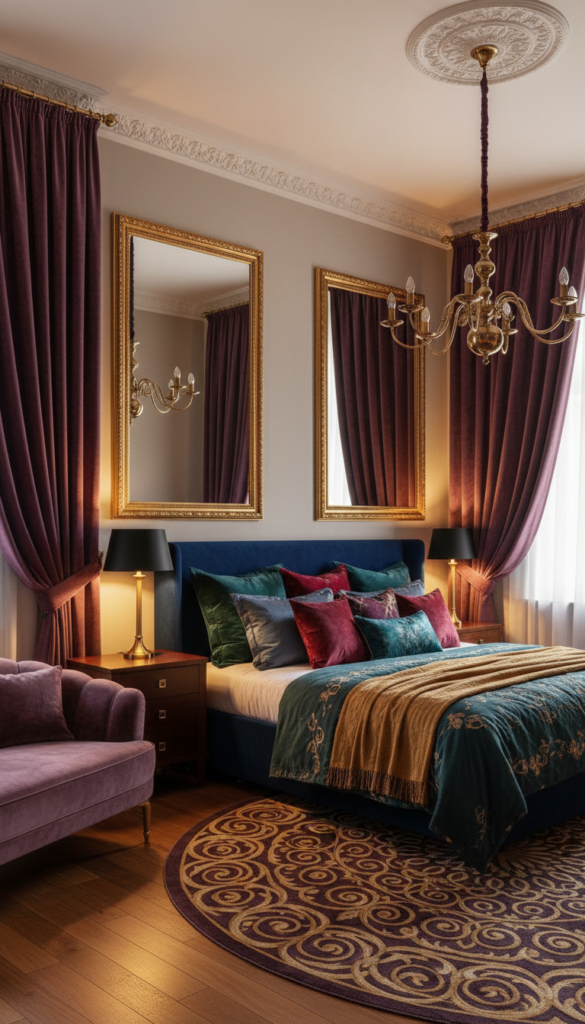
For those seeking luxury and drama, look no further. Deep plum purple is regal and mysterious. When paired with metallic gold, the room instantly feels expensive and boutique-hotel chic.
How To Achieve This Look:
- Commit to dark plum walls or heavy velvet curtains.
- Introduce gold through lighting fixtures, mirror frames, and hardware.
- Ensure you have warm lighting to make the gold sparkle.
Items To Buy
8. Black and Powder Blue

Black in a bedroom might seem daunting, but it acts as a neutral void that lets other colors sing. Powder blue is soft and airy. The contrast between the stark black and the ethereal blue creates a sophisticated, edgy look.
How To Achieve This Look:
- Choose a black metal or wood bed frame.
- Use powder blue bedding and soft textiles.
- Add monochrome art prints to tie the look together.
Items To Buy
Design Your Dream Space
Stepping away from traditional color palettes can feel like a risk, but the rewards are a bedroom that feels uniquely yours.
Whether you gravitate towards the drama of plum and gold or the earthiness of olive and blush, these combinations prove that opposites often attract. Start with small accents if you are nervous, and watch your room transform.
Frequently Asked Questions (FAQs)
1. Can I use dark colors in a small bedroom?
Absolutely. While light colors expand a space, dark colors blur the corners of a room, creating an illusion of infinite space. Deep hues like navy or charcoal can make a small room feel cozy and jewel-box-like rather than cramped.
2. What is the 60-30-10 rule?
This is a classic decor rule to balance color. 60% of the room should be your dominant color (usually walls), 30% should be your secondary color (upholstery or bedding), and 10% should be your accent color (accessories).
3. Should I paint my ceiling?
Painting the ceiling a color other than white is a bold move that pays off. If you have high ceilings, painting them a darker shade can make the room feel more intimate. For standard heights, a lighter version of your wall color can look seamless.
4. How does lighting affect these color combinations?
Lighting is crucial. Natural daylight shows the truest color, while warm incandescent bulbs can make yellows and reds glow but muddy your blues. Always test paint samples on your wall and observe them at different times of the day before committing.
5. I rent my apartment. How can I add color without painting?
Focus on textiles and art. Large area rugs, floor-to-ceiling curtains, and oversized artwork can cover enough surface area to change the color palette of a room without a single drop of paint on the walls.