
Struggling to get a good night’s rest? Your bedroom design might be the culprit. Japanese interior design has long been celebrated for creating spaces that foster tranquility, mindfulness, and restful sleep. By incorporating elements like minimalism, natural materials, and thoughtful organization, you can transform your bedroom into a peaceful sanctuary.

This guide explores 10 simple Japanese bedroom styles that can help you sleep better and wake up refreshed. Each style includes practical tips on how to achieve the look in your own space.

1. Minimalist Zen Bedroom
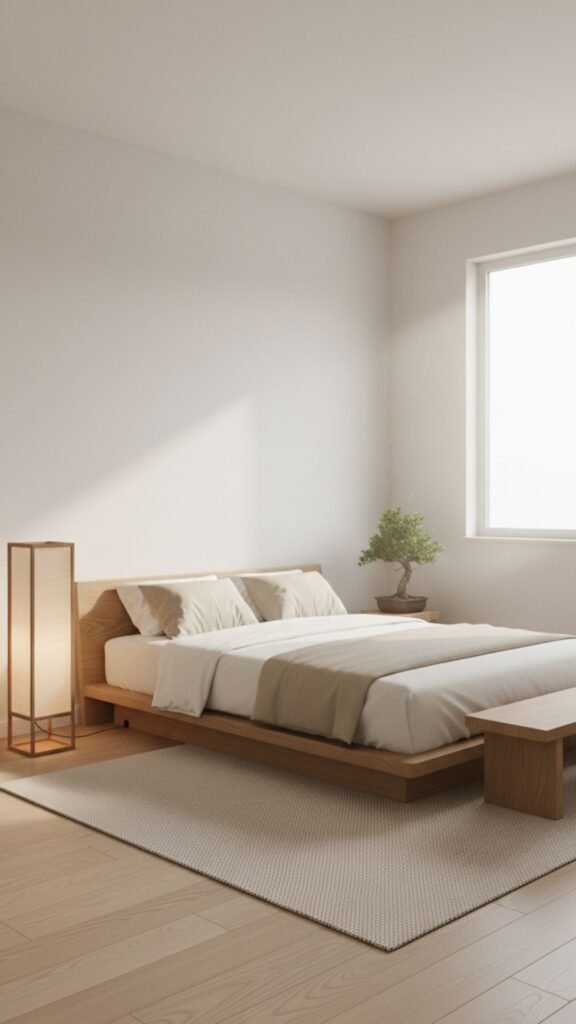
A minimalist Zen bedroom strips away clutter and distractions, leaving only what’s essential. This approach reduces visual noise and creates a calm environment perfect for unwinding.
How To Achieve This Look:
- Remove unnecessary furniture and décor items
- Choose a low platform bed or futon
- Stick to a neutral color palette of whites, beiges, and soft grays
- Add a single piece of meaningful art or a simple plant
Items To Buy
- Japanese platform bed
- Minimalist nightstand
- Neutral bedding set
- Simple wall art
- Small indoor plant
- Floor cushion
- Bamboo lamp
- White curtains
- Woven storage basket
- Natural fiber rug
2. Tatami Mat Flooring

Tatami mats are traditional Japanese flooring made from woven rush grass. They provide a soft, natural surface that feels grounding and adds an authentic touch to your bedroom.
How To Achieve This Look:
- Install tatami mats or tatami-style flooring
- Use a low futon mattress directly on the tatami
- Keep the space open and uncluttered
- Add sliding shoji screens for privacy
Items To Buy
- Tatami mat flooring
- Japanese futon mattress
- Shoji screen room divider
- Tatami yoga mat
- Japanese floor table
- Rush grass pillow
- Natural floor cushion
- Bamboo blinds
- Meditation cushion
- Japanese tea set
3. Natural Wood Accents

Incorporating natural wood elements brings warmth and a connection to nature, both key principles in Japanese design. Wood tones create a soothing atmosphere that promotes relaxation.
How To Achieve This Look:
- Choose furniture made from natural wood like oak, cedar, or bamboo
- Display wooden accents such as trays, picture frames, or shelving
- Avoid painted or heavily treated wood finishes
- Pair wood with soft textiles in natural fibers
Items To Buy
- Wooden bed frame
- Bamboo shelving unit
- Cedar storage box
- Wooden picture frames
- Natural wood tray
- Oak nightstand
- Bamboo clothes rack
- Wooden wall hooks
- Natural wood mirror
- Bamboo desk organizer
4. Soft Neutral Color Palette
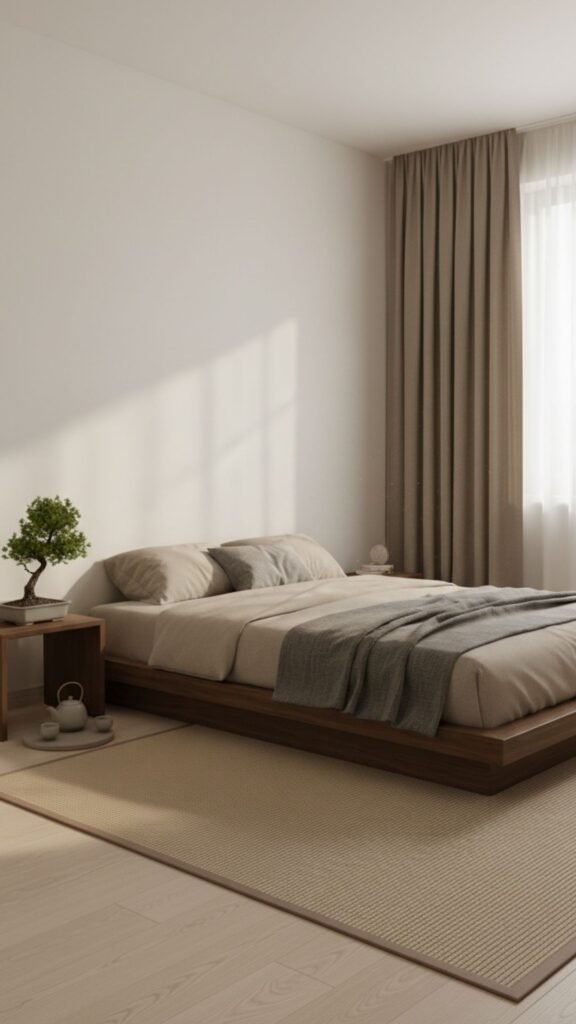
Japanese bedrooms typically feature soft, earthy tones that mimic nature. These calming colors help reduce stress and create a serene sleeping environment.
How To Achieve This Look:
- Paint walls in shades of cream, taupe, or soft gray
- Choose bedding in natural linen or cotton in neutral tones
- Add accents in muted greens, browns, or warm whites
- Avoid bold or bright colors that can be overstimulating
Items To Buy
- Neutral paint colors
- Linen bedding set
- Cream throw pillows
- Taupe curtains
- Cotton duvet cover
- Beige area rug
- Soft gray blanket
- Natural throw blanket
- Muted green pillow
- White wall paint
5. Low Platform Bed
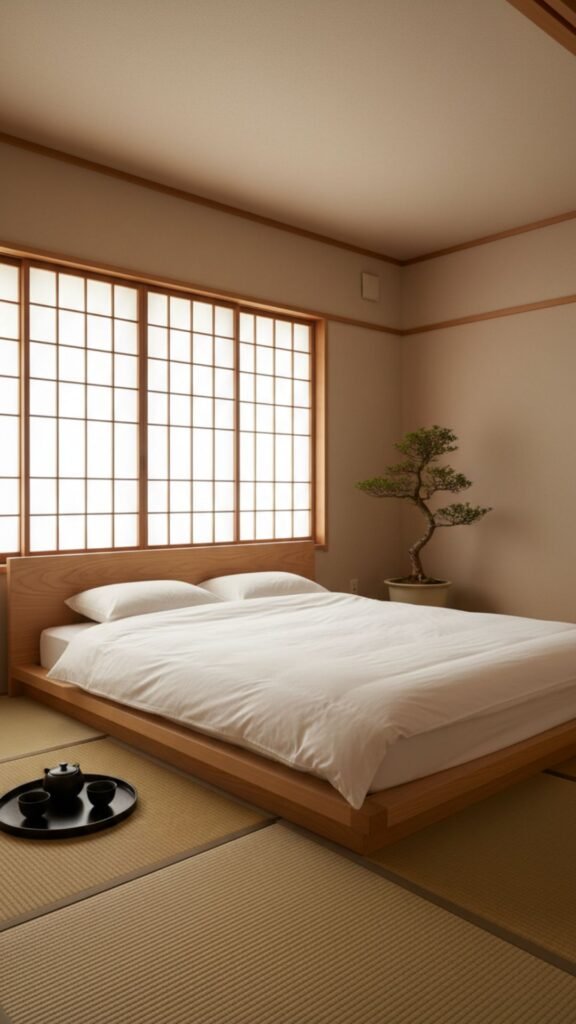
Low platform beds are a staple of Japanese bedroom design. Sleeping closer to the ground creates a sense of stability and grounding, which can improve sleep quality.
How To Achieve This Look:
- Select a platform bed with a low profile
- Opt for a simple, clean-lined design without ornate details
- Use a quality mattress suited to your sleeping preferences
- Keep bedding simple and uncluttered
Items To Buy
- Low profile platform bed
- Japanese style bed frame
- Memory foam mattress
- Simple bed sheets
- Low headboard
- Platform bed slats
- Mattress topper
- White pillowcases
- Bed risers for platform bed
- Flat sheet set
6. Shoji Screens and Sliding Doors
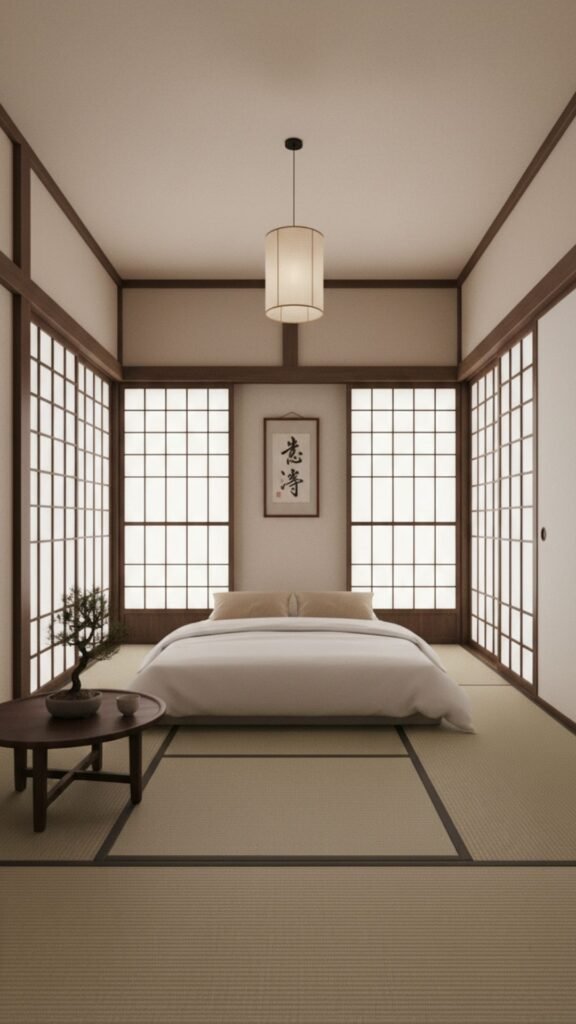
Shoji screens are translucent paper panels framed in wood. They diffuse light beautifully and create flexible, private spaces without feeling closed off.
How To Achieve This Look:
- Install shoji screens as room dividers or closet doors
- Use them to filter natural light during the day
- Choose screens with simple geometric patterns
- Maintain them regularly to keep the paper clean and intact
Items To Buy
- Shoji screen panel
- Sliding door hardware
- Japanese room divider
- Privacy screen
- Folding shoji screen
- Rice paper replacement
- Wood frame screen
- Sliding closet doors
- Shoji lamp
- Japanese screen decor
7. Indoor Plants and Natural Elements
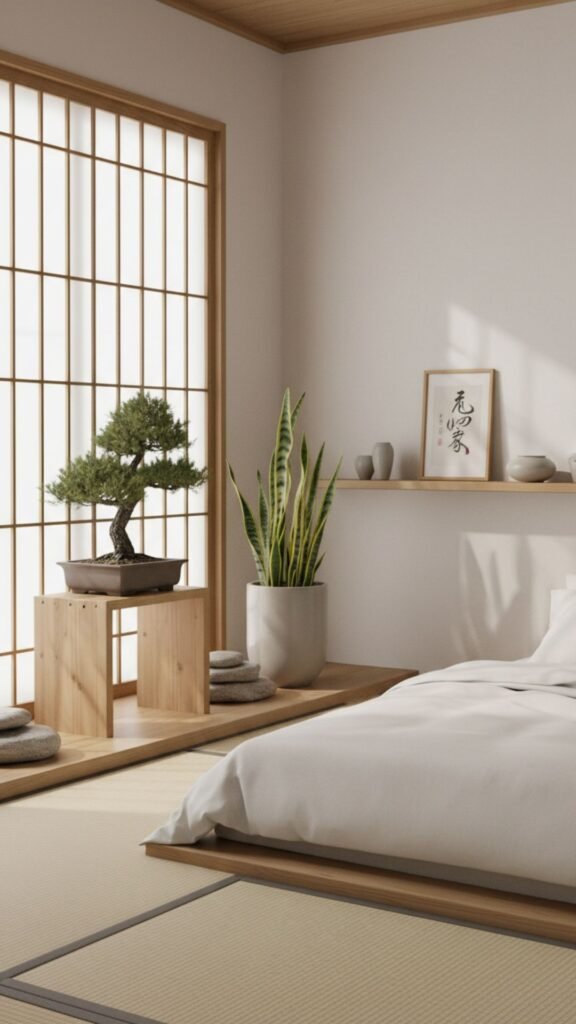
Bringing nature indoors is central to Japanese design philosophy. Plants purify the air, add life to the space, and enhance the connection to the natural world.
How To Achieve This Look:
- Place low-maintenance plants like bonsai, snake plants, or bamboo
- Use simple ceramic or wooden planters
- Position plants near natural light sources
- Incorporate stones, pebbles, or a small water feature
Items To Buy
- Bonsai tree
- Snake plant
- Lucky bamboo
- Ceramic planter
- Wooden plant stand
- River stones
- Tabletop water fountain
- Air purifying plants
- Succulent set
- Hanging plant pot
8. Soft, Diffused Lighting
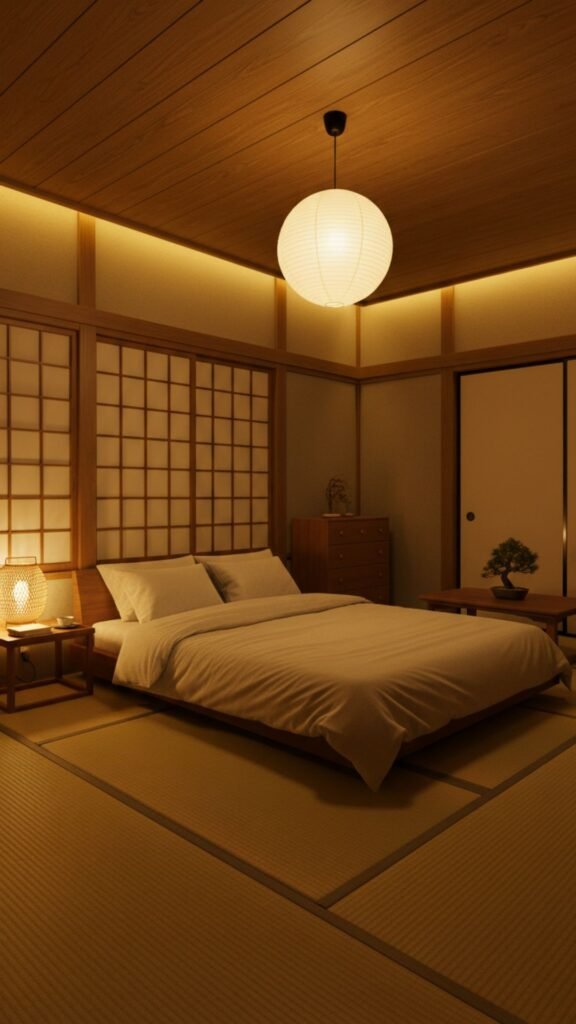
Harsh overhead lighting disrupts the calm atmosphere of a Japanese bedroom. Soft, warm lighting promotes relaxation and signals to your body that it’s time to wind down.
How To Achieve This Look:
- Use paper lanterns or pendant lights with warm bulbs
- Add dimmable bedside lamps
- Incorporate candles or LED candles for ambiance
- Avoid bright white or fluorescent lighting
Items To Buy
- Paper lantern light
- Dimmable bedside lamp
- Japanese pendant light
- Warm LED bulbs
- LED candles
- Rice paper lamp
- Himalayan salt lamp
- Floor lamp with dimmer
- Zen table lamp
- String lights warm white
9. Hidden Storage Solutions
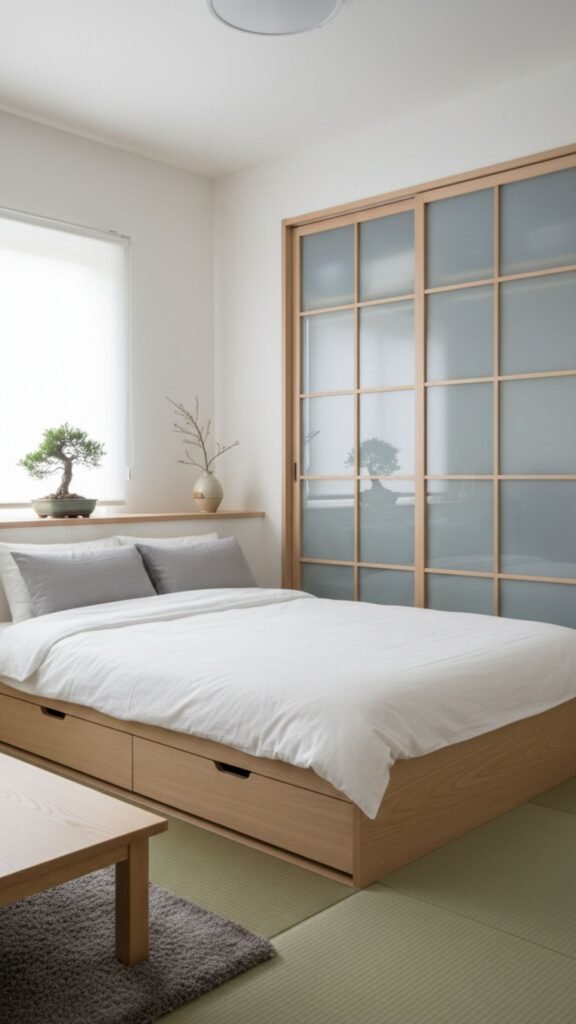
Clutter is the enemy of peace. Japanese design emphasizes concealed storage to maintain a clean, organized space that supports mental clarity and restful sleep.
How To Achieve This Look:
- Use under-bed storage containers
- Install built-in closets with sliding doors
- Choose furniture with hidden compartments
- Keep surfaces clear and store items out of sight
Items To Buy
- Under bed storage boxes
- Storage ottoman
- Closet organizer system
- Drawer dividers
- Fabric storage bins
- Wall mounted shelves
- Hanging closet organizer
- Storage bench
- Vacuum storage bags
- Sliding door hardware
10. Calming Aromatherapy
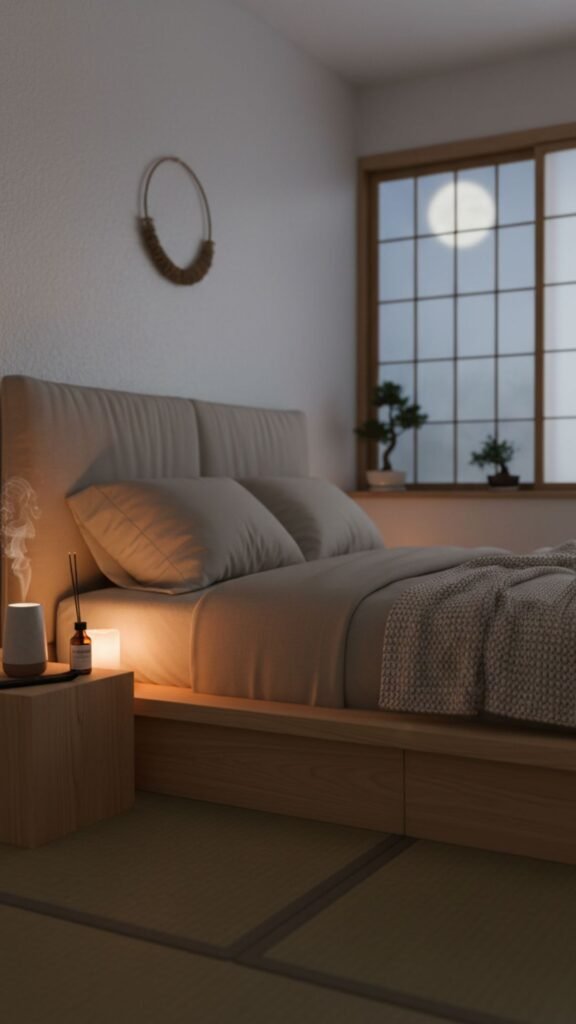
Scent plays a powerful role in relaxation. Japanese bedrooms often incorporate subtle, natural fragrances that calm the mind and prepare the body for sleep.
How To Achieve This Look:
- Use essential oil diffusers with lavender, cedar, or hinoki
- Light incense sticks or cones in gentle scents
- Place sachets of dried herbs in drawers or under pillows
- Avoid overpowering artificial fragrances
Items To Buy
- Essential oil diffuser
- Lavender essential oil
- Japanese incense sticks
- Hinoki essential oil
- Cedar wood essential oil
- Incense holder
- Lavender sachets
- Reed diffuser set
- Natural soy candles
- Aromatherapy pillow spray
Create Your Sleep Sanctuary
Transforming your bedroom with Japanese design principles doesn’t require a complete overhaul. Start with one or two elements that resonate with you—maybe a low platform bed or some calming plants—and build from there. The goal is to create a space that feels peaceful, uncluttered, and uniquely yours.
Better sleep is within reach when your environment supports rest and relaxation. By embracing simplicity, natural materials, and mindful design, you’ll create a bedroom that helps you unwind, recharge, and wake up ready to face the day.
Frequently Asked Questions (FAQs)
1. Do I need to buy all new furniture to create a Japanese-style bedroom?
Not at all. You can start by decluttering your current space and incorporating a few key elements like neutral bedding, natural wood accents, or soft lighting. Small changes can make a big difference.
2. What’s the best type of mattress for a low platform bed?
Memory foam or latex mattresses work well with platform beds. Choose one that provides the support you need while complementing the minimalist aesthetic.
3. Are tatami mats difficult to maintain?
Tatami mats require regular vacuuming and occasional wiping with a damp cloth. Keep them dry to prevent mold, and avoid placing heavy furniture directly on them.
4. Can I incorporate Japanese design in a small bedroom?
Absolutely. Japanese design is ideal for small spaces because it emphasizes minimalism and multifunctional furniture. Hidden storage and low-profile beds can make a small room feel more spacious.
5. What scents are best for promoting sleep in a Japanese bedroom?
Lavender, cedar, and hinoki are excellent choices. These natural scents are calming and help signal to your body that it’s time to relax and prepare for sleep.